
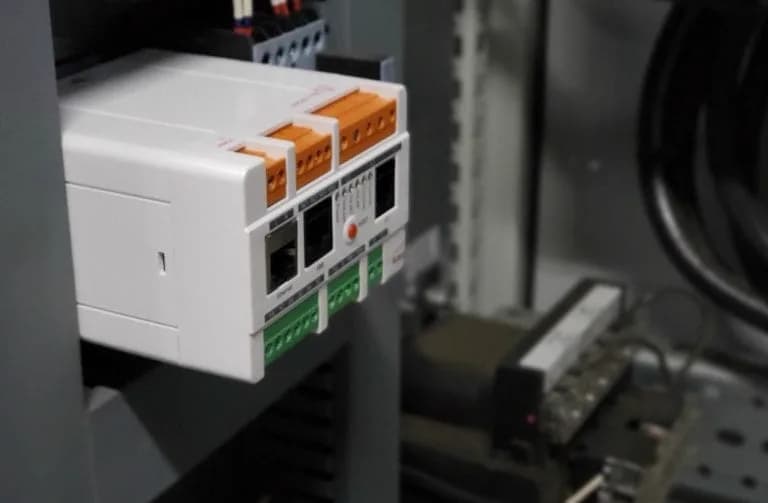
Artesis e-PCM for Diesel Generators: Backup Power Monitoring Without Shaft Sensors
Diesel gensets at CHPs, oil & gas sites and data centres: how e-PCM monitors engine and generator from output current and voltage — early warning before grid failure exposes a dead unit.
Мақала орыс тілінде
Мақаланың толық мәтіні қазіргі уақытта орыс тілінде жарияланған. Аударма дайындалуда — толық мәтін үшін орыс нұсқасына өтіңіз.
Орыс тілінде оқу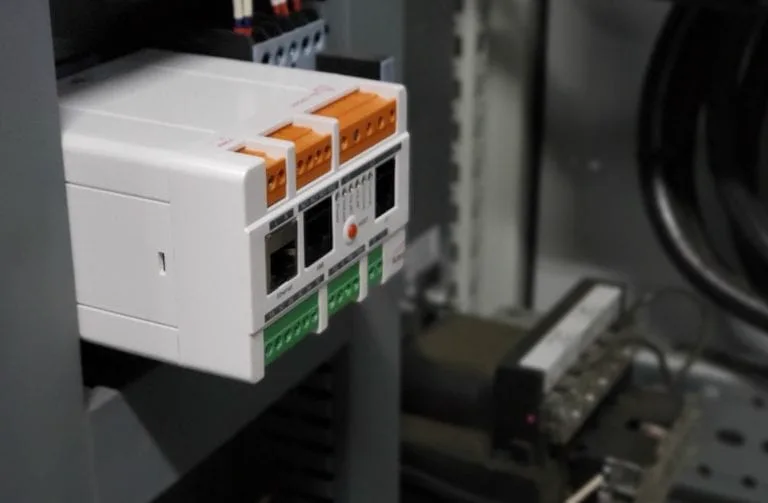
When the grid fails, the diesel generator set (DGS) must start on the first attempt. In practice, backup failure is often discovered only during the outage — too late.
Artesis e-PCM provides continuous online monitoring of the diesel engine and generator without shaft sensors. It analyses three-phase generator output voltage and current to detect mechanical and electrical faults in the prime mover and windings.
Where e-PCM fits on DGS
| Site | Why |
|---|---|
| CHP / boiler plants | Emergency and BOP backup |
| Oil & gas | Remote pads, compressor stations |
| Data centres / telecom | Tier III–IV, N+1 |
| Mining | Weak or absent grid |
| Hospitals, airports | Critical infrastructure |
What e-PCM monitors
Diesel engine
- Main and connecting rod bearing wear
- Rotor imbalance, misalignment with generator
- Fuel system issues (via torque)
- Cooling fan, mounting looseness
Generator
- Stator and rotor winding degradation
- Load asymmetry, harmonics
- Excitation / AVR issues (indirect)
Operating modes
- No-load weekly tests
- Load bank runs
- Extended grid outages
Each mode is compared to a digital twin; drift is tracked weeks to months ahead of failure.
Why not vibration on DGS
| Issue | Vibration | e-PCM |
|---|---|---|
| Shaft/bearing sensors | Required | Not required |
| Weekly test only | Sparse data | Every test analysed + trend |
| Generator electrical faults | Partial | Full |
| Hazardous DGS room | Complex install | Panel only |
For standby equipment, trending every test start matters — e-PCM and Artesis IoT automate that.
Typical failure without monitoring
- Weekly test — “all fine”.
- Generator bearing degrades silently.
- Grid loss → start → trip or no load acceptance.
- Site outage, penalties, safety risk.
With e-PCM: amber/red weeks ahead → planned bearing change in a maintenance window.
Architecture
DGS → generator output → CTs + voltage → e-PCM → Ethernet/Modbus → SCADA / IoT
Install in generator switchgear — 1–2 hours. Add e-MCM on auxiliary pumps and fans on the same site.
ROI
One failed DGS start at a CHP or refinery can cost tens of millions of tenge in downtime. e-PCM on 4–8 units often pays back on the first prevented failure.
Wind-farm case (same logic): unplanned stops 8/year → 1/year, ROI 14 months — see e-PCM product page.
Pre-purchase checklist
- DGS list with criticality (N, N+1, sole source)
- Panel access for CTs and voltage
- SCADA protocol (Modbus TCP / OPC UA)
- Test-start procedure for baseline
- Alarm review owner
Full site picture
| Asset | Product |
|---|---|
| DGS (engine + generator) | e-PCM |
| DGS lube/cooling pumps & fans | e-MCM |
| Fleet route survey | AMT Pro |
| Centralisation | Artesis IoT |
Summary
Artesis e-PCM moves backup DGS from “weekly test and hope” to condition-based care: every start analysed, trends built, failures forecast weeks ahead.
→ e-PCM navigator · Gas turbines · Hydro & steam · Wind · 90-day e-MCM pilot
KEG TRK — official Artesis distributor in Kazakhstan. Request a pilot