
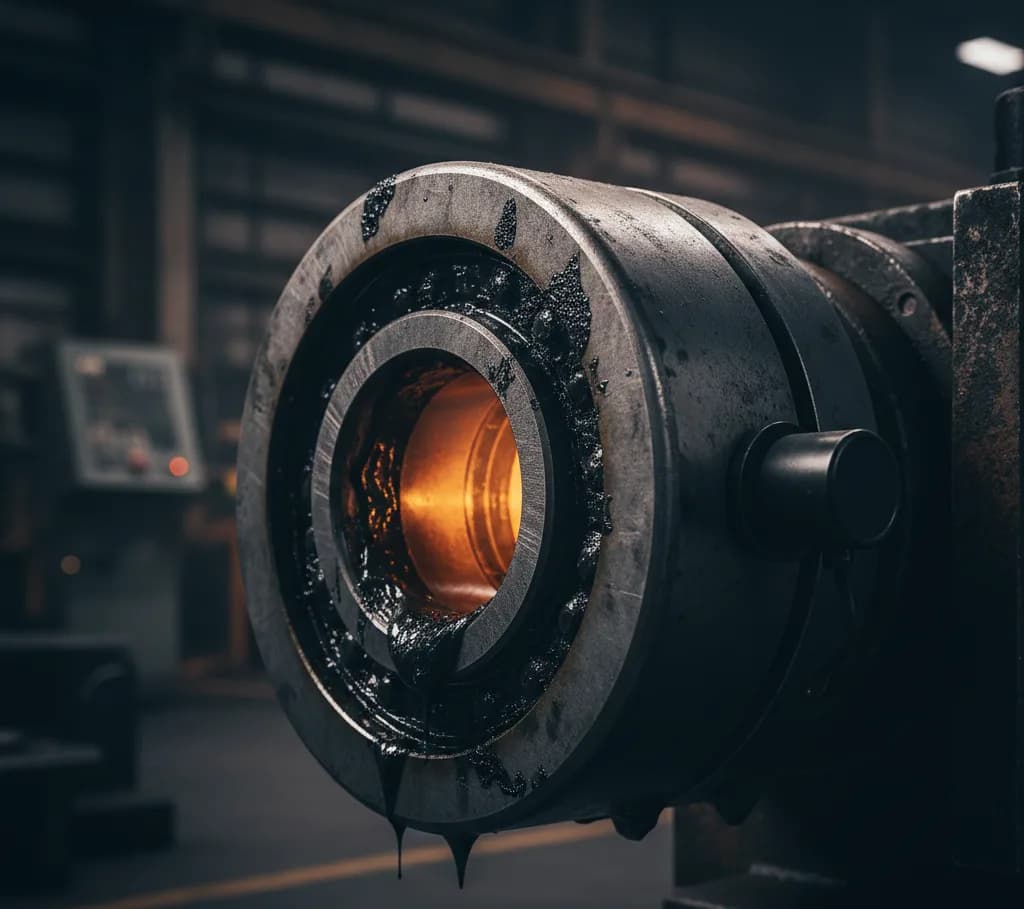
LUBExpert vs Traditional Lubrication Methods: An Effectiveness Comparison
A detailed comparison of ultrasonic lubrication control against traditional lubrication methods. Find out why LUBExpert outperforms classic approaches.
Мақала орыс тілінде
Мақаланың толық мәтіні қазіргі уақытта орыс тілінде жарияланған. Аударма дайындалуда — толық мәтін үшін орыс нұсқасына өтіңіз.
Орыс тілінде оқу
Introduction
Bearing lubrication is one of the oldest maintenance procedures there is. But the way it's actually performed hasn't changed as much as you might think.
Today, plants have a choice: keep lubricating "the old way," or move to modern ultrasonic control methods.
Let's compare these approaches objectively.
Traditional Lubrication Methods
Method 1: Time-Based (Scheduled) Lubrication
This is the most widespread method.
How It Works
- A lubrication interval is set (for example, every 3 months)
- A grease quantity is set (for example, 15 grams)
- The lubrication technician applies grease according to the schedule
Advantages
- Simple to implement
- Low training cost
- Easy to document
Disadvantages
- Ignores actual operating conditions
- Risk of over-lubrication
- Risk of under-lubrication
- No control over the outcome
Method 2: Visual Inspection
Some plants rely on visual inspection.
How It Works
- The technician inspects the bearing
- Condition is assessed visually
- A decision is made on whether lubrication is needed
Advantages
- Requires no equipment
- Fast process
Disadvantages
- Subjective assessment
- Cannot see internal condition
- High probability of error
- Doesn't catch problems at an early stage
Method 3: Run-Time-Based Lubrication
Some plants base lubrication on equipment operating hours.
How It Works
- An interval is set in operating hours (for example, every 1,000 hours)
- Lubrication is performed once the interval is reached
Advantages
- Accounts for usage intensity
- Better than a fixed calendar interval
Disadvantages
- Doesn't account for load
- Doesn't account for environmental conditions
- Doesn't account for the actual state of the lubricant
- Risk of error remains high
Ultrasonic Control with LUBExpert
How It Works
LUBExpert uses ultrasonic diagnostics to control lubrication.
The Process
- Pre-lubrication measurement — the instrument records the baseline ultrasound level
- Need analysis — the system determines whether lubrication is required
- In-process monitoring — real-time tracking of the signal level
- Stopping at the right moment — the system signals when the optimum is reached
- Documentation — results are recorded automatically
The Technical Principle
Friction between metal surfaces generates ultrasonic signals:
- High level — insufficient lubrication
- Medium level — optimal lubrication
- Low level — over-lubrication
LUBExpert measures these signals and shows the operator the optimal moment to stop.
Comparative Analysis
Let's compare the methods across key parameters.
Accuracy of the Stopping Point
| Method | Accuracy | Description |
|---|---|---|
| Scheduled | Low | Fixed quantity with no control |
| Visual | Very low | Subjective assessment |
| Run-time-based | Low | Averaged interval |
| LUBExpert | High | Objective real-time control |
Outcome Control
| Method | Outcome Control | Description |
|---|---|---|
| Scheduled | None | You know what you applied, not the result |
| Visual | Subjective | Depends on operator experience |
| Run-time-based | None | No feedback |
| LUBExpert | Objective | Measurable real-time result |
Accounting for Actual Conditions
| Method | Condition Awareness | Description |
|---|---|---|
| Scheduled | None | Averaged data |
| Visual | Partial | Only visible signs |
| Run-time-based | Partial | Only operating time |
| LUBExpert | Full | Actual bearing condition |
Error Risk Reduction
| Method | Over-Lubrication Risk | Under-Lubrication Risk |
|---|---|---|
| Scheduled | High (40-60%) | Medium (15-25%) |
| Visual | Very high (60-80%) | High (30-50%) |
| Run-time-based | High (40-60%) | Medium (15-25%) |
| LUBExpert | Low (<5%) | Low (<5%) |
Economic Comparison
Let's look at the economics.
Implementation Cost
| Method | Implementation Cost | Description |
|---|---|---|
| Scheduled | Minimal | Training only |
| Visual | Minimal | Training |
| Run-time-based | Minimal | Training |
| LUBExpert | $15,000-30,000 | Equipment + training |
Annual Costs
A plant with 500 bearings, annual grease consumption of 2,000 kg at $15/kg:
| Method | Grease Consumption | Grease Cost | Additional Costs | Total |
|---|---|---|---|---|
| Scheduled | 2,000 kg | $30,000 | $5,000 | $35,000 |
| Visual | 1,800 kg | $27,000 | $3,000 | $30,000 |
| Run-time-based | 1,900 kg | $28,500 | $4,000 | $32,500 |
| LUBExpert | 1,000 kg | $15,000 | $2,000 | $17,000 |
Payback Period
| Method | Investment | Annual Savings | Payback |
|---|---|---|---|
| Scheduled | $0 | $0 | — |
| Visual | $0 | $5,000 | — |
| Run-time-based | $0 | $2,500 | — |
| LUBExpert | $25,000 | $18,000/year | 17 months |
Advantages of LUBExpert
1. Objective Data
LUBExpert gives you precise numbers, not guesswork.
- You know exactly when to stop
- You see the history of every bearing
- You can analyze trends
2. Reduced Risk
Error risk drops from 40-60% to under 5%.
- Less over-lubrication
- Less under-lubrication
- Fewer bearing failures
3. Savings
Annual savings can range from $10,000-50,000 depending on plant scale.
- 30-50% reduction in grease consumption
- 40-60% increase in bearing service life
- 70-80% reduction in downtime
4. Staff Training
LUBExpert is also a training tool.
- Staff see the result of their actions
- Correct technique is reinforced
- Skill level improves
Conclusion
Traditional lubrication methods have worked for decades. But today we have technology that makes the process precise, efficient, and cost-effective.
LUBExpert doesn't replace the lubrication technician — it gives them a tool for making the right decisions.
Recommendation
If your plant:
- Has more than 100 bearings
- Spends more than $10,000/year on lubrication
- Experiences bearing failures
Then implementing LUBExpert will pay for itself in 6-24 months and deliver savings year after year.
Learn More
- More about LUBExpert — acoustic bearing lubrication system
- More about SDT340 — multi-sensor diagnostic platform
- All ultrasound instruments — full equipment range
Contact Us
If you'd like a comparison done for your plant, contact us for a free consultation and savings calculation.
Мақаладағы жабдық
LUBExpert - Система управления смазкой подшипников
Управление программой смазки подшипников с базой данных, Shopping List и Work Or...
SDT340 - Продвинутый ультразвуковой детектор
Самый продвинутый ультразвуковой детектор для сбора, анализа и трендирования дан...
SDT270 - Ультразвуковой детектор с памятью
Цифровой ультразвуковой детектор с возможностью записи данных и спектрального ан...