
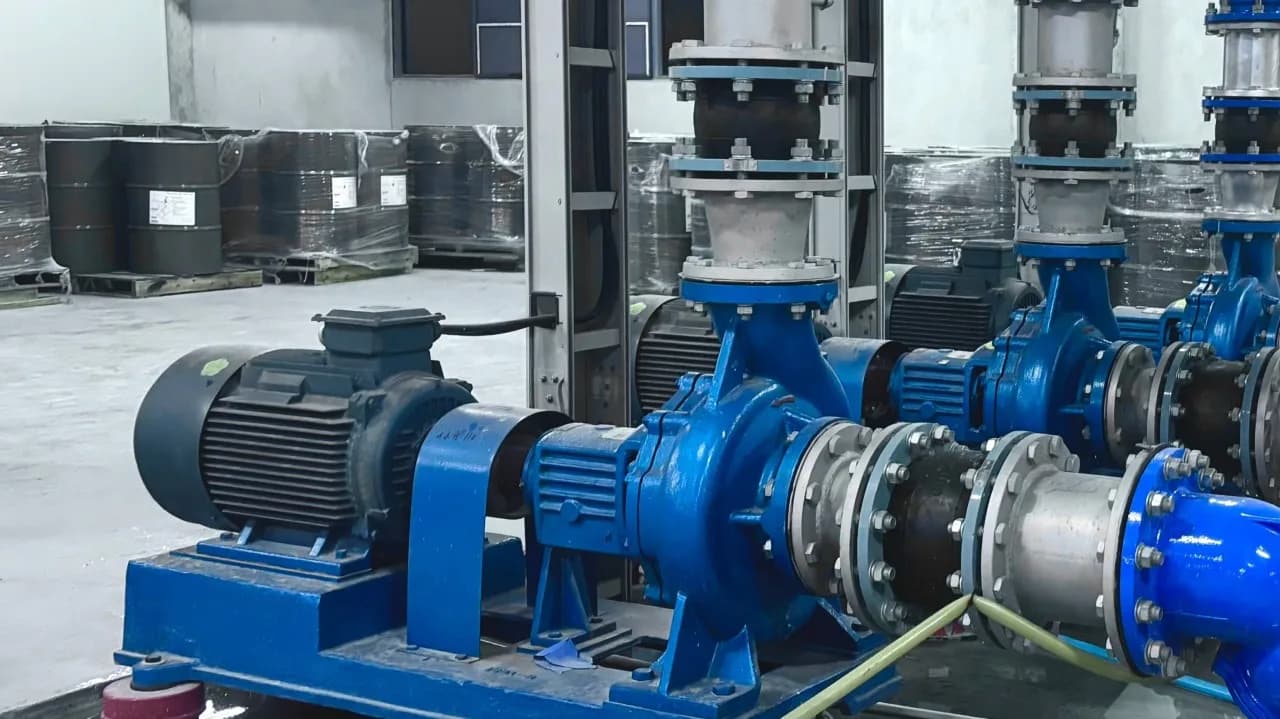
10 Equipment Maintenance Strategies That Cut Downtime in 2026
10 maintenance strategies that genuinely reduce downtime in 2026: predictive maintenance, RCM, TPM, and tools like Artesis e-MCM and SDT340, with KPIs you can roll out in stages at plants across Kazakhstan.
Article available in Russian
The full article body is currently published in Russian. A translated version is in progress — switch to Russian for the complete text.
Read in Russian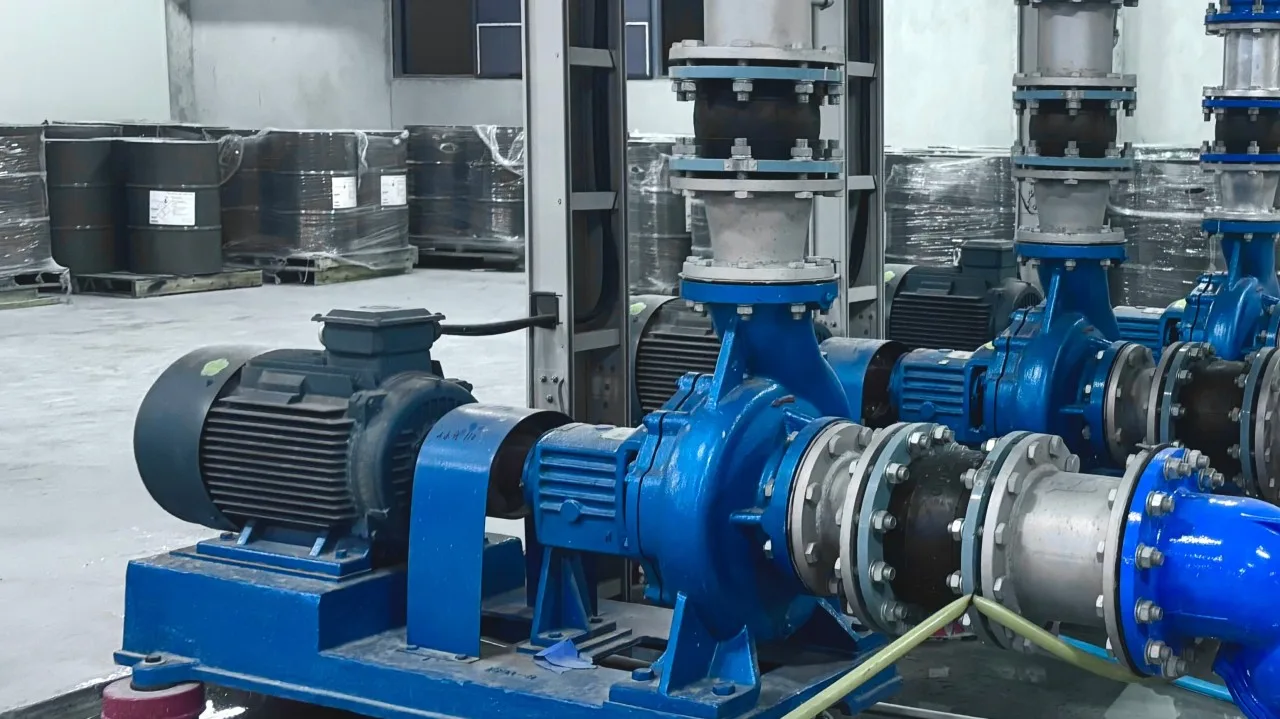
A sudden equipment failure can stop an entire production line. And the cost isn't measured in efficiency percentages — it's thousands of dollars for every hour of downtime: lost output, missed shipments, a maintenance crew scrambling, and a sour mood on the shop floor. The good news is that most of these losses are avoidable — once you stop firefighting and start building a systematic approach to reliability.
Below are 10 maintenance strategies that genuinely reduce downtime. You don't need to implement all of them at once. Figure out which assets cause you the most unplanned stoppages, and start with one or two strategies that fit. Once they deliver a measurable result, expand the scope.
If you want to first understand how much an hour of downtime actually costs you, and why diagnostics is an investment rather than an expense, read the dedicated breakdown: What an hour of downtime really costs.
1. Predictive maintenance (condition-based)
Predictive maintenance is the shift from "calendar-based" maintenance to "data-based" maintenance. Sensors capture vibration, temperature and electrical parameters, and the system compares the current picture against the reference signature of a healthy machine. As soon as a deviation typical of a developing defect appears, an alert is generated — well before a failure occurs.
Effect on downtime. The defect is caught early on the P-F curve, repairs are scheduled in advance, and emergency stoppages drop. Industry estimates put the reduction in sudden failures at 30–50% after moving to predictive maintenance.
What's needed to implement it. Sensors on critical components, a data collection and analysis system, and — most importantly — a person or procedure that turns an alert into a work order. For motors, electrical signature analysis works well: the Artesis e-MCM system is installed on the supply cable and detects both electrical and mechanical defects without stopping the machine. For route-based inspection of bearings, leaks and steam traps — SDT340 routes within the SDT ultrasound lineup. More detail in the article What Is Electric Motor Condition Monitoring.
2. Preventive maintenance (scheduled)
Classic preventive maintenance runs on predefined intervals — by calendar (monthly, quarterly, annually) or by usage (running hours, cycles, mileage). Inspections, lubrication, cleaning and component replacement happen before a part exhausts its service life.
Effect on downtime. Emergency repair almost always costs 3–5 times more than planned work and disrupts the schedule. Preventive maintenance moves a significant share of the work into predictable territory.
What's needed to implement it. A complete asset inventory, criticality ranking, and intervals based on manufacturer recommendations and your own failure history. The downside is that you sometimes replace parts that still had life in them — which is why preventive maintenance pairs logically with condition-based maintenance (see below).
3. Condition-based maintenance (CBM)
Condition-based maintenance triggers work when a measured parameter crosses a threshold. Vibration, ultrasound, temperature and oil quality are tracked continuously or through periodic rounds, and a work order is created based on actual deterioration — not a schedule.
Effect on downtime. Intervention happens at exactly the right time: not too early (wasted work) and not too late (a breakdown). The interval between repairs stretches out to whatever is actually needed.
What's needed to implement it. Instruments matched to the failure modes you're tracking: a vibration analyzer for rotating equipment, ultrasound for bearings, leaks and electrical discharge, and a thermal camera for heat buildup. The multifunction SDT 340 covers ultrasound, vibration and lubrication control in a single round. How to interpret the results is covered in SDT 340 Predictive Analytics: Hidden Defects.
4. Reliability-centered maintenance (RCM)
RCM (Reliability-Centered Maintenance) doesn't pick one strategy for the whole plant — it selects the optimal approach for each asset based on the likelihood and consequences of failure. At its core is failure mode and effects analysis (FMEA) and a decision logic: some equipment goes under continuous monitoring, some is serviced on a schedule, and for some it's economically sound to simply run it to failure.
Effect on downtime. Resources concentrate where a failure is most expensive, while routine work on non-critical assets is reduced. This cuts both downtime and overall maintenance spend.
What's needed to implement it. Asset criticality assessment, FMEA on priority machines, and a pilot on 10–15 key systems before scaling up. The basic logic for choosing a strategy is covered in detail in the article Maintenance Optimization.
5. Total productive maintenance (TPM)
TPM (Total Productive Maintenance) spreads responsibility for equipment condition across everyone — primarily the operators who work on the machines every day. Simple tasks (inspection, cleaning, lubrication, minor adjustments) move to operators, while complex repairs stay with the maintenance team.
Effect on downtime. Whoever works on the machine every day is the first to notice an unusual noise, heat, or leak. Early detection by operators sharply improves equipment availability and makes the workplace safer.
What's needed to implement it. Management support, clear standards for autonomous maintenance, training operators to recognize signs of degradation, and a tracking system that monitors metrics like MTBF (mean time between failures).
6. Proactive maintenance (root cause elimination)
Proactive maintenance goes beneath the symptoms and eliminates the root cause of recurring failures: poor lubrication, misalignment, imbalance, overheating, contamination. The tools are root cause analysis (RCA), the "5 whys" method, and FMEA again.
Effect on downtime. You stop fixing the same bearing every six months and instead remove the reason it's failing in the first place. This cuts the number of failures by 30–50% and extends asset life.
What's needed to implement it. The discipline to investigate every significant failure, a cross-functional team (mechanics, operators, reliability engineers), and recording the findings so the lessons aren't lost. A classic example is shaft misalignment — see Shaft Misalignment — The Hidden Equipment Killer.
7. Computerized maintenance management system (CMMS)
A CMMS is a single digital hub for all maintenance work: work orders, repair history, spare parts inventory, preventive maintenance schedules, KPIs. Modern platforms integrate with sensors and automatically create a work order when a parameter crosses its threshold.
Effect on downtime. A shift from reactive to scheduled work, a digitized history (nothing gets lost, everything is searchable), and a fast response to deviations flagged by monitoring data.
What's needed to implement it. Data standardization (consistent equipment names, clear procedures), a phased rollout, and integration with systems already in use. Without standardization, a CMMS turns into a pile of records rather than a useful tool.
8. Procedure standardization (regulations and SOPs)
Standard operating procedures (SOPs) are step-by-step instructions for recurring work: exactly how to perform an inspection, lubricate a component, or replace an assembly. A good procedure is written so that even the least experienced technician can follow it.
Effect on downtime. Results stay consistent regardless of shift or technician, the human-error factor shrinks, and knowledge doesn't walk out the door with a departing specialist. Fewer repair mistakes mean fewer repeat stoppages.
What's needed to implement it. Start with critical equipment and involve the people who actually do the work. Include the purpose, scope, roles, step-by-step actions with photos or diagrams, and safety requirements. Store procedures in the CMMS with mobile access.
9. Redundancy for critical equipment
Parallel-running duplicate machines, or hot/cold standby units, keep operations going when the primary unit fails. Redundancy is justified wherever a failure threatens safety or causes major financial loss.
Effect on downtime. For critical positions, near-100% availability: the repair crew works without panic, because production continues. This relieves pressure and allows for a properly done repair.
What's needed to implement it. A criticality assessment (redundancy is expensive and isn't needed everywhere), condition monitoring of both the primary and standby units, and regular switchover tests — otherwise the standby unit may fail to start when you actually need it.
10. Staff training and knowledge transfer
Experienced diagnosticians and repair technicians are retiring, and replacing them is getting harder. Structured training stops being a "nice-to-have" and becomes a precondition for reliability.
Effect on downtime. Trained staff get the diagnosis right the first time more often, make fewer mistakes, and cause fewer repeat failures. Training programs measurably cut unplanned downtime within the first year.
What's needed to implement it. An assessment of current skills, a modular program (from basic safety to vibration analysis, thermography, and sensor data interpretation), a mix of theory and hands-on practice on real equipment, and mandatory knowledge transfer from senior specialists before they leave. KEG TRK runs diagnostic training and seminars for companies in Kazakhstan — watch the articles section for announcements.
Summary: which strategy fits which situation
| Strategy | When it fits | KEG TRK tool |
|---|---|---|
| Predictive maintenance | Critical motors and turbomachinery | Artesis e-MCM, Bently Nevada 3500 / System 1 |
| Preventive maintenance | Predictable wear based on usage | CMMS + procedures |
| Condition-based maintenance | Rotating equipment, bearings | SDT 340 (ultrasound + vibration) |
| RCM | A diverse fleet of assets | FMEA + criticality assessment |
| TPM | Availability depends on operators | Autonomous maintenance standards |
| Proactive | Recurring failures of the same type | RCA, vibration analysis, alignment |
| CMMS | Chaos in work orders and history | A computerized maintenance management system |
| Standardization (SOPs) | Staff turnover, inconsistency across shifts | Procedures in the CMMS |
| Redundancy | Failure = safety risk / major losses | Duplication + standby monitoring |
| Training | Experienced specialists leaving | KEG TRK seminars and training |
Where to start
Rolling out all ten strategies at once, plant-wide, isn't possible — and it isn't necessary. The logic is simple:
- Assess asset criticality. Find the equipment that most often stops production and costs the most when it fails.
- Pick 1–2 strategies that fit your capabilities. Most often this is condition-based maintenance on critical machines or predictive motor monitoring.
- Show a measurable result from the pilot — fewer emergency stoppages, higher MTBF, savings on spare parts.
- Scale the approach that's proven itself to the rest of the fleet, and add new strategies.
The biggest gains come from plants that combine several strategies tailored to specific asset types, rather than stretching one approach over everything. The result: fewer unplanned stoppages, lower costs, and longer equipment life.
KEG TRK supplies and implements equipment diagnostic and condition monitoring systems — Bently Nevada, Artesis, SDT, Olympus — and helps build a predictive maintenance program around your fleet. To discuss your needs and find the right solution, reach out through the contacts section.
Equipment in this article
e-MCM
Онлайн мониторинг электродвигателей без датчиков
SDT340 - Продвинутый ультразвуковой детектор
Самый продвинутый ультразвуковой детектор для сбора, анализа и трендирования дан...
Orbit DCM - Распределенная система мониторинга
Распределённый мониторинг для горнодобычи, конвейеров и мобильной техники — 16 д...