
Orbit DCM distributed monitor
(Distributed Condition Monitoring)
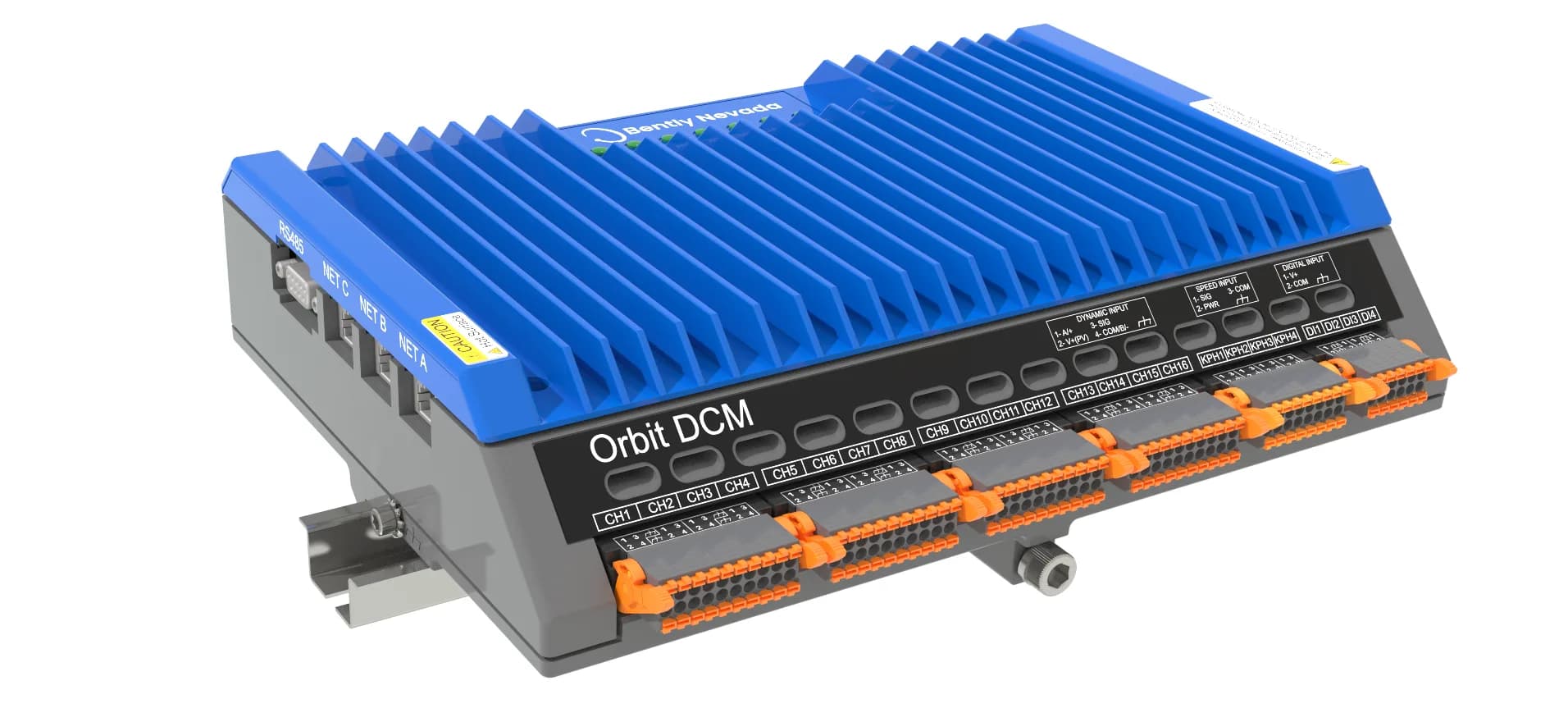
Install monitoring at the asset — less cabling on large sites. 16 dynamic channels, local alarm relay, Modbus and System 1 integration.
16 dynamic channels, 4 Keyphasor inputs and a built-in black box ensure continuous vibration and temperature monitoring even when the central system link is lost. System 1 and Modbus integration for unified plant-wide supervisory monitoring.
Key application in Kazakhstan
Mining and mobile equipment
Plant and quarry equipment
- Belt and screw conveyors — drive drums, gearboxes, take-up stations
- Jaw, cone and impact crushers
- Ball and SAG mills, classifiers
- Pumps and agitators at concentrators
- Mine ventilation fans and compressors
Mobile and quarry equipment
- Excavators and drill rigs — slew and travel drives
- Haul trucks and loaders — gearboxes and transmissions
- Mobile crushing and screening plants
- Stackers and reclaimers at ore stockyards
Distributed Orbit DCM installation reduces cabling costs on dispersed sites and lets you scale monitoring as the quarry or plant expands.
Key specifications
Monitoring channels
- 16 dynamic channels for vibration measurements
- 4 velocity (Keyphasor) channels for phase reference
- 4 digital inputs for discrete signals
- Simultaneous synchronous sampling on all channels
Data processing
- High-speed signal processing
- 4-level alarming (Alert, Danger, OK, Not OK)
- Black box function (flight recorder)
- Autonomous data storage when communication is lost
Connectivity and integration
Ethernet
10/100/1000 BASE-T RJ45
Serial communication
RS485 port
Protocols
Modbus TCP/RTU
Supported sensors
Vibration sensors
- Standard 2-wire IEPE accelerometers
- Velocity transducers
- Proximity sensors
Other sensors
- Temperature sensors (RTD, TC)
- Pressure sensors
- Process variables (4–20 mA)
Mounting and installation
Bulkhead mounting
For panel installation
DIN-rail mounting
Standard industrial mounting
Vertical installation
Recommended for optimal performance
Power supply
Voltage: 24 VDC
Power: 240 W
Certification
Applications
Equipment types
- Ore conveyors and transporters
- Crushers and mills
- Pumps (centrifugal, reciprocating)
- Fans and blowers
- Gearboxes, motors and mobile equipment drives
Industries
- Mining and mineral processing (concentrators, quarries)
- Metallurgy and non-ferrous metals
- Petrochemical industry
- Power generation
- Cement and construction materials
Orbit DCM benefits
Cost efficiency
Optimal price/performance for medium-criticality equipment
Distributed architecture
Installation at the asset reduces cabling costs
Reliability
Autonomous operation with data retention when communication is lost
Flexibility
Supports vibration, temperature and pressure sensor types
Easy installation
Compact size with multiple mounting options including DIN-rail
Integration
Full System 1 compatibility for centralized monitoring
System 1 integration
Orbit DCM fully integrates with the System 1 platform for centralized monitoring and analytics of all distributed modules.
Integration capabilities:
- Automatic real-time data transfer
- Centralized monitoring of all modules
- Advanced analytics and trends
- Customizable reports and alarming
Configuration:
The system is configured through Orbit Studio:
- Channel and sensor setup
- Alarm setpoint programming
- Communication and protocol configuration
- Real-time monitoring
Related products
1900/65A — general purpose equipment monitor
Universal 2-channel vibration monitor with 4–20 mA outputs for general industry
- 2 channels (vibration or process variables)
- 4–20 mA (proportional to measurement)
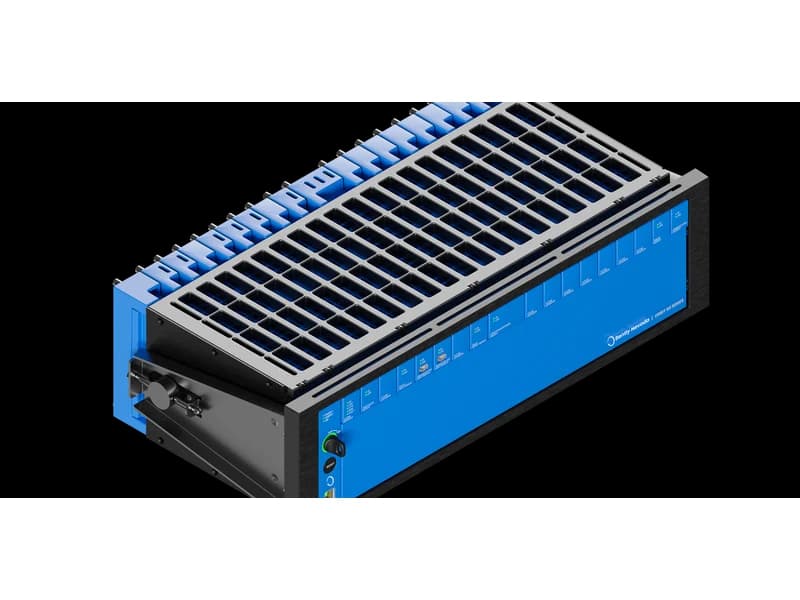
Orbit 60 Series — Next-Generation Monitoring System
Next-generation machinery protection platform with advanced cybersecurity and high channel density
- 80-88 dynamic channels
- 100x higher processing power
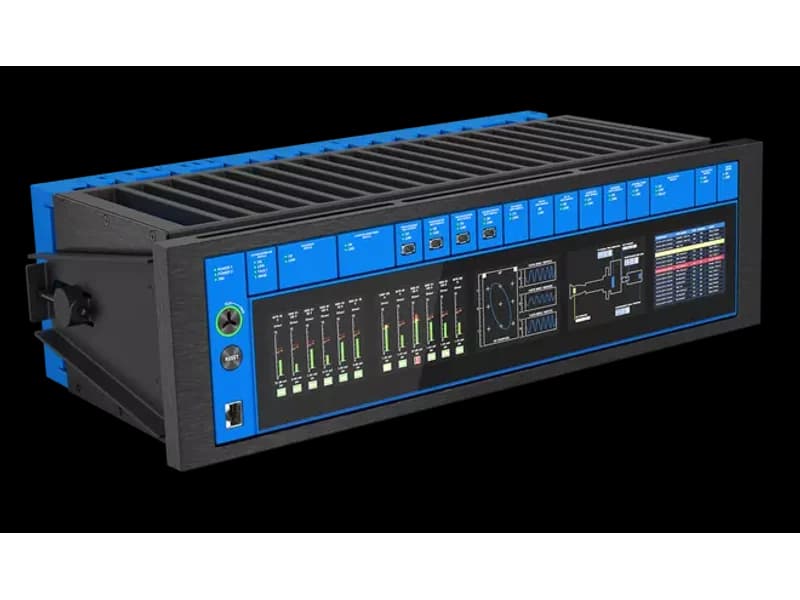
Orbit Studio — orbit studio
Configuration software for Orbit 60 and Orbit DCM distributed monitoring systems
- Orbit 60, Orbit DCM
- USB, Ethernet
Ranger Pro Sensor — wireless ISA100 node
Vibration and temperature, ISA100 wireless
- Ranger Pro Sensor
- Ranger Pro Sensor
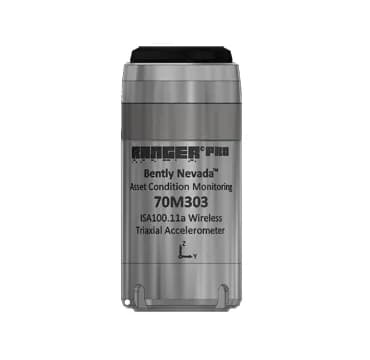
Ranger Pro — wireless vibration monitoring
Wireless vibration and temperature sensor for 24/7 equipment monitoring
- 88 mm × 40 mm
- IP67
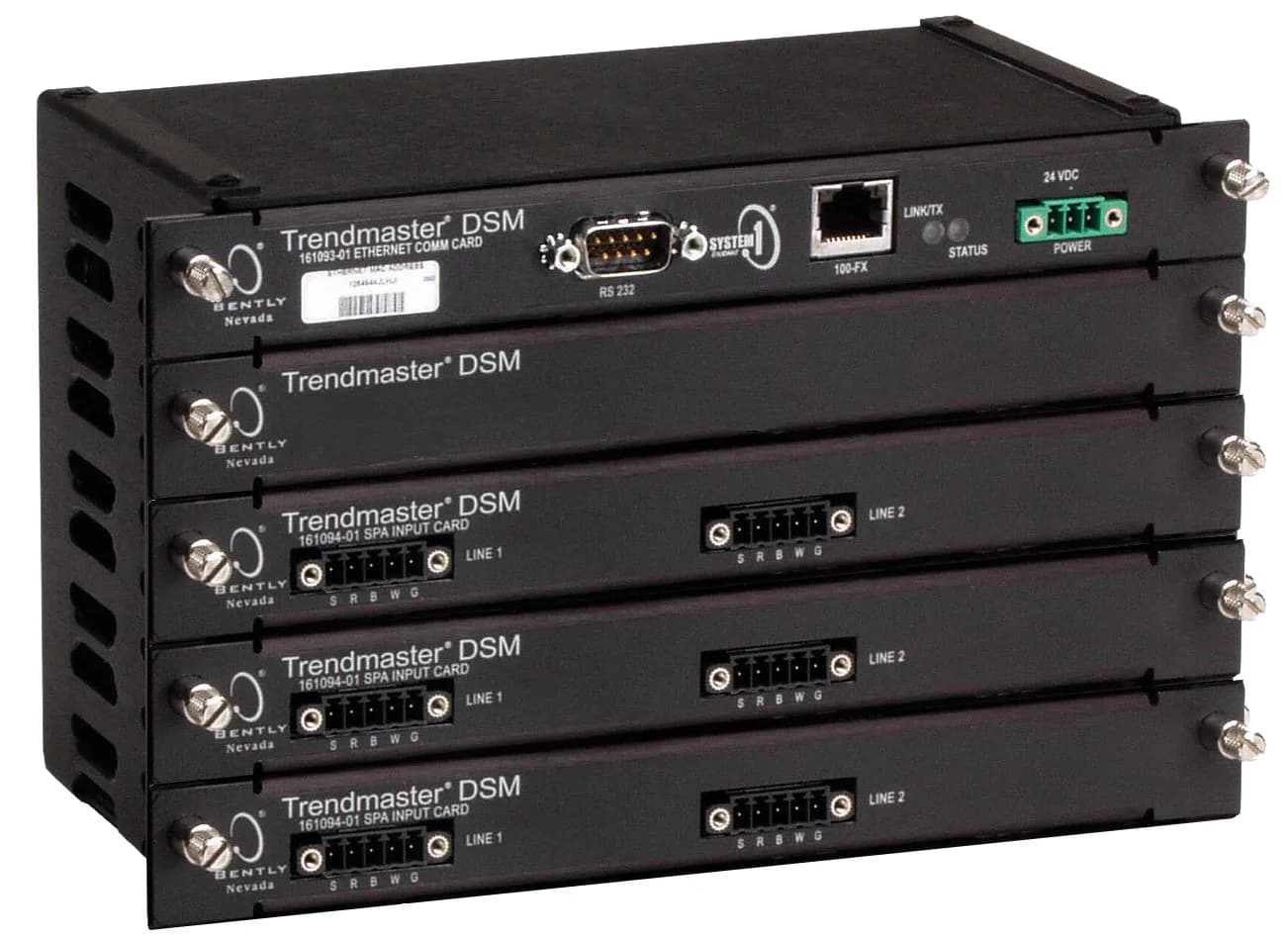
TrendMaster Pro — Tier 2 sensor bus monitoring
Sensor bus monitoring for medium-criticality (Tier 2) equipment
- Hundreds of sensors per system
- Point-to-point Sensor Bus wiring
TrendMaster Sensor Node — bus-mounted sensor
Tier 2 sensor bus node — vibration and temperature, one-cable network
- TrendMaster Sensor
- TrendMaster Sensor
vbOnline Pro — 12-channel scanning monitor
12-channel scanning monitor for rolling bearings and complex gearboxes
- 12 acquisition channels
- Acceleration, velocity
Other monitoring systems
Frequently asked questions
How is Orbit DCM different from a full-scale Orbit 60 or 3500 system?
Orbit DCM is a DIN-rail distributed solution for balance-of-plant equipment: conveyors, crushers, mineral processing plant pumps. Unlike rack-based Orbit 60 and 3500 systems, DCM mounts near the equipment itself with no dedicated equipment room, cutting cable-run costs for monitoring assets spread across a site.
What does Orbit DCM's "black box" (flight recorder) function do?
The module continuously records all 16 dynamic channels synchronously into onboard memory. On a trip event — a conveyor or crusher stopping suddenly, for example — data from before and after the event is stored locally and available for later failure-cause analysis, even if the connection to the central system was down at the time.
Is Orbit DCM suitable for installation in a pit or on mobile equipment?
Yes, DCM is designed for exactly that scenario: DIN-rail mounting, 24 VDC operation, and CSA Class I Division 2 and ATEX/IECEx Zone 2 certification for hazardous areas — making it suitable for excavators, haul trucks, and crushing-screening plants in a pit, not just stationary plant equipment.
Can Orbit DCM connect to an already-installed Orbit 60 or System 1 system?
Yes, Orbit DCM sends data over Ethernet (10/100/1000 BASE-T) and Modbus, letting you integrate its readings into the plant's overall monitoring system alongside Orbit 60 and other sources — every asset, from main equipment down to balance-of-plant, is visible in one System 1 interface.
Need advice?
Our specialists will help you choose the optimal Orbit DCM configuration for your equipment.