
Electric Motor Condition Monitoring: What It Is and Why Plants Need It
Motors drive 40–70% of plant energy use. How Artesis e-MCM and AMT Pro monitor the whole fleet from supply cables — without shaft sensors — and cut unplanned downtime in Kazakhstan industry.
Article available in Russian
The full article body is currently published in Russian. A translated version is in progress — switch to Russian for the complete text.
Read in Russian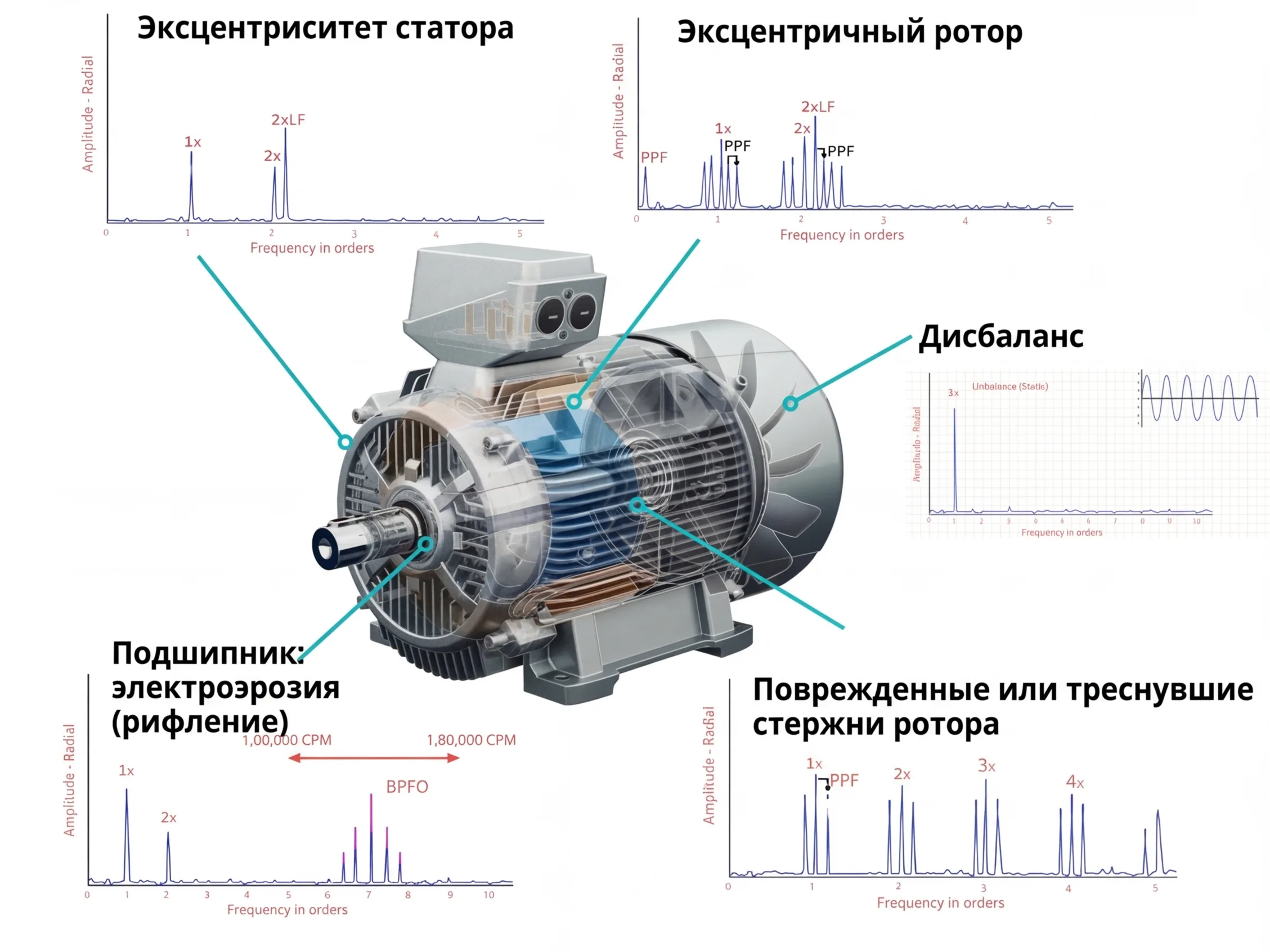
Electric motors are the heart of industry. They consume 40–70% of site electricity and drive pumps, fans, compressors, conveyors and agitators. Artesis e-MCM and AMT Pro motor monitoring is in growing demand across oil & gas, metals, mining and power in Kazakhstan and Central Asia — because one unplanned motor trip can stop an entire production area.
What motor condition monitoring is
Motor condition monitoring is continuous or periodic measurement of operating parameters to detect developing faults before they cause a shutdown. Unlike calendar-based PM, decisions are driven by actual condition. Modern systems often find defects 3–6 months ahead of failure — enough time to plan repairs.
Why traditional maintenance falls short
Run-to-failure is the most expensive path: unplanned downtime, secondary damage to bearings, couplings and driven equipment.
Preventive maintenance (PM) replaces parts on schedule whether needed or not — wasted spend plus missed defects between visits.
Predictive maintenance (PdM) intervenes only when diagnostics show a real deviation — avoiding both emergencies and unnecessary work.
What monitoring can detect
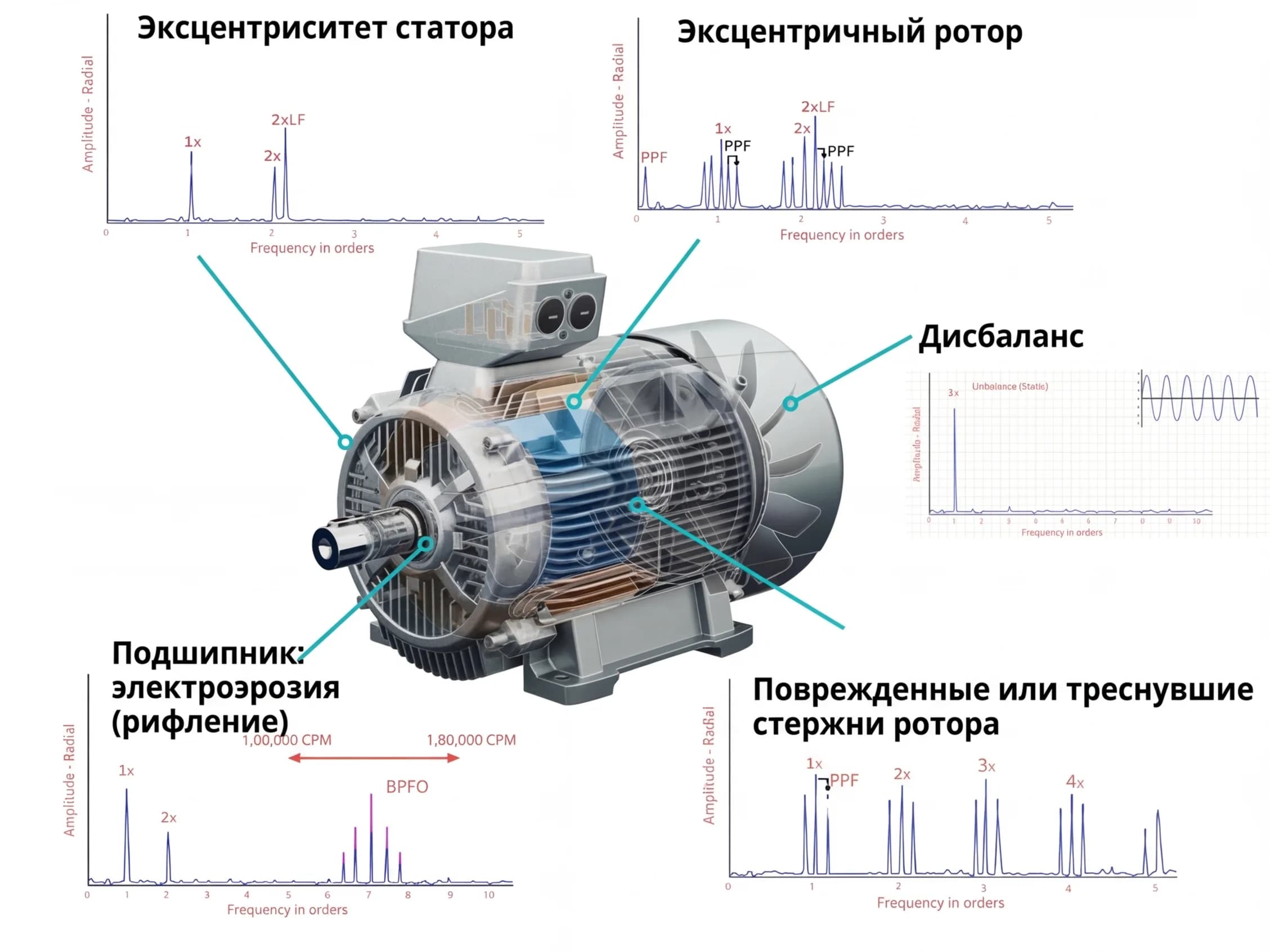
Electrical: stator faults, rotor bar damage, supply imbalance and harmonics, loose terminations.
Mechanical: bearing defects, imbalance and misalignment, coupling and gearbox issues, impeller or fan blade problems.
Process: overload, pump cavitation, changing operating conditions.
Methods compared
Vibration — strong on mechanical faults; needs sensors on the machine, difficult in hazardous areas.
Thermography — periodic hot-spot checks, not continuous trend data.
Motor current signature analysis (MCSA / ESA) — analyses three-phase current and voltage from the MCC. Finds electrical and many mechanical faults without machine-mounted sensors — ideal for enclosed, submerged or classified zones.
Artesis technology
Artesis (UK) is a global leader in electrical-signature motor monitoring. Patented machine-learning models learn “healthy” behaviour; deviations are classified by fault type.
- e-MCM — permanent online monitoring from the control panel, 24/7 on critical drives.
- AMT Pro — portable analyser for route-based surveys; full diagnosis in about 7 minutes with an immediate report.
ROI
Artesis cites payback on e-MCM for large critical machines in 2–4 months. One avoided compressor or pump trip in oil & gas or chemicals can fund the entire system.
Savings come from fewer emergency repairs (often 3–5× planned work cost), no secondary damage, right-sized PM and better motor efficiency.
Who should deploy it
Best fit when you have:
- 20–30+ critical motors
- high cost of downtime (tens of thousands of tenge per hour and above)
- assets in hazardous or hard-to-reach areas
- history of costly motor failures
- a move from PM to PdM
Typical sectors: oil & gas, chemicals, metals, mining, pulp & paper, power.
Getting started in Kazakhstan
KEG TRK is the official Artesis representative in Kazakhstan. We survey your site, prioritise critical assets, supply, commission and train your team.
KEG TRK | keg-trk.kz | info@keg-trk.kz | +7 (7172) 64-08-69