
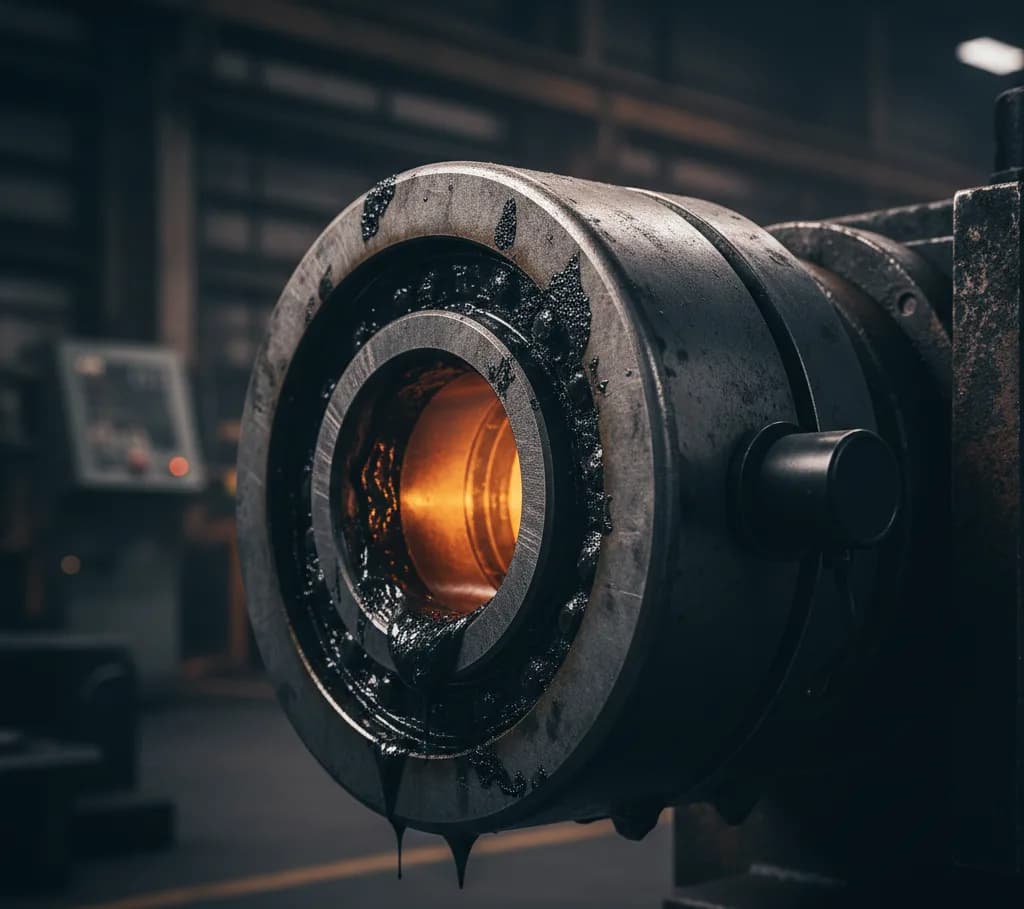
Why Motor Bearings Overheat: The Mechanic's Most Common Mistake
Find out the real reason motor bearings overheat. Why adding more grease usually makes it worse, and how acoustic lubrication control fixes it for good.
Article available in Russian
The full article body is currently published in Russian. A translated version is in progress — switch to Russian for the complete text.
Read in Russian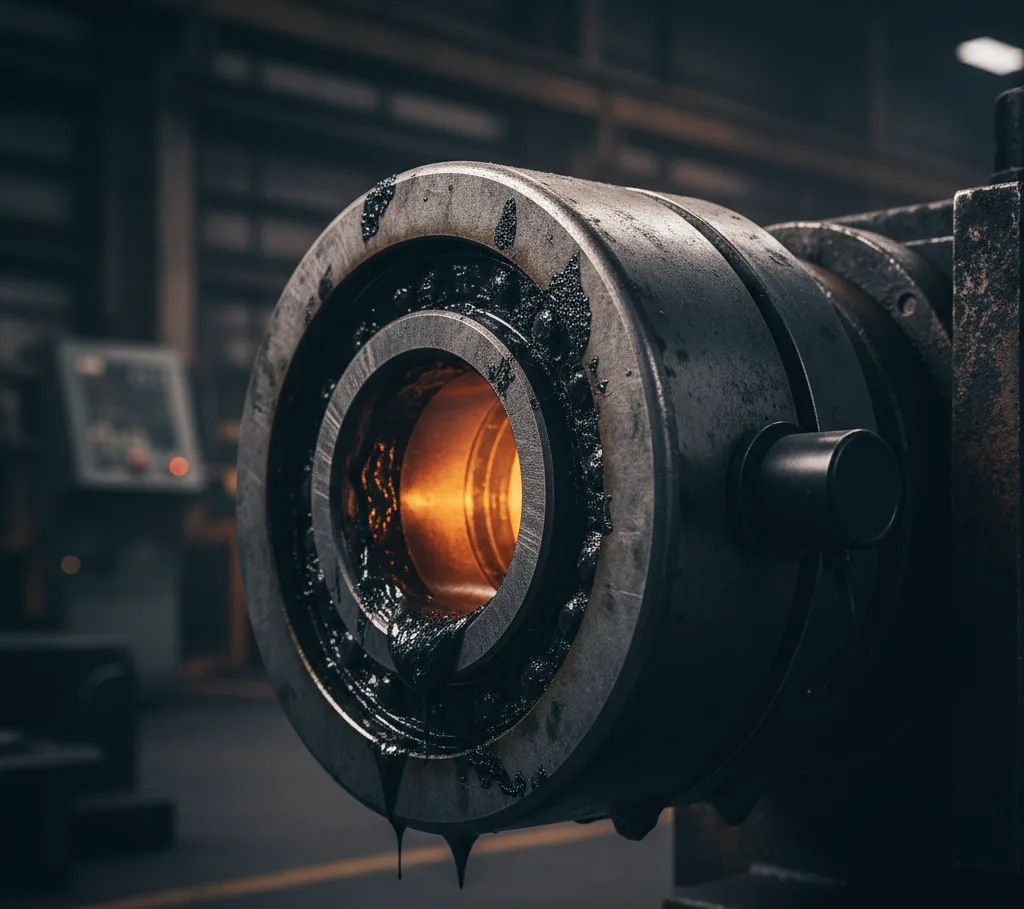
Introduction
Every reliability engineer knows the scene: an operator notices the motor housing is hot to the touch. An infrared pyrometer confirms it — the bearing shield temperature is above normal.
The first instinct of most mechanics? "It needs more grease!"
But that instinct, rooted in outdated ideas about friction, is usually a costly mistake. Let's look at why adding grease to a hot bearing is like pouring fuel on a fire — and how modern technology solves the problem.
The lubrication paradox: why do bearings overheat?
It's natural to assume overheating comes from dry metal-on-metal friction caused by a lack of grease. And indeed, insufficient lubrication does raise friction and temperature.
However, global bearing failure statistics reveal a surprising fact: more than 80% of overheating cases are caused not by too little grease, but by too much.
The churning effect
Imagine running through knee-deep water. Moving is hard work, you burn a lot of energy, and you overheat quickly. The exact same thing happens to the balls or rollers inside a bearing when there's excess grease.
When there's no free space left inside the bearing — it's completely packed with grease — the moving elements are forced to constantly churn and push grease through themselves (the churning effect). Overcoming this resistance consumes energy, which is released as heat.
How overheating kills a bearing
- Grease degradation. The base oil separates from the thickener and bleeds out. The remaining thickener bakes into a hard crust.
- Seal failure. Excess pressure and heat push the seals out of place. Dirt and moisture get free access inside.
- Winding contamination. In electric motors, excess grease is often pushed inward into the stator, damaging winding insulation and causing a short circuit.
Calendar-based lubrication: the root of the problem
Why do bearings end up over-greased in the first place? The problem lies in the traditional approach — calendar-based (scheduled) lubrication.
Recommendations like "add 15 grams of grease every 3,000 hours" are based on idealized formulas that ignore real operating conditions:
- Was the motor running at 100% load the whole time?
- What was the ambient temperature?
- How much old grease is actually still in the bearing?
A mechanic arrives with a grease gun on schedule and pumps in the calculated dose, with no idea whether the bearing actually needs it. Month after month, the bearing "overeats" and eventually starts to overheat.
Acoustic lubrication: a revolution in maintenance
The only way to break this vicious cycle is to move from blind calendar-based lubrication to condition-based lubrication.
The best indicator of friction inside a bearing is high-frequency sound (ultrasound). Unlike temperature, which is a "late symptom" — by the time a bearing is hot, damage has already begun — ultrasound reacts to a change in friction instantly.
How the SDT LUBExpert system works
The SDT LUBExpert is an automated acoustic lubrication system that "listens" to the bearing while grease is being added.
- Pre-lubrication diagnosis. You connect an ultrasonic sensor to the grease point. LUBExpert measures the friction level and tells you: does this bearing need grease at all?
- Guided mode. If lubrication is needed, the instrument recommends adding one shot from the grease gun.
- Real-time friction tracking. After each shot, the instrument analyzes how friction has changed — whether it dropped, stayed the same, or started rising.
- Precise stop point. The system automatically calculates the moment of stabilization and tells you "STOP" exactly when the ideal lubrication level is reached. Not a gram more, not a gram less.
Conclusion
If your motor bearing is overheating, stop blindly adding grease. More often than not, you're only making things worse — increasing hydraulic resistance and pushing grease into the windings.
Switching to ultrasonic control with LUBExpert lets you:
- Cut grease consumption by 30–50% (no more "blind" greasing).
- Eliminate overheating caused by the churning effect entirely.
- Prevent grease from migrating into motor windings.
Adopting acoustic lubrication is the fastest, most effective step toward reliable rotating equipment at your plant.
Read also
- 4 stages of bearing failure: catching a defect months before it breaks down
- Shaft misalignment: the hidden killer of bearings and couplings
Learn more about the SDT LUBExpert acoustic lubrication control system and book an equipment demonstration at your plant.