
Ultrasound Technology in Predictive Maintenance: Trends and the Road Ahead
Ultrasound as a predictive maintenance tool: bearing monitoring, leak detection, electrical diagnostics. Current trends and where the technology is headed.
Мақала орыс тілінде
Мақаланың толық мәтіні қазіргі уақытта орыс тілінде жарияланған. Аударма дайындалуда — толық мәтін үшін орыс нұсқасына өтіңіз.
Орыс тілінде оқуIn the Industry 4.0 era, predictive maintenance has become the foundation of reliable industrial asset operation. SDT ultrasound technology — from the portable SDT200/270/340 to the stationary Vigilant system and SonaVu acoustic cameras — detects developing faults at an early stage across eight pillars: mechanical, lubrication, leaks, electrical and others.
In this article we look at how ultrasound is applied in maintenance analytics, the trends shaping the market, and what the future of this technology in industry looks like.
How ultrasound works in maintenance
Ultrasound technology is based on detecting high-frequency sound waves beyond the range of human hearing (above 20 kHz). These signals carry valuable information about the condition of mechanical and electrical components.
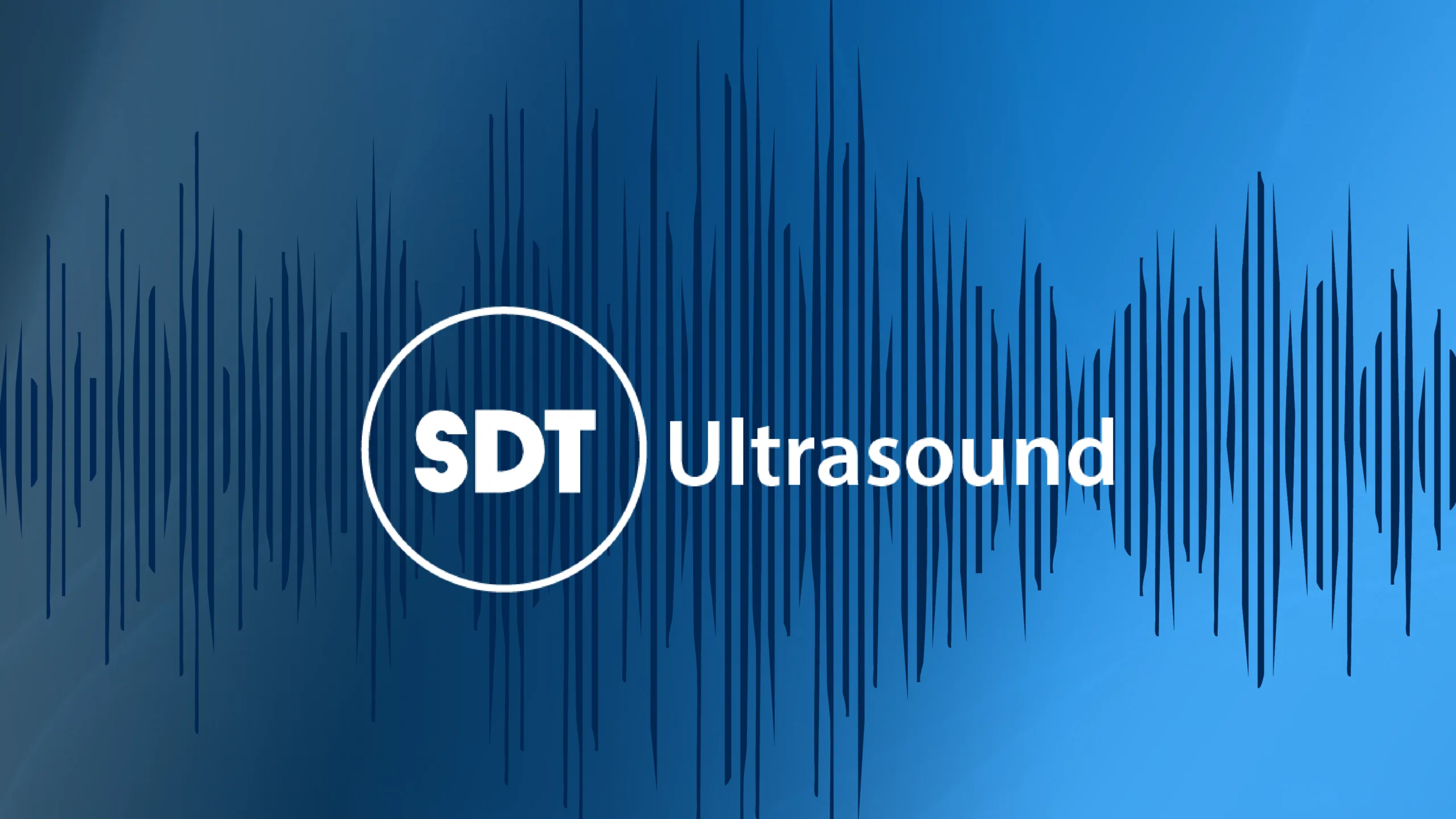
The P-F curve (from potential-failure detection to functional failure) clearly illustrates the advantage of ultrasound in predictive maintenance: ultrasonic inspection identifies a developing problem long before it causes an unplanned shutdown.
Key applications of ultrasound in industrial maintenance
1. Bearing and rotating-equipment monitoring
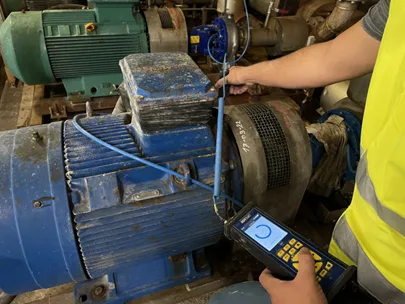
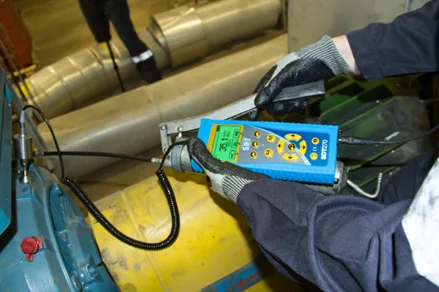
Ultrasonic sensors detect early signs of bearing wear long before critical damage occurs. Analysis of friction levels and lubrication anomalies allows plants to:
- optimize lubrication schedules
- prevent premature equipment failure
- reduce unplanned downtime
2. Detecting compressed air, steam and gas leaks
Compressed air leaks are one of the largest sources of energy loss at industrial plants. By various estimates, up to 30% of compressed air produced is lost through leaking fittings and piping.
Ultrasonic leak detectors pinpoint leaks in compressed air, gas, steam and vacuum systems with high precision, helping plants to:
- cut electricity costs
- improve compressor system efficiency
- extend equipment service life
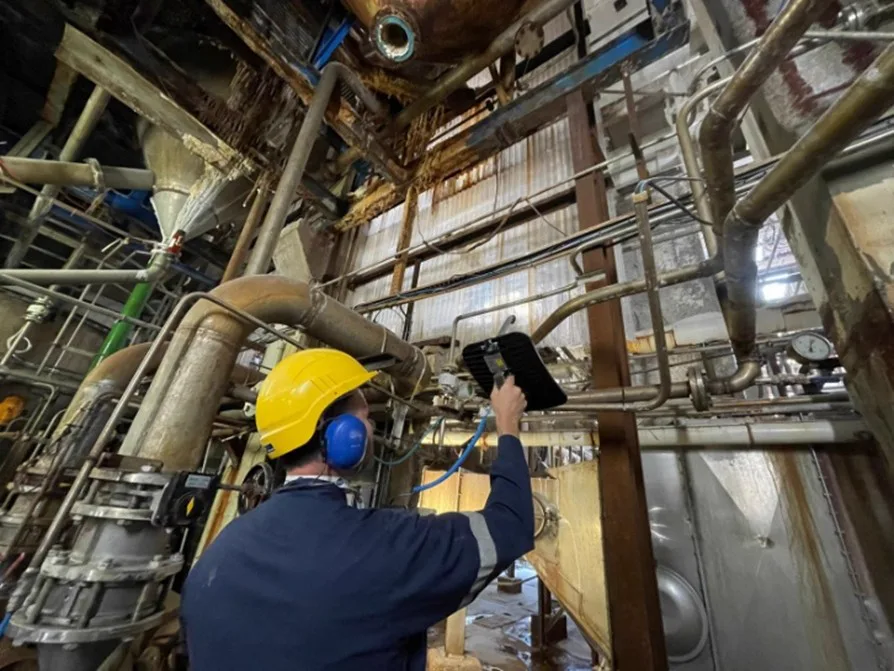
Ultrasonic cameras are a new generation of leak-detection tools. They produce a real-time visualization and let technicians find leak points 10 times faster than traditional methods.
3. Electrical inspection and fault diagnostics
Ultrasound is indispensable for detecting electrical faults: corona discharge, tracking and arcing in high-voltage systems. Catching these phenomena early helps prevent:
- insulation breakdown
- emergency electrical equipment trips
- fire risk

4. Valve and steam trap monitoring
Faulty steam traps and valves lead to significant energy losses. Ultrasonic sensors determine whether a valve is:
- leaking — loss of process fluid
- blocked — disrupting the process
- operating inefficiently — higher energy consumption
This enables timely maintenance and avoids major losses.

5. Condition-Based Lubrication
Ultrasonic lubrication monitoring ensures exactly the right amount of grease is applied — no more, no less. The benefits of this approach:
- eliminating over- and under-lubrication
- extending bearing life
- minimizing unplanned shutdowns
Current trends in ultrasound technology for maintenance
AI and machine learning
Modern ultrasonic instruments now integrate AI and machine-learning algorithms to analyze acoustic patterns and predict failures. AI-driven diagnostics reduce dependence on staff expertise and deliver real-time maintenance recommendations.
Wireless sensors and IIoT integration
Connecting ultrasonic sensors to Industrial IoT (IIoT) platforms opens up:
- remote monitoring of critical assets
- continuous data streaming to cloud analytics platforms
- elimination of manual equipment rounds
Augmented reality for maintenance staff
AR applications paired with ultrasound technology visualize diagnostic data directly on the equipment. Technicians see the data through AR glasses and make faster, more accurate decisions.
Cloud-based data management for ultrasound monitoring
Cloud platforms make it possible to store, analyze and compare historical trends in ultrasonic measurements. This creates a foundation for long-term asset management decisions and optimal maintenance strategies.
Miniaturization and improved sensor accuracy
Modern ultrasonic sensors keep getting smaller, more sensitive and more accurate. Even minor anomalies in mechanical and electrical systems can now be detected at an early stage.
The outlook for ultrasound technology in equipment maintenance
Fully autonomous predictive maintenance systems
The convergence of AI, IIoT and ultrasound is leading to self-learning maintenance systems that require minimal human involvement. These systems continuously monitor equipment and automatically trigger work orders when early signs of degradation are detected.
Digital twins and ultrasound data
Ultrasonic monitoring data will increasingly feed into digital twins — virtual models of physical assets. This will make it possible to model and predict equipment failures with high precision before they actually occur.
Edge computing for real-time analysis
Processing data at the source (edge computing) reduces latency, improves security and speeds up response times for predictive maintenance systems. This matters most for remote sites with limited internet connectivity.
Expanding AI-based fault classification
As AI models mature, ultrasonic signals will be classified into fault types with greater precision. Maintenance specialists will receive detailed diagnostic findings and prescriptive recommendations, significantly speeding up decision-making.
Expansion into new industries
While ultrasound technology today is widely used in manufacturing, power generation and oil & gas, its potential will increasingly be applied to:
- smart buildings — monitoring building services
- transportation — diagnosing rolling stock
- infrastructure — condition monitoring of bridges, pipelines and railway tracks
Conclusion
Ultrasound technology has become an integral part of modern industrial maintenance strategy. It allows plants to move away from reactive "fix it when it breaks" maintenance toward a genuine predictive approach.
The growth of AI, IIoT, edge computing and digital twins is making ultrasonic monitoring ever more intelligent, accessible and effective. Companies investing in these technologies today gain a competitive edge: asset reliability, operational efficiency and reduced unplanned downtime.
KEG TRK is the official distributor of SDT Ultrasound Solutions in Kazakhstan. We supply the SDT200, SDT270 and SDT340 ultrasonic instruments and help industrial plants implement predictive maintenance strategies based on ultrasonic inspection.
Мақаладағы жабдық
SDT200 - Базовый ультразвуковой детектор
Базовый ультразвуковой детектор для всех стандартных применений
SDT270 - Ультразвуковой детектор с памятью
Цифровой ультразвуковой детектор с возможностью записи данных и спектрального ан...
SDT340 - Продвинутый ультразвуковой детектор
Самый продвинутый ультразвуковой детектор для сбора, анализа и трендирования дан...