
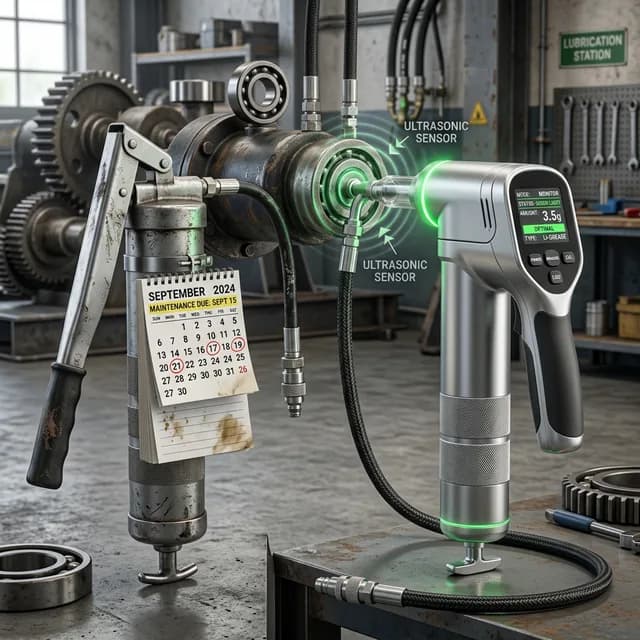
Как выбрать пластичную смазку для подшипников: NLGI, температура, совместимость
Практика подбора пластичной смазки для подшипников качения: класс NLGI, вязкость базового масла, загуститель, температура и почему «универсальная» банка с полки часто губит узел.
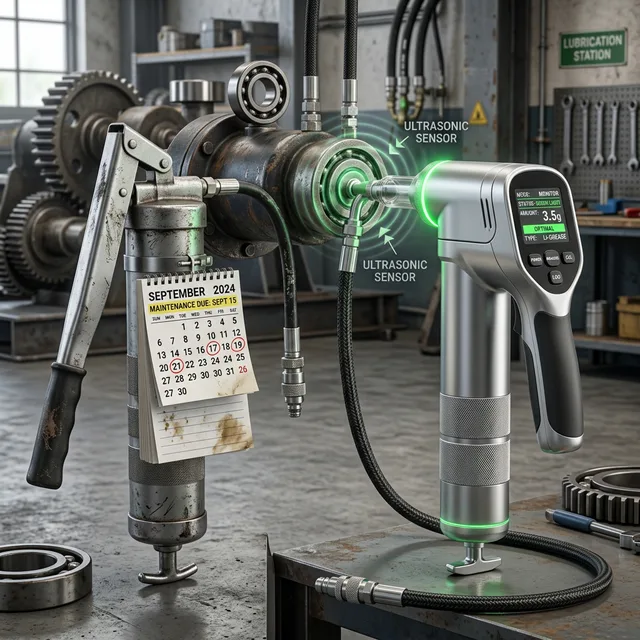
В поиске «пластичная смазка для подшипников» и «как выбрать смазку» обычно ждут одну «лучшую» марку. Её нет. Есть правильный подбор под скорость, температуру, нагрузку и способ подачи — и жёсткое правило: не смешивать то, что несовместимо.
Эта статья — практический каркас выбора для инженера ТОиР. Бренд прибора здесь вторичен: сначала материал, потом контроль дозы.
Из чего состоит пластичная смазка
Упрощённо:
- Базовое масло — создаёт плёнку между телами качения и дорожкой.
- Загуститель — «губка», которая удерживает масло в узле.
- Присадки — противоизнос, антикоррозия, EP, устойчивость к воде и т.д.
Подшипнику нужна прежде всего правильная плёнка масла. Загуститель — средство доставки и удержания, а не «чем больше, тем лучше».
Класс NLGI: густота имеет значение
Класс NLGI описывает консистенцию (пенетрацию). Для подшипников качения чаще всего:
| NLGI | Когда уместно |
|---|---|
| 1 | Низкие температуры, централизованные системы, колебательные движения |
| 2 | Базовый выбор для большинства промышленных подшипников |
| 3 | Крупные подшипники, вертикальный вал, сильная вибрация, высокая температура окружающей среды |
«Гуще = надёжнее» — миф. Слишком жёсткая смазка на высоких оборотах даёт лишние потери и нагрев; слишком мягкая — вытекает и оставляет сухой контакт.
Оборудование по теме статьи
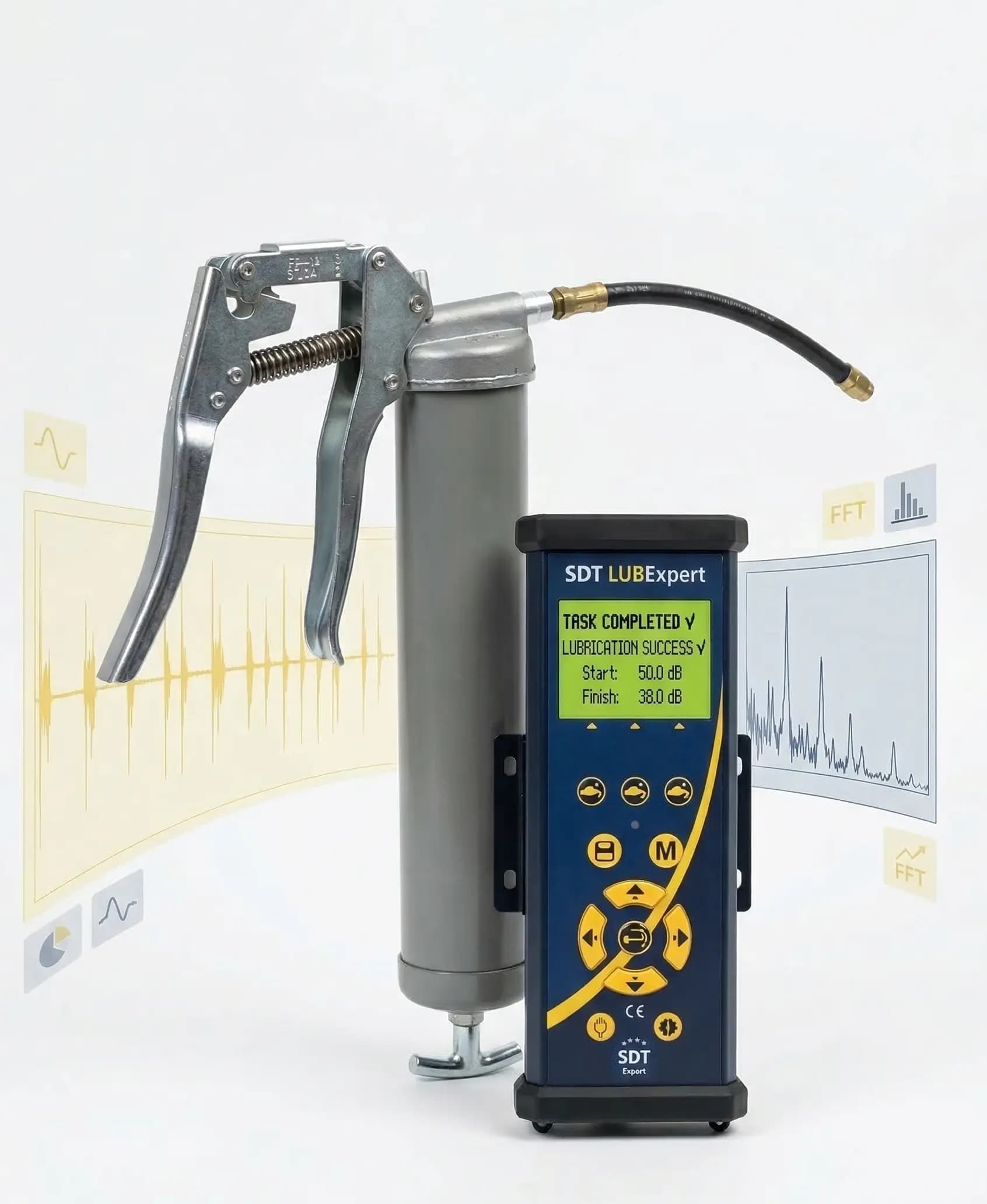
LUBExpert — ультразвуковой ассистент смазки подшипников SDT
Прибор SDT для точной смазки подшипников качения по ультразвуку: подсказывает, когда добавить смазку и когда остановиться, ведёт по маршруту из UAS3 и выдаёт итог GOOD…
Температура и вязкость базового масла
Ориентиры (уточняйте по паспорту смазки и узла):
- Обычный цех, до ~+80…+100 °C — минеральные литиевые NLGI 2 часто достаточны.
- Выше +120…+150 °C — литий-комплекс, полимочевина, специальные высокотемпературные составы; интервал обслуживания короче.
- Ниже −20…−30 °C — синтетика с низким моментом страгивания, часто NLGI 1–2.
- Высокий скоростной фактор (DN) — относительно низкая вязкость базового масла; иначе churning и перегрев.
Если подшипник электродвигателя «вечно горячий» после шприцевания — сначала проверьте не марку «по Circu», а объём и класс консистенции. См. также почему греется подшипник электродвигателя.
Загуститель и среда
- Литиевые / литий-комплекс — широкий промышленный стандарт.
- Кальциевые / комплексные кальциевые — лучше держатся при воде и вымывании.
- Полимочевина — часто в электродвигателях и высокотемпературных узлах (смотрите совместимость!).
- Пыль, руда, цемент — важны уплотнения и чистота точки; «чудо-смазка» не спасёт грязный ниппель.
Совместимость: главная ловушка склада
Смешивание несовместимых загустителей даёт размягчение или, наоборот, «камень», потерю маслоотделения и локальный сухой контакт. Практические правила:
- Одна точка смазки — одна утверждённая марка.
- Смена типа — промывка / полный вытеснение по процедуре производителя, не «долили поверх».
- Цвет банки не означает совместимость.
Отдельный разбор — в статье несовместимость пластичных смазок.
Алгоритм выбора за 5 минут
- Откройте паспорт оборудования / карту смазки — приоритет №1.
- Зафиксируйте: скорость (об/мин), размер подшипника, нагрузку, температуру, влажность/пыль, ориентацию вала.
- Выберите NLGI (обычно 2) и подходящую вязкость базового масла.
- Проверьте совместимость с уплотнениями и с тем, что уже в узле.
- Зафиксируйте марку в программе смазки, чтобы смена не «улучшила» узел другой банкой.
Калькуляторы производителей подшипников (например, SKF LubeSelect) полезны как второй голос, но не отменяют паспорт узла.
Выбор смазки ≠ правильная доза
Даже идеальная пластичная смазка убивает подшипник при пересмазке. Норма по формуле — ориентир; реальное состояние узла меняется от смены к смене. Поэтому зрелые программы переходят на смазку по состоянию: слушают трение и останавливают подачу вовремя.
На маршрутах для этого используют LUBExpert — прибор акустического контроля смазки SDT. Он не выбирает марку за вас, но не даёт «добить» узел лишними качками после того, как плёнка уже восстановлена.
KEG TRK помогает предприятиям Казахстана выстроить программу: карта точек, марка, норма, контроль. Заявка на консультацию.
Оборудование в статье
Цены и сроки поставки в Казахстан KEG TRK сообщает по запросу. Подготовим коммерческое предложение под вашу задачу.
LUBExpert — ультразвуковой ассистент смазки подшипников SDT
Прибор SDT для точной смазки подшипников качения по ультразвуку: подсказывает, когда добавить смазку и когда остановиться, ведёт по маршруту из UAS3 и выдаёт итог GOOD…
Читайте также
14.10.2026
Сколько смазки закладывать в подшипник: формула и расчёт
Для пополнения сбоку подшипника SKF даёт формулу Gp = 0,005 × D × B (граммы; D — наружный диаметр, B — ширина, мм). Сам подшипник при монтаже заполняют полностью, свободный объём корпуса — на 40%.
25.07.2026
Автоматическая vs ручная смазка подшипников: что выбрать
Сравнение ручной маршрутной смазки, лубрикаторов по времени и автоматической смазки по состоянию. Когда достаточно шприца, а когда нужен ON-GUARD.
25.07.2026
Что такое акустическая смазка подшипников и чем она лучше календаря
Простыми словами: акустическая (ультразвуковая) смазка — это подача пластичной смазки по уровню трения, а не по дате в регламенте. Как это работает и кому подходит.