

Pillar 6 of 8 · SDT Ultrasound Solutions methodology
Ultrasonic Internal Leak Detection in Hydraulic Systems
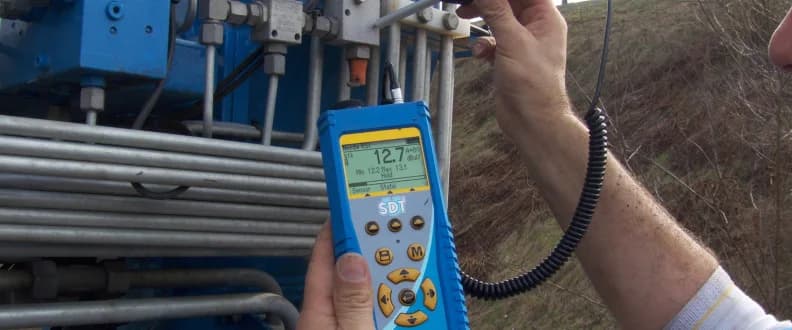
Ultrasonic testing of hydraulic systems solves a problem other methods cannot: detecting internal leaks in valves and cylinders without disassembly or depressurizing. Internal oil bypass reduces actuator force and speed, increases heat generation, and accelerates oil degradation — yet remains invisible to visual inspection.
Oil bypassing through a defective seal or valve creates a turbulent flow with a characteristic ultrasonic noise. Detectors with contact sensors register this signal through the component housing, precisely pinpointing the source of the internal leak. The same principle applies to diagnosing pump cavitation and detecting gear defects in hydraulic motors.
KEG TRK supplies SDT Ultrasound Solutions detectors for hydraulic system testing at mining, metallurgical, oil, and manufacturing enterprises across Kazakhstan. Training in the ultrasonic hydraulics testing methodology is included with every delivery.
Applications of Ultrasound for Hydraulic System Testing
One instrument — full diagnostics of the entire hydraulic system.
Internal and External Leak Detection
Internal leaks in hydraulic valves and cylinders create a turbulent flow detectable by ultrasound. External leaks through seals are detected by the high-frequency signal of escaping oil.
Hydraulic Pump Diagnostics
Cavitation, gear wear, and relief valve wear in a pump produce characteristic ultrasonic signals. Detects pump degradation at an early stage — before performance loss and failure.
Hydraulic Valve Testing
Relief, safety, and control valves — detecting oil bypass through a closed valve without disassembly. The hydraulic ultrasonic signal clearly indicates a leak.
Hydraulic Cylinder Inspection
Seal wear in hydraulic cylinders leads to internal oil bypass and loss of force. An ultrasonic sensor on the cylinder housing detects the bypass signal long before a visible drop in performance.
How to Perform Ultrasonic Hydraulic System Testing
Three steps from sensor to maintenance plan.
Place the Sensor on the Hydraulic Component
Use a magnetic contact sensor on the housing of a valve, pump, or cylinder. A special clamp adapter is available for pipelines. The instrument is ready to measure within 30 seconds.
Record the Signal Level
A healthy component shows a low baseline signal level. An internal leak or cavitation produces a characteristic rise in signal. Compare against the baseline or the standard for that type of component.
Log the Data and Plan Maintenance
The instrument saves measurements with a timestamp and coordinates. A rising trend signals that the component should be added to the maintenance plan. A sharp rise calls for immediate replacement.
Benefits of Ultrasonic Hydraulic System Testing
Uncovering hidden losses and preventing hydraulic system failures at plants across Kazakhstan.
Detecting Invisible Internal Leaks
Internal oil bypass in valves and cylinders is not visible from outside and shows up only as hot oil and lost force. Ultrasound finds the specific valve or cylinder without disassembly.
Diagnostics Under Operating Pressure
Inspection is performed on a running hydraulic system under operating pressure. There is no need to depressurize, drain oil, or disassemble components.
Preventing Sudden Failures
Progressive degradation of hydraulic components is detected months before failure. Planned replacement instead of emergency repair — savings on parts and downtime.
Reducing Hydraulic Oil Loss
Early detection of seal leaks reduces losses of costly hydraulic oil and prevents contamination of the production environment.
One Instrument — the Entire Hydraulic System
A detector with a contact sensor diagnoses pumps, valves, cylinders, and piping. No need for separate specialized instruments for each component type.
Fast Localization
A directional sensor sequentially checks every hydraulic component along a route. The source of the problem is localized to a specific valve or cylinder in a single round.
Want to Uncover Hidden Losses in Your Hydraulic Systems?
KEG TRK specialists will select the optimal kit for your type of hydraulic equipment.
Get a ConsultationInstruments for Hydraulic System Testing
From the entry-level ULTRAChecker to the professional SDT340.
SDT340
ProfessionalA multi-sensor platform with ultrasound, vibration, and an IR thermometer. Maximum hydraulic system diagnostics.
Suited for: Critical hydraulic systems
SDT270
Data and TrendsA data collector with signal recording and trends in Ultranalysis Suite 3 for a hydraulics monitoring program.
Suited for: PdM program, degradation trending
ULTRAChecker
Easy StartA specialized detector for basic hydraulic system testing and leak detection.
Suited for: Basic hydraulics inspection
SDT200
For BeginnersA basic detector with an immediate indicator to start a hydraulics testing program.
Suited for: First step, small fleet
Explore the Other Pillars of Ultrasonic Testing
The SDT methodology covers 8 areas — one instrument solves every task.
Frequently Asked Questions About Ultrasonic Hydraulic Testing
Need advice?
Our specialists will help you choose the optimal detectors for hydraulic system testing configuration for your equipment.