
5 типичных дефектов электродвигателей: как ESA находит их за 7 минут
Дисбаланс, подшипники, ослабление крепления, дефекты обмотки и ротора — разбор того, как Artesis AMT Pro и e-MCM выявляют каждый из пяти дефектов по токовой сигнатуре без датчиков на машине.
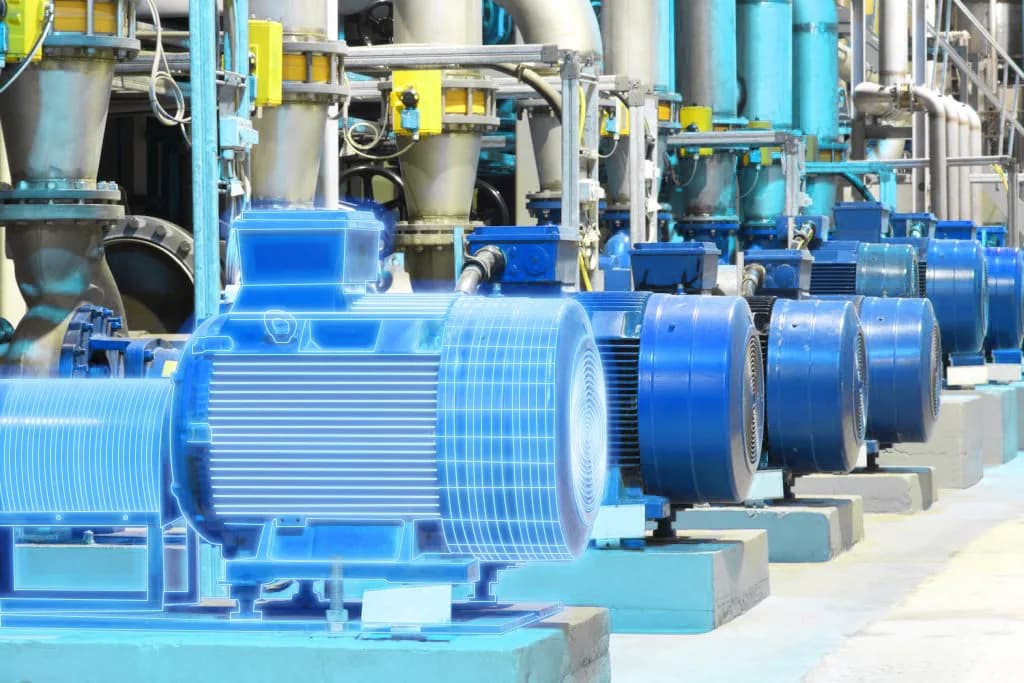
На промышленном предприятии более 60% внеплановых остановок вспомогательного оборудования связаны с электродвигателями и приводами. Вибродиагностика решает часть задач, но требует доступа к валу, датчиков и квалифицированного аналитика. Electrical Signature Analysis (ESA) — анализ тока и напряжения в силовом кабеле — позволяет увидеть механические и электрические дефекты без остановки машины и без датчиков на корпусе.
Системы Artesis AMT Pro (маршрутная диагностика) и Artesis e-MCM (онлайн-мониторинг) используют ESA и выдают заключение за 5–7 минут на один агрегат.
1. Дисбаланс и смещение ротора
Симптомы на производстве: повышенная вибрация, ускоренный износ подшипников, шум на рабочей частоте.
Что видит ESA: характерные боковые полосы вокруг основной частоты сети (50 Гц), пропорциональные скорости вращения. При смещении ротора относительно статора появляются дополнительные компоненты, отличающиеся от чистого дисбаланса.
Практика: на конвейерах ГОК дисбаланс натяжного барабана часто маскируется под «проблему подшипника». ESA разделяет механические причины без разборки привода.
2. Износ подшипников
Симптомы: нарастающий шум, локальный нагрев, в крайних случаях — заклинивание ротора.
Что видит ESA: модуляция тока на частотах, связанных с геометрией подшипника (BPFO, BPFI, BSF, FTF). Алгоритм Artesis сопоставляет сигнатуру с базой из 10+ млн эталонных дефектов.
Преимущество перед вибрацией: не нужен доступ к подшипниковому узлу — достаточно щита управления. Особенно ценно для погружных насосов, где вибродатчик поставить сложно.
Оборудование по теме статьи
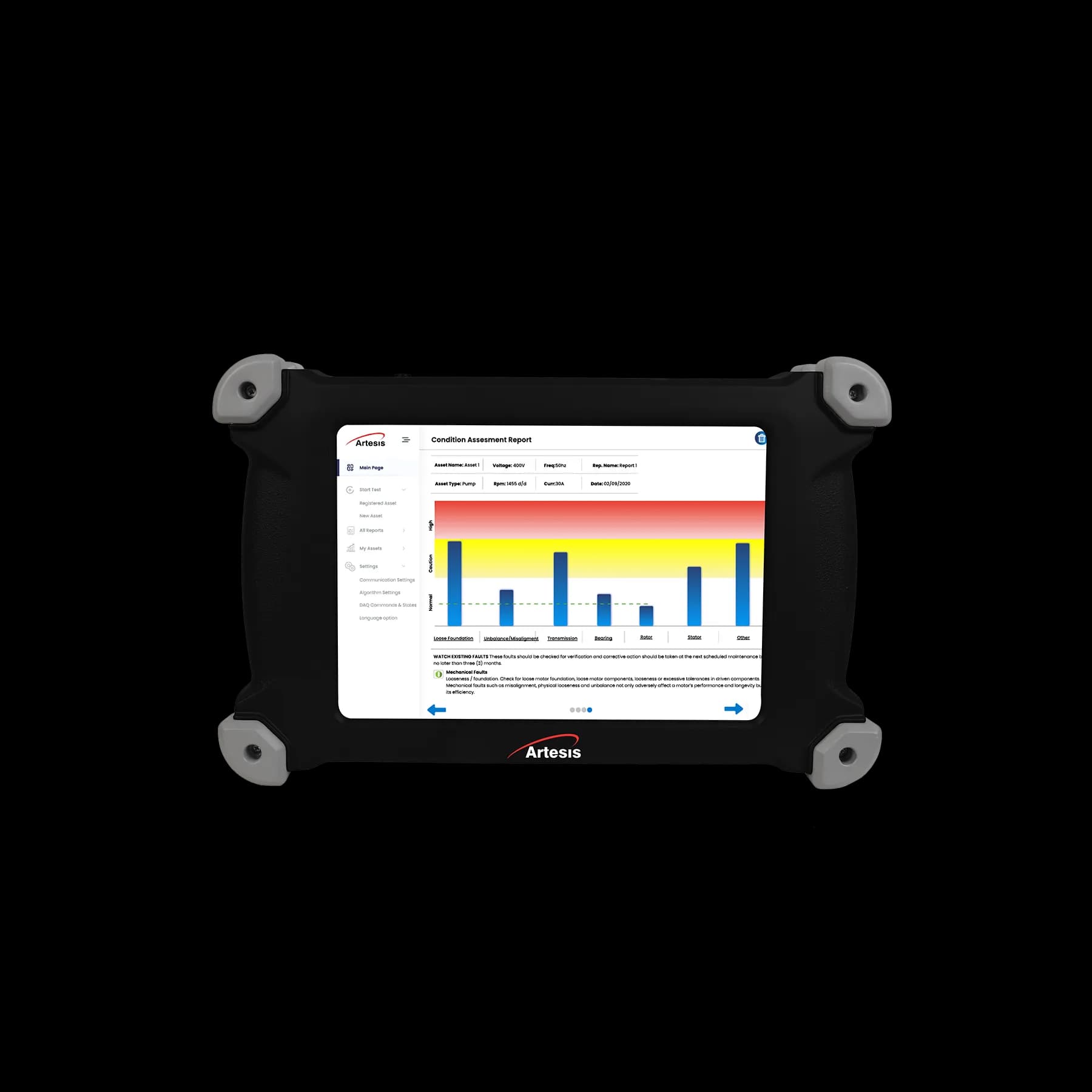
Artesis AMT Pro - Портативный тестер электродвигателей
Портативная система диагностики электродвигателей без датчиков с AI-анализом
3. Механическое ослабление (болты, лапы, фундамент)
Симптомы: «плавающая» вибрация, биение по фазе, периодические удары.
Что видит ESA: нестабильность амплитуды и фазы токовых компонент, характерные для ослабленного крепления статора или базы. Часто сочетается с дисбалансом после ремонта «на скорую руку».
Совмещение с SDT: ультразвук на SDT340 фиксирует ослабление на ранней стадии по акустике трения — см. интеграцию SDT + Artesis.
4. Дефекты обмотки статора
Симптомы: перегрев, падение КПД, срабатывание защит, запах изоляции.
Что видит ESA: асимметрия фаз, рост гармоник, признаки межвиткового замыкания и ослабления изоляции до теплового разрушения.
Для ТЭЦ и металлургии: вспомогательные насосы и вентиляторы с частыми пусками особенно уязвимы. Онлайн-мониторинг e-MCM даёт тренд и алерт за месяцы до отказа.
5. Дефекты ротора (полосы, стержни, контактные кольца)
Симптомы: пульсация момента, рывки, нестабильный ток при постоянной нагрузке.
Что видит ESA: боковые полосы на частотах проскальзывания (slip frequency) — «отпечаток» повреждённых стержней или контактных колец.
На мельницах и дробилках это один из самых дорогих отказов. Кейс мониторинга мельниц ГОК показывает, как ESA выявляет дефект ротора при «нормальной» вибрации.
Сравнение: маршрут vs онлайн
| Задача | Инструмент | Когда |
|---|---|---|
| Обследовать 50+ машин за смену | AMT Pro | Старт программы PdM, аудит парка |
| Критичные приводы 24/7 | e-MCM | После пилота на ключевых агрегатах |
| Несколько площадок | Artesis IoT | Централизация данных |
Подробнее о поэтапном внедрении — в статье «Трёхуровневая стратегия PdM: AMT → e-MCM → IoT».
Где начать на предприятии в Казахстане
- Составьте список критичных двигателей (простой = остановка участка).
- Проведите маршрут AMT Pro — 7 минут на машину, без остановки.
- На 3–5 худших агрегатах запустите пилот e-MCM на 90 дней — пошаговый план.
- Дополните программу ультразвуковым маршрутом SDT для подшипников, паропроводов и утечек — дорожная карта SDT + Artesis.
KEG TRK — официальный поставщик Artesis и SDT в Казахстане. Для демонстрации AMT Pro на вашем оборудовании: info@keg-trk.kz, +7 (7172) 64-08-69.
Оборудование в статье
Цены и сроки поставки в Казахстан KEG TRK сообщает по запросу. Подготовим коммерческое предложение под вашу задачу.
Artesis AMT Pro - Портативный тестер электродвигателей
Портативная система диагностики электродвигателей без датчиков с AI-анализом
e-MCM
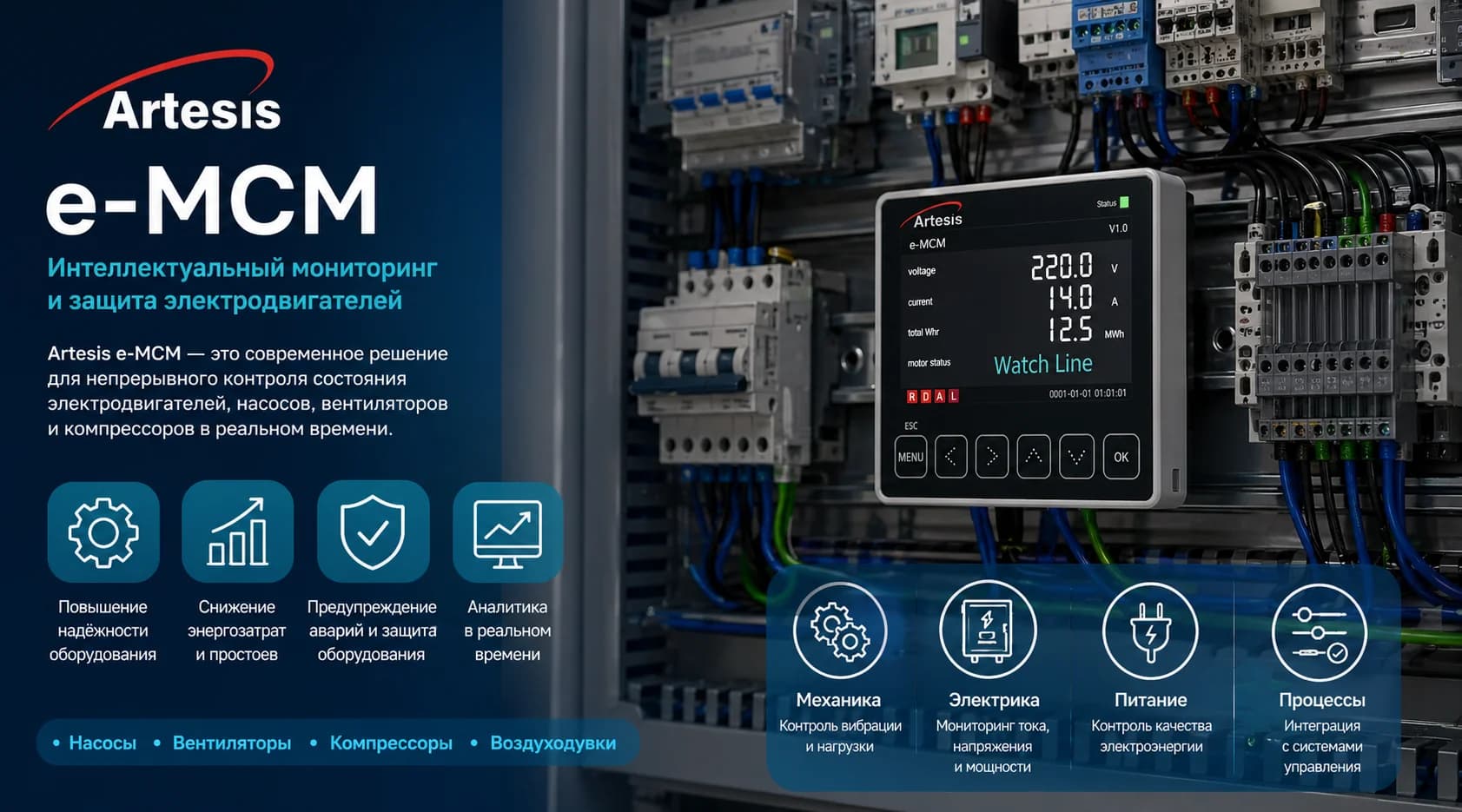
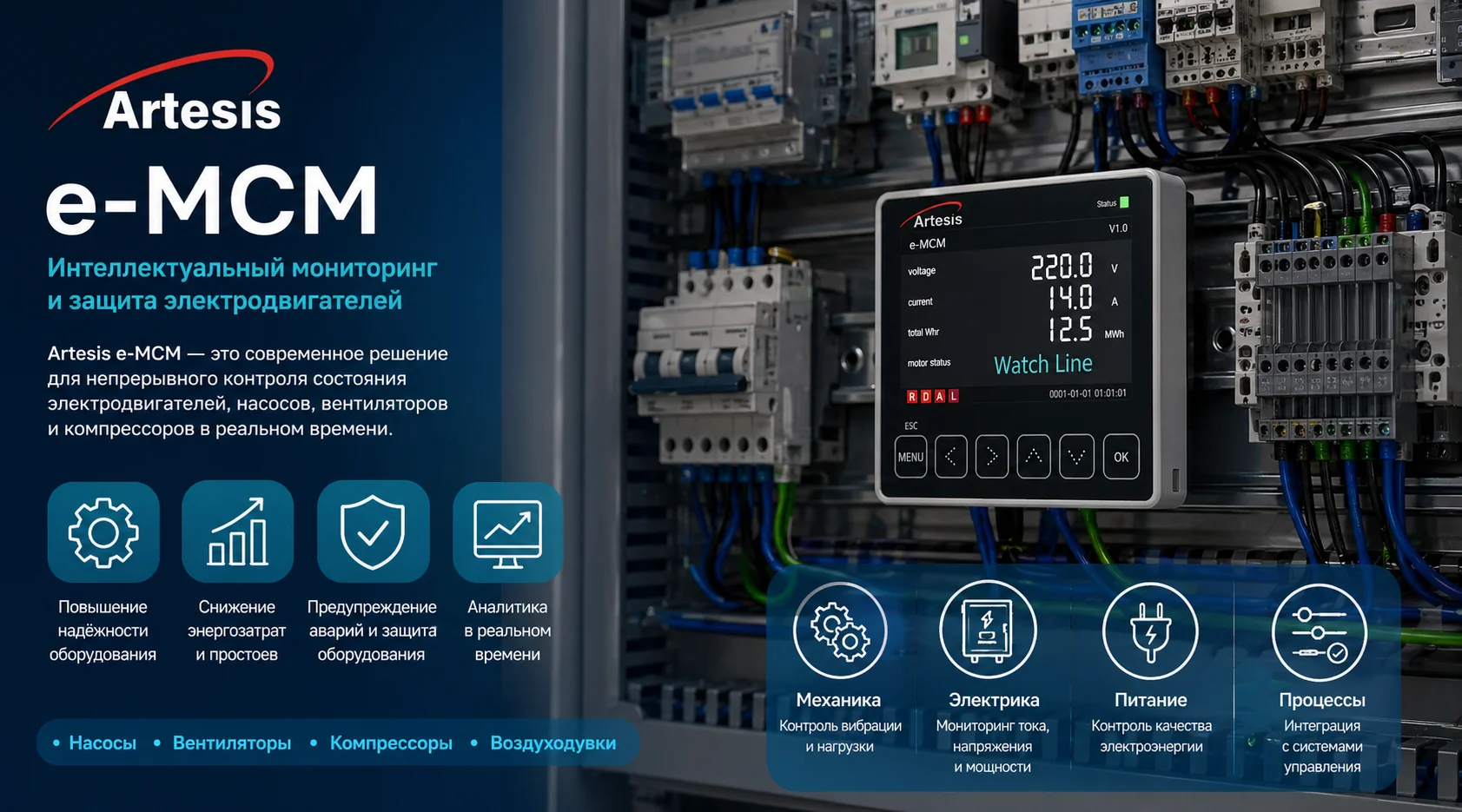
Онлайн мониторинг электродвигателей без датчиков
Читайте также
17.07.2026
ESA, MCSA и вибродиагностика: что выбрать для вспомогательного оборудования ТЭЦ
Сравнение трёх методов предиктивной диагностики для насосов, вентиляторов и конвейеров энергоблоков: когда достаточно ESA Artesis, когда нужна вибрация Bently Nevada, и чем MCSA отличается от полноценного ESA.
30.06.2026
Пилот Artesis e-MCM за 90 дней: пошаговый план внедрения на промплощадке
Как запустить пилотный проект e-MCM за 3 месяца: выбор активов, монтаж, self-learning, верификация тревог и решение о масштабировании — чеклист для инженера по надёжности в Казахстане.
17.07.2026
Гармоники в промышленных электроприводах: причины, последствия и диагностика ESA
ПЧ, выпрямители, трансформаторы и несимметрия сети создают гармоники в токе двигателя. Как Artesis e-MCM отличает «электрический шум» от развивающегося механического дефекта и когда гармоники сами сигнализируют об опасности.