
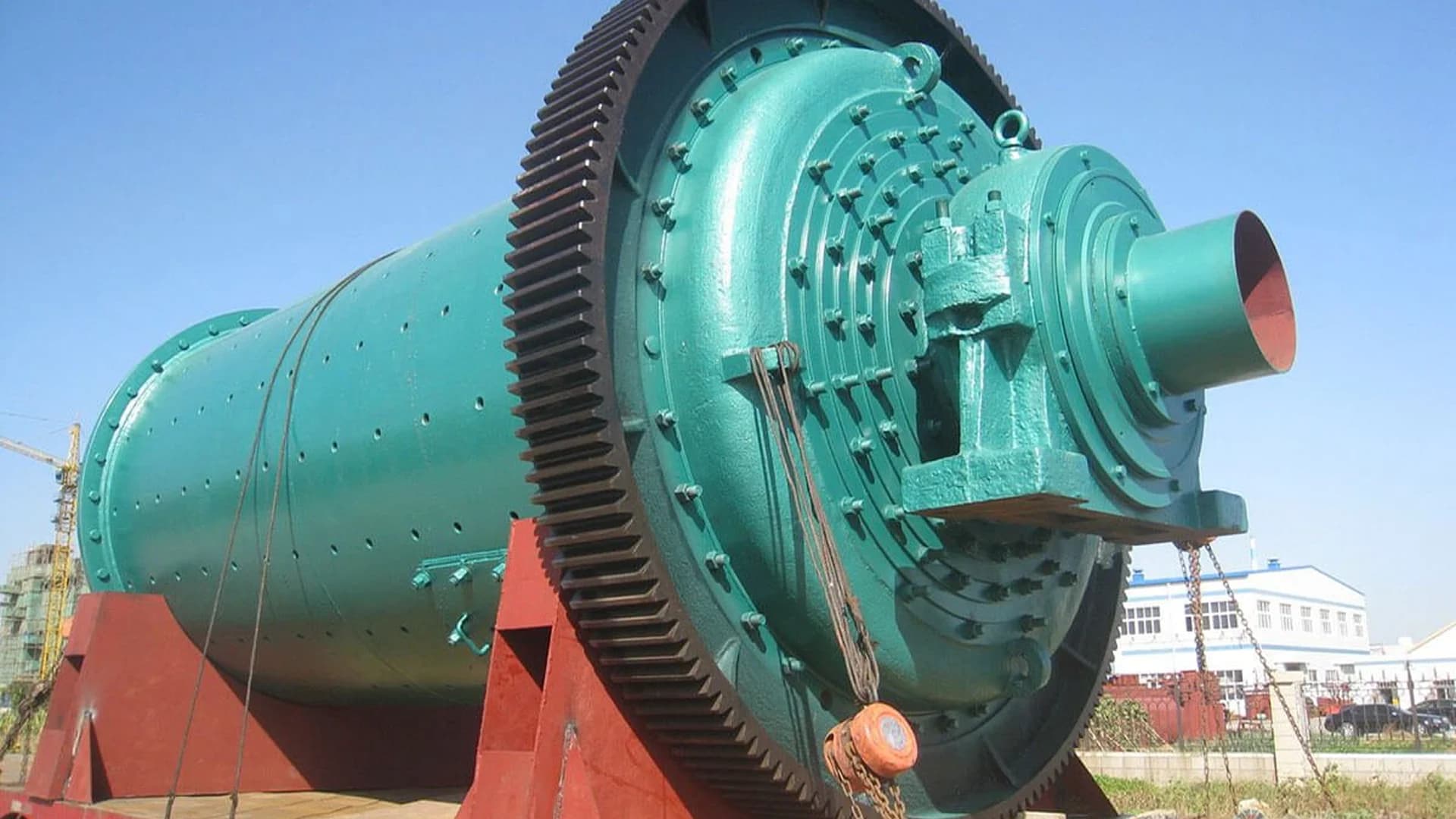
Ультразвук на малых скоростях: как диагностировать редуктор 0,1 об/мин
Вибродиагностика на скоростях ниже 10 об/мин часто даёт ложные выводы. Разбор реального кейса: сломанный зуб шестерни 2,95 об/мин, зафиксированный SDT340 там, где FFT вибрации не помог.
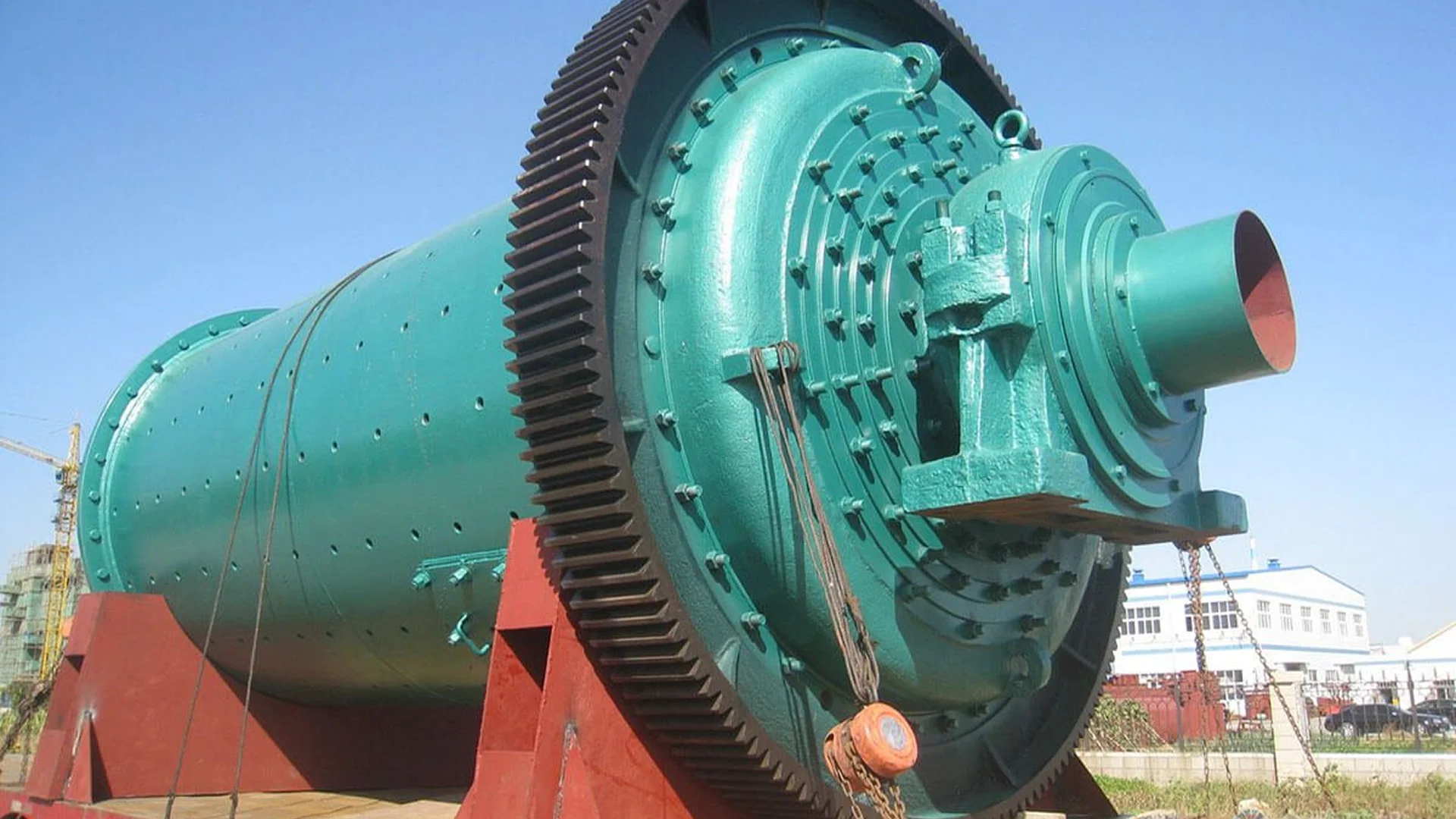
Почему вибрация «не видит» медленные машины
Оборудование с низкой скоростью вращения — декантеры, приводы конвейеров, редукторы цементных мельниц, секции прокатных станов — notoriously сложно для виброанализа. Энергия сигнала мала, период оборота длинный, а для уверенного FFT нужен квалифицированный аналитик и длительная запись.
Ультразвуковой мониторинг измеряет не скорость вала напрямую, а трение и удары — они присутствуют при любой скорости. Именно поэтому SDT рекомендует для точных измерений запись не менее трёх полных оборотов актива.
Кейс: декантер очистных сооружений ЦБК
На целлюлозно-бумажном комбинате подозревали отказ либо пиньона (2,95 об/мин), либо большой шестерни (0,1 об/мин) в приводе декантера сточных вод.
Кинематика привода
| Узел | Скорость |
|---|---|
| Электродвигатель | 1785 об/мин |
| Первичный редуктор (ремень + планетарка, 52,1:1) | 34,26 об/мин |
| Вторичный редуктор (11,6:1) | 2,95 об/мин (пиньон) |
| Большая шестерня | 0,1 об/мин |
Благодаря возможности записи до 10 минут на SDT340 удалось захватить хотя бы один полный оборот пиньона — в идеале SDT рекомендует три оборота, но в данной ситуации одного хватило для диагноза.
Оборудование по теме статьи
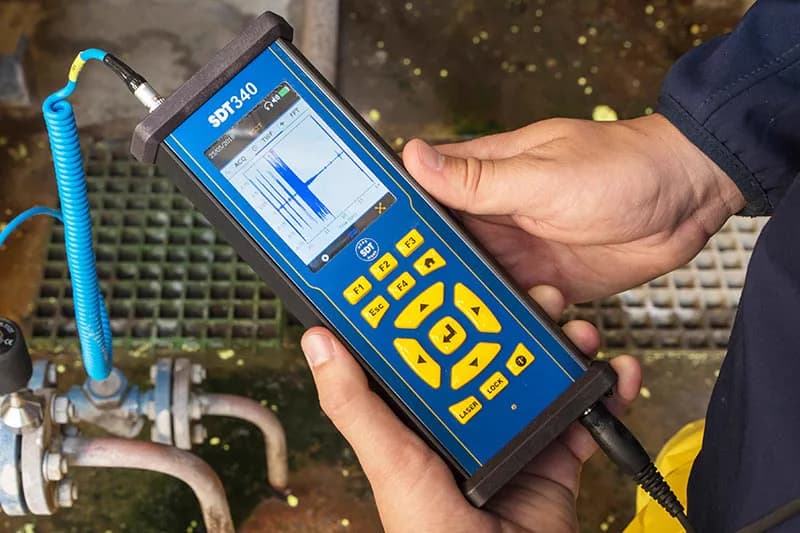
SDT340 - Продвинутый ультразвуковой детектор
Самый продвинутый ультразвуковой детектор для сбора, анализа и трендирования данных
Что показали данные
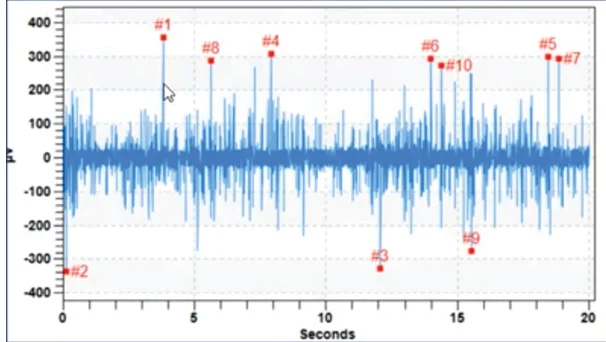
На временной форме (TWF) виден характерный импульс каждый оборот проблемного зуба — в момент, когда он пытается войти в зацепление с большой шестернёй. Интервал между ударами соответствует 1/RPM пиньона.
Типичный паттерн сломанного зуба:
- выраженный пик в TWF с периодом, равным периоду вращения дефектной шестерни;
- в FFT — повышенный уровень ультразвука на 1×RPM проблемного вала.
Вывод: сломанный зуб на пиньоне 2,95 об/мин. Плановая остановка вместо внезапного разрушения редуктора.
Практические рекомендации для ТОиР
- Не отказывайтесь от вибрации — но на скоростях <10 об/мин добавляйте ультразвук в маршрут.
- Увеличивайте время записи — для 0,1 об/мин нужны минуты, не секунды.
- Смотрите TWF, а не только общий уровень — импульс раз в оборот надёжнее среднего dBµV.
- Трендируйте — сравнение с базовой линией важнее разового замера.
Где это актуально в Казахстане
- ЦБК и упаковка — декантеры, сушильные барабаны
- Горнодобыча — приводы конвейеров и дробилок
- Водоканалы — насосные агрегаты и мешалки
- Металлургия — медленные секции прокатных станов
Связанные материалы: SDT340 + LUBEExpert · Диагностика редукторов · Каталог SDT340
Оборудование в статье
Цены и сроки поставки в Казахстан KEG TRK сообщает по запросу. Подготовим коммерческое предложение под вашу задачу.
SDT340 - Продвинутый ультразвуковой детектор
Самый продвинутый ультразвуковой детектор для сбора, анализа и трендирования данных
Читайте также
05.10.2026
Семь лет без истории смазки: ультразвуковой контроль подшипников 19 двигателей металлургического предприятия
Кейс Newton Industrial Solutions и SDT: 19 приводных двигателей 750–2 000 HP семь лет работали без записей о смазке. Поэтапное смазывание под контролем SDT270 и LUBExpert восстановило проход смазки и выявило двигатель, требующий замены.
17.07.2026
Отказ тиристоров DC-привода: ультразвук и вибрация SDT340 на одном агрегате
Когда вибрация «норма», а привод греется и искрит: как совместить ультразвуковой и вибрационный каналы SDT340 для ранней диагностики дефектов SCR и механики DC-привода.
30.06.2026
Кейс: внедрение PdM на ГОК и ТЭЦ за 12 месяцев — Artesis, Bently и SDT
Реальный сценарий холдинга: за год — маршрут SDT, Orbit DCM на конвейерах, e-MCM на мельницах, e-PCM на ДГУ, IoT для руководства. Цифры, этапы и уроки.