
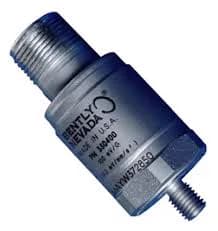
Supply in Kazakhstan
KEG TRK supplies vibration monitoring and analysis solutions (Bently Nevada) across Kazakhstan: Almaty, Astana, Karaganda, Ust-Kamenogorsk, Aktobe and other regions. Official warranty, monitoring system design, installation, commissioning and personnel training.
Mining equipment
Key features
Applications and resources
Industry solutions, landing pages and articles about 330400 / 330425 — Accelerometers for API 670 Machinery Protection
Where it is used
Typical tasks
- Critical machinery
- Gearbox gear mesh monitoring
- Bearing housing and machine casing acceleration
- API 670 machinery protection systems
Integrated monitoring: ultrasonic diagnostics · motor monitoring · implementation services
Documentation
Official Baker Hughes / Bently Nevada manufacturer PDFs. Key specifications are also published on this page for search and equipment selection.
- Download PDF
ru330400 / 330425 datasheet (PDF, Russian translation)
Baker Hughes / Bently Nevada. Russian translation; the English original prevails in case of discrepancies
- Download PDF
330400 / 330425 datasheet (PDF, English original)
Baker Hughes / Bently Nevada
Need a price with delivery in Kazakhstan? We will prepare a quotation for your task.
Description
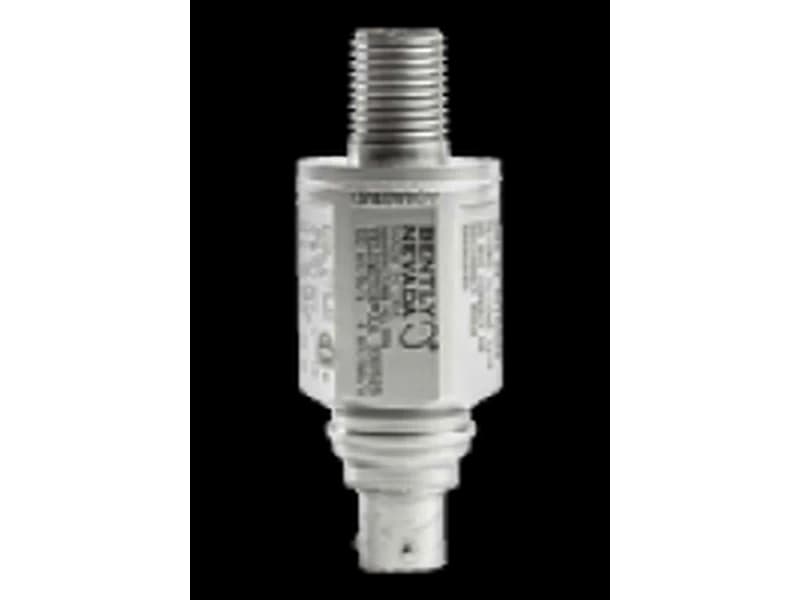
The Bently Nevada 330400 and 330425 are accelerometers for critical machinery where casing acceleration must be measured, for example for gear mesh monitoring. The 330400 is designed to the API 670 requirements for accelerometers: 50 g peak range and 100 mV/g sensitivity. The 330425 is identical except for a larger range, 75 g peak, at 25 mV/g.
Bently Nevada notes that most common malfunctions (unbalance, misalignment) occur on the rotor. A casing measurement is useful for machine protection only if rotor vibration is consistently transmitted to the casing at the transducer location. Improper installation reduces amplitude and frequency response and can generate false signals.
Key specifications
Parameters apply at +20 to +30 °C and 100 Hz unless otherwise stated (datasheet 141638 Rev. AB).
Technical parameters
- Sensitivity: 100 mV/g ±5% (330400); 25 mV/g ±5% (330425)
- Acceleration range: 50 g peak (330400); 75 g peak (330425), within 10 Hz – 15 kHz
- Amplitude linearity: ±1% to 50 g (330400) and to 75 g (330425)
- Frequency response: 10 Hz – 15 kHz (±3 dB); 30 Hz – 10 kHz (±10%)
- Broadband noise floor (10 Hz – 15 kHz): 0.004 g RMS (330400); 0.01 g RMS (330425)
- Mounted resonant frequency: greater than 30 kHz, resonant peak 20 dB maximum
- Transverse sensitivity: less than 5% of axial
- Temperature sensitivity: −11% to +3% (typical) over the operating temperature range
Vibration above 15 kHz, especially at the transducer resonance, significantly reduces the available acceleration range.
Construction
- Case: 316L stainless steel, hermetically sealed
- Ingress protection: equivalent to IP68 (sensor only, not the cable)
- Connector: 3-pin MIL-C-5015 receptacle, 316L stainless steel
- Mounting: integral 1/4-28 UNF or M8×1 stud, any orientation
- Weight (no cable): about 100 g
- Dimensions: 23 mm diameter, 59 mm height including the mounting stud
Electrical
- Input voltage: −24 ±0.5 V DC
- Bias current: 2 mA nominal
- Output bias voltage: −8.5 ±0.5 V DC
- Grounding: case isolated
- Cable length: up to 305 m with no signal degradation
Models
330400
- 100 mV/g sensitivity, 50 g peak range
- Designed to the API 670 requirements for accelerometers
330425
- 25 mV/g sensitivity, 75 g peak range
- Otherwise identical to the 330400
Ordering code: 330400-AA-BB or 330425-AA-BB, where AA is the stud thread (01 — 1/4-28 UNF, 02 — M8×1) and BB is the approval option (00 — none, 05 — CSA, ATEX, IECEx).
| Parameter | 330400 | 330425 |
|---|---|---|
| Sensitivity | 100 mV/g ±5% | 25 mV/g ±5% |
| Range | 50 g peak | 75 g peak |
| Frequency response | 10 Hz – 15 kHz (±3 dB) | 10 Hz – 15 kHz (±3 dB) |
| Resonant frequency | > 30 kHz | > 30 kHz |
| Operating temperature | −55 to +121 °C | −55 to +121 °C |
- critical machinery that requires casing acceleration measurement;
- gearbox gear mesh monitoring;
- API 670 machinery protection systems.
Environment and approvals
- Operating and storage temperature: −55 to +121 °C
- Shock survivability: 5000 g peak
- Humidity: 100% condensing, non-submerged
- Altitude: up to 2000 m above sea level
- Hazardous areas (option 05): ATEX/IECEx Ex ia IIC T3 Ga, Ex ec IIC Gc, Ex tc IIIC Dc; cNRTLus Class I, Div 1, Groups A, B, C, D
- Maritime: ABS
Mounting and installation
- Mounting torque: 4.1 N·m
- Mounting surface finish: 32 µin RMS
- Standard installation is in a protective enclosure with wiring in conduit; splash boots can be added if required.
- For units with serial numbers not preceded by the letter "G" (shipped before April 2004), Bently Nevada recommends the 37439 mounting base to reduce base strain sensitivity.
Cables: 130539 (18 AWG, fluorosilicone boot), 16925 (22 AWG) and 16710 (22 AWG, armored), up to 30 m.
Specification table
| Parameter | 330400 | 330425 |
|---|---|---|
| Range | 50 g peak | 75 g peak |
| Sensitivity | 100 mV/g ±5% | 25 mV/g ±5% |
| Frequency response (±3 dB) | 10 Hz – 15 kHz | 10 Hz – 15 kHz |
| Frequency response (±10%) | 30 Hz – 10 kHz | 30 Hz – 10 kHz |
| Noise floor (10 Hz – 15 kHz, RMS) | 0.004 g | 0.01 g |
| Mounted resonance | > 30 kHz | > 30 kHz |
| Temperature | −55 to +121 °C | −55 to +121 °C |
| Power | −24 V DC | −24 V DC |
| Case | 316L stainless steel | 316L stainless steel |
| Weight | about 100 g | about 100 g |
| Connector | MIL-C-5015, 3-pin | MIL-C-5015, 3-pin |
| Mounting torque | 4.1 N·m | 4.1 N·m |
Supply in Kazakhstan
KEG TRK supplies Bently Nevada 330400 and 330425 accelerometers, cables and mounting accessories. Price on request.
Source
Technical specifications
| Type | Piezoelectric accelerometer, −24 V DC supply |
| Range | 50 g peak (330400) / 75 g peak (330425) |
| Sensitivity | 100 mV/g ±5% (330400) / 25 mV/g ±5% (330425) |
| Frequency range | 10 Hz – 15 kHz (±3 dB); 30 Hz – 10 kHz (±10%) |
| Temperature | −55 to +121 °C |
| Bently Nevada part number | 330400 / 330425 |
Applications
Manufacturer
Bently Nevada
Casing acceleration transducers for critical machinery: 330400 (100 mV/g, 50 g peak, designed for API 670) and 330425 (25 mV/g, 75 g peak)
Key specifications
- Type
- Piezoelectric accelerometer, −24 V DC supply
- Range
- 50 g peak (330400) / 75 g peak (330425)
- Sensitivity
- 100 mV/g ±5% (330400) / 25 mV/g ±5% (330425)
- Frequency range
- 10 Hz – 15 kHz (±3 dB); 30 Hz – 10 kHz (±10%)
- Temperature
- −55 to +121 °C
Official supplier in Kazakhstan
Related products
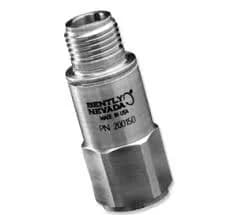
200150 / 200155 / 200157 — Bently Nevada accelerometers for Trendmaster and 1900
General-purpose 100 mV/g casing accelerometers in a hermetically sealed stainless steel case for Trendmaster ProTIM and 1900/25, 1900/27 monitors. Temperature −40 to +105 °C.
- 10.2 mV/(m/s²) (100 mV/g) ±12%
- ±245 m/s² (±25 g)
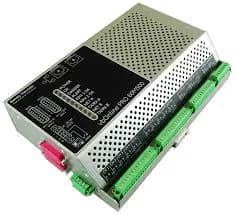
vbOnline Pro — 12-channel scanning monitor
12-channel scanning monitor for rolling bearings and complex gearboxes
- 12 acquisition channels
- Acceleration, velocity
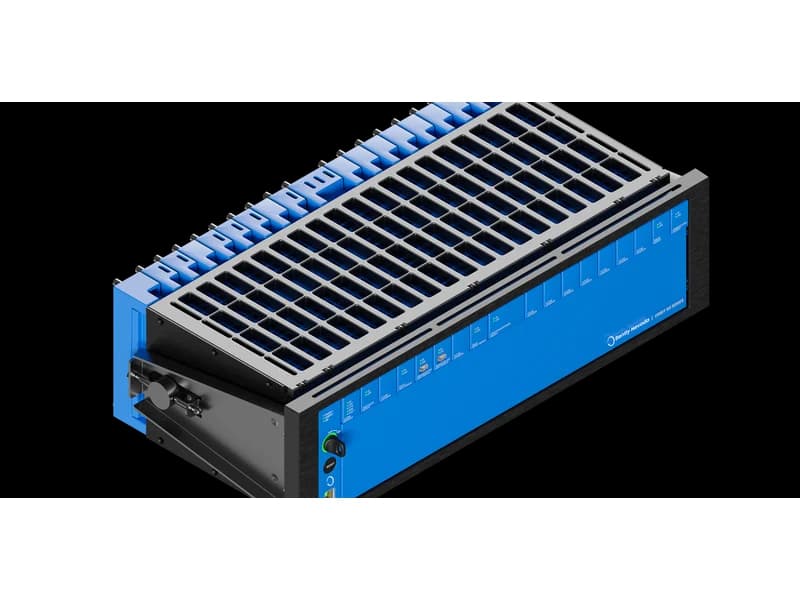
Orbit 60 Series — Next-Generation Monitoring System
Next-generation Bently Nevada monitoring and protection system: compact 3U or 6U chassis, SIL 2 version, separate configuration and condition monitoring modules.
- 19-inch, 3U or 6U
- −30 to +70 °C (3U), −30 to +65 °C (6U)
Need advice?
Our specialists will help you choose the optimal 330400 / 330425 — Accelerometers for API 670 Machinery Protection configuration for your equipment.
Related articles
All articles →Vibration Sensor: How to Choose (Accelerometer, Velocity Sensor, Proximity Probe)
A proximity probe measures shaft motion in fluid-film bearings, a velocity sensor gives overall casing vibration, an accelerometer covers high frequencies of rolling bearings and gearboxes.
Which Bently Nevada Vibration Sensor to Choose: 3300 XL Proximity Probe, Velomitor, Accelerometer or 177230 Transmitter
Fluid-film or rolling element bearings, protection or diagnostics, monitor or PLC: how to choose between the 3300 XL proximity probe, the Velomitor velocity sensor, the 330400 and 200150 accelerometers and the 177230 transmitter. A selection table and typical solutions.

Bearing Monitoring on Auxiliary Motor Drives — Bently Nevada
Rolling element bearing units on auxiliary motors at metallurgical, mining and power sites: 330400 accelerometers, Orbit DCM, SCOUT and early BPFO/BPFI signs in the spectrum.
10 Equipment Maintenance Strategies That Cut Downtime in 2026
10 maintenance strategies that genuinely reduce downtime in 2026: predictive maintenance, RCM, TPM, and tools like Artesis e-MCM and SDT340, with KPIs you can roll out in stages at plants across Kazakhstan.

Shaft Misalignment: the Hidden Killer of Bearings, Couplings and Seals
Up to half of all rotating equipment failures are linked to shaft misalignment. We break down the types of misalignment, its consequences, and how vibration analysis and current analysis detect it before it destroys couplings and bearings.

What an Hour of Downtime Really Costs and How to Cut Unplanned Stops
Unplanned downtime costs far more than the repair crew's payroll line suggests. We break down the full cost-of-downtime formula and show how switching to predictive maintenance cuts unplanned stops by 30–50%.