
Dosimeter or radiometer: what is the difference and which radiation monitor to choose
A dosimeter measures dose and dose rate, a radiometer measures contamination and particle flux density. Units, search mode and the choice between the DKG-07D Drozd, DKG-09D Chizh and MKS-15D Snegir from NPP Doza.
In this article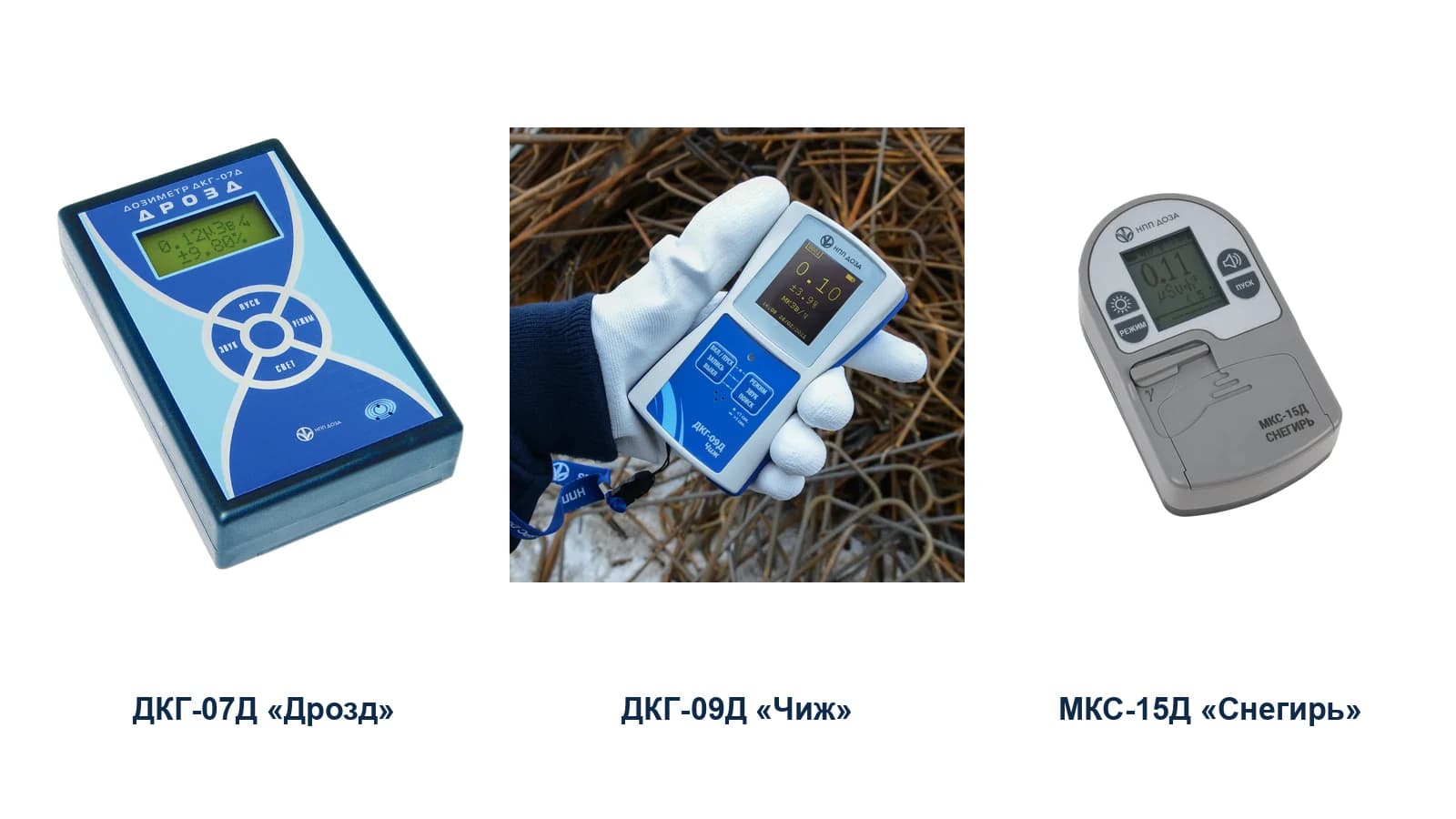
Prepared by the KEG TRK team · How we prepare our content
A dosimeter shows dose and dose rate: whether you can stay in a place and how much radiation has been received. A radiometer shows contamination and activity: whether a surface, clothing or material is clean. Many NPP Doza instruments combine both modes, and some have a search mode that quickly shows where a source is. Below: units, three models and how to choose.
What each instrument measures
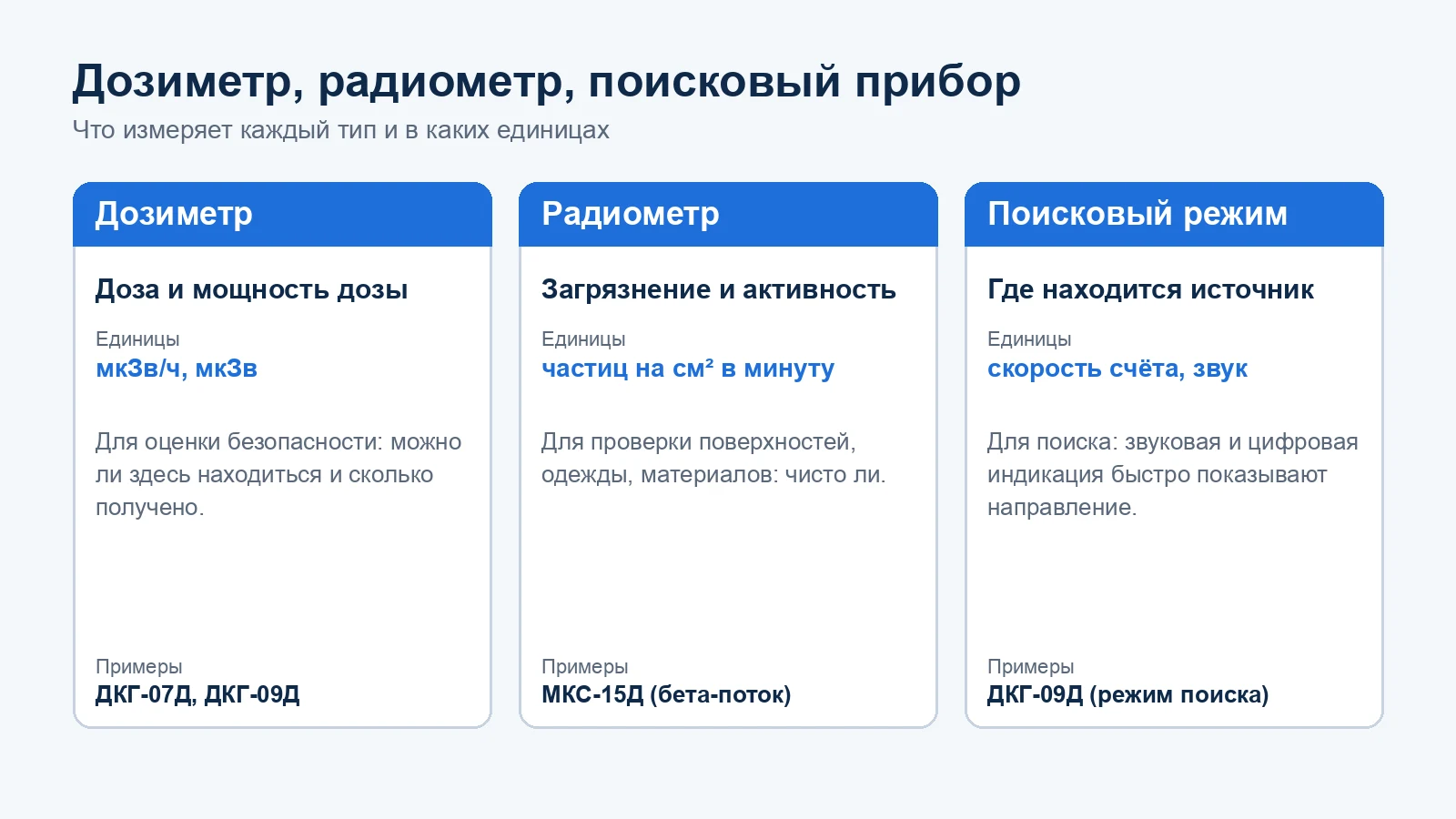
| Type | Shows | Units | Question it answers |
|---|---|---|---|
| Dosimeter | dose rate and dose | µSv/h, µSv, mSv | how hazardous it is to stay here |
| Radiometer | particle flux density, contamination | particles per cm² per minute | is the surface clean |
| Search mode | count rate, audible signal | counts/s, sound | where is the source |
Two quantities in a dosimeter datasheet:
- MAED: ambient dose equivalent rate H*(10), µSv/h. Shows how fast dose builds up.
- AED: ambient dose equivalent H*(10), accumulated dose in µSv.
1 mSv equals 1000 µSv. Natural background is usually fractions to a few microsieverts per hour and depends on the area, so measure the background in a clean place before checking an object.
Three NPP Doza instruments for typical tasks
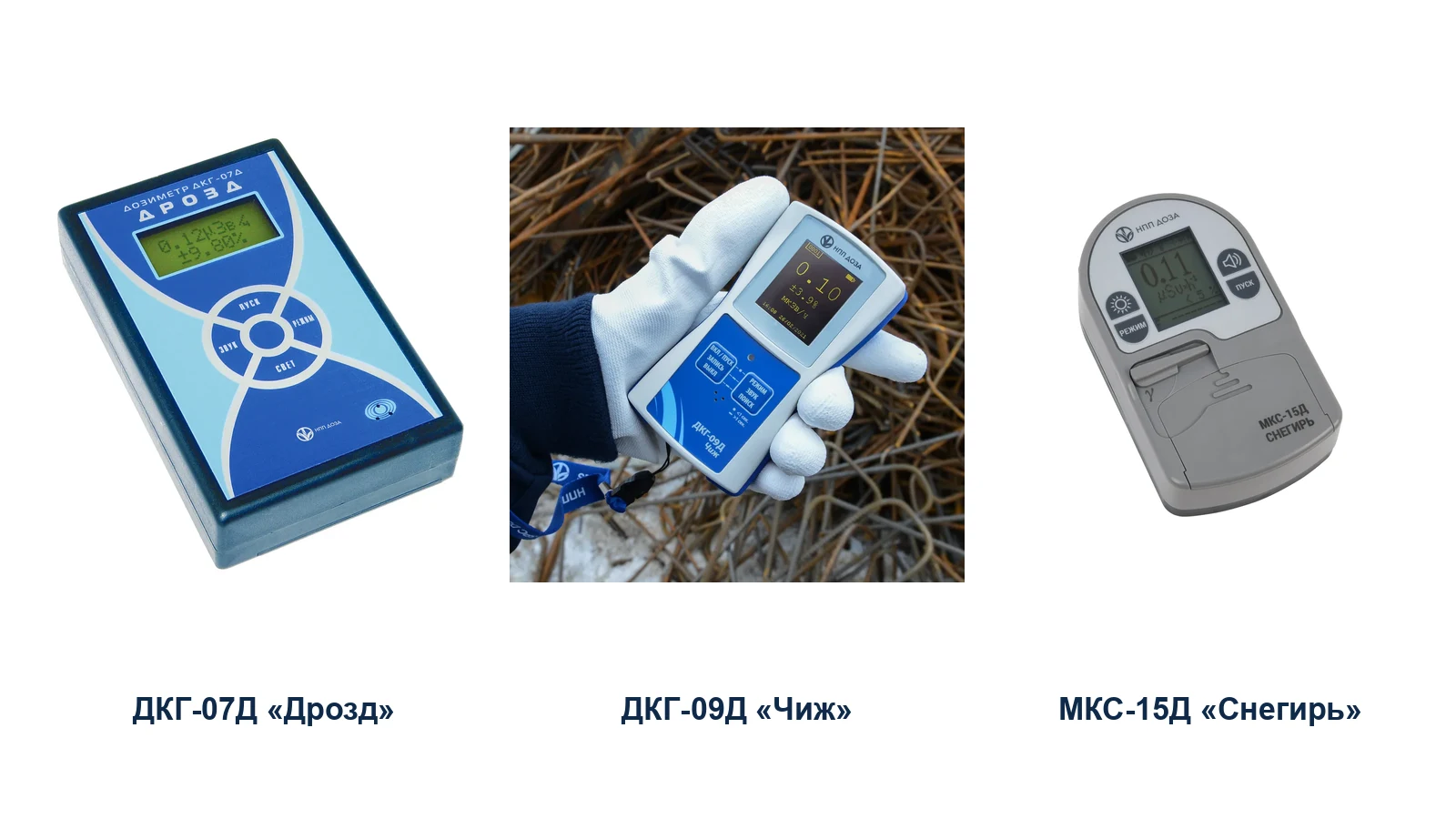
| DKG-07D Drozd | DKG-09D Chizh | MKS-15D Snegir | |
|---|---|---|---|
| Type | dosimeter | dosimeter, search mode | dosimeter-radiometer |
| Radiation | gamma | gamma and X-ray | gamma and beta |
| Detector | gas-discharge counter | scintillation CsI(Tl) | gas-discharge counter |
| MAED | 0.1 µSv/h - 1.0 mSv/h | 0.1 µSv/h - 50 mSv/h | 0.1 µSv/h - 2 mSv/h |
| AED | 1.0 µSv - 0.2 Sv | 0.1 µSv - 10 Sv | 1 µSv - 10 Sv |
| Beta flux | no | no | 10 - 10⁵ cm⁻²·min⁻¹ |
| Energy range | 0.05-3.0 MeV | 0.05-3 MeV | 0.05-3.0 MeV (gamma) |
| Temperature | minus 20...+50 °C | minus 40...+50 °C | minus 20...+50 °C |
| Protection | plastic case | IP65 | IP52 |
| Power | 2 AA cells | 3 AAA cells | 2 AA cells |
| Weight | 0.25 kg | up to 0.2 kg | 0.35 kg |
Features per the manufacturer's documentation:
- Drozd is a simple gamma dosimeter. Continuous operation on one set of batteries is at least 200 hours.
- Chizh is highly sensitive: background measurement to 30 % error takes 5 seconds. Color OLED display, search mode with a reading-versus-time graph, archive of 9999 measurements, USB link.
- Snegir shows the statistical error during measurement, refines the result continuously and compensates the gamma contribution when measuring beta flux.
Equipment covered in this article
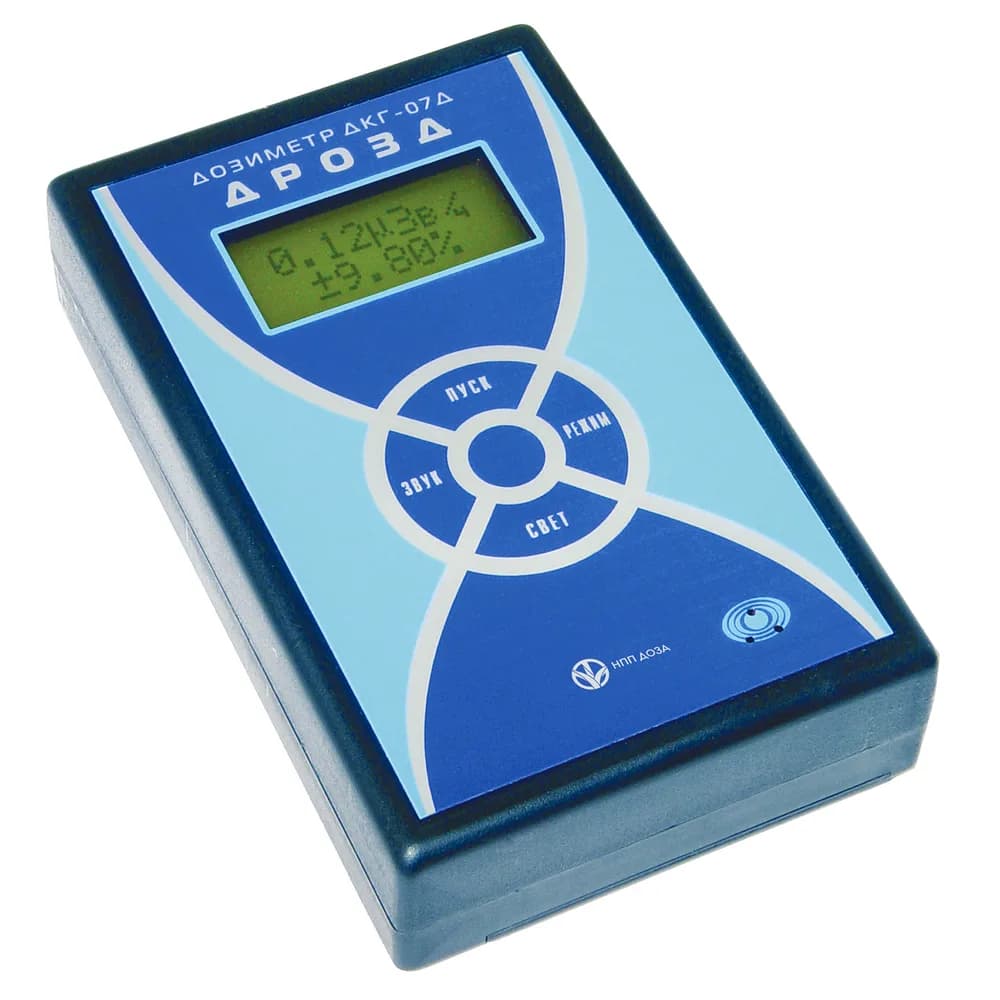
DKG-07D «Drozd» — gamma radiation dosimeter
Measurement of ambient dose equivalent rate H*(10) of gamma radiation (ADER); measurement of ambient dose equivalent H*(10) of gamma radiation (ADE).
How to choose
- You need to judge whether a place is safe. A dosimeter is enough: DKG-07D for routine control, DKG-09D when sensitivity and speed matter.
- You need to check surfaces, clothing or materials for beta contamination. Take the MKS-15D dosimeter-radiometer.
- You need to find a source. The search mode of the DKG-09D with a reading graph and audible alarm helps localize the point quickly.
- Outdoor work in frost. The DKG-09D works to minus 40 °C and has IP65 protection.
- You need data logging and transfer. The DKG-09D has a 9999-measurement archive and USB.
What this choice does not replace: the instrument must be type-approved and verified if results are used officially. The verification interval of the DKG-09D and MKS-15D is 2 years per the documentation. The Drozd and Chizh pages link to measuring-instrument certificates on the manufacturer's site. Check current Kazakhstan requirements with metrology and radiation safety specialists.
How to measure correctly
- Switch the instrument on and let it reach working mode. For the MKS-15D this is 1 minute.
- Measure the background in a clean place and record the value.
- Measure the object without hurrying: the instrument has a statistical error and the result refines over time.
- Compare the object with the background, not with an abstract number.
- Record the point, time and result. An instrument with an archive saves this itself.
Common mistakes
- Measuring beta contamination with a gamma dosimeter. A gamma dosimeter will not show beta flux; you need a dosimeter-radiometer with a beta channel.
- Skipping the background. Without it there is nothing to compare a result with.
- Taking the reading right after power-on. The instrument needs time to stabilize and accumulate statistics.
- Ignoring temperature. In frost ordinary instruments stop working; check the rated range.
Where to look and order
The NPP Doza catalog on the site has over 600 items. KEG TRK is NPP Doza's partner in Kazakhstan: we will select an instrument for the task, price on request. Russian manuals and brochures are on the instrument pages.
Frequently asked questions
Equipment in this article
KEG TRK quotes prices and delivery times to Kazakhstan on request. We will prepare a commercial offer for your application.
DKG-07D «Drozd» — gamma radiation dosimeter
Measurement of ambient dose equivalent rate H*(10) of gamma radiation (ADER); measurement of ambient dose equivalent H*(10) of gamma radiation (ADE).
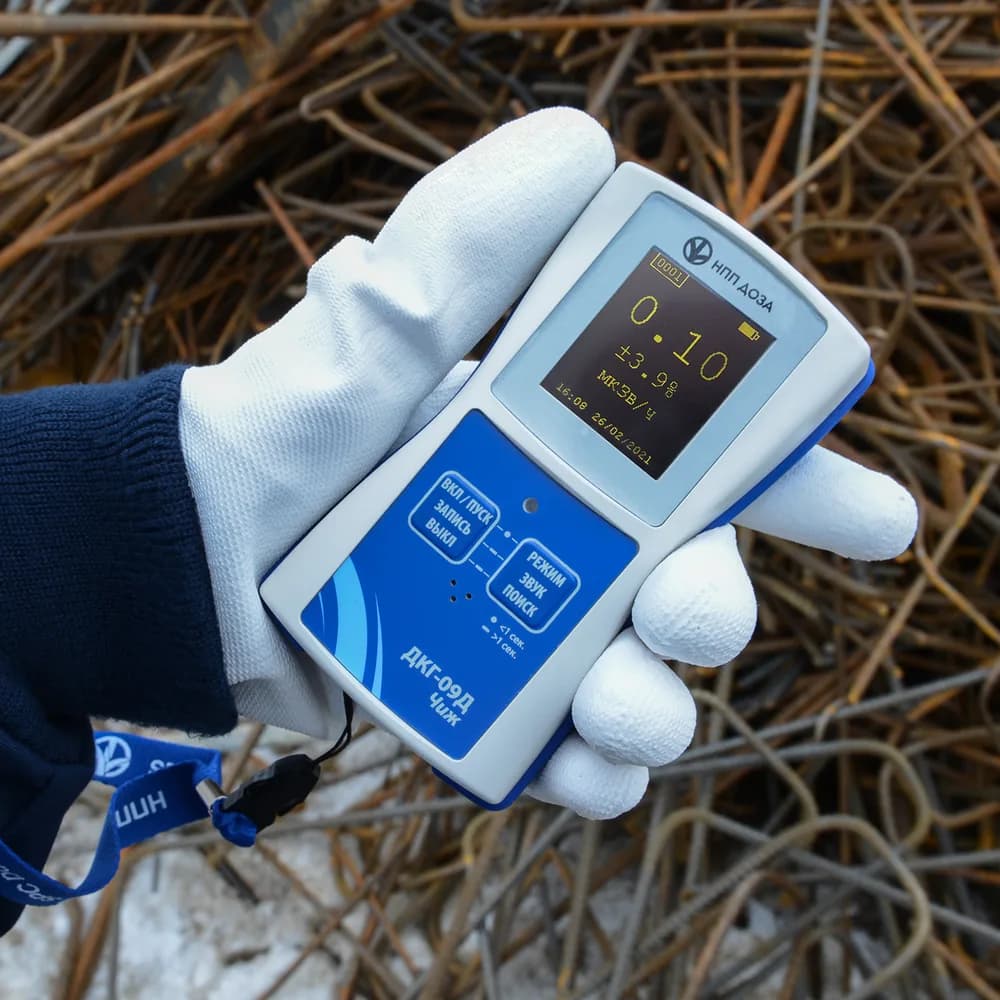
DKG-09D «Chizh» — gamma and X-ray radiation dosimeter
A high-sensitivity gamma and X-ray radiation dosimeter based on a CsI(Tl) scintillation detector.
Also in this article: MKS-15D «Snegir» — dosimeter-radiometer
Read also
11/3/2026
Accepting a motor after repair: electrics with Artesis AMT Pro, bearings with SDT340
How to check a motor after rewinding or a bearing change before it returns to service: compare before-and-after tests on Artesis AMT Pro and check the bearings with SDT340 ultrasound.
10/14/2026
What lubrication programs delivered at real plants: public case studies with numbers
Woodgrain, Owens Corning, a grain mill and others: what the plants themselves report in money after moving to managed lubrication, what can be checked, and which figures are better not to repeat.
10/12/2026
Downtime, efficiency and people: what ultrasound-guided precision lubrication delivers
Energy savings are not the only argument for condition-based lubrication. How LUBEChecker, the SDT340 in LUBExpert mode and LUBExpert ON-GUARD cut downtime, free up specialists and make greasing a task for the whole shift.