
Personal dosimetry for workers: electronic dosimeter or TLD
An electronic dosimeter shows the dose immediately and alarms when a threshold is exceeded; a thermoluminescent dosimeter (TLD) accumulates dose over a wear period and is read in a laboratory. We cover the dose limits under Kazakhstan hygiene standards, the quantities Hp(10), Hp(0.07), Hp(3), and the choice between the DKG-05D and the DOZA-TLD system.
In this article
An entrance to a controlled-access area. No instruments are shown.
KEG TRKAuthor: Georgy Cheredeev, Technical Director, KEG TRK · Updated: November 18, 2026 · How we prepare our content
Personal dosimetry answers one question: what dose did a specific worker receive? An electronic dosimeter shows the dose immediately and alarms if a threshold is exceeded. A thermoluminescent dosimeter (TLD) accumulates dose over the wear period and is read in a laboratory. At sites with group A personnel the two usually work together. Below: dose limits under Kazakhstan standards, the measured quantities, and the choice between the DKG-05D and the DOZA-TLD system from NPP Doza.
Dose limits in Kazakhstan
The basic dose limits are set out in Annex 3 to the Hygiene Standards for Radiation Safety (Order of the Minister of Health of Kazakhstan No. KR DSM-71 of 2 August 2022).
| Quantity | Group A personnel | Public |
|---|---|---|
| Effective dose | 20 mSv per year averaged over any 5 consecutive years, but no more than 50 mSv per year | 1 mSv per year averaged over any 5 consecutive years, but no more than 5 mSv per year |
| Annual equivalent dose to the lens of the eye | 20 mSv | 15 mSv |
| Annual equivalent dose to the skin | 500 mSv | 50 mSv |
| Annual equivalent dose to hands and feet | 500 mSv | 50 mSv |
For group B personnel the basic limits are 1/4 of the group A values. Check the figures against the current version of the order before designing a monitoring system: it has been amended.
The practical conclusion: if a worker may receive a noticeable dose to the eye lens (working close to an unsealed source) or to the hands (handling sources), a single chest dosimeter is not enough. Dosimeters for the corresponding quantities are needed.
What a personal dosimeter measures: Hp(10), Hp(0.07), Hp(3)
A personal dosimeter measures the personal dose equivalent Hp(d) at depth d in tissue below the point where it is worn.
| Quantity | Depth | Purpose | Where it is worn |
|---|---|---|---|
| Hp(10) | 10 mm | whole-body effective dose | on the chest, on the body surface |
| Hp(0.07) | 0.07 mm | skin and hand dose | ring on a finger |
| Hp(3) | 3 mm | eye lens dose | near the eyes, on glasses or a headband |
Do not confuse the personal dose equivalent Hp(10) with the ambient dose equivalent H*(10), which a survey meter shows when measuring conditions in a room. We explain this difference and the choice between a dosimeter and a radiometer in Dosimeter or radiometer: what is the difference.
Equipment covered in this article
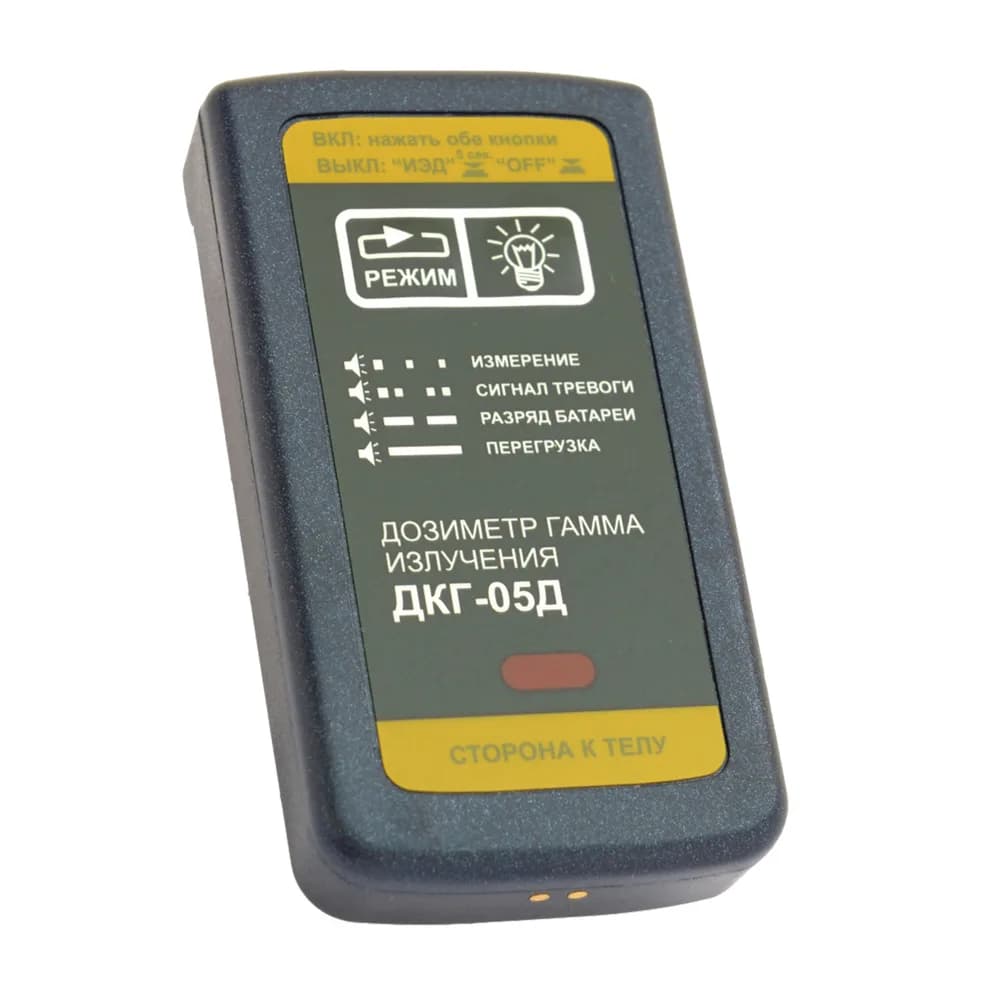
DKG-05D — personal gamma radiation dosimeter
A direct-reading electronic dosimeter for monitoring the dose burden of personnel at radiation-hazardous facilities, designed for harsh operating conditions.
Electronic dosimeter versus TLD
| DKG-05D electronic dosimeter | DOZA-TLD system | |
|---|---|---|
| How the result is obtained | immediately, on the display | after reading on the ST-01D reader |
| Alarm | audible and visual when dose and dose-rate thresholds are exceeded | none |
| Quantities | Hp(10) and dose rate of photon radiation | photon and neutron Hp(10), Hp(0.07), Hp(3) depending on dosimeter type |
| Range | dose 0.1 µSv – 15 Sv, dose rate 1 µSv/h – 10 Sv/h | photon Hp(10) 20 µSv – 10 Sv for TLD-3, DTL-02, DTU-1, DVNG-M |
| Photon energy | 0.05 – 3.0 MeV | 0.015 – 18 MeV for Hp(10) with TLD-3, DTL-02, DTU-1, DVNG-M |
| What else is needed | reader, charging, software | reader, cassette annealing and tracking, software |
| Typical role | operational control during a shift, work permits | personal dose records over a period |
An electronic dosimeter is useful where the dose rate may rise sharply: the worker learns about a threshold being exceeded at the moment it happens, not a month later. A TLD needs no power, is not affected by a flat battery, and suits dose records for a large workforce over a long period.
DKG-05D: an electronic dosimeter for the shift
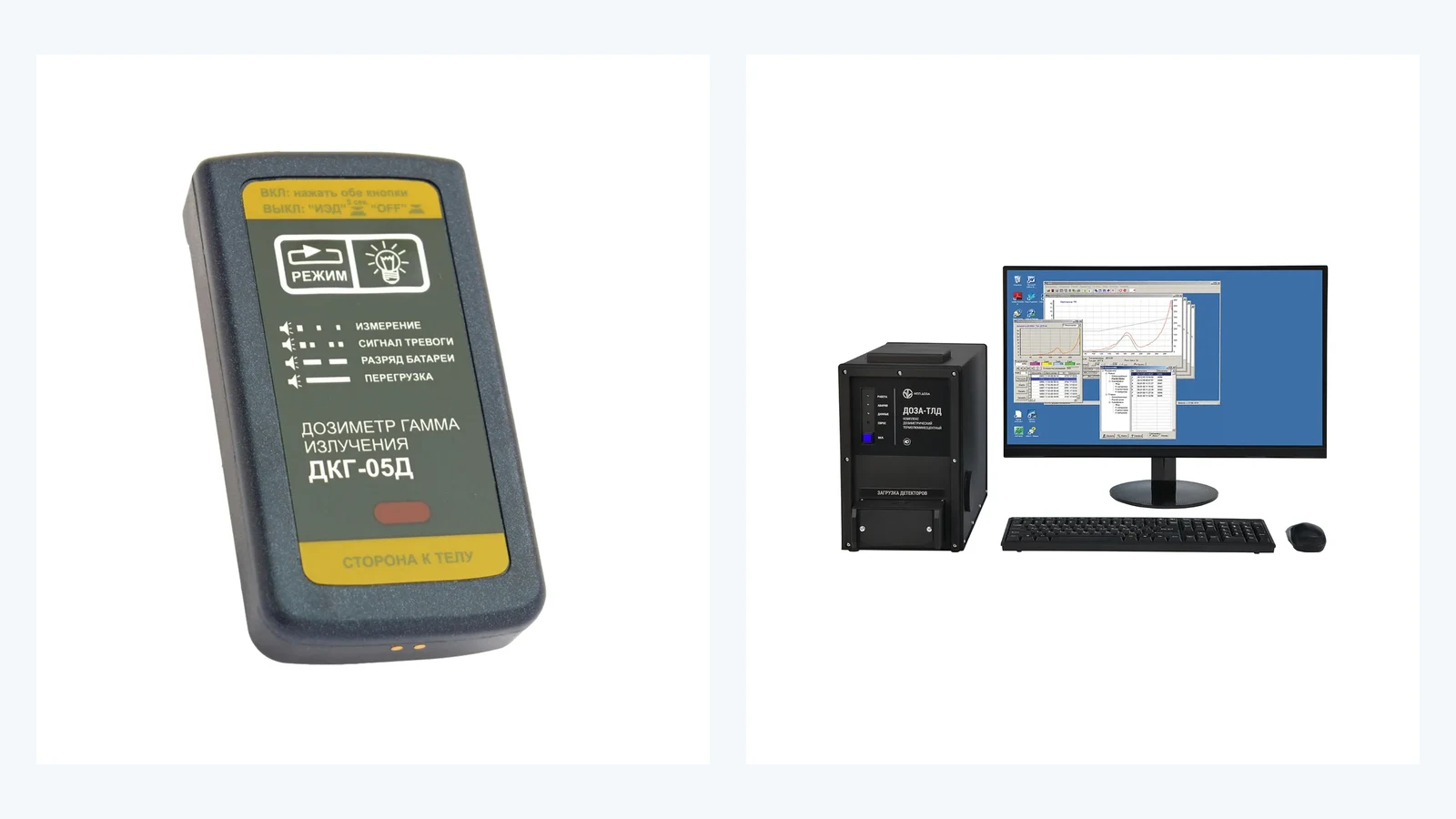
The DKG-05D is a direct-reading electronic gamma dosimeter with silicon semiconductor detectors. According to the manufacturer's documentation:
- tested to IEC 61526 (second edition 2005-02) for direct-reading personal dose equivalent meters;
- warning and alarm dose thresholds and a dose-rate threshold can be set across the full range in 1 µSv and 1 µSv/h steps;
- audible alarm of at least 80 dB at 40 cm, plus a flashing LED;
- memory for 1900 results, retained for at least 10 years without power;
- IP65 housing, operating temperature from minus 20 to plus 50 °C, weight 0.1 kg, pocket clip;
- at least 400 hours without recharging the battery, at least 600 hours on a replaceable cell;
- data exchange with the US-05-01 reader over infrared, transfer to a PC over USB.
For sites that issue dosimeters to dozens of workers per shift there is the wall-mounted KZU-28 cassette charger: up to 28 dosimeters at once, charging in no more than 6 hours.
DOZA-TLD: dose records over a period
The DOZA-TLD system consists of the ST-01D thermoluminescent reader and sets of personal thermoluminescent dosimeters. The dosimeter type is chosen by quantity:
| Dosimeter | Measures | Range |
|---|---|---|
| TLD-3, DTL-02, DTU-1 | photon Hp(10) | 20 µSv – 10 Sv |
| DTU-2 | photon Hp(10) | 20 µSv – 0.5 Sv |
| DVNG-M | photon and neutron Hp(10) | neutrons 100 µSv – 2 Sv |
| Finger Ring Type G, Type BG | Hp(0.07) in finger skin | 20 µSv – 10 Sv |
| EYE-D | Hp(3) in the eye lens | 20 µSv – 10 Sv |
Reading one detector with linear heating at 10 °C/s takes no more than 60 seconds. The reader runs on 220 V mains in laboratory conditions (plus 10 to plus 35 °C); the dosimeters themselves are rated from minus 40 to plus 50 °C.
How to organize monitoring
- Define personnel groups. Who is group A, who is group B, and who may receive dose to the eye lens or hands.
- Choose the quantities. All group A workers need Hp(10). Add Hp(0.07) and Hp(3) where work involves handling sources or working close to the face.
- Assign roles to instruments. TLDs for period dose records; electronic dosimeters for work with a risk of rising dose rate, for work permits and visitors.
- Set electronic dosimeter thresholds. The radiation safety service sets warning and alarm thresholds from the site's control levels.
- Organize issue and reading. TLD cassette tracking, reading frequency, end-of-shift charging and reading of electronic dosimeters, result storage.
- Check metrology. Official records require measuring instruments of an approved type with valid verification. The DKG-05D and DOZA-TLD have certificates of entry in the register of measuring instruments of the Republic of Kazakhstan.
Where this is needed in Kazakhstan
- Uranium mining and processing. Workers in processing areas, laboratories and uranium product handling.
- Industrial radiography. Gamma inspection of welds on pipelines and steel structures.
- Oil and gas. Well logging with sealed sources, radioisotope density and level gauges.
- Energy and research centers. Research reactors, laboratories with unsealed sources.
What to prepare for a request
To select a set, tell us the number of group A and group B workers, the radiation types on site (gamma, beta, neutrons), whether hand and eye-lens dose monitoring is needed, how many people go out per shift, and whether you already have a TLD reader and dose-record software. KEG TRK is the distributor of NPP Doza in Kazakhstan: instrument selection, technical consultation and delivery support.
A dosimeter measures external exposure, while contamination of hands, footwear and clothing at the zone exit is monitored separately: see How to Monitor Radioactive Contamination of Staff Hands, Footwear and Clothing at the Zone Exit.
Frequently asked questions
Equipment in this article
KEG TRK quotes prices and delivery times to Kazakhstan on request. We will prepare a commercial offer for your application.
DKG-05D — personal gamma radiation dosimeter
A direct-reading electronic dosimeter for monitoring the dose burden of personnel at radiation-hazardous facilities, designed for harsh operating conditions.
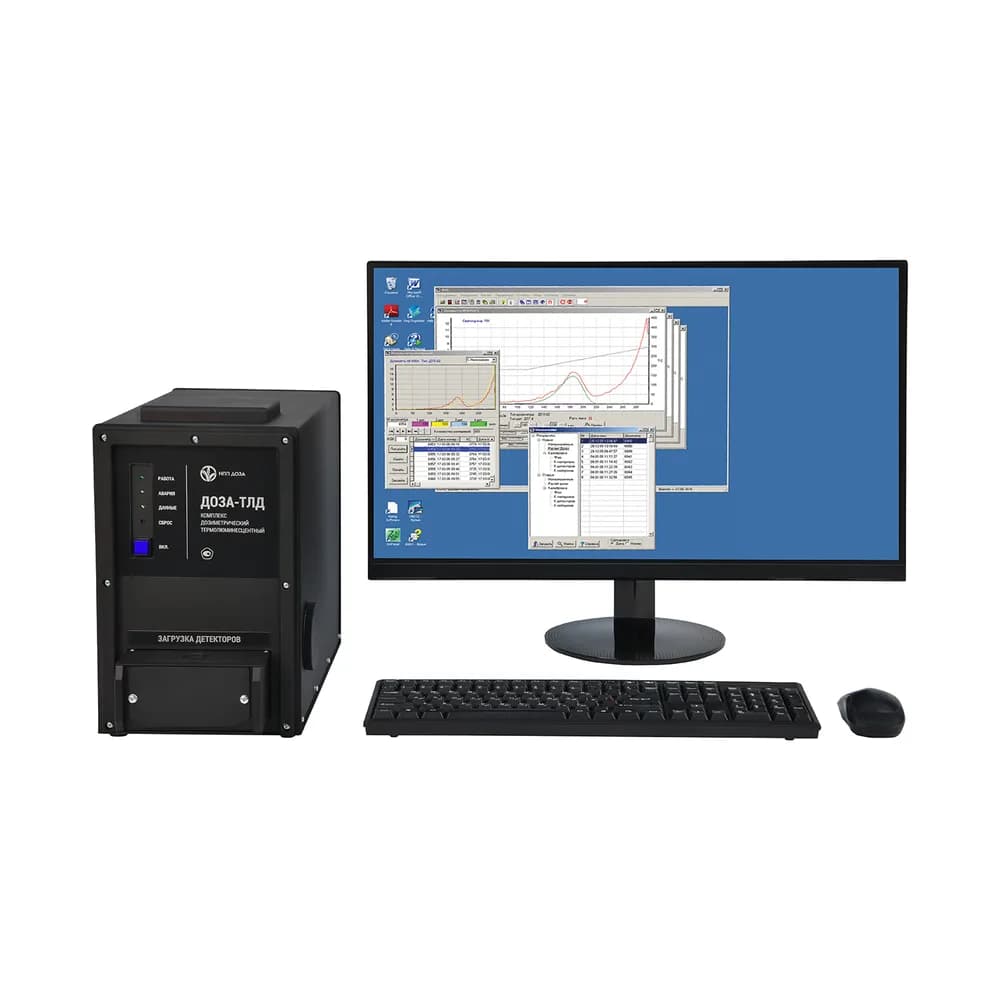
«DOZA-TLD» — thermoluminescent dosimetry system
The "DOZA-TLD" system, supplied with different types of personal thermoluminescent dosimeters, provides individual dosimetric monitoring (IDM) under photon and neutron…
Also in this article: TLD — personal thermoluminescent dosimeters, KZU-28 — cassette battery charger
Read also
11/18/2026
Radiation monitoring in the nuclear industry: how to plan a large equipment project
When the task is to equip not one workshop but a group of enterprises (mining areas, processing, production of uranium products), purchasing by workshop requests leads to a mixed instrument fleet and verification problems. We explain how to build the project: audit, standard kits, pilot, roll-out, metrology and training.
10/23/2026
Vibration Units: Displacement, Velocity, Acceleration and How to Convert Them
Vibration is expressed as displacement (µm, mil), velocity (mm/s, in/s) and acceleration (m/s², g). For a sine wave at frequency f: v = 2πf·d, a = 2πf·v, peak = 1.414·RMS, peak-to-peak = 2.828·RMS.
10/23/2026
How to Measure Vibration Correctly: Points, Directions, Sensor Mounting
Measure vibration on bearing housings, close to the bearing, in two radial directions and axially, at steady state. Mark each point and mount the sensor the same way every time.