
Radiation monitoring in the nuclear industry: how to plan a large equipment project
When the task is to equip not one workshop but a group of enterprises (mining areas, processing, production of uranium products), purchasing by workshop requests leads to a mixed instrument fleet and verification problems. We explain how to build the project: audit, standard kits, pilot, roll-out, metrology and training.
In this article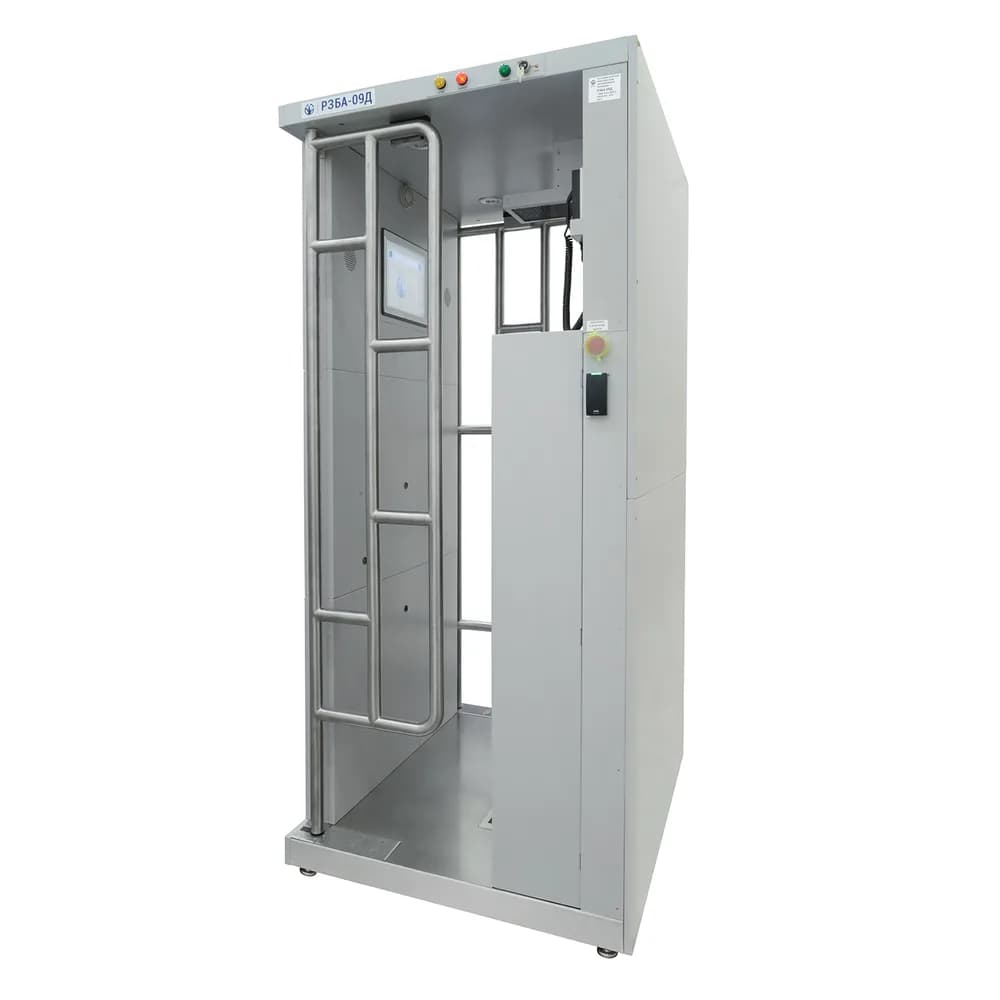
Author: Georgy Cheredeev, Technical Director, KEG TRK · Updated: November 24, 2026 · How we prepare our content
Buying a few dosimeters for one workshop is easy. Difficulties start when a group of enterprises needs equipping: mining areas, a processing plant, production of uranium products, laboratories. If purchases follow workshop requests, within a couple of years the sites hold instruments from different manufacturers and generations, with different software, their own spare parts and verification schedules. Below: how to build such a project so that it ends with a working monitoring system, not a warehouse of instruments.
Why a project and not a purchase
A large radiation monitoring project differs from a one-off purchase in three ways:
- common requirements. The same tasks at different sites are solved with the same means. A dosimetrist transferred from one site to another works with the same instruments;
- life cycle. The budget covers not only instruments but verification, consumables, spare parts, training and software updates;
- data. Measurement results must reach the radiation safety service records rather than stay in instrument memory.
Stage 1. Site audit
For each site collect:
- the operational radiation monitoring programme and the zone map;
- the list of areas with monitoring tasks: aerosols, radon, surface contamination, dose rate, individual monitoring;
- a register of existing instruments: model, year, condition, verification date, availability of spare parts;
- the number of category A and B personnel and the dosimeter issue scheme;
- operating conditions: temperature range, dust, humidity, presence of hazardous areas;
- how results are recorded today: logbooks, spreadsheets, software.
The audit result is a table "area, task, what exists, what is missing". It becomes the basis of the technical specification.
Equipment covered in this article
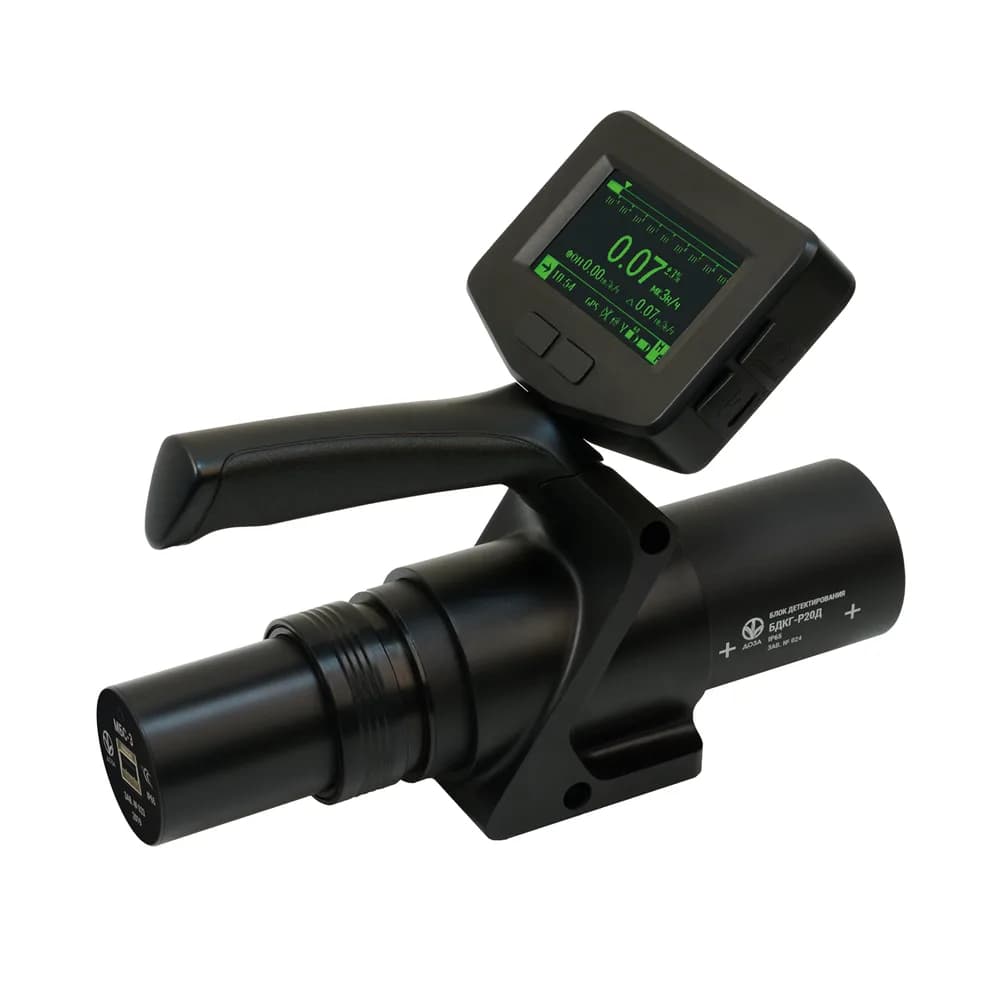
MKS-17D «Zyablik» — dosimeter-radiometer
The latest universal dosimeter-radiometer with wireless connection to a computer and detector units.
Stage 2. Standard kits by area type
Areas repeat from site to site. For each type of area it is convenient to define a standard kit and handle site specifics as additions.
| Area type | Tasks | Example kit from the Doza range |
|---|---|---|
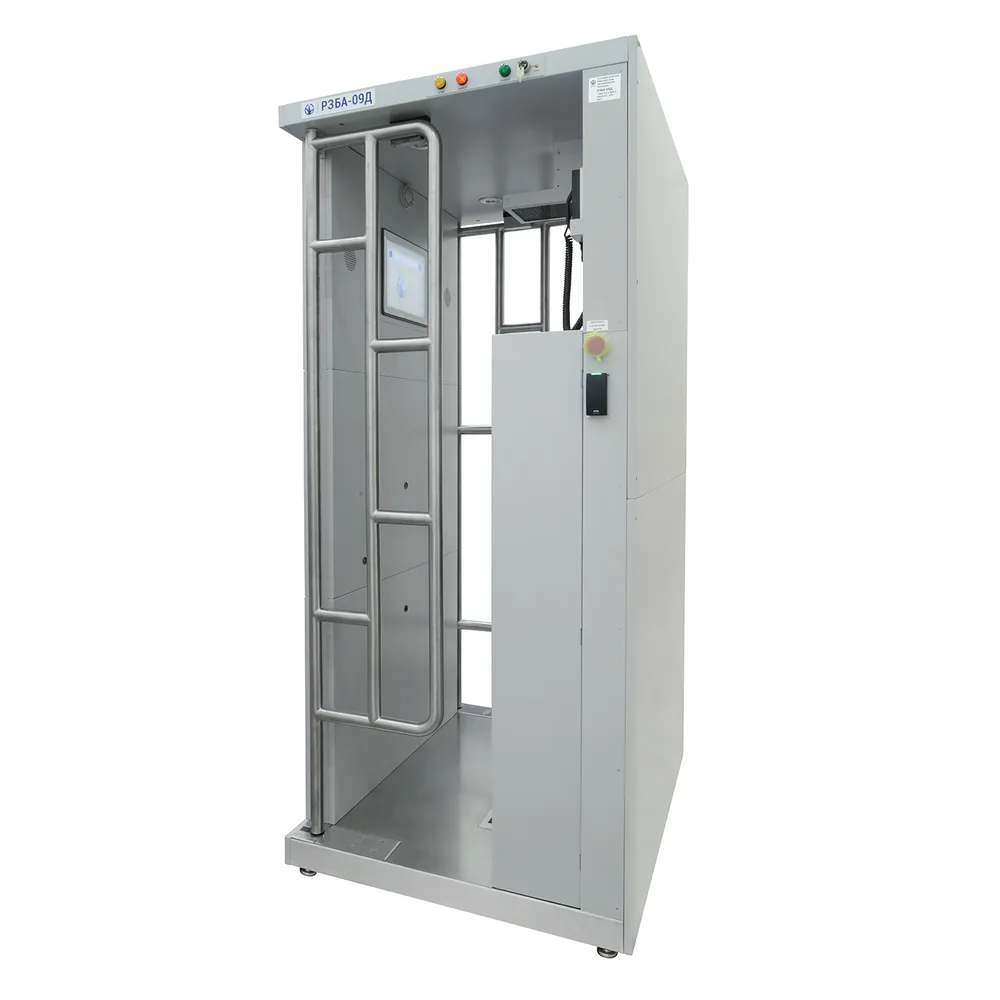
| Sanitary checkpoint, zone exit | alpha and beta contamination of hands, shoes, clothing | RZA-08D or RZBA-09D |
| Workshop with aerosol hazard (drying, packing, processing) | continuous aerosol volumetric activity monitoring | UDA-1AB, stationary version |
| Rooms with process solutions, underground structures | radon and its progeny | Alfarad Plus for surveys, UDA-1AB with radon EEC indication at permanent points |
| Wellfield, repair shop, release from the zone | dose rate, contamination of surfaces, equipment, vehicles | MKS-17D Zyablik with alpha and beta probes, DKG-09D Chizh |
| Category A and B personnel | operational and record-keeping individual monitoring | DKG-05D with KZU-28, DOZA-TLD |
The tasks of each area at a mining enterprise are covered in detail in the article Radiation monitoring at a uranium mining enterprise.
For facilities that need stationary monitoring with data sent to a control room, the NPP Doza range includes automated radiation monitoring systems for rooms and gas-aerosol emissions. At production sites handling enriched uranium, a separate task is criticality accident alarm, and Doza makes such systems as well. The configuration of system-level solutions is defined by the facility project, and for these we involve the manufacturer from the first stage.
Stage 3. Technical specification
The supply specification should record not only models but the requirements by which offers are compared:
- measured quantities and ranges for each task;
- radiation types and radionuclides for which the error is specified (for uranium production check whether U-238 and U-234 are listed or only Pu-239);
- operating conditions: minimum temperature, enclosure protection rating;
- metrology: Republic of Kazakhstan measuring instrument certificate, verification interval, who verifies and where;
- scope of supply: probes, poles, chargers, software, cables, first-year consumables;
- documentation and its language;
- staff training and delivery dates per site.
Stage 4. Pilot on one site
A pilot answers questions that are invisible on paper. How an instrument behaves at the wellfield in winter. Whether the checkpoint monitor handles a shift change without queues. Whether operators understand the interface. How results get into the records. After the pilot, the standard kits and the specification are adjusted.
Stage 5. Roll-out and delivery schedule
Delivery across sites is best split into phases by priority: first areas with aerosol hazard and sanitary checkpoints, where the risk of contamination leaving the zone is higher, then replacement of the outdated fleet. Align phases with the verification schedule: instruments whose verification is expiring are logical to replace first.
Stage 6. Metrology, service, training
- Verification. Build a single verification schedule for all sites. A uniform fleet simplifies it: fewer different methods and reference standards.
- Spare parts and consumables. Filter tape for aerosol monitors, batteries, replacement probes.
- Training. Separately for dosimetrists (methods, interpretation) and operators (daily work with the instrument).
Common mistakes
- Gamma dosimeters only. In uranium production the main dose contribution often comes from internal exposure to alpha emitters. Without monitoring aerosols, radon and alpha contamination the picture is incomplete.
- One instrument for all tasks. A universal dosimeter-radiometer is useful but does not replace continuous aerosol monitoring and checkpoint monitors.
- Forgetting verification and consumables. An instrument without valid verification cannot be used for official measurements, and an aerosol monitor without filter tape does not work.
- Data stays in the instruments. If results do not reach the records, the radiation safety service does not see trends.
The same approach in oil and gas
At oil and gas facilities, naturally occurring radionuclides can accumulate in deposits on the inner walls of pipes, separators and tanks. The tasks are similar: dose rate and contamination monitoring during repairs and equipment release, personnel monitoring. The same audit and standard-kit logic applies here too.
How to assess project economics
The effect of the project consists of several items that the customer can calculate from its own data:
- lower verification and spare parts costs thanks to a uniform fleet;
- dosimetrist time freed up by checkpoint monitors;
- prevented incidents with contamination leaving the zone and the related decontamination and downtime;
- shorter approval times for releasing equipment from the zone when portable radiometers are available on site.
We do not plug placeholder figures into the calculation: equipment prices and scope of supply depend on the specification and are agreed with the manufacturer for each project.
What KEG TRK offers
KEG TRK is a distributor of NPP Doza in Kazakhstan. On large projects we take part from the audit stage: we help collect input data, propose standard kits, check metrology documents, prepare the specification and support delivery across sites. Equipment is listed in the Radiation monitoring section.
Separate tasks of such a project are covered in How to Monitor Radioactive Contamination of Staff Hands, Footwear and Clothing at the Zone Exit and How to Measure Radon in a Building.
Frequently asked questions
Equipment in this article
KEG TRK quotes prices and delivery times to Kazakhstan on request. We will prepare a commercial offer for your application.
MKS-17D «Zyablik» — dosimeter-radiometer
The latest universal dosimeter-radiometer with wireless connection to a computer and detector units.
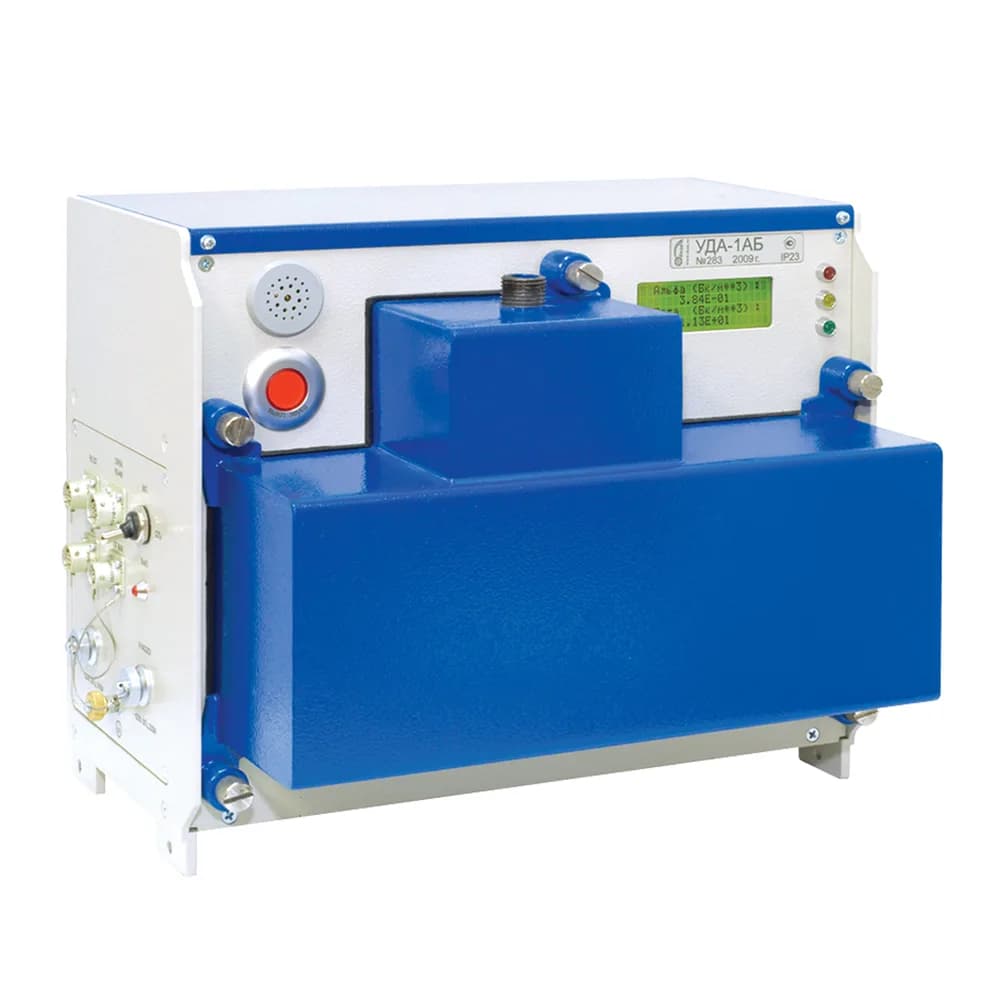
UDA-1AB — unit for measuring the volumetric activity of radioactive aerosols
A unit for continuous automatic monitoring of the concentration of radioactive aerosols in the air of working rooms and ventilation systems, in stand-alone mode or as…
Also in this article: RZA-08D — personnel surface contamination monitor, RZBA-09D — personnel surface contamination monitor, DKG-05D — personal gamma radiation dosimeter, KZU-28 — cassette battery charger, «DOZA-TLD» — thermoluminescent dosimetry system, «Alfarad Plyus» — measuring system for monitoring radon, thoron and their progeny
Read also
11/18/2026
Radiation monitoring at a uranium mining enterprise: areas, risks and NPP Doza instruments
With in-situ recovery the ore never comes to the surface, yet radiation risks remain: radon above process solutions, uranium aerosols at concentrate drying and packing, contamination of hands, workwear and equipment. We go through the areas of a mining enterprise and match NPP Doza instruments to each of them.
11/24/2026
How to Monitor Radioactive Contamination of Staff Hands, Footwear and Clothing at the Zone Exit
At the exit from a controlled-access zone the flux density of alpha and beta particles from skin, footwear and clothing is measured and compared with the permissible levels of Annex 21 of the Kazakhstan hygiene standards. We cover the exit routine, what to do on a Dirty signal, and how the RZA-08D, RZBA-09D and the portable MKS-17D Zyablik with the BDZA-R5D block differ.
11/18/2026
Personal dosimetry for workers: electronic dosimeter or TLD
An electronic dosimeter shows the dose immediately and alarms when a threshold is exceeded; a thermoluminescent dosimeter (TLD) accumulates dose over a wear period and is read in a laboratory. We cover the dose limits under Kazakhstan hygiene standards, the quantities Hp(10), Hp(0.07), Hp(3), and the choice between the DKG-05D and the DOZA-TLD system.