
Supply in Kazakhstan
KEG TRK supplies vibration monitoring and analysis solutions (Bently Nevada) across Kazakhstan: Almaty, Astana, Karaganda, Ust-Kamenogorsk, Aktobe and other regions. Official warranty, monitoring system design, installation, commissioning and personnel training.
Mining equipment
Key features
Applications and resources
Industry solutions, landing pages and articles about vb Balancer — rotor balancing tool
Typical tasks
- Balancing fans and induced-draft fans in their own bearings
- Balancing pump impellers after repair
- Checking residual 1x vibration after weights are fitted
- Field crews for whom balancing is the main job
Integrated monitoring: ultrasonic diagnostics · motor monitoring · implementation services
Documentation
Official Baker Hughes / Bently Nevada manufacturer PDFs. Key specifications are also published on this page for search and equipment selection.
Need a price with delivery in Kazakhstan? We will prepare a quotation for your task.
Description
The vb Balancer is a line of dedicated Bently Nevada balancers within the vbSeries: the vbBalancer with two channels and the vbBalancer+ with four. They are meant for balancing a rotor in its own bearings without removing it, in two planes. The basic spectrum up to 800 lines and 5 kHz is there so that, after the weights are fitted, you can check that vibration at running speed has dropped rather than moved to another component. Unlike the vb7 and vb8, this is not an instrument for routes and in-depth diagnostics.
How it differs from the vb7
| Parameter | vb Balancer | vb7 |
|---|---|---|
| Purpose | balancing | data collection, analysis and balancing |
| Channels | 2 (vbBalancer) or 4 (vbBalancer+) | 2 |
| Balancing planes | up to 2 | up to 2 |
| Spectrum | basic, up to 800 lines and 5 kHz | up to 6,400 lines and 40 kHz, demodulation |
| Run-up, bump test, orbit | not in the description | yes |
When to choose the vb Balancer
- Balancing is the crew's main job: fans, induced-draft fans, pumps, motor rotors.
- Another instrument or another specialist finds the cause of vibration.
- You do not need route collection with stored spectra.
If you must rule out misalignment, looseness or resonance before balancing, you need an analyzer: the vb7 or vb8.
What to prepare for an order
- A list of machines: rotor mass, running speed, access to two correction planes, how weights are attached.
- The required balance grade under ISO 21940-11. G 6.3 is usual for most industrial machines; the machine manufacturer sets the final grade.
- The number of channels: two or four.
- A tachometer with a mark on the shaft, for example a laser sensor with reflective tape, and vibration sensors.
- Ask us for the vb Balancer datasheet: the PDF attached to this page describes the vb7.
Limits
A balancer corrects unbalance only. It does not replace diagnosis of misalignment, looseness, a bent shaft or resonance. The approval for hazardous areas is not given in the materials we have for the vb Balancer, so for explosive sites we confirm it before ordering.
Related
Articles: on-site rotor balancing, field balancing of fans and induced-draft fans, how to read an FFT spectrum. Range: SCOUT and vbSeries, SCOUT portable collection. Neighbouring models: vb7, vb8, SCOUT100-EX.
Supply in Kazakhstan
KEG TRK supplies Bently Nevada equipment, trains staff, integrates with System 1, and provides on-site service in Kazakhstan.
Technical specifications
| Product | vb Balancer |
| Bently Nevada part number | vb Balancer |
| Purpose | dynamic balancing of rotors in their own bearings |
| Versions | vbBalancer (2 channels), vbBalancer+ (4 channels) |
| Balancing planes | up to 2 |
| Basic verification spectrum | up to 800 lines, up to 5 kHz |
Applications
Manufacturer
Bently Nevada
Dedicated vbSeries rotor balancing
Key specifications
- Product
- vb Balancer
- Bently Nevada part number
- vb Balancer
- Purpose
- dynamic balancing of rotors in their own bearings
- Versions
- vbBalancer (2 channels), vbBalancer+ (4 channels)
- Balancing planes
- up to 2
Official supplier in Kazakhstan
Related products
vb7 — collector, analyzer and balancer
Dual channel simultaneous recording, two-plane balancing, IP65
- vb7
- vb7
SCOUT100-EX — portable collector and balancer
2-channel ATEX Zone 2 collector, FFT, balancing, System 1
- SCOUT100EX
- SCOUT100EX
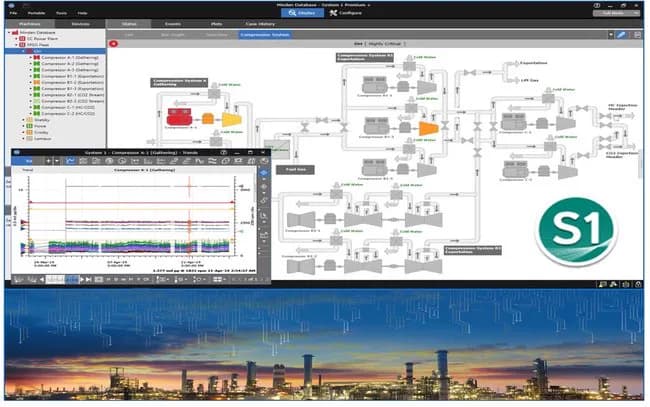
System 1 — condition monitoring platform
Flagship Bently Nevada condition monitoring and diagnostics platform
- All Bently Nevada systems + third-party systems
- ML, AI, Root Cause Analysis
Need advice?
Our specialists will help you choose the optimal vb Balancer — rotor balancing tool configuration for your equipment.
Related articles
All articles →Field Balancing of a Rotor: How It Is Done and When It Is Needed
A rotor is balanced in its own bearings: the instrument measures 1x amplitude and phase from a tachometer mark, a trial weight is added, and the vector change gives the correction mass and angle.
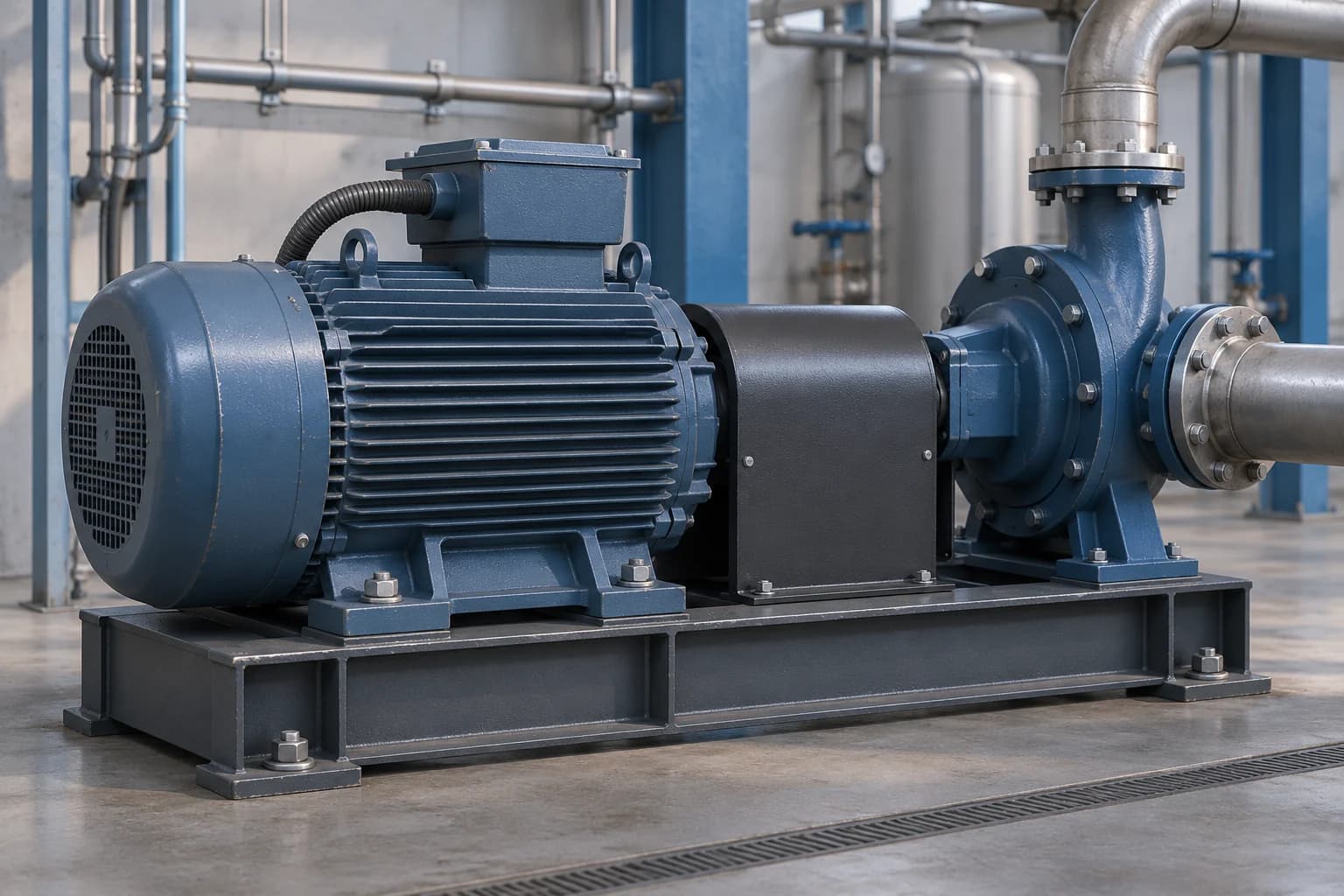
Ultrasound, vibration and electrical signature analysis for motor diagnostics
Compare seven motor-driven equipment conditions across three physical signals. See which method gives an early indication, localises a fault or guides the next test.
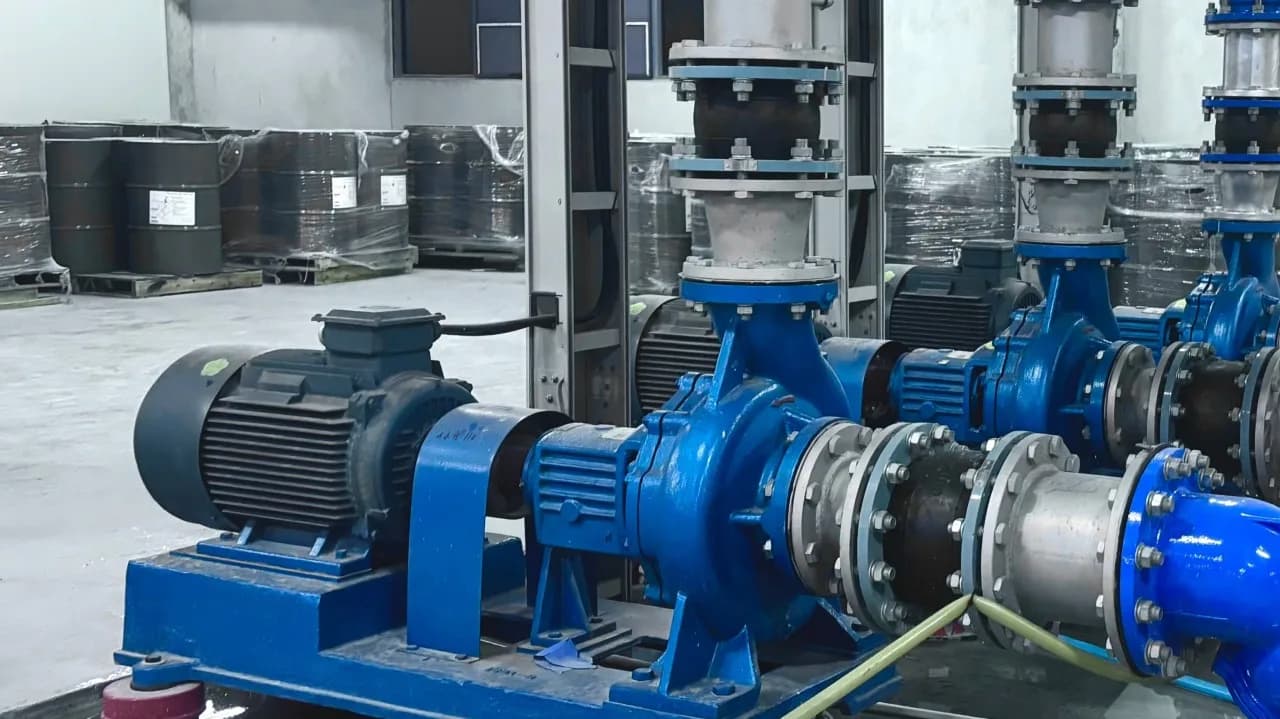
10 Equipment Maintenance Strategies That Cut Downtime in 2026
10 maintenance strategies that genuinely reduce downtime in 2026: predictive maintenance, RCM, TPM, and tools like Artesis e-MCM and SDT340, with KPIs you can roll out in stages at plants across Kazakhstan.
Shaft Misalignment: the Hidden Killer of Bearings, Couplings and Seals
Up to half of all rotating equipment failures are linked to shaft misalignment. We break down the types of misalignment, its consequences, and how vibration analysis and current analysis detect it before it destroys couplings and bearings.

What an Hour of Downtime Really Costs and How to Cut Unplanned Stops
Unplanned downtime costs far more than the repair crew's payroll line suggests. We break down the full cost-of-downtime formula and show how switching to predictive maintenance cuts unplanned stops by 30–50%.

4 Stages of Bearing Failure: How to Catch a Defect Months Before It Fails
A bearing doesn't fail instantly — it goes through 4 stages of degradation, and the first one is only visible to ultrasound. We break down the P-F curve and which diagnostic method works at each stage of bearing failure.