
Supply in Kazakhstan
KEG TRK supplies vibration monitoring and analysis solutions (Bently Nevada) across Kazakhstan: Almaty, Astana, Karaganda, Ust-Kamenogorsk, Aktobe and other regions. Official warranty, monitoring system design, installation, commissioning and personnel training.
Mining equipment
Key features
Applications and resources
Industry solutions, landing pages and articles about Ascent — legacy vibration analysis software
Typical tasks
- Offloading SCOUT and vbSeries route measurements to a computer
- Storing and viewing data at sites with instruments and Ascent databases already running
- Moving to System 1 as the monitoring programme grows
Integrated monitoring: ultrasonic diagnostics · motor monitoring · implementation services
Description
Ascent is Bently Nevada software for receiving and viewing data recorded by SCOUT and vbSeries portable instruments. In the descriptions of the SCOUT100, SCOUT140, vb6, vb7, vb8 and vb Balancer, Ascent is named as one of two ways to output results, alongside System 1. Ascent is now legacy software.
Overview: System 1.
Place in the measurement chain
Sensor on the machine, portable instrument (SCOUT or vb), USB or another offload route, then Ascent on a computer. System 1 is used for permanent online systems and for new monitoring programmes. If a site already has a fleet of instruments and an Ascent database, the program keeps working as a data destination; a move to System 1 is planned as the programme develops.
What the documentation does and does not allow us to say
Confirmed: the list of instruments that mention Ascent; two licence levels (Level 1 and Level 2); software and licence are ordered separately from the instrument kit. Not confirmed: the functions of each level, report formats and computer requirements. We do not fill these gaps with guesses and clarify them with the manufacturer on request.
What to prepare for an order
- instrument model (SCOUT100, SCOUT140, vb6, vb7, vb8, vb Balancer), serial number and year of manufacture;
- whether Level 1 or Level 2 is needed;
- whether an Ascent database already exists and which version;
- whether a move to System 1 is planned.
Related
Articles: how to measure vibration correctly, vibration meter or analyzer, what vibration diagnostics is and where to start. System: SCOUT and vbSeries, System 1, Orbit Studio. Neighbouring models: SCOUT100, SCOUT140, vb6, vb7, vb8.
Supply in Kazakhstan
KEG TRK supplies Bently Nevada equipment, trains staff, integrates with System 1, and provides on-site service in Kazakhstan.
Technical specifications
| Type | software (legacy) |
| Data sources | SCOUT100, SCOUT140, vb6, vb7, vb8, vb Balancer |
| Licence levels | Level 1 (108M4051), Level 2 (108M4052) |
| Supply | separately from the instrument |
| Product | Ascent |
| Bently Nevada part number | Ascent |
Applications
Manufacturer
Bently Nevada
Legacy Bently Nevada software for SCOUT and vbSeries data; an alternative to System 1
Key specifications
- Type
- software (legacy)
- Data sources
- SCOUT100, SCOUT140, vb6, vb7, vb8, vb Balancer
- Licence levels
- Level 1 (108M4051), Level 2 (108M4052)
- Supply
- separately from the instrument
- Product
- Ascent
Official supplier in Kazakhstan
Related products
SCOUT100-EX — portable collector and balancer
2-channel ATEX Zone 2 collector, FFT, balancing, System 1
- SCOUT100EX
- SCOUT100EX
vb5 — portable data collector
CSA Class 1 Div 2, route-based collection, Ascent / System 1
- vb5
- vb5
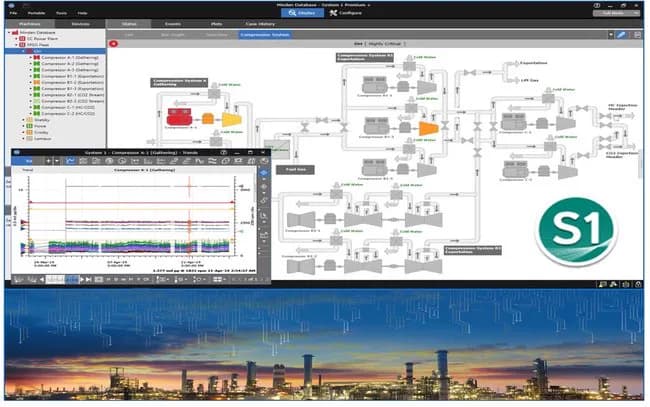
System 1 — condition monitoring platform
Flagship Bently Nevada condition monitoring and diagnostics platform
- All Bently Nevada systems + third-party systems
- ML, AI, Root Cause Analysis
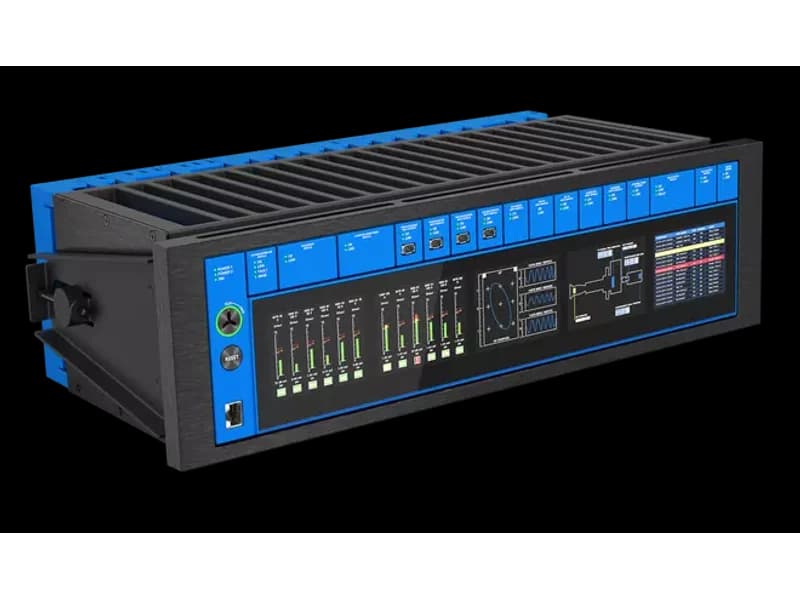
Orbit Studio — orbit studio
Configuration software for Orbit 60 and Orbit DCM distributed monitoring systems
- Orbit 60, Orbit DCM
- Ethernet
Need advice?
Our specialists will help you choose the optimal Ascent — legacy vibration analysis software configuration for your equipment.
Related articles
All articles →
10 Equipment Maintenance Strategies That Cut Downtime in 2026
10 maintenance strategies that genuinely reduce downtime in 2026: predictive maintenance, RCM, TPM, and tools like Artesis e-MCM and SDT340, with KPIs you can roll out in stages at plants across Kazakhstan.
Shaft Misalignment: the Hidden Killer of Bearings, Couplings and Seals
Up to half of all rotating equipment failures are linked to shaft misalignment. We break down the types of misalignment, its consequences, and how vibration analysis and current analysis detect it before it destroys couplings and bearings.

What an Hour of Downtime Really Costs and How to Cut Unplanned Stops
Unplanned downtime costs far more than the repair crew's payroll line suggests. We break down the full cost-of-downtime formula and show how switching to predictive maintenance cuts unplanned stops by 30–50%.
4 Stages of Bearing Failure: How to Catch a Defect Months Before It Fails
A bearing doesn't fail instantly — it goes through 4 stages of degradation, and the first one is only visible to ultrasound. We break down the P-F curve and which diagnostic method works at each stage of bearing failure.
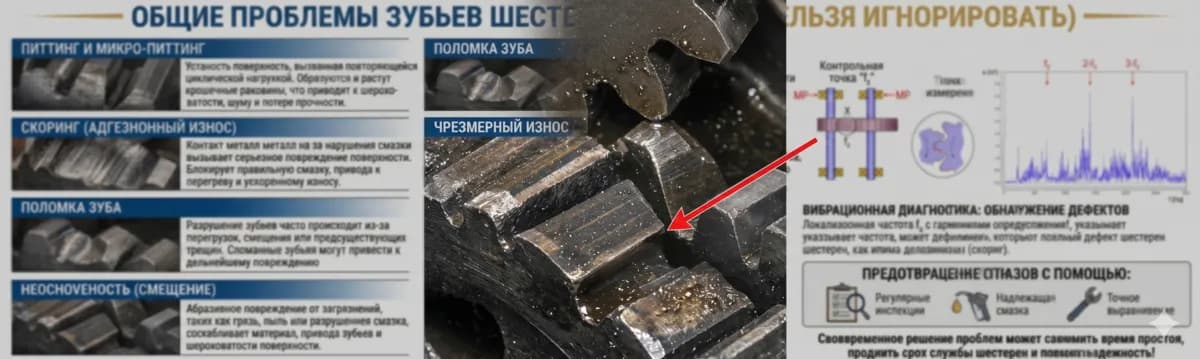
Gearbox Diagnostics: Tooth Wear, Pitting and Misalignment Before Shutdown
How to catch gear tooth wear, pitting and misalignment before an emergency stop. SDT 340 ultrasound walkdowns plus Artesis e-MCM on the drive motor — field experience from mining and metallurgy in Kazakhstan.
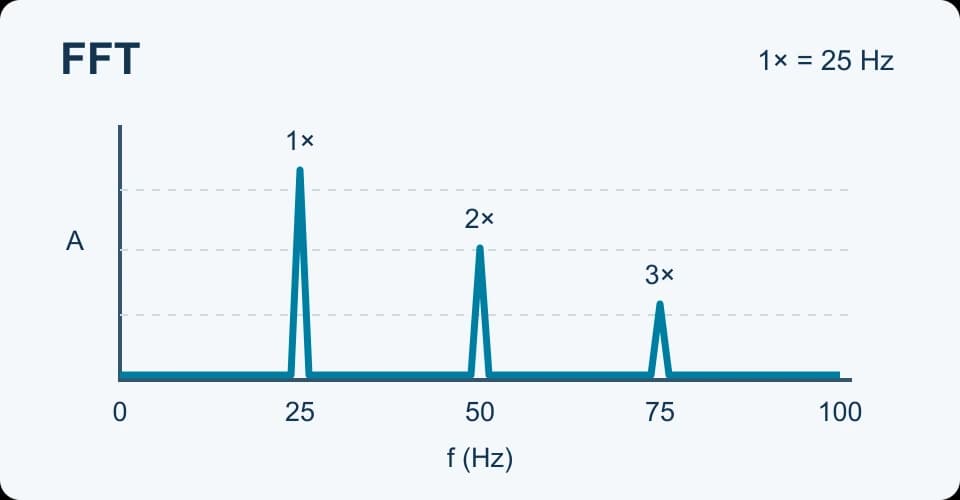
How to Read an FFT Spectrum: Five Vibration Signatures Every Mechanic Should Know
How to read an FFT vibration spectrum: unbalance (1x), misalignment (2x and axial 1x), mechanical looseness (harmonics), bearing defects (BPFO, BPFI, BSF, FTF). Criteria per the SKF guide.