
Ultrasonic Lubrication of Crushers, Screens and Mills: Where LUBExpert Delivers the Most in Mineral Processing
Which crushing and processing assets are grease-lubricated, how bearing lubrication differs from purging a labyrinth seal, and how to run ultrasonic lubrication control in a noisy, dusty plant.
In this article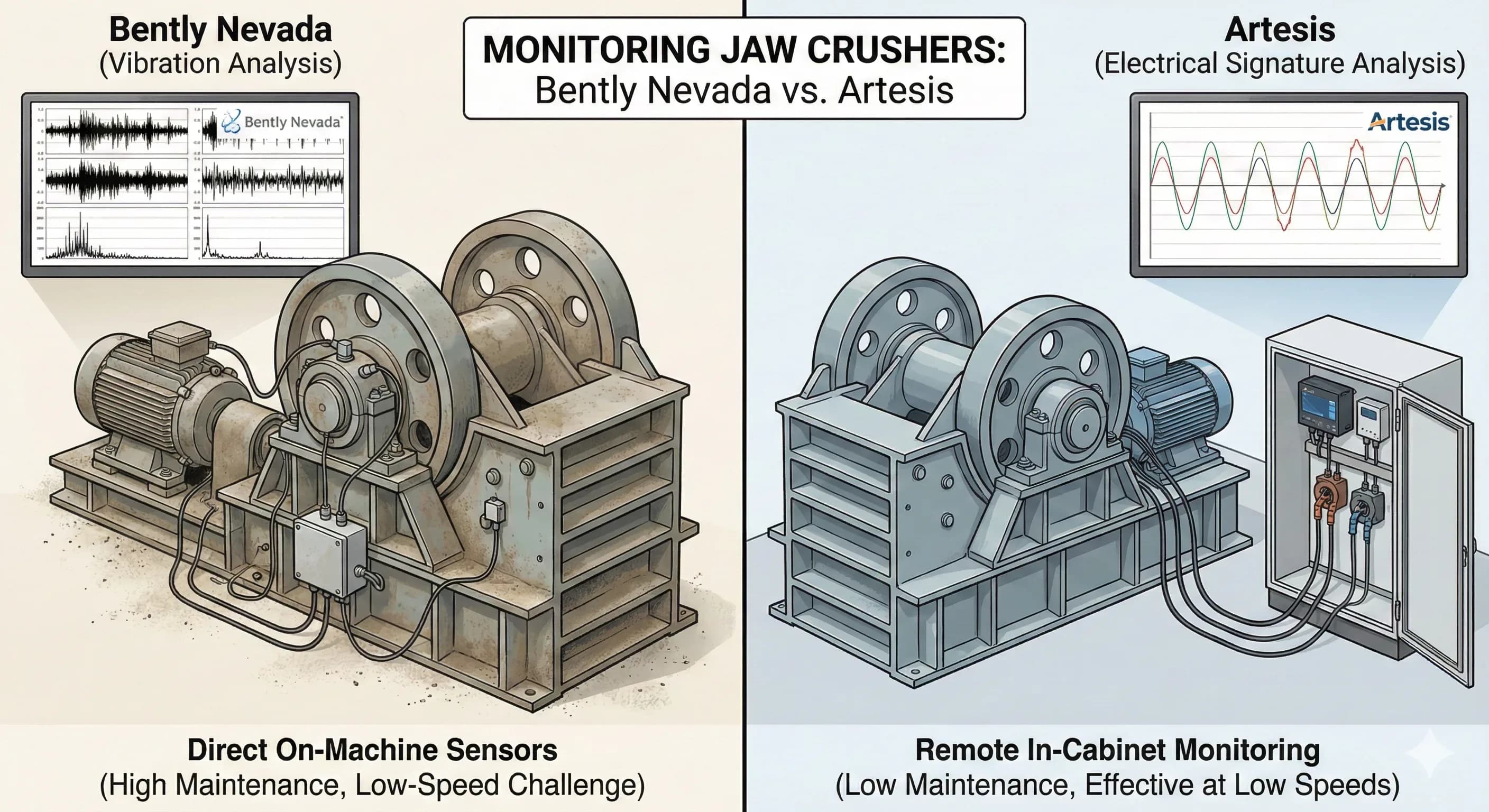
Prepared by the KEG TRK team · How we prepare our content
A mining and processing plant has hundreds of grease points, and they are the ones most often serviced "by habit": grease gun, five strokes, next point. Yet conditions here are the toughest on the whole site: impact loads, abrasive dust, water, low speeds and large bearings. A lubrication mistake on a jaw crusher eccentric shaft bearing costs not a bearing replacement but a stop of the entire process line.
Let us look at where ultrasonic lubrication control with LUBExpert pays back fastest in mineral processing, where it does not apply, and how to work with the instrument in a noisy plant.
First, separate two tasks: lubricating the bearing and protecting the seal
On mining equipment, grease often performs two different functions, and they are constantly confused:
| Function | Where the grease goes | How to dose | Is ultrasound needed |
|---|---|---|---|
| Bearing lubrication | Into the cavity between rolling elements and raceways | Strictly as needed; over-greasing is harmful | Yes, this is its core task |
| Labyrinth purging | Into the labyrinth seal and out | Regularly and generously; fresh grease pushes out dust | No, controlled by grease emerging from the labyrinth |
If an asset has a single grease nipple feeding both the bearing and the labyrinth, understand the design before you start: check the housing drawing and find where the channels lead. Ultrasound controls only the bearing cavity. Trying to "purge the labyrinth" through the bearing while following ultrasound gives either a dirty labyrinth or an over-greased bearing.
Where LUBExpert delivers the most
Jaw crushers
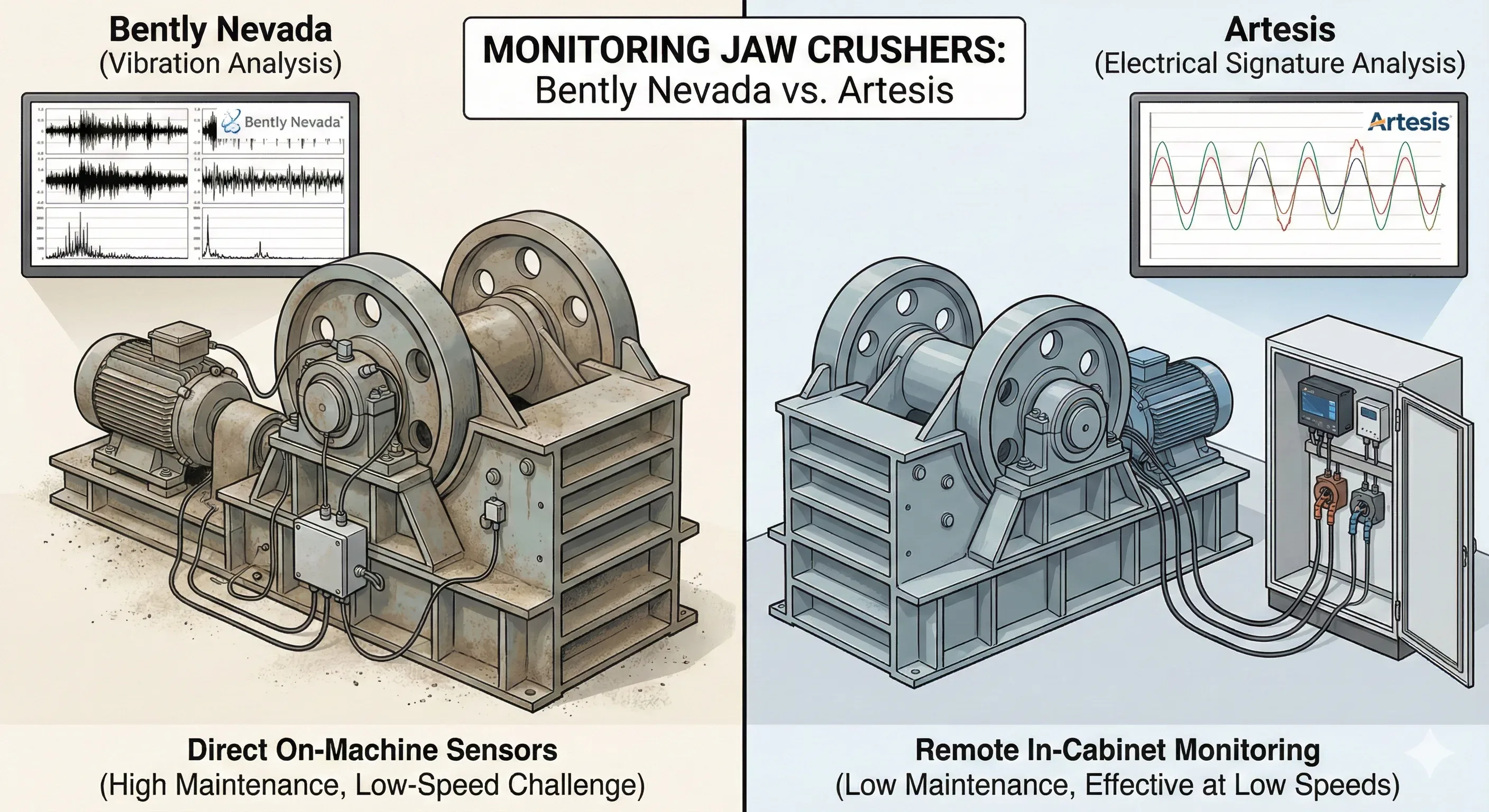
Eccentric shaft bearings and pitman bearings are large spherical roller bearings, grease-lubricated on many models. The load is impact, the speed moderate. The typical problem is over-greasing: "the crusher is critical, extra won't hurt". Excess grease heats up, gets pushed out through the seals and drags dust back into the housing. Ultrasound shows when the bearing has received enough, so there is no need to keep pumping. Monitoring of this asset is covered on the jaw crusher page.
Vibrating screens
Screen exciters come with oil baths or with grease, and for the latter ultrasonic lubrication is very telling. Bearings run under heavy load at high frequencies; both under- and over-greasing show quickly as rising temperature. Note that a running screen has a high overall vibration background, so the reading must be taken with a contact sensor at exactly the same spot on the housing, otherwise the trend will jump. More on the vibrating screen.
Belt conveyor pulleys
Drive, tail and bend pulleys are the largest group of points at a processing plant. Their bearings are grease-lubricated and often hard to reach in galleries. This is where ultrasound saves the most time and grease: a significant share of points turns out to be fine on measurement and does not need grease on this round. See the belt conveyor page and the article on conveyor idler lubrication.
Slurry pumps
Slurry pump bearing housings are a frequent source of unplanned repairs: water and slurry get in through shaft seals. Ultrasound is doubly useful here: besides dosing, it shows rising friction from contaminated grease earlier than other methods. See the slurry pump page.
Mills: pinion shaft bearings
Mill trunnion bearings usually run on oil with hydrostatic lift, which is not a task for LUBExpert. But pinion shaft bearings and motor bearings are often grease-lubricated, and their failure stops the mill. See the ball mill page.
Equipment covered in this article
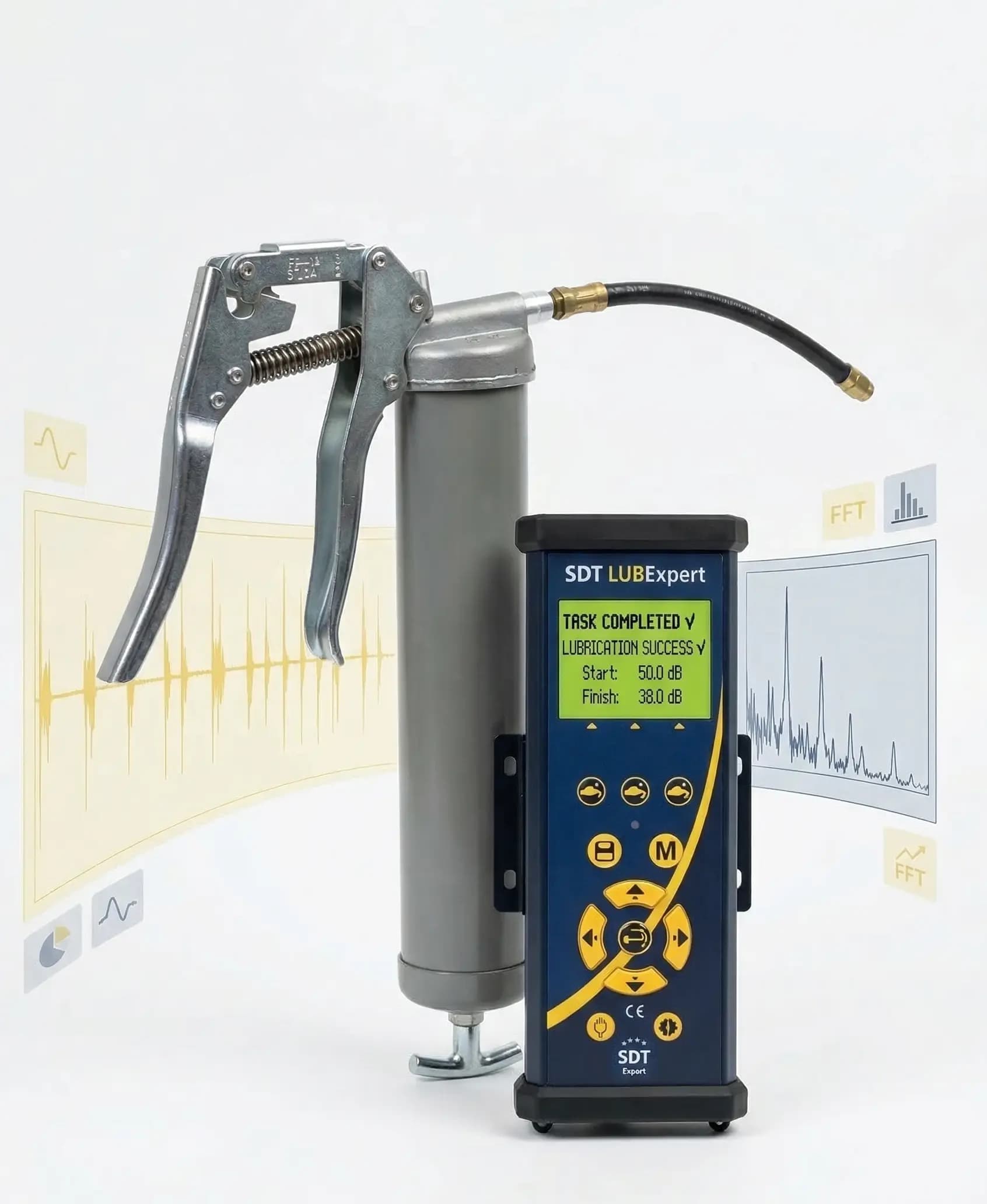
LUBExpert — SDT Ultrasound Bearing Lubrication Assistant
SDT instrument for precision ultrasound-guided greasing of rolling element bearings: tells you when to add grease and when to stop, follows routes from UAS3 and closes…
Where ultrasonic lubrication does not apply
- Assets on circulating oil: cone crushers with a lube unit, hydrostatic mill bearings, oil-bath gearboxes. Here oil analysis and vibration analysis do the job.
- Open gears (mill girth gears) are lubricated by spraying adhesive lubricant and are monitored differently.
- Bearings that cannot be reached while running due to safety rules. Ultrasonic lubrication requires a rotating asset. If the running asset cannot be approached, the solution is a remote sensor and an extended grease line outside the guard, not greasing on stopped equipment.
How to work in a noisy, dusty plant
Noise. A contact ultrasonic sensor measures the signal that arrives through the housing metal at around 38 kHz, a frequency at which airborne plant noise barely interferes. But vibration from neighbouring assets travels through the frame, so:
- always use the same measurement point: mark it with paint or install a measurement stud;
- on large housings, place the point close to the bearing load zone;
- compare the bearing with itself over time, not with its neighbour.
Dust. The grease nipple is the main path for abrasives into the bearing. Wipe the nipple before every gun connection and fit a cap. A dirty nipple cancels out any dosing accuracy.
Remote points. If the grease point is piped far from the bearing, allow for the delay: grease reaches the cavity with a lag, and the signal responds late. Guided mode in SDT340 LUBExpert waits for signal stabilisation, and on long lines that pause should be extended.
Where to start at a processing plant
- Inventory the points. Build a lubrication point map: asset, grease type, delivery method, and where the grease actually goes (bearing or labyrinth).
- Pilot area. Take one line, for example the crushing building or a conveyor gallery, 40–80 points.
- Calibrate grease guns and label them by grease type.
- Two to three months of ultrasonic lubrication with a comparison of grease consumption, asset temperatures and unplanned bearing replacements.
- Scale up to other areas using the pilot experience.
A detailed plan for the first three months is in the article on the 90-day SDT programme.
Summary
At a processing plant, lubrication is not an auxiliary task but one of the main levers of reliability for crushing and beneficiation lines. Ultrasound with LUBExpert lets you dose grease according to the bearing's actual need, separate bearing lubrication from seal purging, and catch contaminated assets before they fail.
KEG TRK supplies LUBExpert and SDT340 and runs pilot implementations at mining companies in Kazakhstan, from inventorying lubrication points to on-site training of lubrication technicians.
Equipment in this article
KEG TRK quotes prices and delivery times to Kazakhstan on request. We will prepare a commercial offer for your application.
LUBExpert — SDT Ultrasound Bearing Lubrication Assistant
SDT instrument for precision ultrasound-guided greasing of rolling element bearings: tells you when to add grease and when to stop, follows routes from UAS3 and closes…

SDT340 LUBExpert — Intelligent Lubrication Control Mode
The SDT340 in LUBExpert mode combines ultrasound bearing diagnostics and lubrication management in a single field instrument.
Also in this article: SDT340 - Advanced Ultrasound Detector
Read also
6/30/2026
SDT at mines and concentrators: conveyors, crushers, compressed air
Conveyor rollers, crusher bearings, slurry pumps, leaks and LUBExpert — SDT340 guide for mining in Kazakhstan.
9/18/2026
SDT + Artesis at a cement plant: mills, kilns, fans
Raw and cement mills, rotary kilns, ID fans and drive motors — how SDT340 ultrasound and Artesis ESA monitoring cut downtime at cement production.
7/22/2026
Ultrasonic Bearing Grease Management with SDT: 70% of Points Over-Greased
SDT multi-plant studies: switching from grease formulas to LUBExpert found ~70% of bearings over-lubricated, 15% under, only 15% correct. How ultrasound sets dose and interval.