
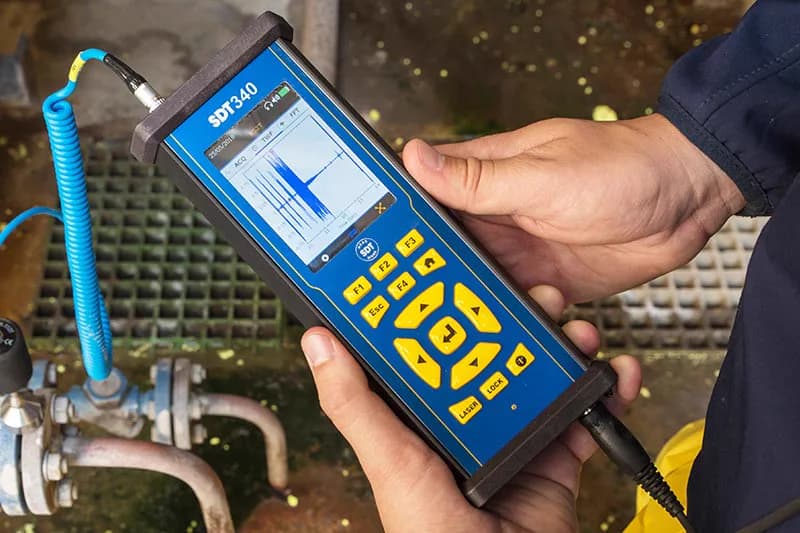
SCR failure on a DC drive: ultrasound and vibration with one SDT340
When vibration says 'normal' but the drive heats up and arcs: how to combine the ultrasound and vibration channels of the SDT340 for early diagnosis of SCR and mechanical faults on DC drives.
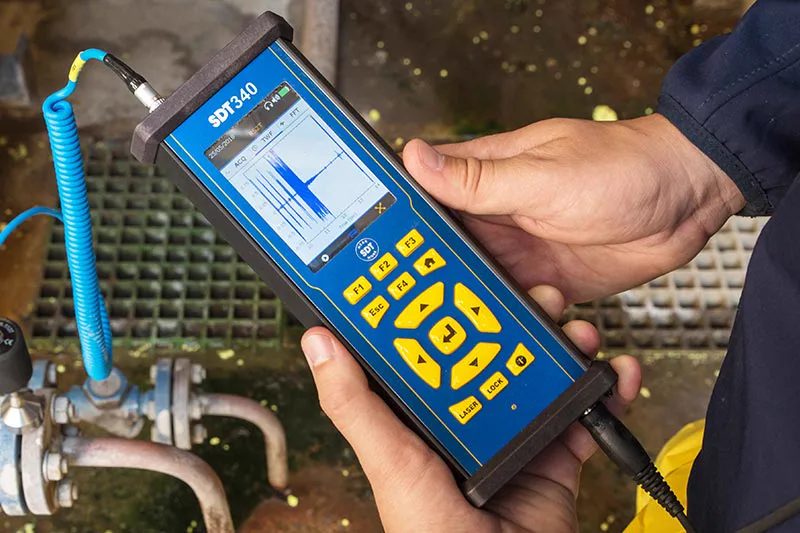
Metals and mining plants still run plenty of thyristor DC drives: roller tables, coilers, cranes, some mill lines. Classic vibration analysis sees the motor and gearbox mechanics well, but electrical faults in the SCR / thyristor bridge often stay invisible until a thermal failure happens. The SDT340 is convenient here because one instrument carries both ultrasound and vibration.
Two channels — two fault natures
| Channel | What you look for | Where you measure |
|---|---|---|
| Ultrasound (airborne) | arcing, partial discharge, abnormal cabinet noise | converter cabinet, busbars, contactors |
| Ultrasound (contact) | bearing and coupling friction | motor / gearbox bearings |
| Vibration | unbalance, misalignment, gear mesh | motor housing, gearbox |
See also: partial discharge with ultrasound, couplings.
A typical SCR failure scenario
- One thyristor / module starts running with elevated heat and noise.
- Vibration at the motor is still normal (the mechanics are fine).
- Torque instability, jerks and nuisance trips appear.
- Without early diagnosis — cascading bridge failure and line downtime.
Ultrasound at the cabinet picks up abnormal pulses / hissing earlier than a thermal camera averaging the whole cabinet, especially when compared against a healthy neighbouring drive.
Equipment covered in this article
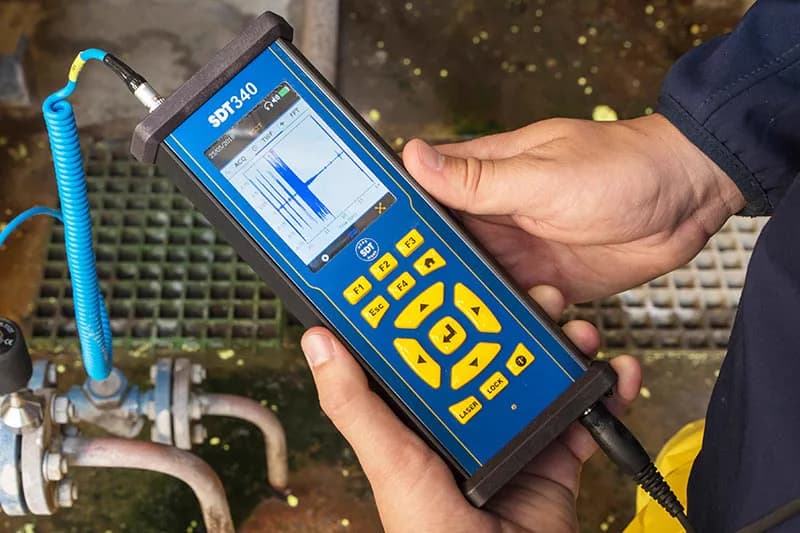
SDT340 - Advanced Ultrasound Detector
The most advanced ultrasound detector for collecting, analysing and trending data
SDT340 route method
- Baseline on a healthy drive of the same rating (cabinet ultrasound plus motor vibration).
- Walk the suspect drives: airborne sensor along cabinet doors / ventilation grilles (observing electrical safety rules!).
- Contact ultrasound plus vibration at the motor — to separate the mechanics.
- If electrical faults are suspected — escalate to the electrical team (thermography, oscilloscope, module replacement).
For a fleet of induction motors nearby, Artesis ESA is useful — but the DC/SCR area is usually covered by cabinet ultrasound plus mechanical vibration.
Where this matters in Kazakhstan
- Rolling mills — auxiliary DC drives (ESA at a rolling mill).
- Mining and processing plants — conveyor and crusher drives with legacy converters.
- Cranes / transfer systems in the workshops.
Conclusion
On a DC section the SDT340 works as a multi-sensor route instrument: ultrasound catches the cabinet electrics, vibration catches the machine mechanics. That is cheaper than line downtime and faster than waiting for the smell of burning.
Related material: SDT340 for hydraulics, SDT + Artesis integration, SonaVu and electrical reliability.
Equipment in this article
KEG TRK quotes prices and delivery times to Kazakhstan on request. We will prepare a commercial offer for your application.
SDT340 - Advanced Ultrasound Detector
The most advanced ultrasound detector for collecting, analysing and trending data
Read also
7/17/2026
Ultrasonic diagnostics of couplings and shaft connections: early signs of failure
Elastomeric, gear and jaw couplings emit a characteristic ultrasonic signature long before a vibration alarm. The SDT340 inspection method for pumps, compressors and gearbox drives.
10/10/2026
What Is Machinery Vibration Analysis and How to Start
Vibration analysis checks machine condition from bearing housing vibration: what is measured, route-based vs online monitoring, which faults show in the spectrum, how to start.
10/10/2026
Electric Motor Diagnostics: Which Method Shows What
Vibration, ultrasound, thermography, current analysis (MCSA/ESA), motor circuit analysis (MCA), megohmmeter and oil analysis: which faults each method sees, where it stops and how to combine them.