
Supply in Kazakhstan
KEG TRK supplies ultrasonic diagnostics solutions (SDT Ultrasound Solutions) across Kazakhstan: Almaty, Astana, Karaganda, Ust-Kamenogorsk, Aktobe and other regions. Official warranty, monitoring system design, installation, commissioning and personnel training.
Mining equipment
Key features
Applications and resources
Industry solutions, landing pages and articles on SDT Mate - Sherlog Kit MATE for Hatch Tightness Testing (Discontinued)
Where it is used
Typical tasks
- Ship hatch cover tightness testing
- Class society survey and certification
- Port State Control (PSC) and pre-loading inspections
- Documenting measurements for reporting to a charterer or insurer
Overview
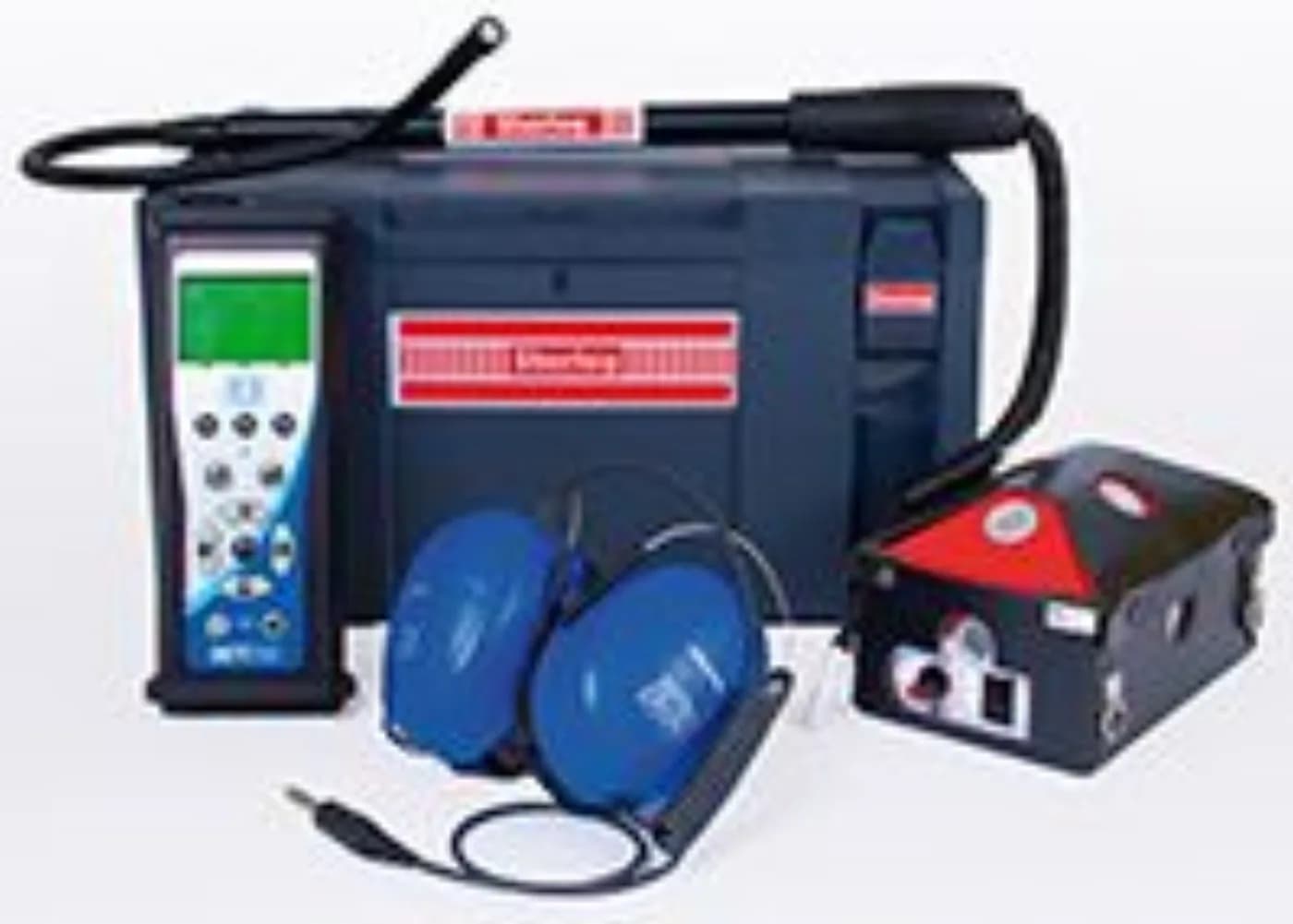
SDT Mate is the market name for the ready-made Sherlog kit "MATE", which SDT Ultrasound Solutions offered as an affordable set for ultrasonic tightness testing of ship hatch covers. At its core is the SDT200 detector — a high-quality ultrasonic receiver with a digital LCD readout — paired with the SDT 8 MS multi-transmitter and an external flexible sensor.
This kit has been discontinued. A dedicated Sherlog kit MATE page is no longer part of SDT Ultrasound Solutions' current catalogue: the manufacturer moved hatch tightness testing onto the combination of a general-purpose SDT270 or SDT340 detector, a HATCHecker sensor, and reports generated in SHERLOGReporter — the same source-receiver principle, on a current detector platform with more developed reporting.
Key features
A turnkey kit
- SDT200 receiver — a high-quality ultrasonic detector that clearly shows where air compression inside the hold is compromised, with digital readings on an LCD
- SDT 8 MS transmitter — a multi-transmitter generating a reference ultrasound signal inside the closed hold
- External flexible sensor — access to seams and hard-to-reach areas around the hatch perimeter
- Noise isolating headphones — audio confirmation of the result on top of the digital readout
Control and data
- Icon-based menu — intuitive navigation with no operator training required
- 6 interface languages — built-in localizations
- Memory for 4,000 measurements — each with a date and time stamp
- DataDump — proprietary software for transferring data to a computer and printing a report
- Independent adjustment — listening volume and amplification level set separately for operator comfort
Who the kit was for
The Sherlog kit MATE was recommended for operators who valued both measuring and evaluating hatch cover tightness, as well as transferring survey data to a computer for reporting and record keeping. To interpret readings and test results correctly, the manufacturer recommended completing the SDT-IMCS training course.
Technical specifications
| Parameter | Description |
|---|---|
| Kit contents | SDT200 receiver, SDT 8 MS transmitter, headphones, flexible sensor |
| Receiver | SDT200, LCD with digital readout |
| Transmitter | SDT 8 MS, multi-transmitter, stabilized frequency |
| Menu | Icon-based, 6 language versions |
| Memory | 4,000 time- and date-stamped measurements |
| Data transfer | DataDump (PC, printed report) |
| Adjustments | Independent volume and amplification level |
| Purpose | Ship hatch cover and cargo hold tightness testing |
Why the kit was discontinued
SDT consistently moved hatch tightness testing away from dedicated branded kits (Sherlog kit CADET, MATE, MASTER) toward a modular setup: a general-purpose SDT270 or SDT340 detector, to which a dedicated HATCHecker sensor connects, with survey reports produced in SHERLOGReporter. This let the same detector cover both hatch testing and the rest of a predictive maintenance program — mechanical diagnostics, leaks, electrical inspection.
What to choose instead of SDT Mate
- HATCHecker — a dedicated hatch tightness sensor built on a current detector, the direct functional successor
- SDT270 — a detector with memory and spectral analysis in place of the SDT200 receiver that shipped in the kit
- SHERLOGReporter — reporting software for hatch tightness testing in class-society formats in place of DataDump
Support for this discontinued kit
- Repair and calibration of previously purchased Sherlog kit MATE units remains available through SDT's authorized service centres
- For new purchases and to continue a survey programme, migrating to the SDT270/SDT340 + HATCHecker + SHERLOGReporter combination is recommended
Technical specifications
| Receiver | SDT200 — an ultrasonic receiver with an LCD and digital readout |
| Transmitter | SDT 8 MS — multi-transmitter, 8 emitters × 125 mW, 39.2/39.6 kHz |
| Sensor | External flexible ultrasonic sensor |
| Headphones | Noise isolating headphones included |
| Memory | 4,000 time- and date-stamped measurements |
| Interface | PC transfer via the proprietary DataDump software |
| Languages | 6 built-in menu language versions |
Applications
Manufacturer
SDT Ultrasound Solutions
The Sherlog Kit MATE, a ready-made SDT200-based kit for ultrasonic ship hatch cover tightness testing, now discontinued. Its function today is covered by HATCHecker, SDT270/SDT340 and SHERLOGReporter
Key specifications
- Receiver
- SDT200 — an ultrasonic receiver with an LCD and digital readout
- Transmitter
- SDT 8 MS — multi-transmitter, 8 emitters × 125 mW, 39.2/39.6 kHz
- Sensor
- External flexible ultrasonic sensor
- Headphones
- Noise isolating headphones included
- Memory
- 4,000 time- and date-stamped measurements
Official supplier in Kazakhstan
Related products
SDT Master - Sherlog Kit MASTER for Hatch Tightness Testing (Discontinued)
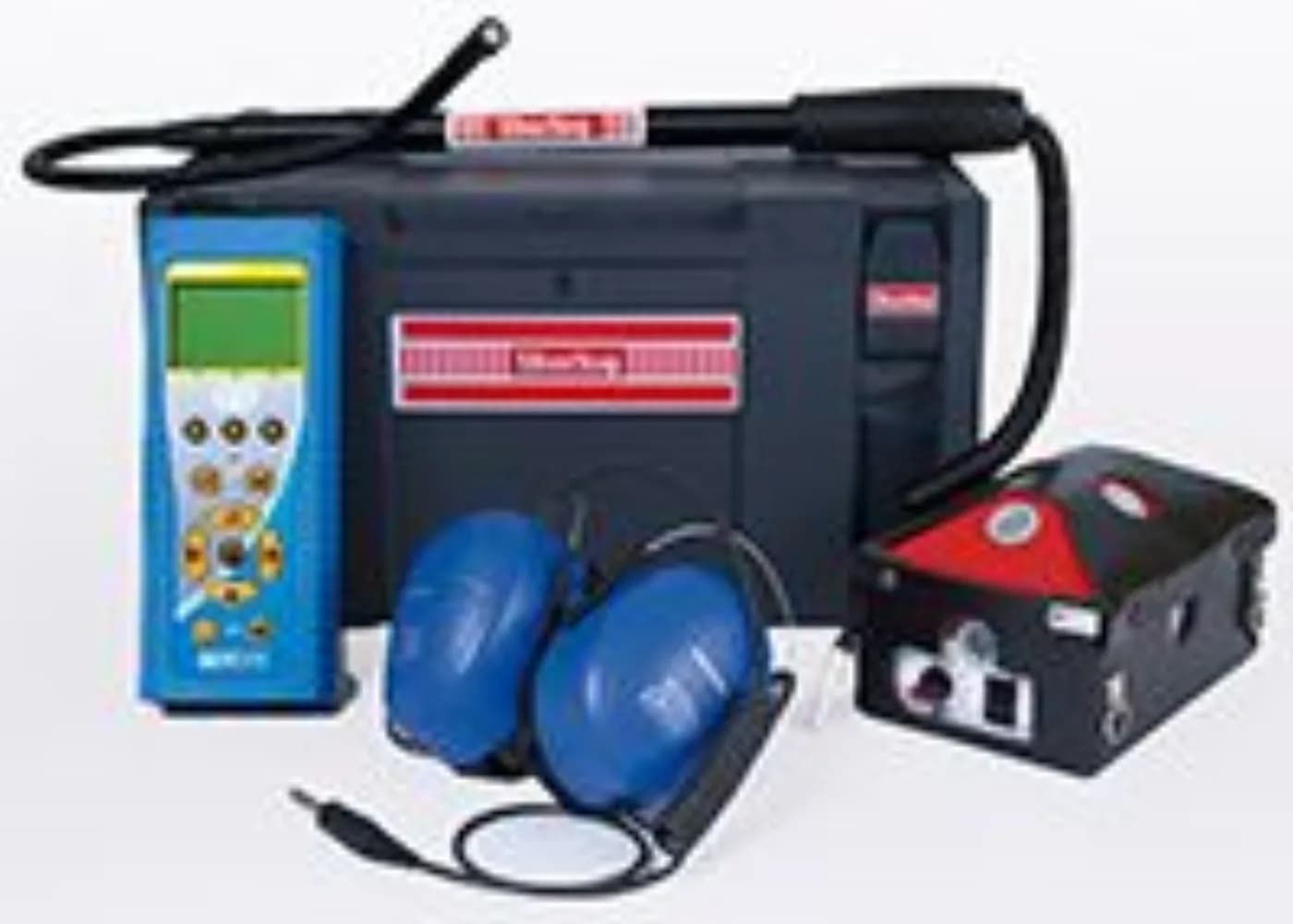
The flagship Sherlog Kit MASTER, an SDT270-based kit for ultrasonic ship hatch cover tightness testing with instant report generation, now discontinued. Its function today is covered by HATCHecker, SDT270/SDT340 and SHERLOGReporter
- SDT270 — the top-tier receiver in the SDT line, with extended reporting logic
- SDT 8 MS — multi-transmitter, 8 emitters × 125 mW, 39.2/39.6 kHz
SDT HATCHecker ultrasonic hatch cover tightness tester
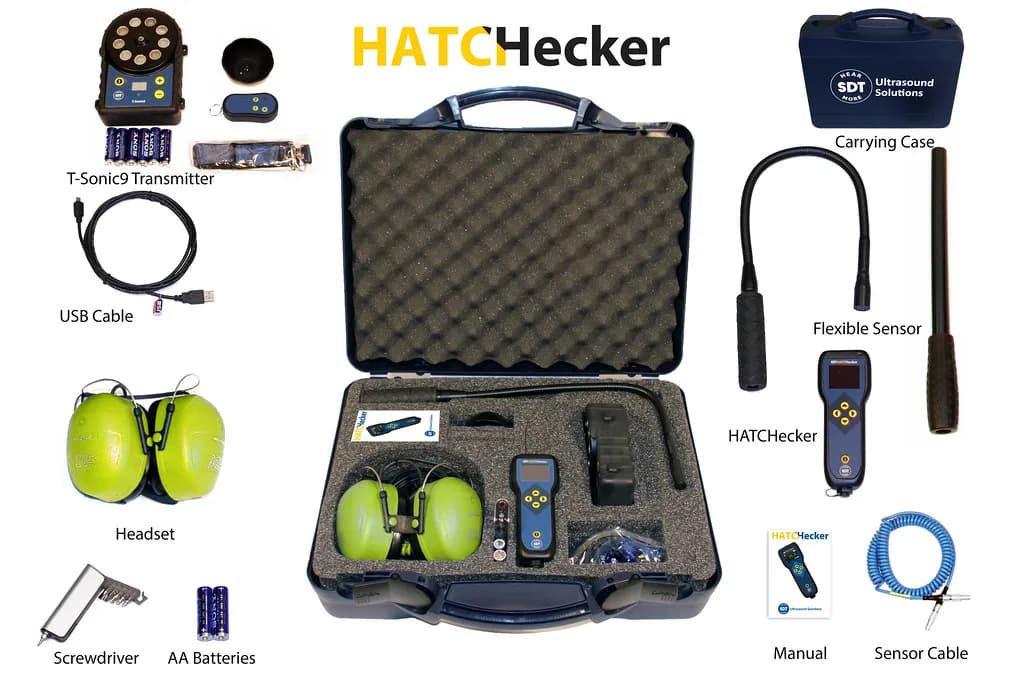
Locate sound paths through cargo hatch seals with a T-Sonic9 transmitter and flexible sensor. Receiver specifications and guidance on documenting an inspection.
- T-Sonic9
- OLED 160 × 128
SDT Sherlog TA - Ultrasound Detector for Hatch Tightness Testing (Discontinued)
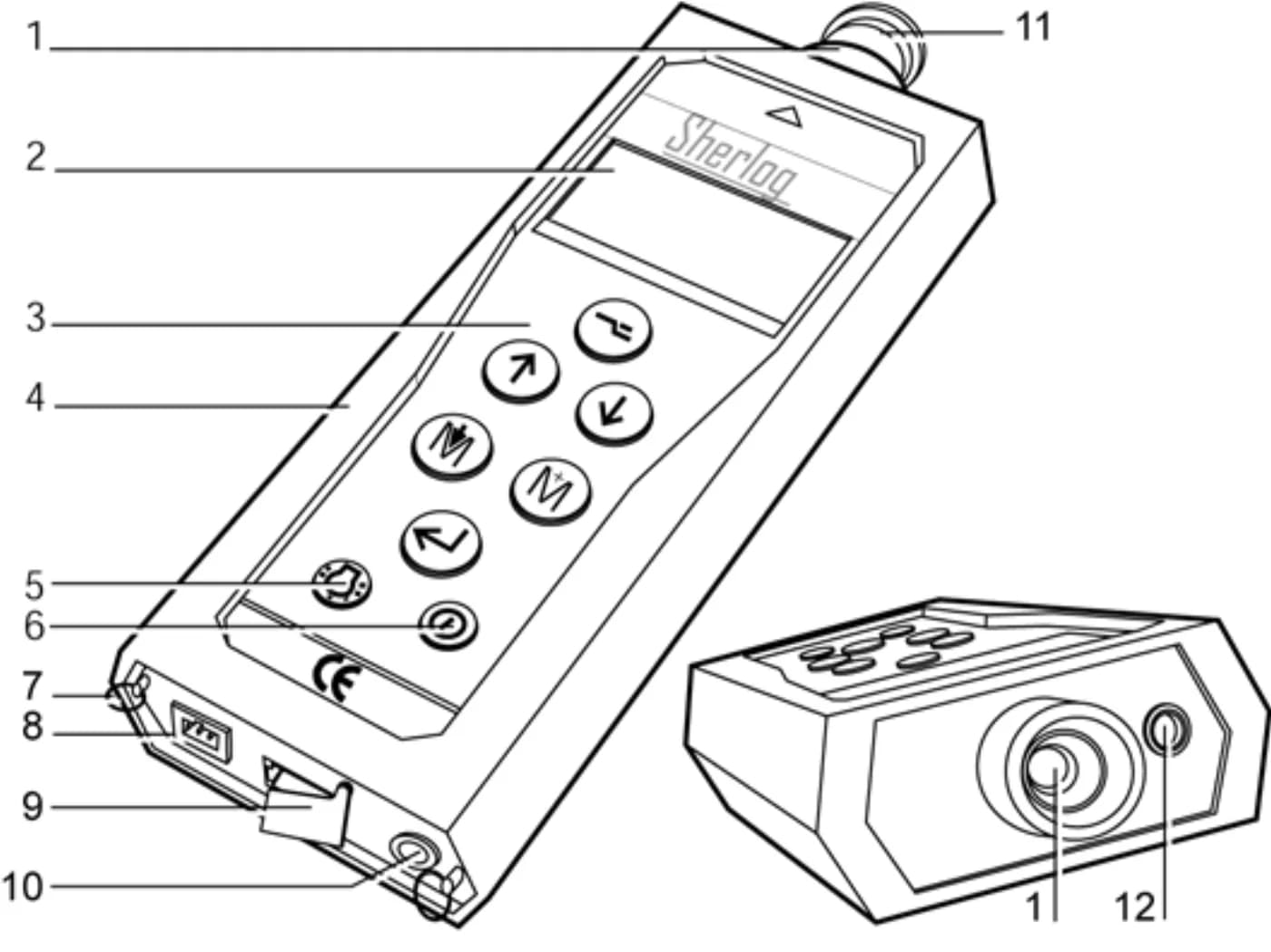
Stand-alone ultrasound detector and multi-transmitter for ship hatch cover tightness testing, now discontinued. Its function today is covered by HATCHecker, SDT270/SDT340 and SHERLOGReporter
- 40 kHz ± 1 kHz (built-in and flexible sensors)
- Backlit graphic LCD
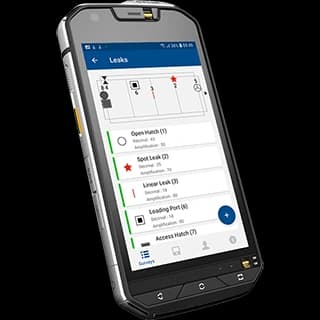
SDT SHERLOGReporter for hatch cover survey reports
Mobile app and web workspace for hatch cover inspections. Map spot and linear leaks and associate photographs with each finding.
- Mobile app and web platform
- Survey report preparation
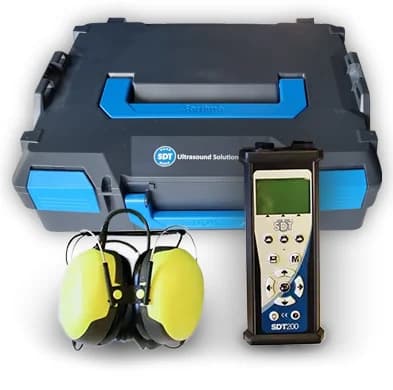
SDT200 — Entry-Level SDT Ultrasound Detector
Handheld SDT ultrasound detector with up to 100 kHz bandwidth, built-in IR pyrometer and memory for 4,000 measurements. For leak detection, bearing checks and electrical panel inspection.
- up to 100 kHz (ultrasound bandwidth)
- 256 kSps, 16-bit ADC; recording at 8 kSps (heterodyned)
Need advice?
Our specialists will help you choose the optimal SDT Mate - Sherlog Kit MATE for Hatch Tightness Testing (Discontinued) configuration for your equipment.
Related articles
All articles →
What compressed air leaks cost: a step-by-step calculation
Leak cost = air flow × operating hours × compressor specific energy × tariff. A flow table by orifice diameter and pressure, a worked example and how to use your own tariff.
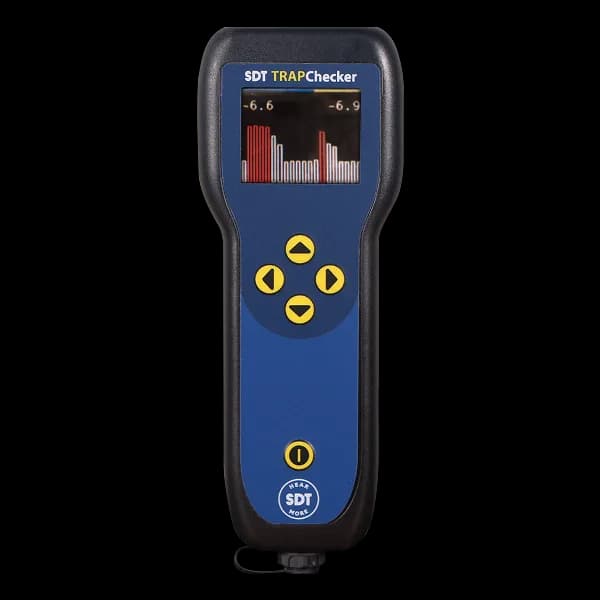
How to test a steam trap: ultrasound and temperature
A steam trap is tested with two readings: temperature finds blocked traps, ultrasound before and after the trap finds steam blow-through. Signs by trap type, the procedure and steam losses.

Ultrasound at low speeds: how to diagnose a gearbox running at 0.1 rpm
Vibration analysis below 10 rpm often leads to wrong conclusions. A real case: a broken gear tooth at 2.95 rpm caught by the SDT340 where the vibration FFT could not help.

Partial Discharge in Switchgear and Substations: Hearing a Breakdown Before It Happens
Corona, tracking and partial discharge silently destroy switchgear, transformer and cable-joint insulation for months before a flashover. How ultrasound and UV inspection catch insulation defects from a safe distance.
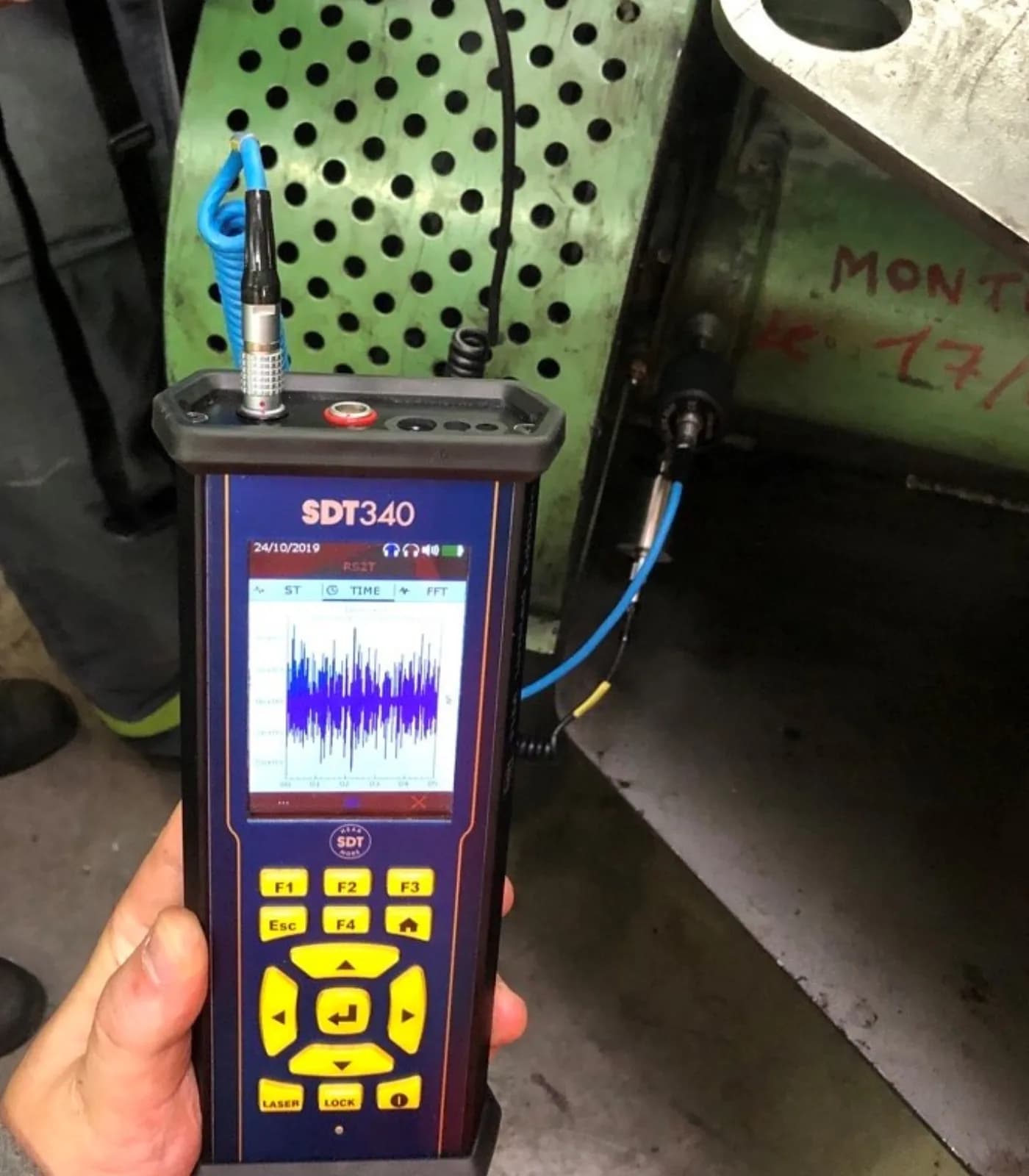
Ultrasound Inspection: A Beginner's Guide
How ultrasound condition monitoring works, what it finds across SDT's eight application areas, which instrument to choose and how to build an inspection programme.