
Dust in open-pit diesels: ultrasonic tightness testing as engine protection
At Kazakhstan's open-pit mines dust kills diesel engines through leaks in the air intake. How SDT340 and TIGHTChecker find intake leaks before power loss and catastrophic wear.
At Kazakhstan's open pits and processing plants, abrasive dust is the main enemy of the diesel engines in haul trucks, excavators and drill rigs. Even a healthy air filter cannot save the engine if there is a leak in the intake downstream of the filter: dust goes straight into the cylinders. An ultrasonic tightness test finds those spots in minutes.
Why the filter is "fine" but the engine still eats dust
The classic scenario:
- The filter is replaced on schedule.
- Power drops, oil consumption rises.
- Teardown shows scoring and liner wear.
- The cause is unfiltered air being drawn in at clamps, cracked hoses, covers and loose joints downstream of the filter.
Visual inspection and soap solution work poorly on large machines and in dusty conditions. What you need is a "pressure / vacuum + ultrasound" method.
The SDT method
Instruments: SDT340, TIGHTChecker or SDT270.
- Isolate the intake section per the OEM / service instructions.
- Apply slight positive pressure or vacuum (within the safety procedure).
- Survey the joints with an airborne sensor — a leak "whistles" in ultrasound.
- Mark and repair the leaks, then repeat the test.
The same principle applies to operator cabs, hydraulic tanks and other sealed volumes — see the tightness pillar.
Equipment covered in this article
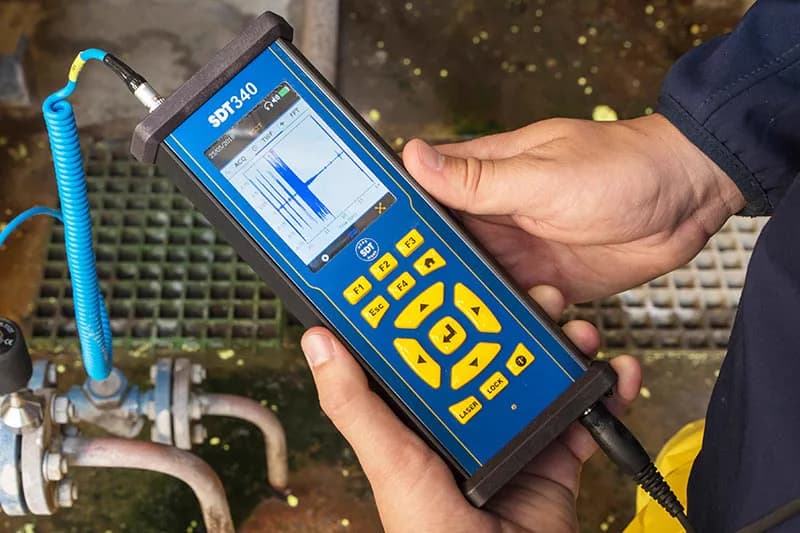
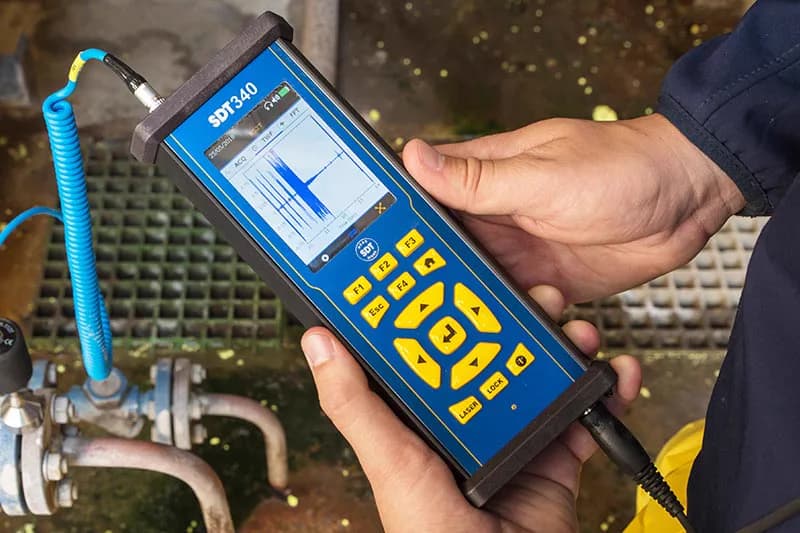
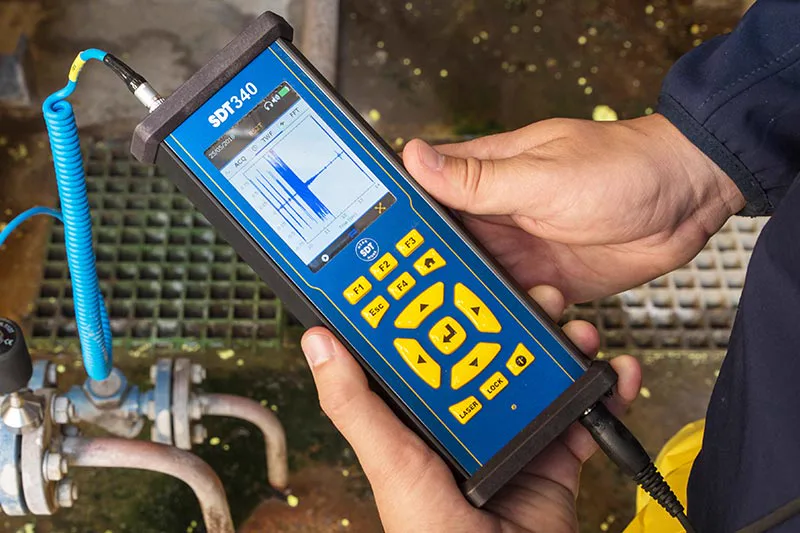
SDT340 - Advanced Ultrasound Detector
The most advanced ultrasound detector for collecting, analysing and trending data
Where to deploy it at a mine site
| Asset | Inspection points |
|---|---|
| Haul trucks | hoses downstream of the filter, intercooler, joints |
| Excavators / loaders | air path, air cleaner covers |
| Stationary gensets | intake, panels, seals (e-PCM for generators) |
| Drill rigs | intake plus operator cab tightness |
Industry context: SDT at mining and processing plants.
Link to the reliability programme
The tightness test is a fast preventive layer:
- before the dust-storm season;
- after any intake repair;
- whenever oil consumption rises or compression drops without explanation.
It complements the bearing and compressed-air-leak route — 90 days with SDT.
Conclusion
At an open pit it is far cheaper to find a whistle at a clamp than to overhaul a diesel. Ultrasonic tightness testing gives evidence-based localisation of intake leaks and belongs in the service checklist for heavy mining equipment.
Products: TIGHTChecker, SDT340 · SDT.
Equipment in this article
KEG TRK quotes prices and delivery times to Kazakhstan on request. We will prepare a commercial offer for your application.
SDT340 - Advanced Ultrasound Detector
The most advanced ultrasound detector for collecting, analysing and trending data
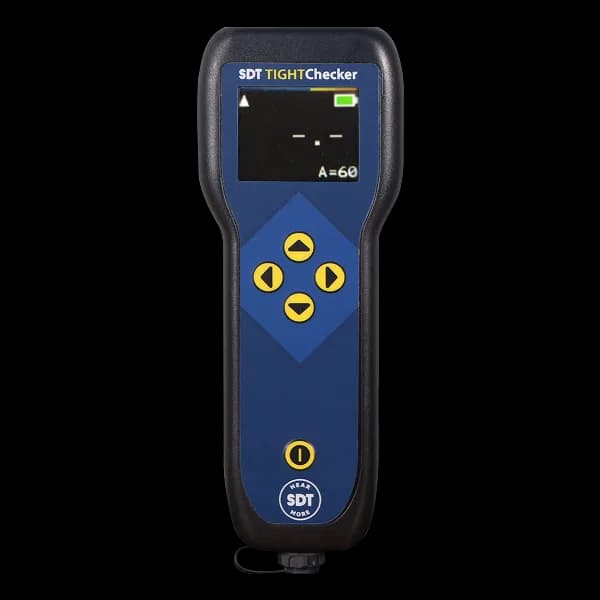
TIGHTChecker - Tightness Testing
Detector plus ultrasonic transmitter kit for tightness testing of vessels, seals and enclosures
Also in this article: SDT270 — SDT Ultrasound Detector and Data Collector
Read also
7/17/2026
Ultrasonic diagnostics of couplings and shaft connections: early signs of failure
Elastomeric, gear and jaw couplings emit a characteristic ultrasonic signature long before a vibration alarm. The SDT340 inspection method for pumps, compressors and gearbox drives.
9/18/2026
SDT + Artesis at a cement plant: mills, kilns, fans
Raw and cement mills, rotary kilns, ID fans and drive motors — how SDT340 ultrasound and Artesis ESA monitoring cut downtime at cement production.
7/22/2026
Ultrasonic Bearing Grease Management with SDT: 70% of Points Over-Greased
SDT multi-plant studies: switching from grease formulas to LUBExpert found ~70% of bearings over-lubricated, 15% under, only 15% correct. How ultrasound sets dose and interval.