
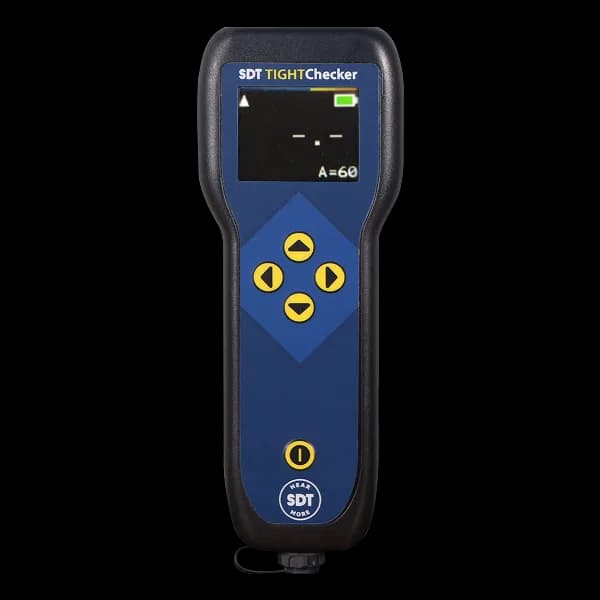
Supply in Kazakhstan
KEG TRK supplies ultrasonic diagnostics solutions (SDT Ultrasound Solutions) across Kazakhstan: Almaty, Astana, Karaganda, Ust-Kamenogorsk, Aktobe and other regions. Official warranty, monitoring system design, installation, commissioning and personnel training.
Mining equipment
Key features
Applications and resources
Industry solutions, landing pages and articles on TIGHTChecker - Tightness Testing
Where it is used
Typical tasks
- Tanks and vessels after installation or repair
- Flanged joints and pipelines
- Ship hatches
- Cabins and the air intake tract of mining equipment
- Window frames and display cases
- Pharmaceuticals and cleanrooms
Overview
TIGHTChecker is SDT's tightness-testing kit: an ultrasonic detector paired with an ultrasonic transmitter. Its job isn't finding a leak in a system that's already running — that's what LEAKChecker is for — it's confirming whether the object itself is sealed: a tank, a housing, a gasket, or a joint.
How the test works
The transmitter goes inside the object under test — a tank, a gearbox housing, behind a flanged joint or a hatch — and generates an ultrasonic signal. The detector scans the object from outside: wherever the seal is broken, the signal leaks through and the detector registers a local spike. The leak point shows up as a signal peak, so there's no need to inspect an entire joint by eye to find the source of the problem.
When a transmitter can't be fitted but the object can be isolated and put under a small positive pressure or vacuum, the same detector with its air sensor finds leaks by their characteristic ultrasonic "whistle" without a separate transmitter. This is how mine sites and processing plants test the air intake tract of diesel engines downstream of the filter: dust getting in through unnoticed intake leaks after the filter is a common cause of accelerated cylinder wear.
The transmitter radiates airborne ultrasound, so there has to be an air or gas space inside at the seam being tested. No tracer gas is needed, unlike a helium test.
Features
The instrument is built for a fast check with no special preparation: calibration takes minutes, scanning follows a weld or the perimeter of a seal, and the detector gives an audible alert when it finds a fault.
Firmware update
SDT updated the Checker series with a streaming-screen mode: a continuous real-time visualisation of the signal instead of a single static reading, which makes it easier to pinpoint a fault while scanning. The update is free and installs through SDT Updater: download the software, connect TIGHTChecker over USB, switch the device on, and Windows installs the driver automatically — follow the update wizard from there. Once updated, the On/Off button switches between screen modes.
Application areas
Industrial vessels and pipelines
Checking tanks, reactors, and heat exchangers after installation or repair, and flanged joints and valves, before commissioning — while fixing a defect is still cheap, ahead of start-up.
Marine industry
Tightness of ship hatches, portholes, and watertight bulkheads. For hatch and hatch-cover testing built specifically to marine classification-society requirements, the range also has a dedicated HATCHecker.
Mining and heavy equipment
Testing the air intake tract of diesel engines on haul trucks, excavators, and drill rigs for dust ingress downstream of the filter, using the pressure-or-vacuum method with ultrasonic scanning, before power loss and cylinder wear set in.
Pharmaceuticals and cleanrooms
Checking the tightness of isolators, glove boxes, laminar-flow cabinets, and cleanroom door seals.
Construction
Checking the tightness of window frames, display cases, and door seals.
Advantages
TIGHTChecker checks an object's tightness directly, by signal through the fault, rather than indirectly by flow or smell. It doesn't require a water pressure test, soap solution, or shutting the object down: the kit works with any medium inside and gives a result in minutes rather than the half hour traditional methods take. Locating a fault means you don't have to disassemble or visually inspect the whole joint.
Economic impact
A failed seal means direct losses: leaked product, contamination, or accelerated corrosion and equipment damage from abrasive or moisture getting in. Catching the defect during installation or incoming inspection is cheaper than dealing with the consequences after commissioning — the same logic that applies to cylinder wear from dust entering through an unnoticed intake leak.
Checker Range series
TIGHTChecker is part of SDT's line of specialised detectors:
- LEAKChecker — compressed-air and gas leaks in operating systems
- LUBEChecker — bearing lubrication control
- TRAPChecker — steam trap testing
- TIGHTChecker — tightness testing of vessels, seals, and enclosures
- HATCHecker — ship hatch tightness
- ULTRAChecker — universal ultrasound detector
Technical specifications
| Type | Tightness testing kit |
| Application | Tightness testing of seals, vessels and enclosures |
| Display | Real-time histogram |
| Update | SDT Updater software |
| Modes | Default and Streaming screens |
Applications
Manufacturer
SDT Ultrasound Solutions
Detector plus ultrasonic transmitter kit for tightness testing of vessels, seals and enclosures
Key specifications
- Type
- Tightness testing kit
- Application
- Tightness testing of seals, vessels and enclosures
- Display
- Real-time histogram
- Update
- SDT Updater software
- Modes
- Default and Streaming screens
Official supplier in Kazakhstan
Related products
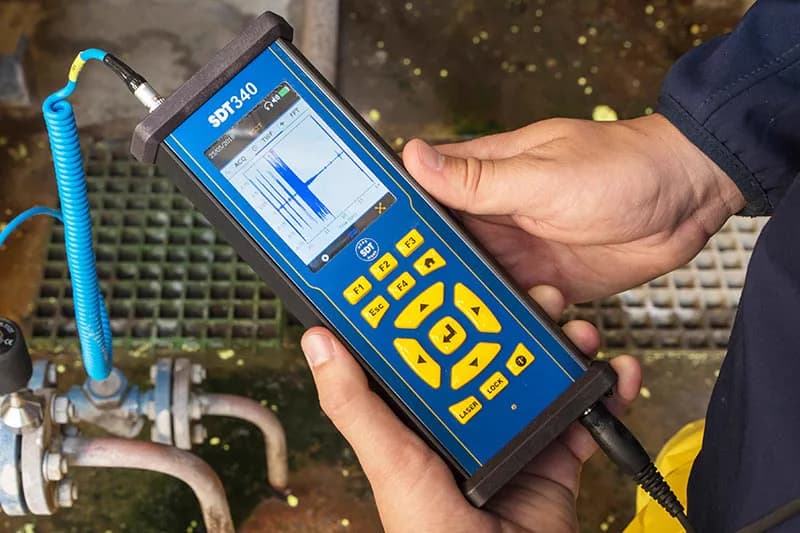
SDT340 - Advanced Ultrasound Detector
The most advanced ultrasound detector for collecting, analysing and trending data
- 20 kHz to 50 kHz
- 10 Hz to 10 kHz
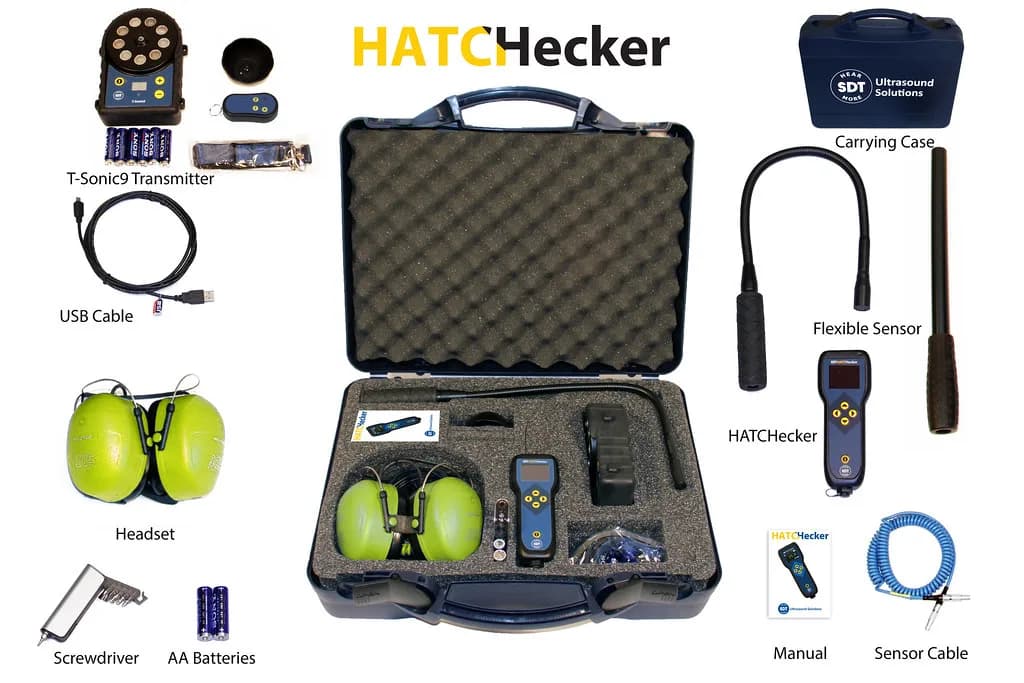
HATCHecker - Ship Hatch Tightness Testing
Specialised detector for testing the tightness of ship hatches and cargo-hold covers
- Single-purpose detector
- Ship hatches and cargo-hold covers
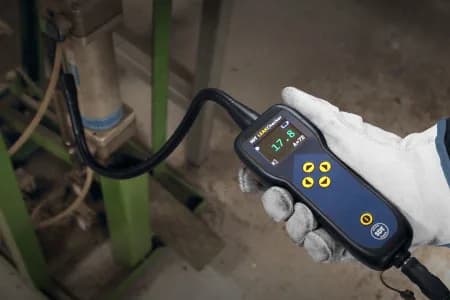
LEAKChecker - Compressed-Air Leak Detector
Specialised detector for fast detection of compressed-air and gas leaks
- Single-purpose detector
- Compressed-air and gas leaks
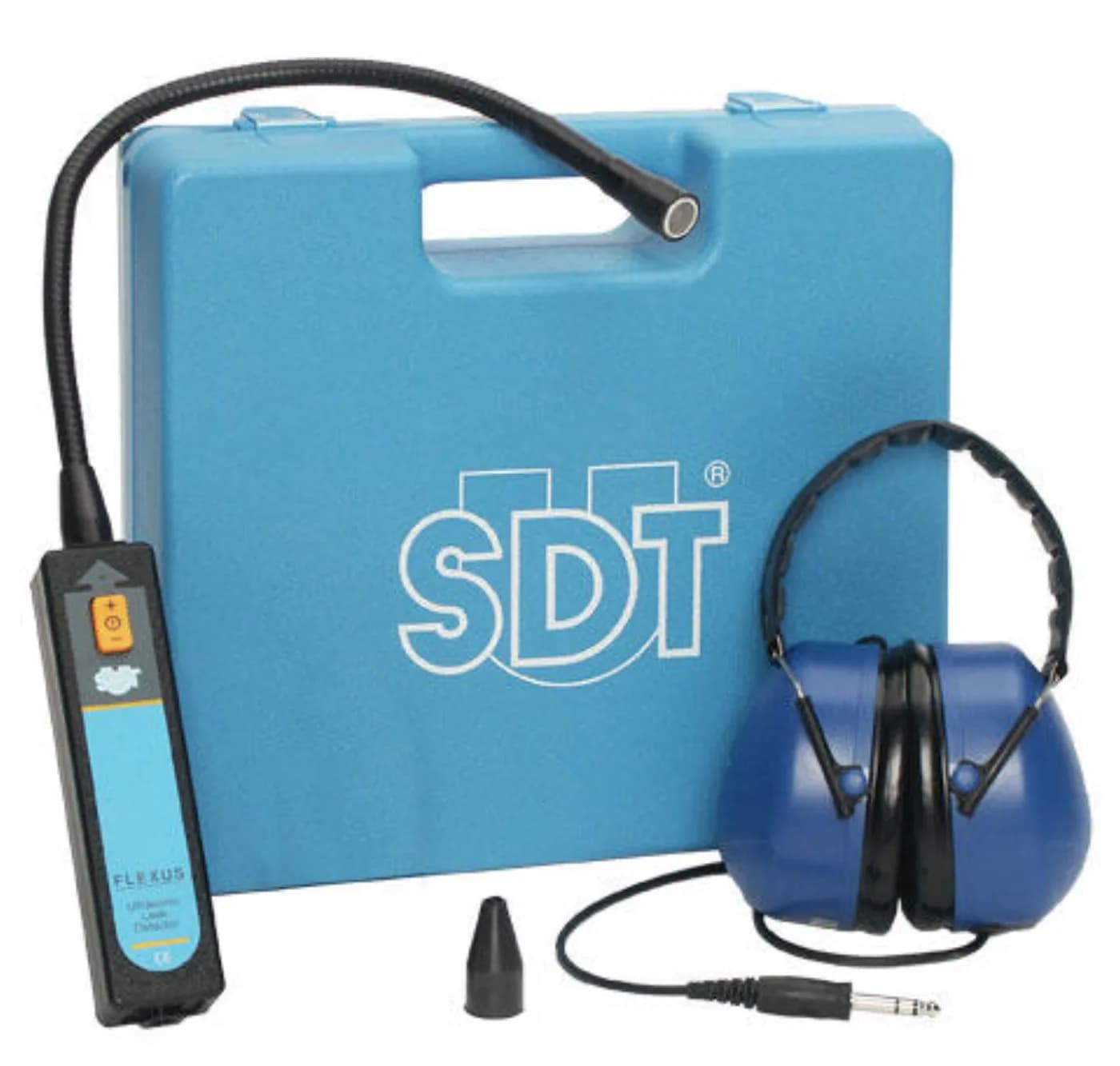
SDT FLEX.US - Flexible Ultrasound Leak Detector (Discontinued)
Stand-alone ultrasound leak detector with a flexible probe from the SDT170 era, now discontinued. The closest current equivalent is TIGHTChecker
- 38.4 kHz ± 2 kHz, 40 kHz centre frequency
- Open piezoelectric sensor, 16 mm (internal) / 19 mm (external)
Need advice?
Our specialists will help you choose the optimal TIGHTChecker - Tightness Testing configuration for your equipment.
Related articles
All articles →
What compressed air leaks cost: a step-by-step calculation
Leak cost = air flow × operating hours × compressor specific energy × tariff. A flow table by orifice diameter and pressure, a worked example and how to use your own tariff.

How to test a steam trap: ultrasound and temperature
A steam trap is tested with two readings: temperature finds blocked traps, ultrasound before and after the trap finds steam blow-through. Signs by trap type, the procedure and steam losses.
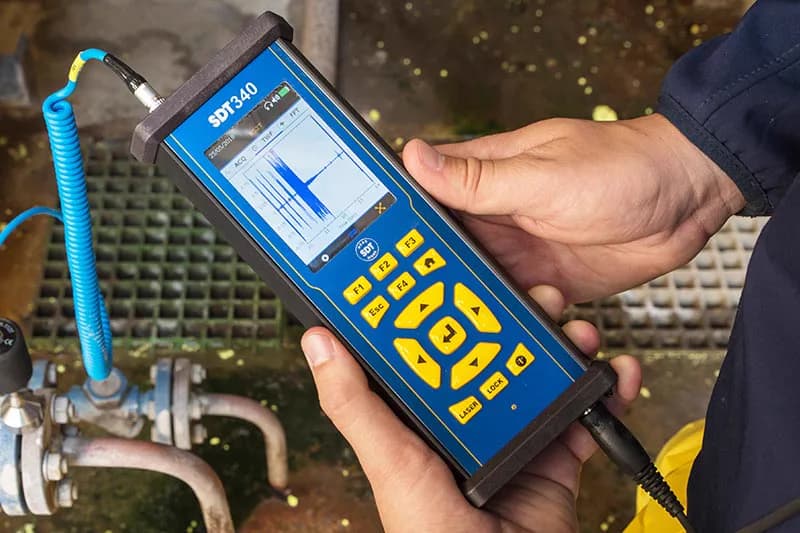
Dust in open-pit diesels: ultrasonic tightness testing as engine protection
At Kazakhstan's open-pit mines dust kills diesel engines through leaks in the air intake. How SDT340 and TIGHTChecker find intake leaks before power loss and catastrophic wear.
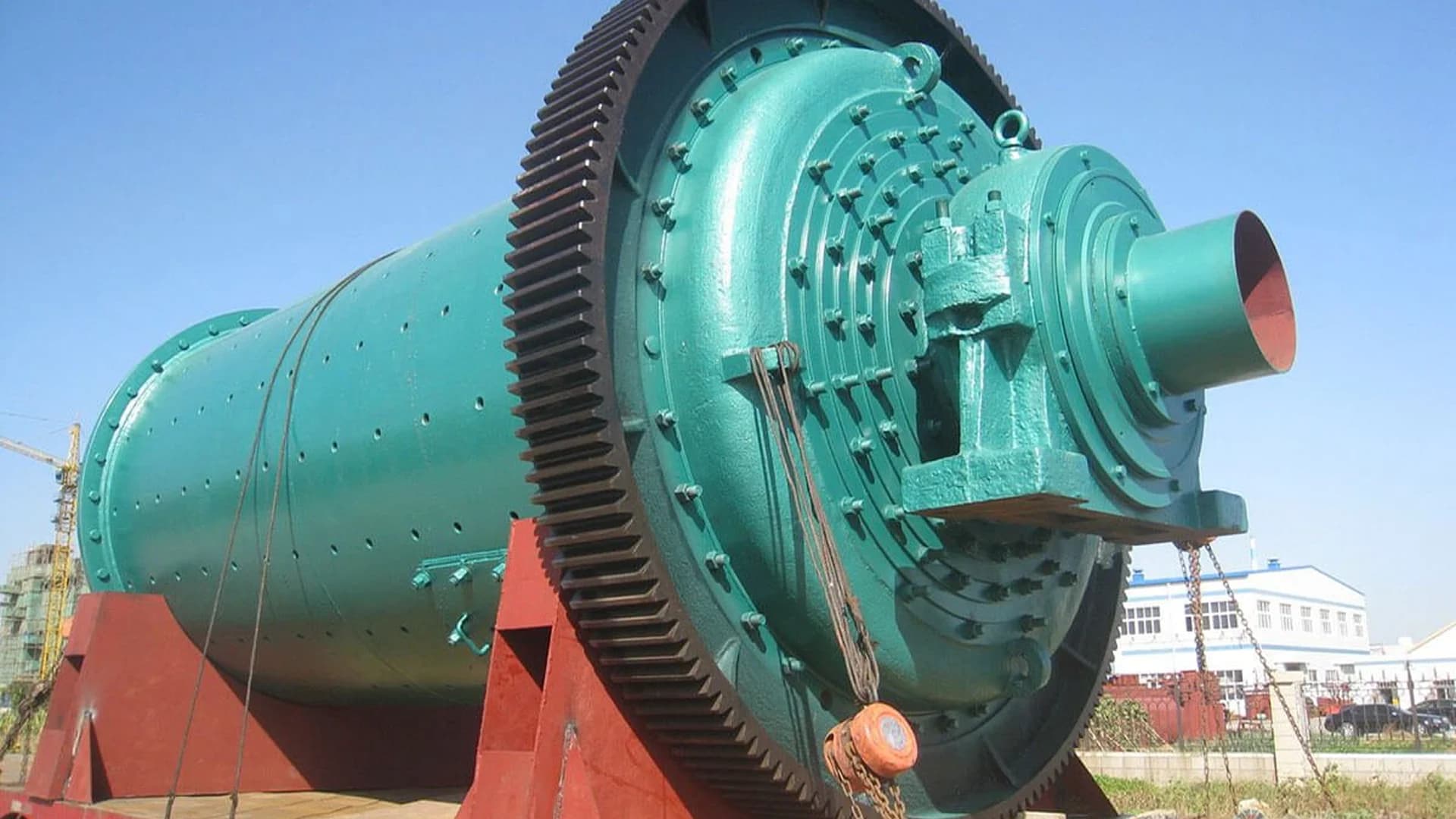
Ultrasound at low speeds: how to diagnose a gearbox running at 0.1 rpm
Vibration analysis below 10 rpm often leads to wrong conclusions. A real case: a broken gear tooth at 2.95 rpm caught by the SDT340 where the vibration FFT could not help.

Partial Discharge in Switchgear and Substations: Hearing a Breakdown Before It Happens
Corona, tracking and partial discharge silently destroy switchgear, transformer and cable-joint insulation for months before a flashover. How ultrasound and UV inspection catch insulation defects from a safe distance.
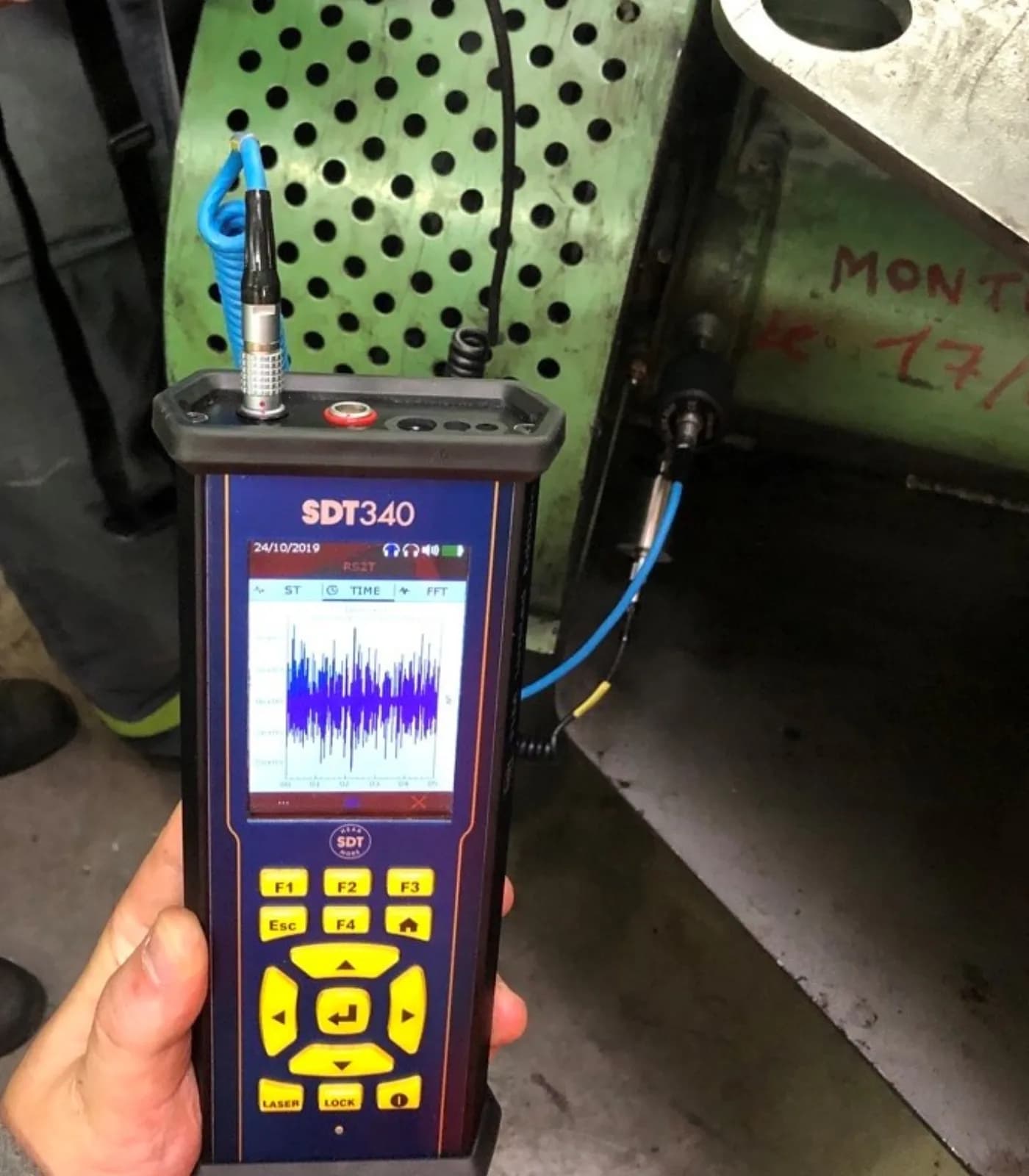
Ultrasound Inspection: A Beginner's Guide
How ultrasound condition monitoring works, what it finds across SDT's eight application areas, which instrument to choose and how to build an inspection programme.