
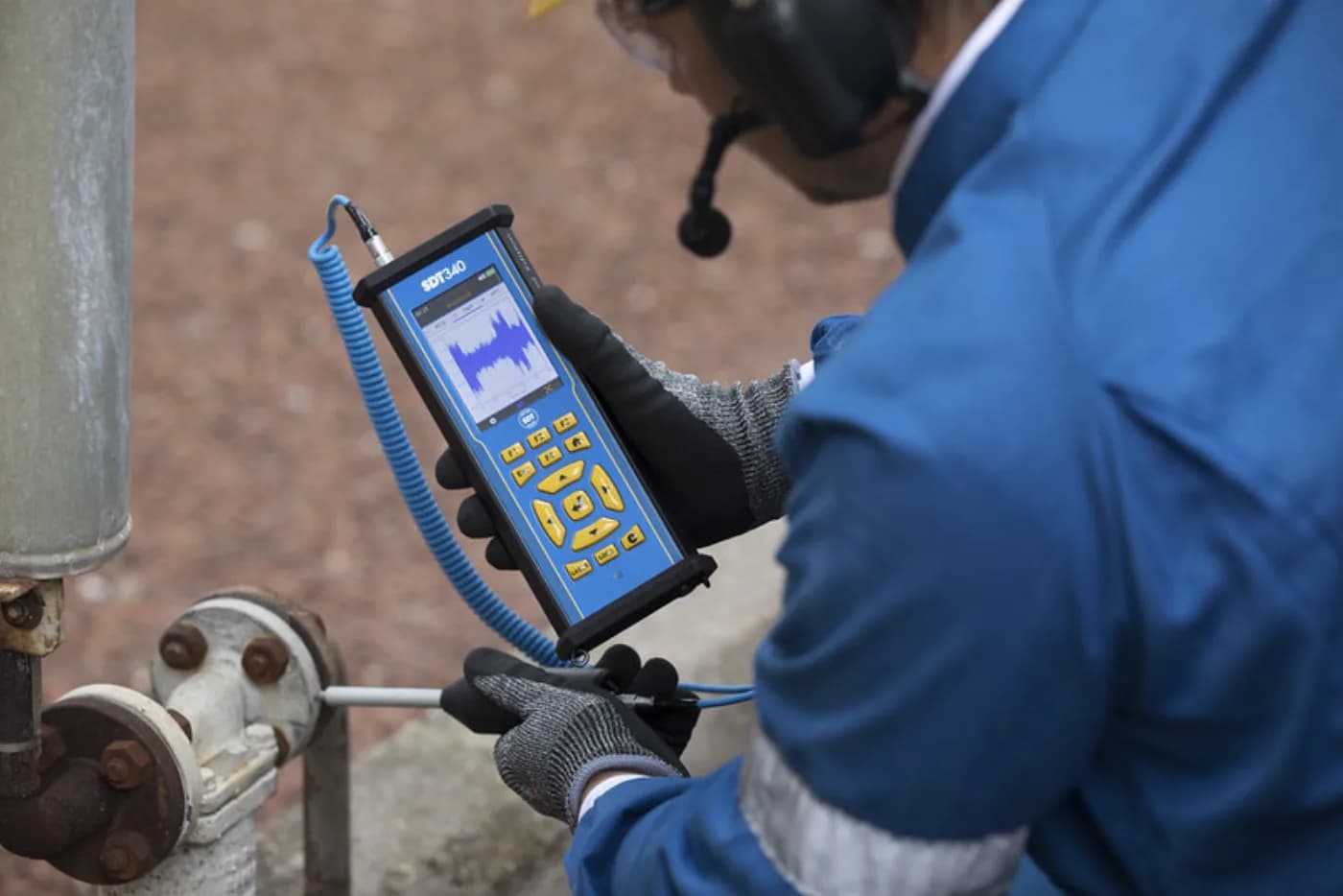
Finding Compressed Air Leaks at a Petrochemical Plant
Five compressor rooms, 150+ connections: how LEAKChecker and SDT270 found hidden compressed air leaks at a petrochemical plant and paid for themselves within the first week of the survey.
The challenge
A petrochemical plant was facing high costs to produce compressed air. A preliminary assessment indicated significant leaks in the system.
Equipment
The following tools were used:
- LEAKChecker — a dedicated leak detector
- SDT270 — for documentation and quantification
- LEAKReporter software — for cost calculation
Equipment covered in this article
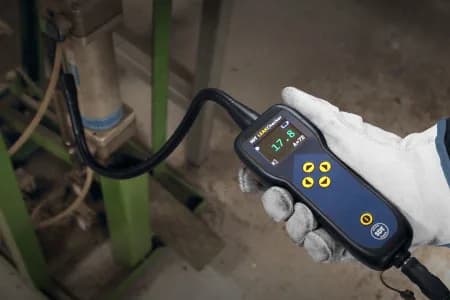
LEAKChecker - Compressed-Air Leak Detector
Specialised detector for fast detection of compressed-air and gas leaks
The process
1. System audit
Five compressor stations were inspected:
- 150+ connections and fittings
- 50 control valves
- 30 pneumatic instruments
2. Leak detection
47 leaks of varying severity were found:
| Size | Count | Loss (kW) | Cost/year |
|---|---|---|---|
| Small (<1 mm) | 28 | 0.5 kW each | $200 |
| Medium (1–3 mm) | 15 | 2 kW each | $800 |
| Large (>3 mm) | 4 | 8 kW each | $3,200 |
Total losses: 75 kW, cost: $37,600/year
3. Prioritization
Leaks were classified by criticality:
- Critical (immediate repair) — 4
- Important (within a month) — 15
- Scheduled (next maintenance) — 28
Results
Savings
- Energy: 612,000 kWh/year
- Money: $37,600/year
- CO2: 150 tonnes/year
Payback
- LEAKChecker cost: on request
- Payback = instrument cost / annual leak losses
Additional benefits
- Reduced load on the compressors
- Longer equipment service life
- Higher reliability of pneumatic systems
- Lower noise levels in production areas
Recommendations
- Monthly ultrasonic monitoring
- Training of LEAKChecker operators
- Inclusion in the predictive maintenance program
- Consider permanent monitoring for critical zones
Equipment in this article
KEG TRK quotes prices and delivery times to Kazakhstan on request. We will prepare a commercial offer for your application.
LEAKChecker - Compressed-Air Leak Detector
Specialised detector for fast detection of compressed-air and gas leaks
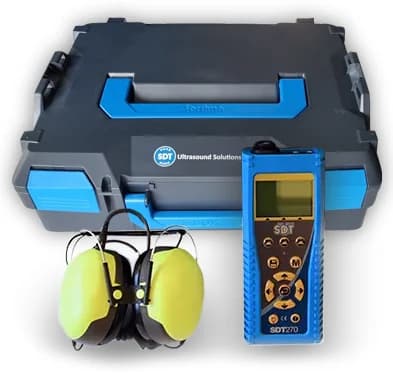
SDT270 — SDT Ultrasound Detector and Data Collector
Handheld SDT ultrasound data collector: 2 channels, up to 100 kHz bandwidth, built-in IR thermometer and laser tachometer, ICP accelerometer input, signal recording for…
Read also
9/18/2026
SDT + Artesis at oil & gas compressor stations
Gas compressor units, electric-driven compressors and gas leaks in hazardous areas: how SDT340 ultrasound and Artesis ESA monitoring reduce the risk of an unplanned compressor station outage.
7/17/2026
Leaks in heat exchangers and condensers: the ultrasonic detection method
Tube bundles in CHP and metals condensers and heat exchangers develop micro-leaks long before a visible vacuum drop. How the SDT340 and the compressed-air method pinpoint the faulty tube without a full teardown.
10/10/2026
Comparing ultrasonic leak detectors: what to look for
Ultrasonic leak detectors are compared by tasks, sensors and range, frequency band, data logging and reports, ATEX rating and operating conditions. Selection criteria and a table of SDT models.