
Compressed air leak detection: inspection route and repair verification
Inspect the air network, register defects, assign repairs and verify the result: a practical route for compressor stations and production areas.
Finding a leaking joint is the start of the job. An inspection should produce a register of confirmed defects with repair owners and follow-up checks. This supports a loss-reduction program even when the flow through each leak is not yet known.
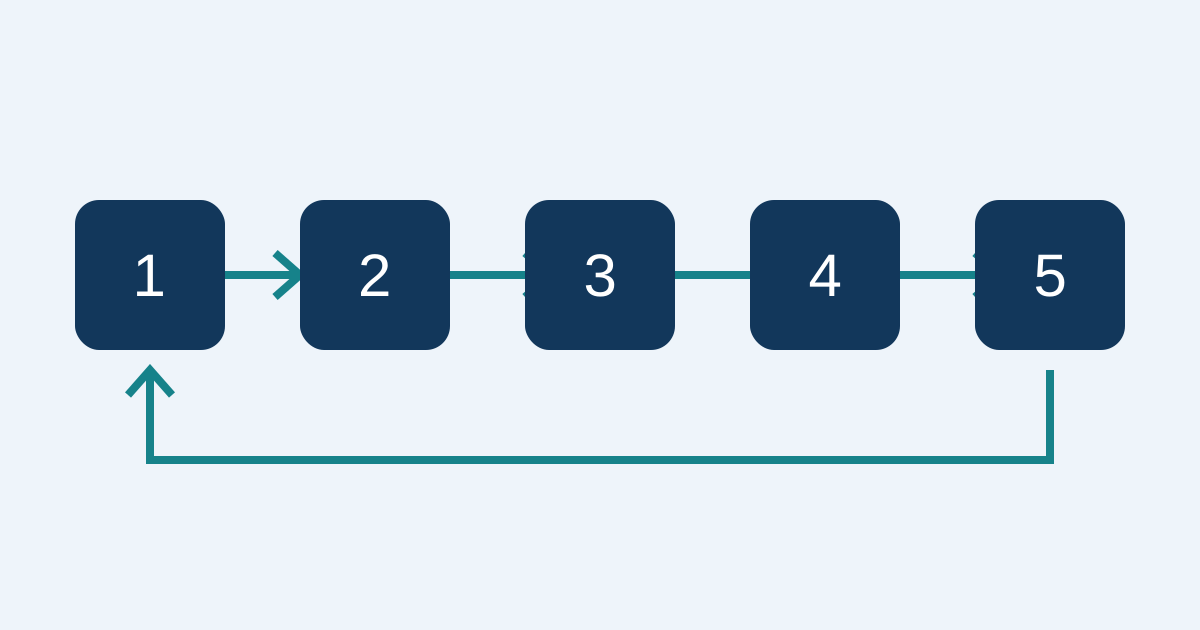
The diagram shows 1 preparation, 2 inspection, 3 registration, 4 repair and 5 verification. The return arrow represents regular repeat inspections.
Estimate compressed air leak cost using measured flow and station data.
Prepare the route
Start at the compressor station, then follow the main, branches and consumers. Include fittings, couplings, hoses, air preparation units, valves and drains. Plan access to overhead lines. Normal exhaust from pneumatic equipment must not be registered as a defect.
Record network pressure, process load and operating compressors. Different conditions can change the signal without changing the defect.
Choose a localization method
An ultrasonic detector supports joint-by-joint inspection. An acoustic camera can survey a wider zone; then verify the individual source. Background noise, distance, access and site requirements determine suitability. See leak detection methods.
A suitable soap solution can confirm escaping air at an accessible joint when permitted for the material and process. A vacuum line draws air inward; use the separate vacuum air ingress route.
Equipment covered in this article
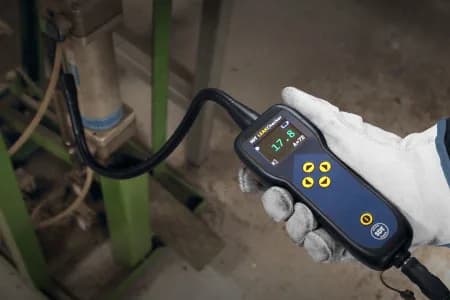
LEAKChecker - Compressed-Air Leak Detector
Specialised detector for fast detection of compressed-air and gas leaks
Register each point
| Field | Record |
|---|---|
| Identifier | Unique tag and register number |
| Location | Area, line, equipment, reference point and photo |
| Conditions | Pressure with units and consumer operating mode |
| Measurement | Instrument, sensor, settings, distance and result |
| Confirmation | How the source was verified and normal exhaust excluded |
| Action | Proposed repair, owner and due date |
| Closure | Repair date and repeat inspection result |
A dB value alone does not determine flow in m³/h. A cost estimate needs the instrument's method, measurement conditions, operating hours and the cost of producing air. Do not add readings from different instruments or modes as comparable flow values.
Close the loop
Prioritize defects affecting operation and process requirements, then consider losses and repair access. Isolate and prepare the section under the site's procedure before dismantling a connection.
After repair, revisit the point under comparable conditions. At station level, compare energy use and compressor operation under comparable loads. If energy use does not change, examine compressor control: fixing a leak and proving savings are separate steps.
For an inspection request, provide the network diagram, pressure range, number of production areas, access conditions, operating schedule and report requirements. Contact KEG TRK to discuss the method. LEAKChecker and SDT340 with an appropriate airborne sensor are available for route inspections.
Sources
The DOE compressed air sourcebook covers leak detection and repair programs. Natural Resources Canada discusses compressor control after repairs. The register above is a practical proposal, with no guaranteed savings percentage.
Equipment in this article
KEG TRK quotes prices and delivery times to Kazakhstan on request. We will prepare a commercial offer for your application.
LEAKChecker - Compressed-Air Leak Detector
Specialised detector for fast detection of compressed-air and gas leaks
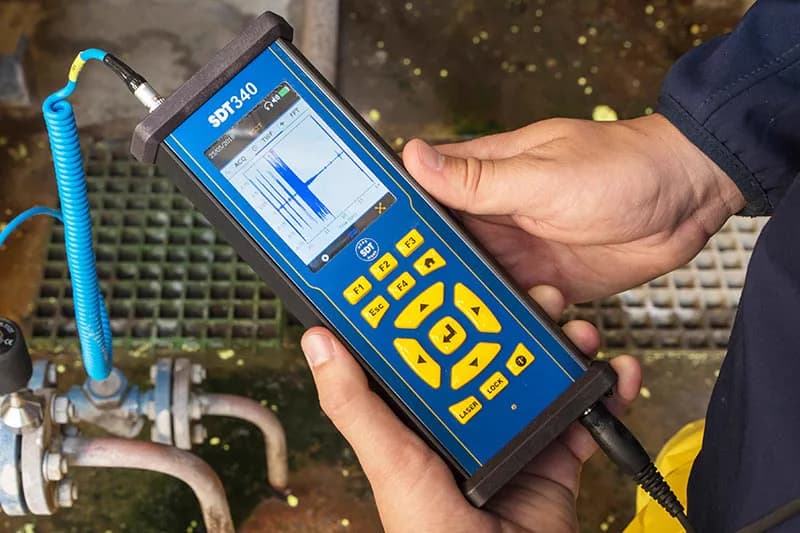
SDT340 - Advanced Ultrasound Detector
The most advanced ultrasound detector for collecting, analysing and trending data
Read also
10/6/2026
Vacuum suction cup will not hold: causes and air ingress inspection
Separate hose and fitting leaks, cup wear, workpiece porosity and insufficient vacuum generation before changing the operating settings.
10/6/2026
Finding air ingress in a vacuum system: inspection route and verification
Vacuum fails to reach its setpoint or drops under load: inspect joints, hoses, valves and seals, choose a method and verify the repair.
6/30/2026
Launch an SDT ultrasound route in 90 days: step-by-step plan
From SDT340 purchase to first management report: asset register, baseline, LUBExpert, leaks and CMMS integration.