

What Is Acoustic Bearing Lubrication — and Why It Beats the Calendar
In plain language: acoustic (ultrasonic) lubrication means adding grease based on friction level, not only the date in the PM schedule. How it works and who it is for.

Acoustic lubrication (ultrasonic / precision acoustic lubrication) is a relubrication method where the decision to add grease — and when to stop — is based on the high-frequency friction signal, not only on the calendar.
Why it exists
Calendars are easy to plan against, but they ignore real load, dust, temperature, and residual grease in the cavity. The result is under-greasing (dry contact, wear) or over-greasing (churning, heat, blown seals) — see over-greasing.
How it works
- A sensor listens in the ultrasonic band: rising friction sounds louder.
- The tech adds grease in small shots.
- If the film recovers, the friction signal drops.
- When the drop stops or the signal rises — stop. Further pumps are over-greasing.
Temperature and classic vibration often lag. Acoustics reacts earlier to boundary friction. Full method: condition-based lubrication. Calendar limits: how often to lubricate.
Equipment covered in this article
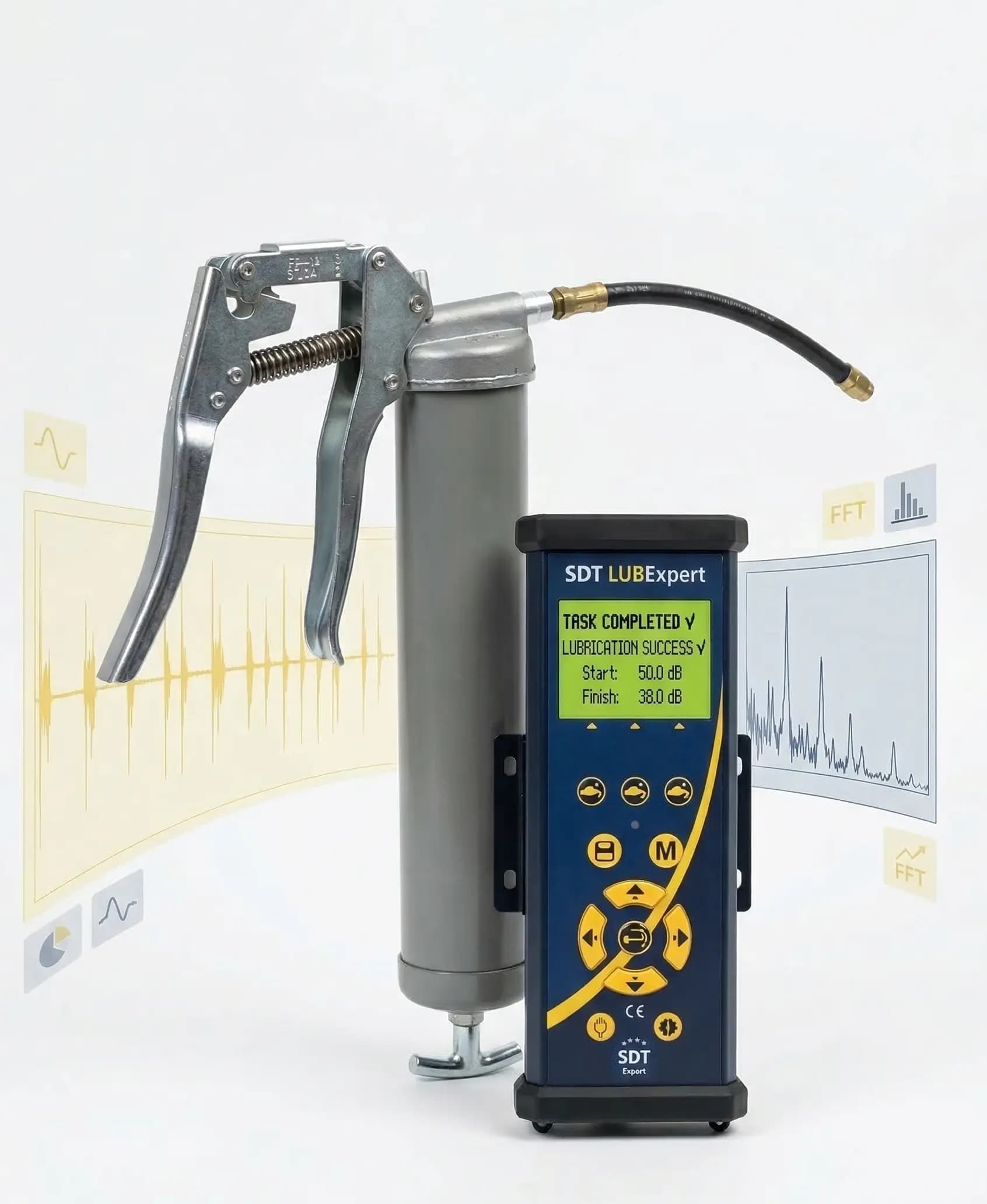
LUBExpert — SDT Ultrasound Bearing Lubrication Assistant
SDT instrument for precision ultrasound-guided greasing of rolling element bearings: tells you when to add grease and when to stop, follows routes from UAS3 and closes…
What it is not
| Not the same as | Why |
|---|---|
| A special “ultrasound grease” tub | You change the control process, not necessarily the grade |
| Dropping norms and maps | Dose ceilings and a point map still matter |
| “Listening on headphones only” | You need measurement, thresholds, and history per point |
| A timed auto-lubricator | A timer is still a calendar; smart auto = condition-based (compare) |
Who it fits
Electric motors, pumps, fans with grease nipples; conveyor drums where mistakes are expensive; plants already overspending grease or blowing seals. It does not replace the right grease grade, clean gun technique, or warehouse discipline.
Instruments (SDT / KEG TRK Kazakhstan)
- LUBExpert — route grease assistant
- LUBEChecker — simpler quality check
- SDT340 — diagnostics + grease mode
- LUBExpert ON-GUARD — stationary condition-based auto-lube
Pillar overview: /products/ultrasound/pillars/lubrication.
One-week start
- Pick 20–50 critical nipple points.
- Mini-map: grade, dose ceiling, owner.
- One instrument + train the stop criterion.
- After a month compare grease use, overheats, and “skipped — OK” share.
Request a pilot — KEG TRK.
Equipment in this article
KEG TRK quotes prices and delivery times to Kazakhstan on request. We will prepare a commercial offer for your application.
LUBExpert — SDT Ultrasound Bearing Lubrication Assistant
SDT instrument for precision ultrasound-guided greasing of rolling element bearings: tells you when to add grease and when to stop, follows routes from UAS3 and closes…
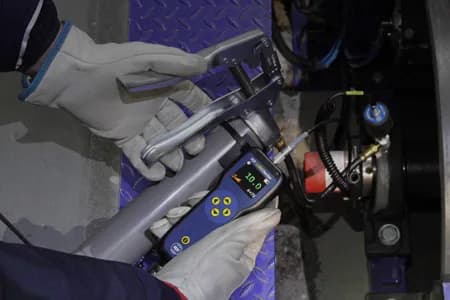
LUBEChecker - Bearing Lubrication Control
Portable detector that doses bearing grease by the real-time ultrasound friction signal
Also in this article: SDT340 - Advanced Ultrasound Detector
Read also
7/25/2026
Automatic vs manual bearing lubrication: which to choose
A comparison of manual route lubrication, time-based lubricators and condition-based automatic lubrication. When a grease gun is enough and when you need ON-GUARD.
7/25/2026
How to Grease Bearings Correctly: A Step-by-Step Guide for Mechanics
A practical bearing greasing procedure: prep, dose, drain, and stop criteria. Why “one more pump for luck” blows seals — and how to know when grease is enough.
7/25/2026
Plant Lubrication Point Map: How to Build It and Which KPIs to Track
How to build a lubrication point map: asset inventory, grease grade and dose ceiling, criticality, routes, and program KPIs. Without a map, “scheduled greasing” stays chaos.