
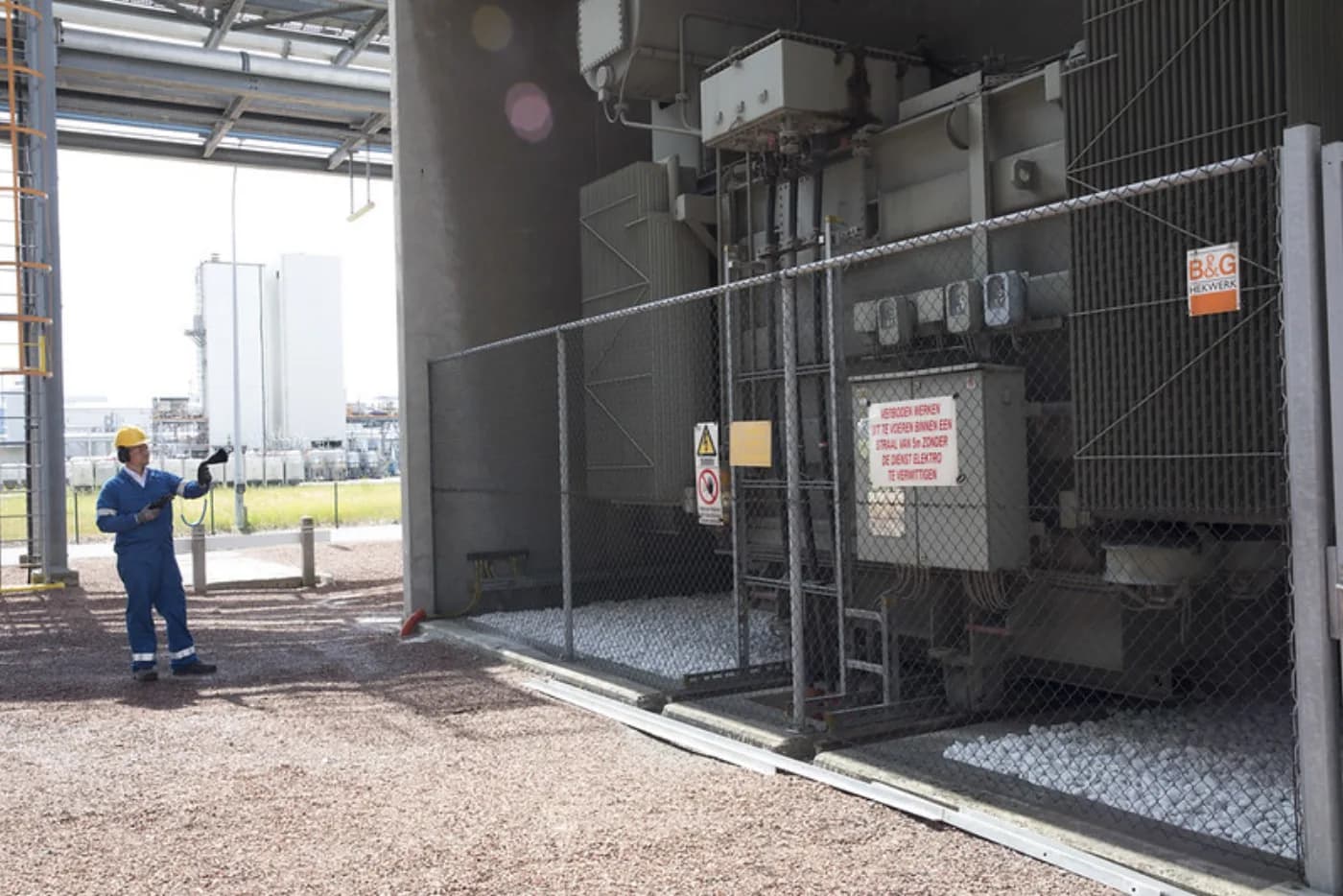
Power Transformer Diagnostics: Methods and What They Reveal
The main transformer diagnostic method is dissolved gas analysis (DGA). It is complemented by oil testing, oxygen monitoring, ultrasound for partial discharge, thermography and cooling vibration.
The main method for diagnosing a power transformer is dissolved gas analysis (DGA): it reveals overheating, discharges and decomposition of the paper insulation. It is complemented by oil quality and furan testing, oxygen and tightness monitoring, ultrasonic partial discharge detection, thermography and vibration monitoring of the cooling pumps and fans. Electrical tests are done on a de-energised transformer.
Summary table of methods
| Method | What it finds | Transformer status |
|---|---|---|
| DGA, laboratory analysis of an oil sample | Overheating, partial discharge, arcing, paper decomposition | In service (sampling) |
| DGA, online monitor | The same, continuously; trend and rate of gas increase | In service |
| Oil quality analysis | Moisture, acidity, contamination, breakdown voltage, oil ageing | In service (sampling) |
| Furans in oil | Wear of the paper insulation | In service (sampling) |
| Oxygen, total gas pressure | Air ingress, loss of sealing | In service |
| Ultrasound, acoustic emission | Partial discharges and their location | In service |
| Thermography | Overheated connections, cooling, oil level, tap changer compartment | In service |
| Cooling vibration monitoring | Pump and fan defects | In service |
| Frequency response analysis (FRA) and other electrical tests | Changes in the active part versus a reference | De-energised |
DGA: dissolved gas analysis
Doble calls DGA arguably the most powerful tool for assessing transformer condition. Gases are extracted from an oil sample, for example by the headspace method per ASTM D3612C (also IEC 60567), and the gas mix tells whether the fault is thermal or electrical, whether solid insulation is involved and whether sealing has been compromised.
| Gas | What it points to (per Doble) |
|---|---|
| Hydrogen H₂ | Partial discharge |
| Methane CH₄, ethane C₂H₆ | Low-temperature overheating |
| Ethylene C₂H₄ | High-temperature overheating |
| Acetylene C₂H₂ | Arcing or a high-temperature thermal condition |
| Carbon monoxide CO | Paper degradation (in hot climates it may be present without other signs) |
| Carbon dioxide CO₂ | General overheating of the paper insulation at high levels |
Interpretation follows IEEE C57.104-2019 (which includes the key gas method, Rogers ratios and the Duval triangle) and IEC 60599:2022. IEC 60599 states explicitly that its indications are guidance only and that actions should rest on proper engineering judgement.
In practice:
- One sample does not show the dynamics. Per Doble, a single set of DGA data cannot tell you whether gas concentrations are stable or rising; the gas generation rate is determined from samples taken at regular intervals.
- Consider the context: loading, ambient temperature, transients, harmonics, through faults, repairs, data from sister units.
- Degassing does not remove the cause. Per Doble, after degassing at least 3 months of benchmark tests are needed to re-establish the trend.
- Online monitors come in two types: fault detection monitors measure hydrogen and CO, fault diagnosis monitors measure five to nine gases (review by Bustamante et al., Sensors, 2019).
More in DGA of a Transformer at a CHP Plant: What to Add to Oil Chromatography and Field Screening of Transformer Gases Before Laboratory DGA.
Equipment covered in this article
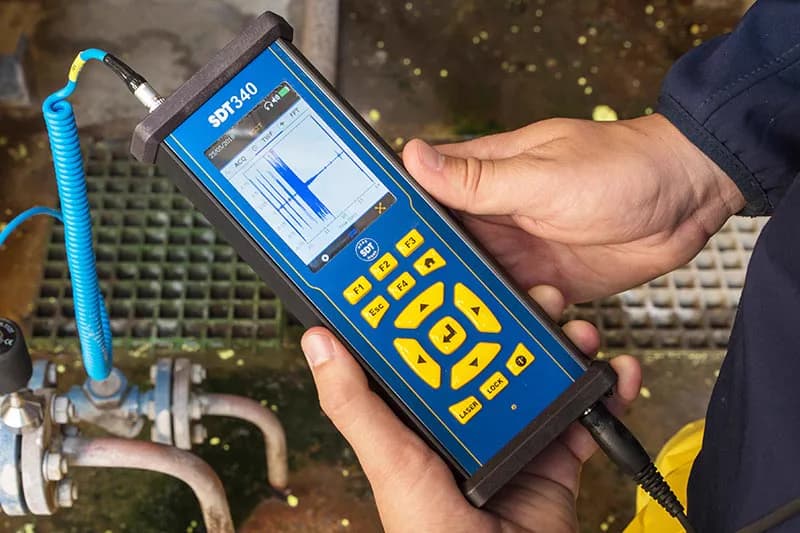
SDT340 - Advanced Ultrasound Detector
The most advanced ultrasound detector for collecting, analysing and trending data
Oxygen and sealing
According to Vaisala, new power transformers are usually sealed to keep oxygen and atmospheric moisture out: oxygen and moisture degrade and age the insulating paper, and the paper condition determines the transformer's remaining life.
Judging tightness by oxygen is harder than it looks:
- oxygen is consumed in reactions, so measuring it directly will not always reveal that air is getting in;
- with an air leak, the total dissolved gas pressure (TGP) rises and nitrogen and oxygen become the dominant gases;
- there is no international standard for interpreting oxygen concentration in transformer oil; results are usually assessed by a DGA specialist.
IEEE C57.104-2019 introduced an O₂/N₂ ratio limit to split transformers into groups. A study published by CIGRE shows that the oil preservation system significantly affects gas levels and that classification on an O₂–N₂ diagram is more nuanced than a simple ratio limit; in its data, pressure-regulated nitrogen-blanketed transformers had the lowest average gas levels.
Practical oxygen monitoring in the gas cushion and conservator is covered in Oxygen in the Transformer Gas Cushion and Conservator and Oxygen: Oil Diagnostics.
Oil and furan analysis
Oil analysis shows the condition of the oil itself and, indirectly, of the internal components. Tests listed by EA Technology:
| Parameter | What it shows |
|---|---|
| Moisture, acidity, solid contamination, breakdown strength | Overall condition of the oil and internal components |
| Dissipation factor (power factor) | Contamination or deterioration of the oil |
| Interfacial tension | Soluble polar contaminants and ageing products; changes quickly in the early stages of ageing |
| Viscosity | Heat dissipation; increases with ageing and oxidation |
| Density | Matters in very cold climates: whether ice will float on the oil |
| Colour and appearance | Level of contamination by ageing products |
| Furfuraldehyde (furans) | Condition of the paper insulation: correlates with the paper's degree of polymerisation |
Supervision of in-service oil, recommended tests and evaluation of results are covered by IEC 60422 (current edition 2024).
Partial discharge: ultrasound and acoustic emission
Partial discharges gradually destroy insulation. According to SDT, they produce turbulence with peaks around 40 kHz, and the signal character lets you classify the discharge as corona, tracking or arcing. SDT lists transformers among the substation equipment that needs particular attention for partial discharge.
For liquid-insulated power transformers and reactors, IEEE C57.127-2018 describes the detection, location and interpretation of acoustic emission sources from discharges: signals are captured by transducers placed at selected points on the tank and used to estimate the relative size and location of the source.
More in Partial Discharge in Switchgear and Substations: Hearing a Breakdown Before It Happens.
Thermography
A thermal camera shows what appears on the surface:
- radiators: tubes should be uniform in temperature and in most cases warmer than ambient air, and the radiators themselves clean and unobstructed; low oil level produces a characteristic thermal pattern;
- tap changer compartment: on a properly working tap changer it should not appear warmer than the main tank;
- tank: local hot spots;
- primary and secondary connections;
- cooling fans and pumps: whether they run as set.
Temperatures are compared with the nameplate maximum rating. The limitation: thermography identifies many, but not all, problems. Winding problems are found by oil analysis: DGA and furans.
Cooling system vibration
Oil pumps and cooler fans are rotating machines, and their defects are monitored like those of any pump or fan: by vibration. Fan and pump operation is also checked during a thermographic survey. Details in Vibration Monitoring of Power Transformer Cooling Systems at CHP Plants.
Tests on a de-energised transformer
Some methods require taking the transformer out of service. For example, frequency response measurement (FRA) is performed per IEC 60076-18: the standard sets the measurement technique and equipment for on-site and factory measurements on new and in-service equipment. The result is compared with a reference response taken when the transformer was in sound condition.
How to build a diagnostic programme
- Baseline. Laboratory DGA and oil analysis for each transformer, nameplate data and history.
- Trend. Regular sampling, to see the rate of gas increase and not only the levels.
- Continuous monitoring of critical units. An online DGA monitor where failure is most costly.
- Energised surveys. Thermography and ultrasound: external overheating, cooling, discharges.
- Cooling. Vibration of pumps and fans.
- In-depth check. If DGA shows rising discharge-type gases, locate the discharges acoustically; if mechanical changes are suspected, plan tests on the de-energised transformer.
Which instrument to choose
- Ultrasonic discharge detection and substation surveys — SDT340.
- Oxygen measurement in a gas sample — the Rapidox 1100 analyser (Cambridge Sensotec); according to the manufacturer it is a bench or panel instrument powered from 90–260 VAC mains, with a zirconia sensor range of 0.5 ppm to 30 % O₂.
- Vibration monitoring of cooling pumps and fans — Bently Nevada systems, see the article on cooling vibration monitoring.
KEG TRK supplies these instruments in Kazakhstan and helps match them to the task. Price on request.
Sources
- Doble. Assessing Transformer Condition — Part 2: Dissolved Gas Analysis (DGA) Carries the Most Weight: https://www.doble.com/assessing-transformer-condition-part-2-dissolved-gas-analysis-dga-carries-the-most-weight/
- IEEE C57.104-2019. Guide for the Interpretation of Gases Generated in Mineral Oil-Immersed Transformers, description: https://www.standards.nimonik.com/products/ieee/ieee-c57pt104/
- IEC 60599:2022. Mineral oil-filled electrical equipment in service — Guidance on the interpretation of dissolved and free gases analysis: https://webstore.iec.ch/en/publication/66491
- Bustamante S. et al. Dissolved Gas Analysis Equipment for Online Monitoring of Transformer Oil: A Review. Sensors, 2019, 19(19):4057: https://pmc.ncbi.nlm.nih.gov/articles/PMC6806153/
- Vaisala. More robust air leak monitoring for power transformers — Total Gas Pressure: https://www.vaisala.com/nl/node/91071
- CIGRE Science & Engineering. Determination of oil preservation types from atmospheric gases to contextualize DGA in power transformers: https://cse.cigre.org/cse-n036/determination-of-oil-preservation-types-from-atmospheric-gases-to-contextualize-dga-in-power-transformers
- EA Technology. Oil Diagnostics: Oil-Filled Transformer testing & analysis (data sheet): https://eatechnology.com/media/altlbiud/oil-diagnostics-data-sheet-transformers.pdf
- IEC 60422:2024. Mineral insulating oils in electrical equipment — Supervision and maintenance guidance: https://webstore.iec.ch/en/publication/66421
- SDT Ultrasound Solutions. Using Ultrasound for Electric Power Reliability: https://sdtultrasound.com/2022/07/14/using-ultrasound-for-electric-power-reliability/
- IEEE C57.127-2018. Guide for the Detection, Location and Interpretation of Sources of Acoustic Emissions from Electrical Discharges in Power Transformers and Power Reactors, description: https://standards.nimonik.com/products/ieee/ieee-c57pt127/
- Infraspection Institute. IR Inspection of Liquid Filled Transformers: https://irinfo.org/tip-of-week-alphabeta/ir-inspection-of-liquid-filled-transformers
- Infrared Training Center. Techniques for Identifying Problems in Transformers: https://www.infraredtraining.com/en-US/home/resources/blog/techniques-for-identifying-problems-in-transformers/
- IEC 60076-18:2012. Power transformers — Part 18: Measurement of frequency response: https://webstore.iec.ch/en/publication/597
- Cambridge Sensotec. Rapidox 1100 Oxygen Analyser: https://cambridge-sensotec.co.uk/product/rapidox-1100-oxygen-analyser/
Frequently asked questions
Equipment in this article
KEG TRK quotes prices and delivery times to Kazakhstan on request. We will prepare a commercial offer for your application.
SDT340 - Advanced Ultrasound Detector
The most advanced ultrasound detector for collecting, analysing and trending data
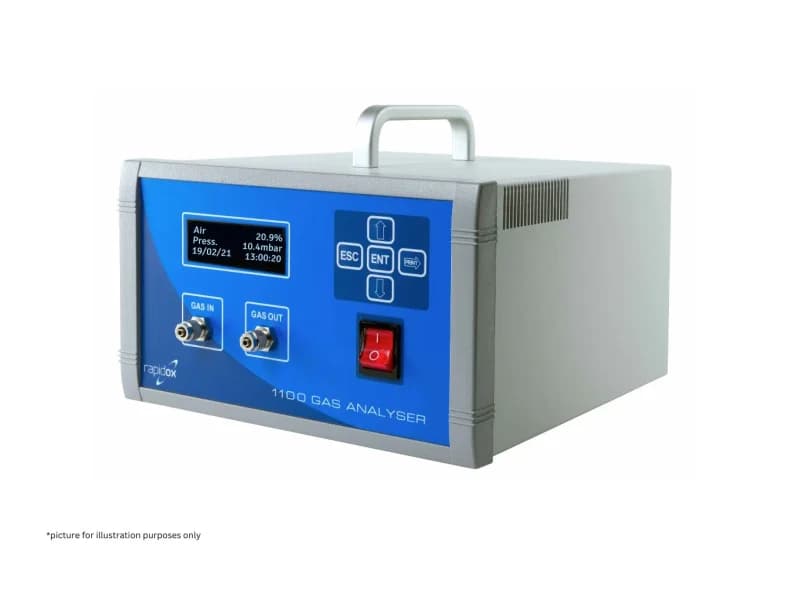
Rapidox 1100 — oxygen analyser
Versatile O₂ analyser with zirconia, electrochemical or optical sensor for ppm and percent measurements
Read also
10/13/2026
Ultrasound or thermal imaging for electrical equipment: which to choose
A thermal camera sees heat, which appears late, once enough current flows. Ultrasound hears corona, tracking and arcing at any stage of discharge. That is why SDT recommends using both methods.
10/22/2026
ISO 4406 Oil Cleanliness Code: How to Read It and What Target to Set
An ISO 4406 code such as 18/16/13 gives the number of particles ≥4, ≥6 and ≥14 µm per 1 ml of oil. Each step doubles the particle count. Set the target by the most sensitive component.
10/14/2026
What Is Predictive Maintenance of Equipment (PdM)
Predictive maintenance (PdM) means repairing a machine based on its measured condition (vibration, ultrasound, thermography, oil and current analysis), not the calendar, before it fails.