
Supply in Kazakhstan
KEG TRK supplies equipment diagnostics solutions (I-care) across Kazakhstan: Almaty, Astana, Karaganda, Ust-Kamenogorsk, Aktobe and other regions. Official warranty, monitoring system design, installation, commissioning and personnel training.
Key features
Applications and resources
Industry solutions, landing pages and articles on I-care Wi-care 130 G23 — wireless vibration sensor
Typical tasks
- Auxiliary pumps, fans and compressors
- Electric motors and gearboxes
- Conveyors and crushers at mining and processing plants
- Hazardous areas in oil, gas and chemical plants
- Hard-to-reach equipment that is unsafe to visit with a portable instrument
Overview
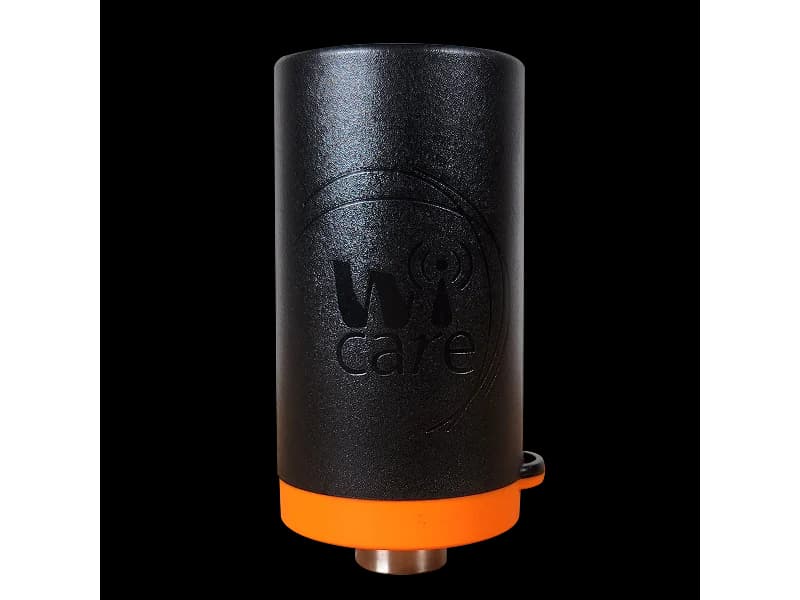
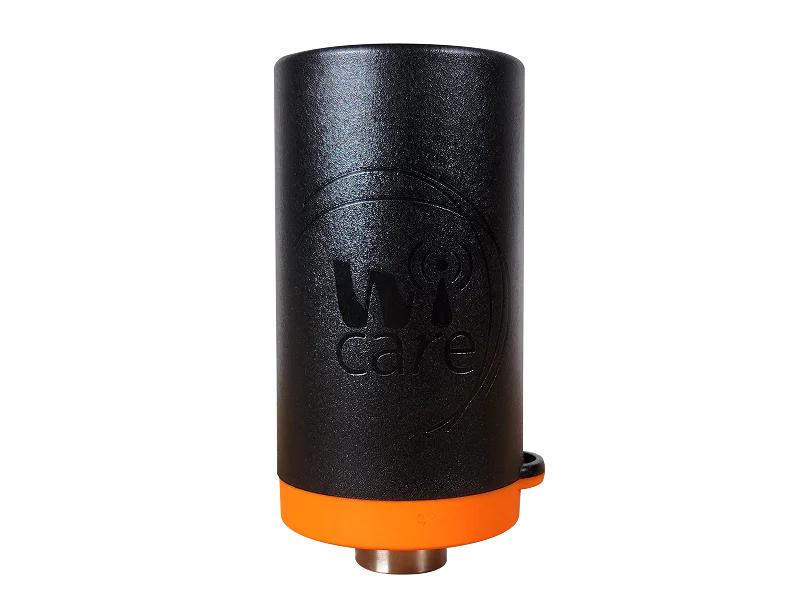
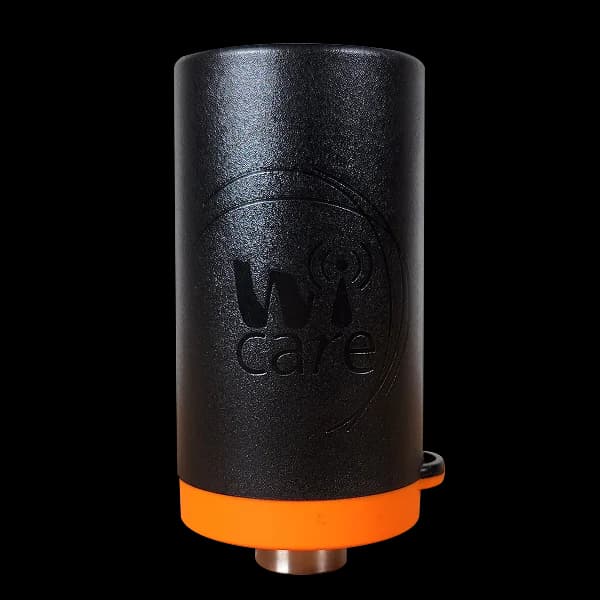
The Wi-care 130 G23 is a wireless vibration sensor from the Belgian company I-care. It mounts on the machine and, with no cables or external power, measures triaxial vibration, impacts and temperature. Data travels through a gateway to the I-see cloud platform, where trends are built and alarms raised.
G23 is the new generation of the Wi-care 130. The manufacturer describes it as the first high-precision vibration sensor made entirely in Belgium, with a data stream three times more powerful than before.
What it measures
| Parameter | Value |
|---|---|
| Vibration | three axes, 1 Hz – 20 kHz |
| Impacts | I-DNA high-frequency processing at 160 kHz |
| Temperature | built-in sensor |
The high-frequency channel detects early bearing and gear defects that stay hidden in overall vibration for a long time.
Why wireless monitoring
- No cables. No cable runs or cabinets — the sensor installs in minutes.
- No rounds in hazardous areas. ATEX certification and an IP67 housing allow installation in explosive and dusty zones.
- Over 5 years without maintenance at standard intervals.
- Continuous trend instead of a monthly reading.
Technical specifications
| Parameter | Value |
|---|---|
| Sensor | piezoelectric accelerometer |
| Axes | 3 |
| Frequency range | 1 Hz – 20 kHz |
| High-frequency processing | I-DNA, 160 kHz |
| Temperature | yes |
| Power | built-in battery, over 5 years |
| Connectivity | wireless, Wi-care gateway, I-see cloud |
| Certification | ATEX |
| Protection | IP67 |
| Made in | Belgium |
The Wi-care system
| Task | Solution |
|---|---|
| Permanent wireless machine monitoring | Wi-care 130 G23 |
| Route-based collection with wireless triaxial sensors | Wi-care PURE G24 |
| Wired sensors, tachometer, variable speed | Wi-care 240 |
For critical turbomachinery needing protection systems, see Bently Nevada systems. For motor electrical diagnostics, see Artesis monitoring.
Supply in Kazakhstan
KEG TRK supplies I-care systems, helps choose machines to monitor, sets up the I-see platform and trains staff. Price on request.
Technical specifications
| Measured parameters | vibration (3 axes), impacts, temperature |
| Sensor | piezoelectric accelerometer |
| Frequency range | 1 Hz – 20 kHz |
| High-frequency processing | I-DNA, 160 kHz |
| Power | built-in battery, over 5 years |
| Connectivity | wireless, via Wi-care gateway to I-see cloud |
| Certification | ATEX |
| Protection | IP67 |
| Mounting | magnetic |
| Manufacturer | I-care (Belgium) |
Applications
Manufacturer
I-care
Fully wireless triaxial sensor for vibration, impacts and temperature: 1 Hz – 20 kHz range, I-DNA high-frequency processing at 160 kHz for early bearing and gear defects, battery life over 5 years, ATEX, IP67.
Key specifications
- Measured parameters
- vibration (3 axes), impacts, temperature
- Sensor
- piezoelectric accelerometer
- Frequency range
- 1 Hz – 20 kHz
- High-frequency processing
- I-DNA, 160 kHz
- Power
- built-in battery, over 5 years
Official supplier in Kazakhstan
Related products
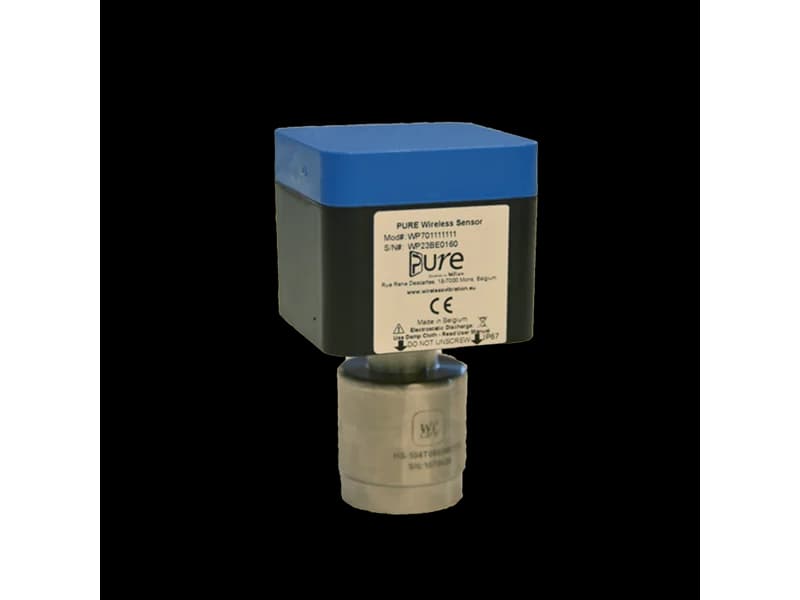
I-care Wi-care PURE G24 — wireless vibration data collector
Portable wireless data collector for route-based rounds: triaxial sensors capture horizontal, vertical and axial directions at once, and an ATEX tablet sends data to the I-see cloud. Velocity, acceleration and I-DNA for bearing and gearbox defects.
- portable wireless data collector
- wireless triaxial (horizontal, vertical, axial)
I-care Wi-care 240 — continuous monitoring module
Wi-care 200 series module for continuous monitoring: 4 dynamic vibration channels with temperature, 2 Smart Tach speed inputs up to 20,000 RPM, any IEPE accelerometer, spectrum to 60 kHz, data via 3G/4G, LoRa or a gateway to the I-see cloud, Modbus and REST API.
- continuous monitoring transmitter module
- 4 dynamic (vibration + temperature)
Need advice?
Our specialists will help you choose the optimal I-care Wi-care 130 G23 — wireless vibration sensor configuration for your equipment.
Related articles
All articles →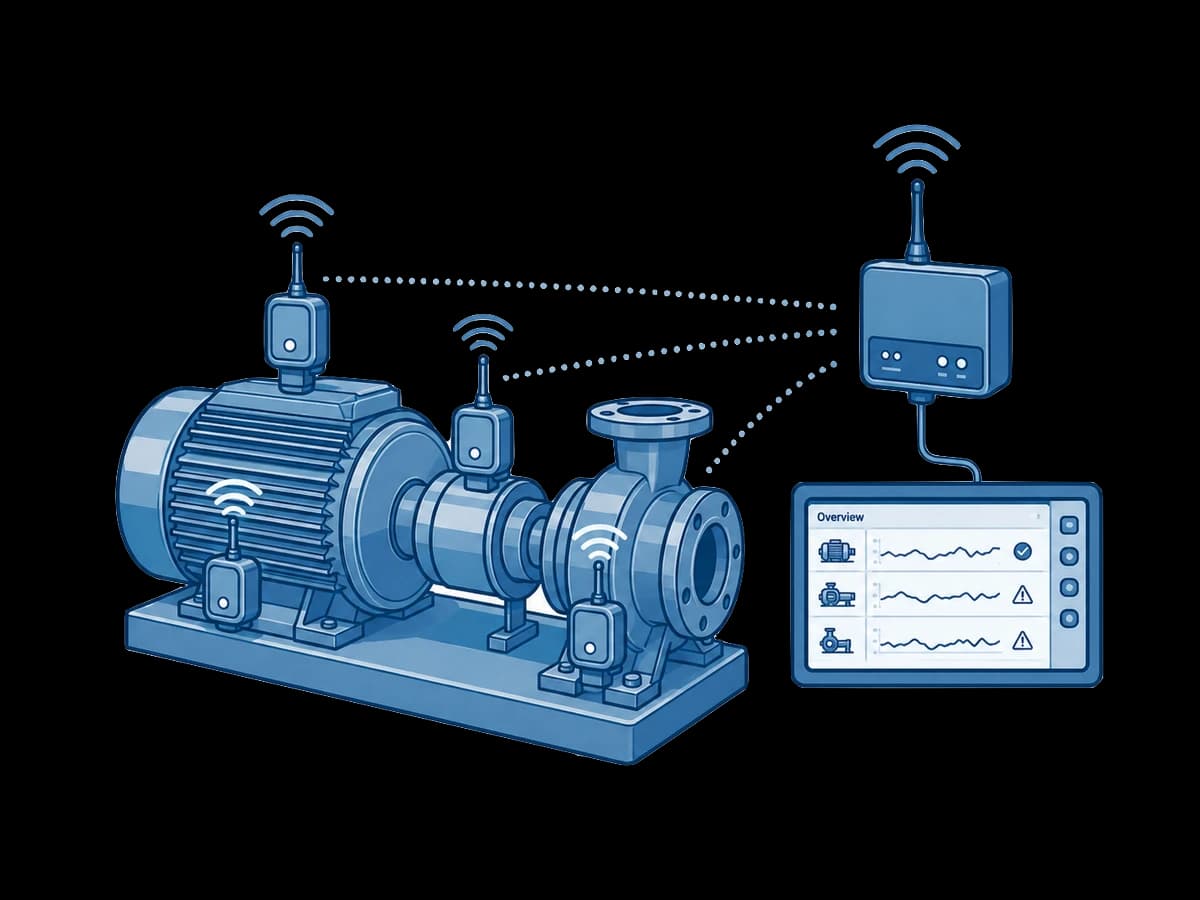
What Is Machinery Vibration Analysis and How to Start
Vibration analysis checks machine condition from bearing housing vibration: what is measured, route-based vs online monitoring, which faults show in the spectrum, how to start.
Wi-care: wireless vibration monitoring without running cables
How the I-care Wi-care 130 G23 and Wi-care Pure G24 wireless sensors capture vibration, shock and temperature on hazardous and hard-to-reach assets — with up to five years of battery life and data going to the I-see cloud.