
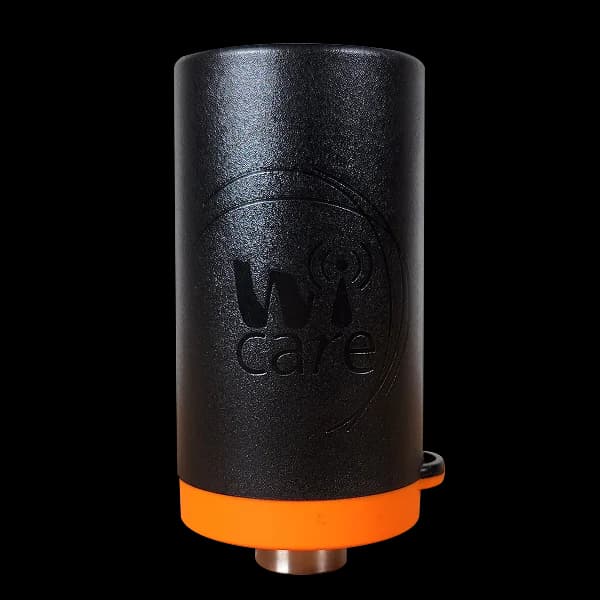
Wi-care: wireless vibration monitoring without running cables
How the I-care Wi-care 130 G23 and Wi-care Pure G24 wireless sensors capture vibration, shock and temperature on hazardous and hard-to-reach assets — with up to five years of battery life and data going to the I-see cloud.
Why wireless monitoring
Running cables to every pump, fan or gearbox bearing is expensive, slow and often impossible in a live plant. A monthly route walkdown will not catch a fault that develops in 48 hours.
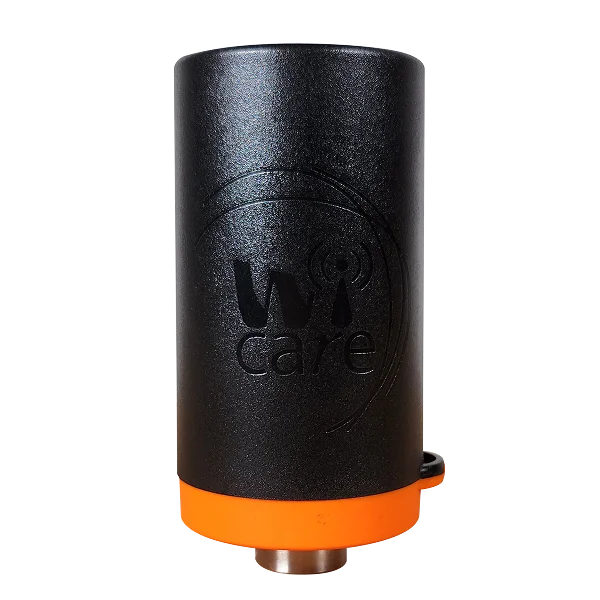
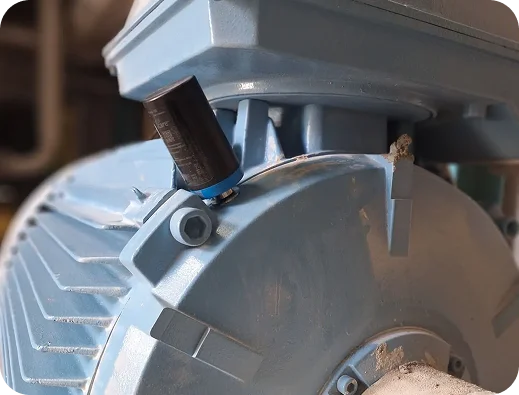
The I-care Wi-care range solves the problem differently: a compact sensor is mounted on the machine housing, captures triaxial vibration, shock loads and temperature, and sends the data to the I-see cloud platform — without a single metre of cable.
Two formats: route-based and permanent
| Model | Purpose | Key feature |
|---|---|---|
| Wi-care 130 G23 | Route collection | ATEX, up to 5-year battery, results in 15 min |
| Wi-care Pure G24 | Fixed online | Continuous monitoring, I-see integration |
| Wi-care 240 | Extended route | Extra channels and long-term logging |
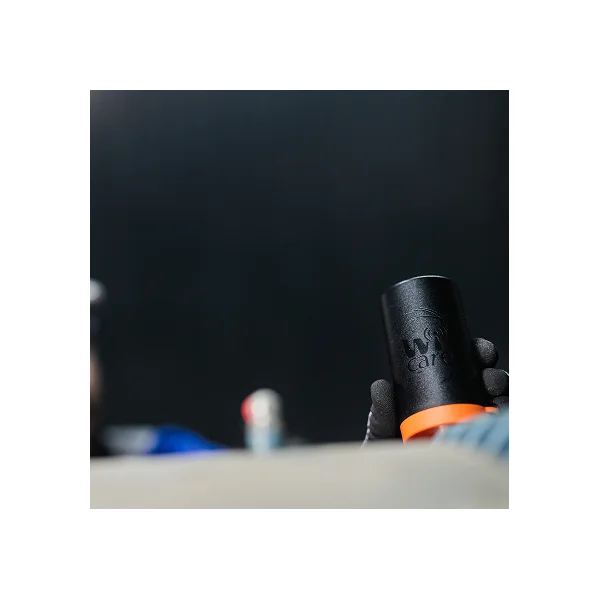
Wi-care 130 suits plants that want to move from "once a month with a vibration analyser" to a regular trend without stopping equipment. The operator walks up to the sensor and reads the data with a smartphone or tablet.
Wi-care Pure is for critical assets (main pumps, ID fans, CHP compressors) where downtime costs millions.
Equipment covered in this article
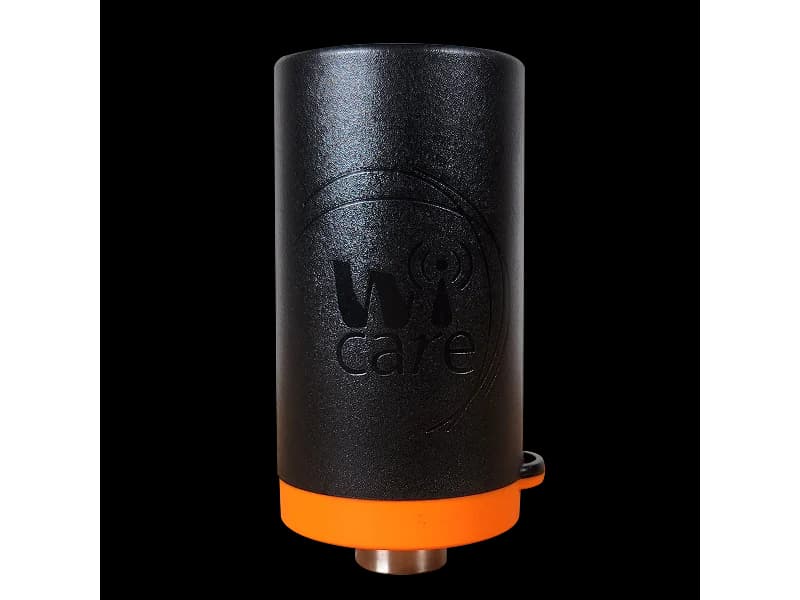
I-care Wi-care 130 G23 — wireless vibration sensor
Fully wireless triaxial sensor for vibration, impacts and temperature: 1 Hz – 20 kHz range, I-DNA high-frequency processing at 160 kHz for early bearing and gear…
Typical application scenarios
Power generation
- ID fans and transformer cooling fans
- Cooling circuit pumps
- Auxiliary equipment at CHP and thermal plants
Oil, gas and chemicals
- Transfer pumps in ATEX zones
- Compressors and packages at refineries
- Gearboxes and drives at remote sites
Mining and metals
- Conveyor and crusher drives
- Mine ventilation fans
- Slow-rotating gearboxes (paired with ultrasonic diagnostics)
Wi-care + SDT + Artesis: the KEG TRK ecosystem
Wi-care wireless sensors complement rather than replace the other technologies in the KEG TRK portfolio:
- SDT340 — ultrasound and lubrication on the route
- Artesis EPCM — electrical signature of the motor
- Wi-care — continuous vibration and temperature trend at the asset
This stack covers mechanics, electrics and lubrication without juggling separate contractors.
What the maintenance engineer gets
- Vibration and temperature trends in I-see — accessible from any device
- Early warning of unbalance, looseness and overheating
- Fewer "blind" rounds — the sensor is already in place
- ATEX versions for hazardous areas
Request a consultation on selecting Wi-care for your equipment fleet. KEG TRK supplies I-care with commissioning and training.
Related material: I-care catalogue · 5 steps to reliability · Thermography vs Wi-care
Equipment in this article
KEG TRK quotes prices and delivery times to Kazakhstan on request. We will prepare a commercial offer for your application.
I-care Wi-care 130 G23 — wireless vibration sensor
Fully wireless triaxial sensor for vibration, impacts and temperature: 1 Hz – 20 kHz range, I-DNA high-frequency processing at 160 kHz for early bearing and gear…
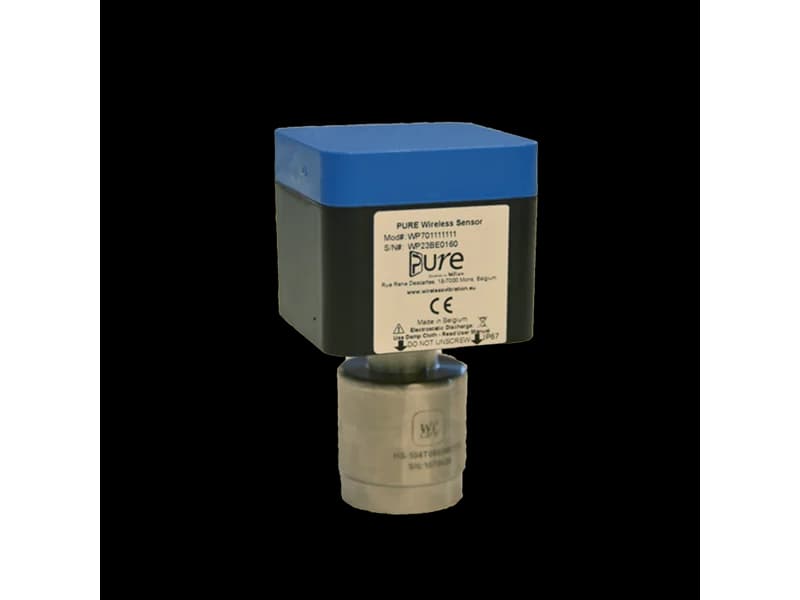
I-care Wi-care PURE G24 — wireless vibration data collector
Portable wireless data collector for route-based rounds: triaxial sensors capture horizontal, vertical and axial directions at once, and an ATEX tablet sends data to the…
Also in this article: I-care Wi-care 240 — continuous monitoring module
Read also
10/13/2026
Acoustic Camera: What It Is and How It Works
How an acoustic camera with a MEMS microphone array shows an ultrasound source on video, what beamforming is, which tasks it handles and where the method has limits.
10/13/2026
Thickness Gauging Through Paint: Echo-to-Echo and THRU-COAT Modes
Why a standard gauge overstates painted steel thickness, how echo-to-echo and THRU-COAT remove the coating, which transducers they need, thickness ranges and temperature limits.
10/13/2026
Ultrasonic Flaw Detector: How It Works and What It Finds
The pulse-echo principle, how to read an A-scan, straight and angle beam transducers, which flaws a detector finds, velocity and zero calibration, reference blocks and the DAC curve.