
Supply in Kazakhstan
KEG TRK supplies non-destructive testing solutions (Olympus) across Kazakhstan: Almaty, Astana, Karaganda, Ust-Kamenogorsk, Aktobe and other regions. Official warranty, monitoring system design, installation, commissioning and personnel training.
Key features
Applications and resources
Industry solutions, landing pages and articles on Olympus OmniScan X4 — next-generation phased array flaw detector
Typical tasks
- Weld inspection with complex geometry
- Hydrogen cracking and high-temperature hydrogen attack
- Aerospace composites
- Corrosion mapping
- Tasks requiring FMC, TFM and PCI
Overview
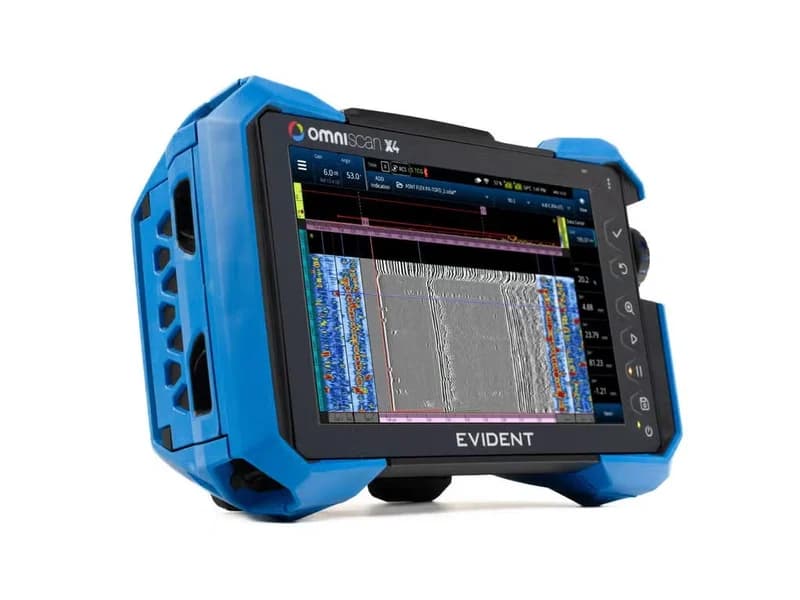
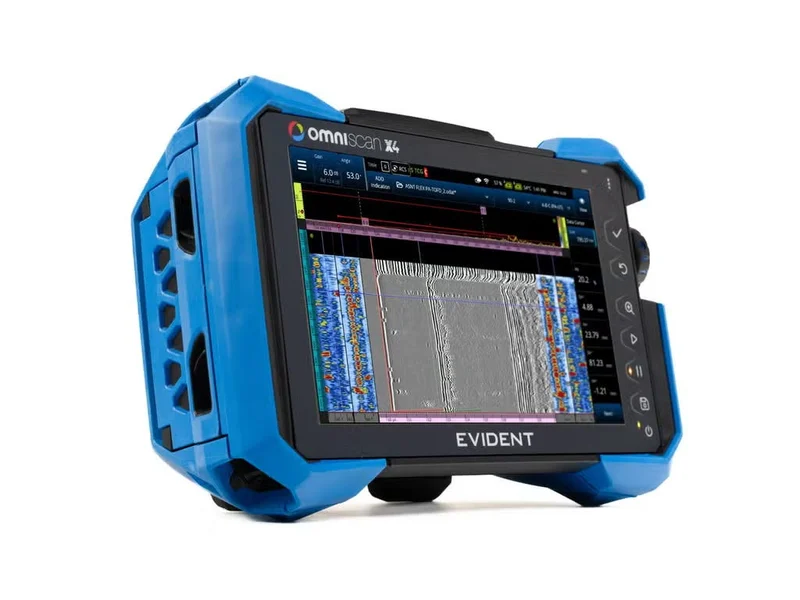
The OmniScan X4 is the next generation of Olympus (now Evident) phased array flaw detectors. Five configurations cover everything from routine weld inspection to full matrix capture with TFM, PCI and PWI on 128 elements.
TFM images reach 1024 × 1024 points, data is stored on a 1 TB SSD, and Wi-Fi 6E and Bluetooth 5.3 simplify file transfer.
Configurations
| Model | Pulsers | Receive channels | FMC/TFM/PCI/PWI |
|---|---|---|---|
| 16:64PR | 16 | 64 | no |
| 16:128PR | 16 | 128 | no |
| 32:128PR | 32 | 128 | no |
| 64:128PR | 64 | 128 | yes |
| 128:128PR | 128 | 128 | yes |
Technical specifications
| Parameter | Value |
|---|---|
| Bandwidth | PA 0.2–26.5 MHz, UT 0.25–28.5 MHz |
| Gain | PA 0–80 dB, UT 0–120 dB |
| TFM/PCI image | up to 1024 × 1024 |
| Display | 10.6" WXGA 1280 × 768 |
| Storage | 1 TB SSD, files up to 25 GB |
| Connectivity | Wi-Fi 6E, Bluetooth 5.3 |
| Power | 2 × 87 Wh, ≥ 5 h |
| Protection | IP65, MIL-STD-810G |
| Operating temperature | −10 to +45 °C |
| Dimensions | 335 × 221 × 151 mm |
| Weight | 5.7–5.9 kg |
Other instruments
Previous generation with TFM: OmniScan X3. Compact 16:64PR at 3.4 kg: OmniScan SX. Conventional UT: EPOCH 650.
What it is used for
The OmniScan X4 is an instrument for critical phased array inspection. The manufacturer names inspection of welds (thin and thick, austenitic and CRA), small-diameter piping, corrosion monitoring and pipeline integrity, high-temperature hydrogen attack (HTHA) and hydrogen-induced cracking (HIC), boiler tubes, pressure vessels, wind towers and blades, and aerospace composites. In Kazakhstan that means oil and gas, power, chemicals and metallurgy.
How to use it in practice
- Build an inspection plan in ScanPlan or on the instrument: weld, thickness, probe.
- Mount a scanner (HydroFORM, FlexoFORM, RollerFORM or another) and connect the probe.
- Calibrate and record data. Raw FMC data is available on the 64:128PR and 128:128PR through the Black Box app or the NDT Device API.
- Build the TFM or PCI image, using the live envelope on the instrument if needed.
- Transfer the file by Wi-Fi 6E, Bluetooth 5.3 or USB and analyse it in OmniPC 6, WeldSight or AeroView.
Choosing a configuration
| Configuration | Pulsers (aperture) | Receive channels | Extended FMC aperture | Raw FMC (Black Box, API) |
|---|---|---|---|---|
| 16:64PR | 16 | 64 | 32 | no |
| 16:128PR | 16 | 128 | 32 | no |
| 32:128PR | 32 | 128 | 64 | no |
| 64:128PR | 64 | 128 | 128 | yes |
| 128:128PR | 128 | 128 | 128 | yes |
Weight is 5.7 kg (16:64PR) and 5.9 kg (the others). Simpler jobs are covered by the OmniScan SX and EPOCH 650.
What to prepare for an order
- the material, thickness and geometry (weld, nozzle, small diameter);
- the procedures and codes you inspect to;
- whether you need raw FMC recording for your own processing;
- scanners, probes, wedges;
- analysis and reporting software, operator training.
Limits
- 5.7–5.9 kg, IP65: for work at height and in tight spaces the SX is more convenient.
- The method requires a procedure and trained operators.
- File size up to 25 GB, stored on a 1 TB SSD.
Related materials
- Thickness gauging, flaw detector or PAUT: which NDT tool you need on site
- Weld NDT at mining and metals plants: EPOCH or OmniScan
- Ultrasonic Flaw Detector: How It Works and What It Finds
- Non-Destructive Testing Methods: Types, What They Find, Where They Are Used
- OmniScan X3, OmniScan SX, EPOCH 650, EPOCH 6LT
- NDT equipment catalog
Supply in Kazakhstan
KEG TRK supplies Olympus (Evident) phased array flaw detectors, selects configurations, probes and scanners, and trains staff. Price on request.
Technical specifications
| Configurations | 16:64PR, 16:128PR, 32:128PR, 64:128PR, 128:128PR |
| Methods | PAUT, TOFD, TFM; FMC/TFM/PCI/PWI on 64:128PR and 128:128PR |
| TFM groups | 4 (X4A); 2 (X4B 16:64PR) |
| Image resolution | up to 1024 × 1024 per TFM or PCI wave set |
| PA bandwidth | 0.2–26.5 MHz |
| UT bandwidth | 0.25–28.5 MHz |
| Gain | PA 0–80 dB, UT 0–120 dB |
| Display | 10.6" WXGA 1280 × 768 touchscreen |
| Storage | 1 TB SSD, files up to 25 GB |
| Connectivity | Wi-Fi 6E, Bluetooth 5.3 |
| Power | 2 × 87 Wh Li-ion, hot-swap, at least 5 h |
| Protection | IP65, MIL-STD-810G |
| Operating temperature | −10 to +45 °C |
| Dimensions | 335 × 221 × 151 mm |
| Weight | 5.7–5.9 kg depending on model |
| Software | OmniPC 6; compatible with WeldSight, AeroView, ScanPlan |
Applications
Manufacturer
Olympus
Next-generation Olympus (Evident) phased array flaw detectors: five configurations from 16:64PR to 128:128PR, FMC/TFM/PCI/PWI, TFM images up to 1024 × 1024, 1 TB SSD, Wi-Fi 6E and Bluetooth 5.3, IP65, MIL-STD-810G.
Key specifications
- Configurations
- 16:64PR, 16:128PR, 32:128PR, 64:128PR, 128:128PR
- Methods
- PAUT, TOFD, TFM; FMC/TFM/PCI/PWI on 64:128PR and 128:128PR
- TFM groups
- 4 (X4A); 2 (X4B 16:64PR)
- Image resolution
- up to 1024 × 1024 per TFM or PCI wave set
- PA bandwidth
- 0.2–26.5 MHz
Official supplier in Kazakhstan
Related products
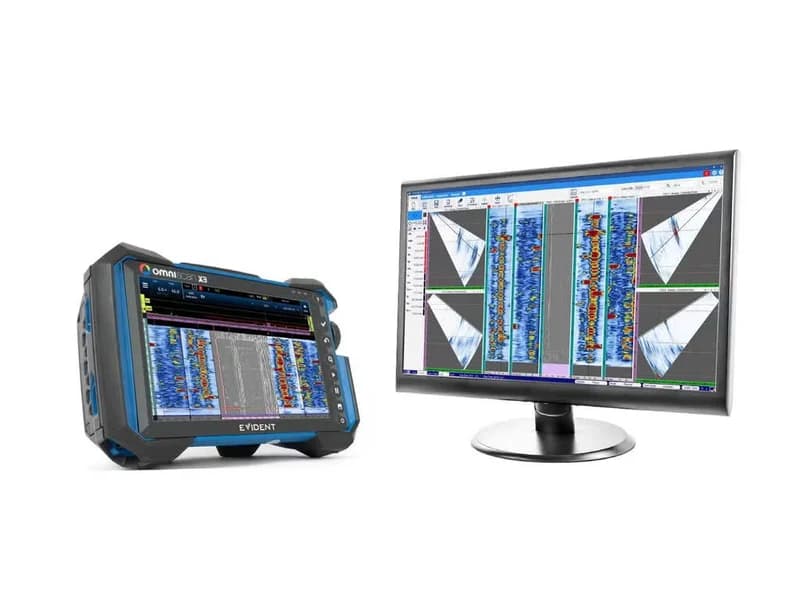
Olympus OmniScan X3 — phased array flaw detector with TFM
Olympus (Evident) phased array flaw detector with full matrix capture and TFM: X3 series (16:64PR, 16:128PR) and X3 64 (32:128PR, 64:128PR), up to 4 simultaneous TFM groups, 10.6" display, two hot-swap batteries, IP65.
- X3: 16:64PR, 16:128PR; X3 64: 32:128PR, 64:128PR
- PAUT, TOFD, TFM (MXU software)
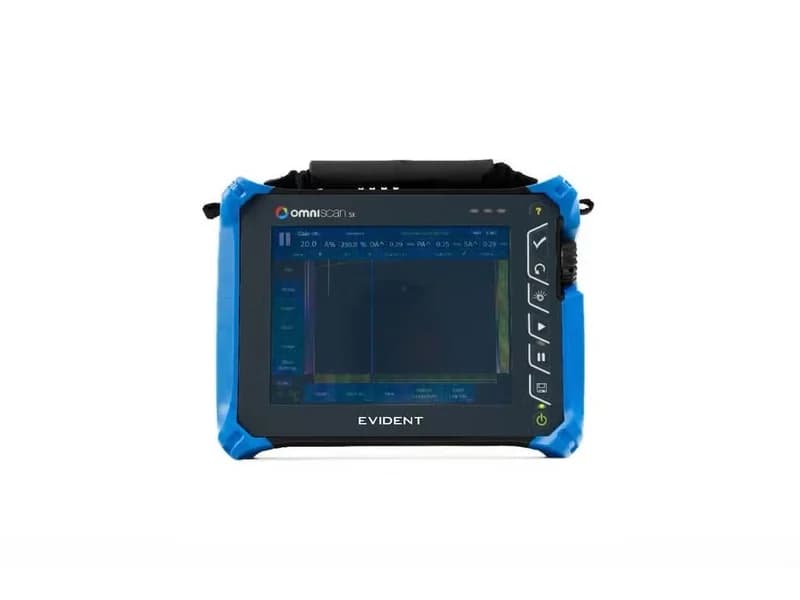
Olympus OmniScan SX — compact PA and UT flaw detector
Compact Olympus (Evident) flaw detector: SX PA with 16:64PR phased array and SX UT for conventional UT and TOFD. 8.4" display, up to 256 focal laws, at least 6 h runtime, 3.4 kg, IP66.
- SX PA (16:64PR), SX UT
- 1 PA connector, 2 UT LEMO 00 connectors
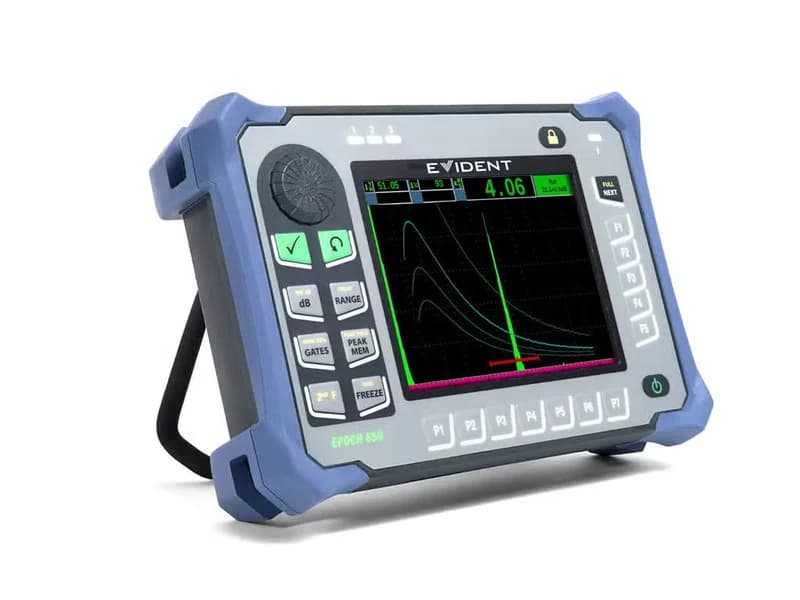
Olympus EPOCH 650 — ultrasonic flaw detector
Portable Olympus (Evident) ultrasonic flaw detector: tunable square-wave pulser up to 400 V, 0.2–26.5 MHz bandwidth, VGA display, DGS/AVG, DAC/TCG and AWS as standard, 100,000 IDs, 15–16 h runtime, IP67.
- 3.36–13,388 mm at 5900 m/s
- tunable square wave, 100/200/300/400 V
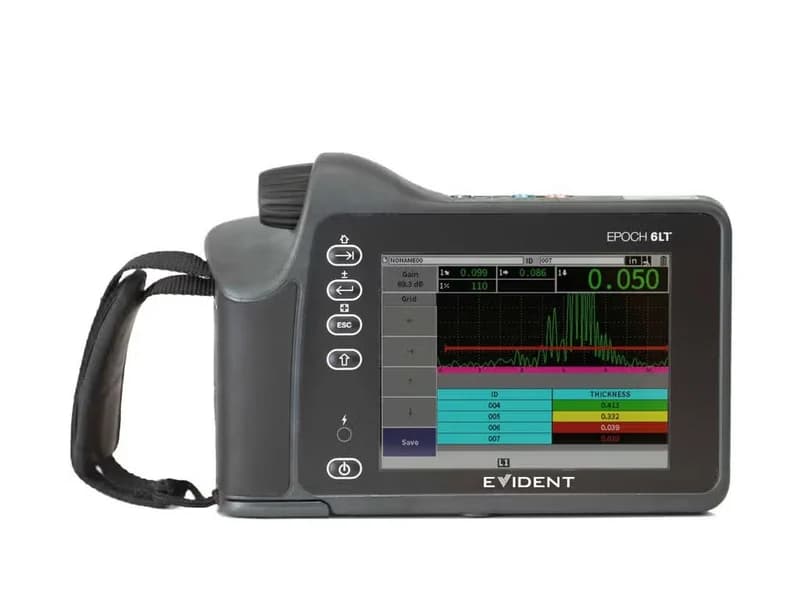
Olympus EPOCH 6LT — lightweight ultrasonic flaw detector
Lightweight Olympus (Evident) ultrasonic flaw detector, 890 g, for one-handed and rope access work: pulser up to 400 V, bandwidth up to 26.5 MHz, VGA display, 100,000 IDs, IP67.
- 4.31–6700 mm at 5900 m/s
- square wave, 100/200/300/400 V
Need advice?
Our specialists will help you choose the optimal Olympus OmniScan X4 — next-generation phased array flaw detector configuration for your equipment.
Related articles
All articles →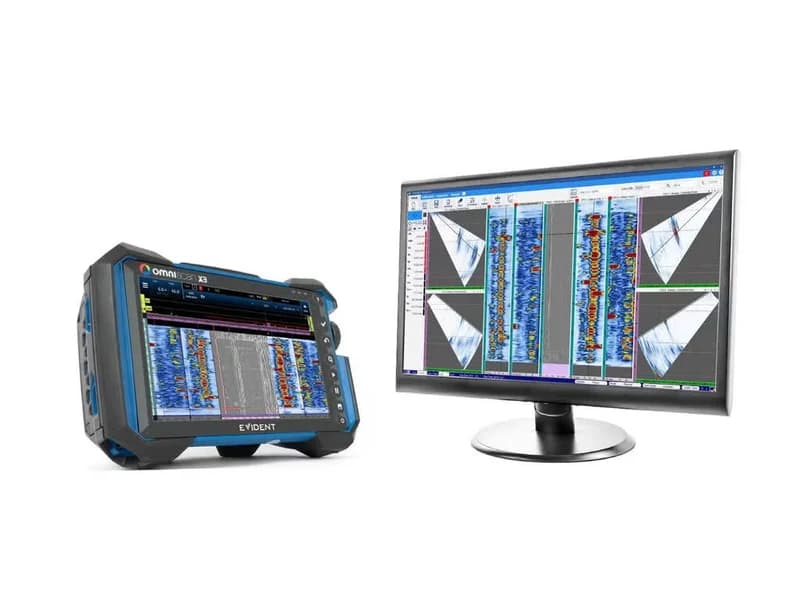
Non-Destructive Testing Methods: Types, What They Find, Where They Are Used
The main NDT methods: visual (videoscopes), ultrasonic thickness gauging, flaw detection and PAUT, eddy current, magnetic particle, penetrant, radiography and acoustic emission.
Ultrasonic Flaw Detector: How It Works and What It Finds
The pulse-echo principle, how to read an A-scan, straight and angle beam transducers, which flaws a detector finds, velocity and zero calibration, reference blocks and the DAC curve.
Weld NDT at mining and metals plants: EPOCH or OmniScan
When a conventional EPOCH flaw detector is enough on GOK/metals sites — and when OmniScan PAUT is justified
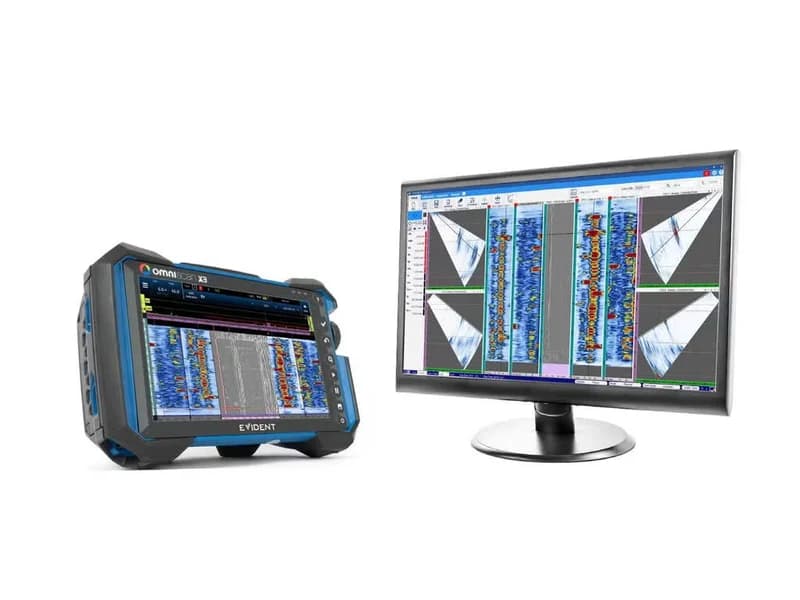
Thickness gauging, flaw detector or PAUT: which NDT tool you need
When an Olympus thickness gauge is enough, when you need EPOCH, and when OmniScan PAUT is justified