
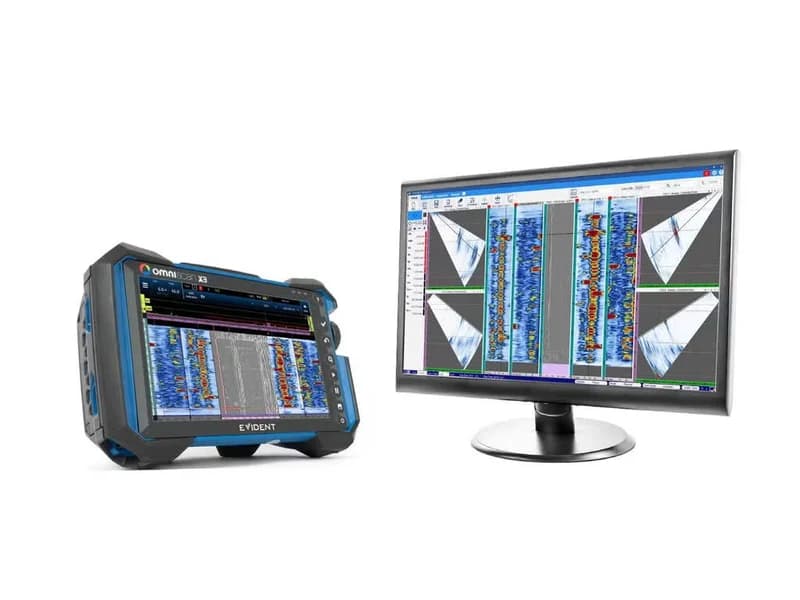
Weld NDT at mining and metals plants: EPOCH or OmniScan
When a conventional EPOCH flaw detector is enough on GOK/metals sites — and when OmniScan PAUT is justified
A weld is not the same as "wall thickness"
There is a lot of metal at mining and metals plants: bins, slurry pipelines, steel structures, crane runways, vessels. A thickness gauge answers the question of wall loss. Weld inspection is a different task: lack of penetration, cracks, slag, lack of fusion, bevel geometry.
If an enquiry says "we need Olympus ultrasound", clarify: thickness gauging or weld UT. Otherwise you will buy the wrong class of instrument.
The basic method map is here.
When EPOCH is enough
The EPOCH 650 and the portable EPOCH 6LT cover classic UT:
- standard butt and fillet welds to an agreed procedure;
- routine inspection after repair or installation;
- work with wedges, DAC/TCG and A-scan documentation.
Choose EPOCH if:
- you have (or will have) a procedure and trained Level II UT personnel;
- the volume is tens or hundreds of metres of weld per year, not a continuous PAUT flow;
- the client accepts a classic UT report without a mandatory C-scan.
At many Kazakhstan sites this is the correct and sufficient entry point into flaw detection.
Equipment covered in this article
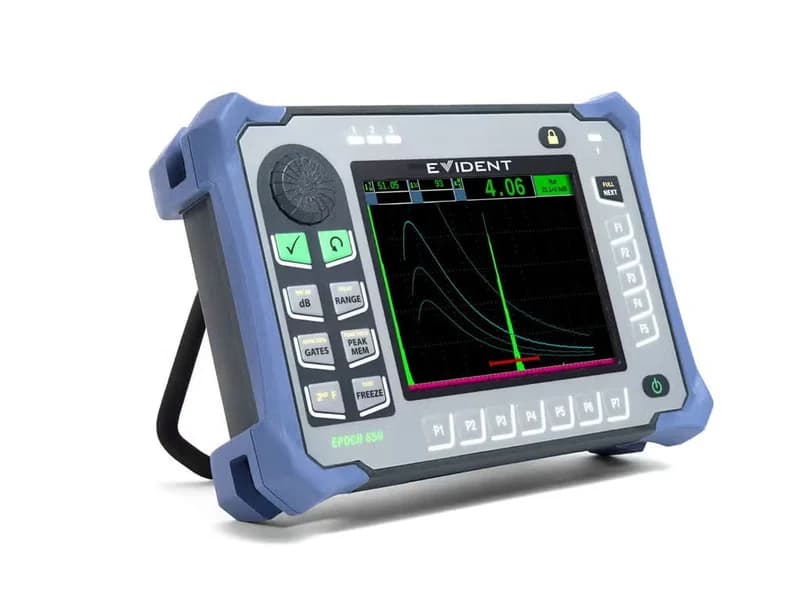
Olympus EPOCH 650 — ultrasonic flaw detector
Portable Olympus (Evident) ultrasonic flaw detector: tunable square-wave pulser up to 400 V, 0.2–26.5 MHz bandwidth, VGA display, DGS/AVG, DAC/TCG and AWS as standard…
When OmniScan (PAUT / TFM) is justified
The OmniScan X3 / X4 is needed when:
- critical welds require encoded scanning and a full map of the zone;
- geometry is complex, access limited, and a high probability of detection is required;
- the tender or standard explicitly specifies PAUT / TFM;
- you have PAUT operators and a procedure — otherwise the instrument sits idle.
PAUT without a procedure is more expensive and less useful than a good EPOCH backed by inspection discipline.
Typical mining / metals assets
| Asset | Usually enough | When to consider PAUT |
|---|---|---|
| Water / slurry pipelines after repair | EPOCH | thick-wall critical joints, difficult access |
| Shop steel structures | EPOCH | assemblies with strict documentation requirements |
| Vessels / tanks | EPOCH plus thickness gauging | per project / inspection body requirements |
| New turnkey installation campaigns | EPOCH / PAUT per the specification | if the spec says PAUT — OmniScan from the start |
Keep a separate thickness-gauging route for corrosion in parallel — one does not replace the other.
Link to site reliability
- Vibration / ESA find the machine that is "alive".
- Visual inspection plus thickness gauging remove the wall-loss risk.
- UT/PAUT confirm weld quality after repair or installation.
That is how Olympus NDT becomes part of the reliability programme rather than a one-off paper exercise.
What to budget for
- The instrument (EPOCH or OmniScan) plus cables and probes.
- Calibration blocks and couplant.
- Personnel training / certification.
- A report template accepted by your client or inspection body.
The catalogue is in the NDT section. Kit selection is on the Olympus page.
Equipment in this article
KEG TRK quotes prices and delivery times to Kazakhstan on request. We will prepare a commercial offer for your application.
Olympus EPOCH 650 — ultrasonic flaw detector
Portable Olympus (Evident) ultrasonic flaw detector: tunable square-wave pulser up to 400 V, 0.2–26.5 MHz bandwidth, VGA display, DGS/AVG, DAC/TCG and AWS as standard…
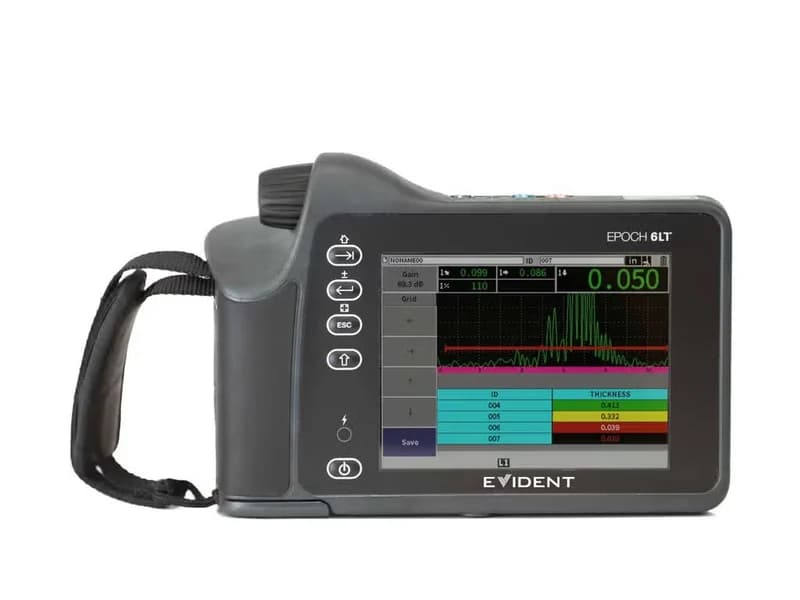
Olympus EPOCH 6LT — lightweight ultrasonic flaw detector
Lightweight Olympus (Evident) ultrasonic flaw detector, 890 g, for one-handed and rope access work: pulser up to 400 V, bandwidth up to 26.5 MHz, VGA display, 100,000…
Also in this article: Olympus OmniScan X3 — phased array flaw detector with TFM, Olympus OmniScan X4 — next-generation phased array flaw detector, Olympus OmniScan SX — compact PA and UT flaw detector
Read also
7/22/2026
Thickness gauging, flaw detector or PAUT: which NDT tool you need
When an Olympus thickness gauge is enough, when you need EPOCH, and when OmniScan PAUT is justified
7/17/2026
Ultrasonic diagnostics of couplings and shaft connections: early signs of failure
Elastomeric, gear and jaw couplings emit a characteristic ultrasonic signature long before a vibration alarm. The SDT340 inspection method for pumps, compressors and gearbox drives.
7/17/2026
Conveyor belt drives: SDT ultrasound and Artesis ESA on one site
Belt tension, sheave wear, pulley unbalance and drive motor bearings — how to combine the SDT340 ultrasound route with Artesis monitoring on belt conveyors at mines and processing plants.