
Supply in Kazakhstan
KEG TRK supplies non-destructive testing solutions (Olympus) across Kazakhstan: Almaty, Astana, Karaganda, Ust-Kamenogorsk, Aktobe and other regions. Official warranty, monitoring system design, installation, commissioning and personnel training.
Key features
Applications and resources
Industry solutions, landing pages and articles on Olympus EPOCH 6LT — lightweight ultrasonic flaw detector
Typical tasks
- Weld inspection at height and in confined spaces
- Rope access — tanks, masts, structures
- Pipeline and steel structure inspection
- Corrosion measurement with the corrosion module
Overview
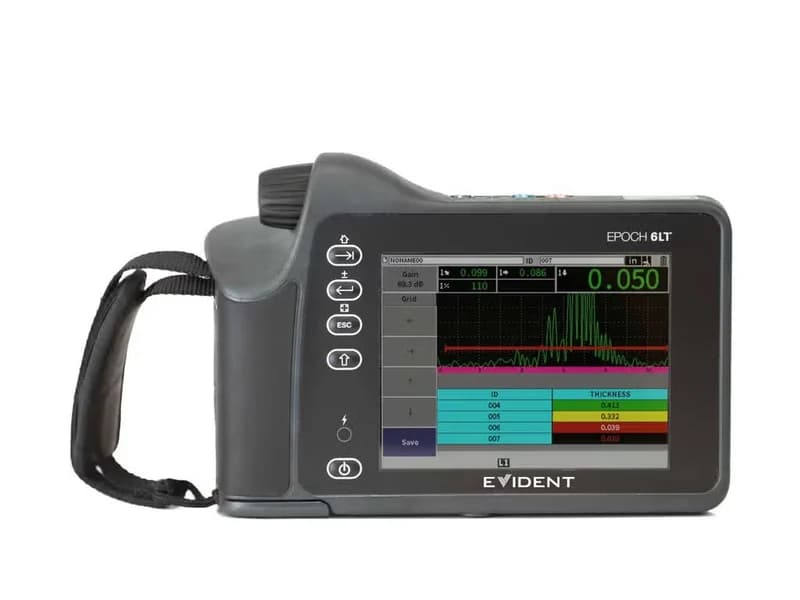
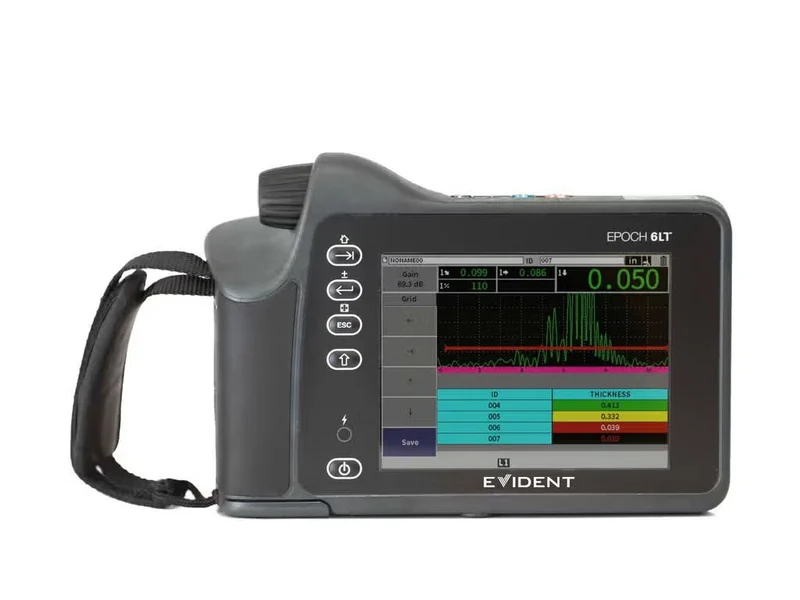
The EPOCH 6LT is a lightweight ultrasonic flaw detector from Olympus (now the Evident brand). At 890 g it is balanced for a one-handed grip, and a rope access kit secures it to your leg or harness. It is built for work at height, on masts, tanks and in tight spaces.
Pulser and receiver
| Parameter | Value |
|---|---|
| Pulse | square wave, 100 / 200 / 300 / 400 V |
| Pulse width | 25–5000 ns |
| PRF | 10–2000 Hz |
| Bandwidth | DC–26.5 MHz; 0.2–26.5 MHz version to ISO 22232-1:2020 |
Software options
- DAC/TCG;
- DGS/AVG;
- AWS D1.1 and D1.5;
- corrosion module;
- back wall echo attenuator.
Technical specifications
| Parameter | Value |
|---|---|
| Range | 4.31–6700 mm (steel, 5900 m/s) |
| Display | VGA 640 × 480, 60 Hz |
| Memory | 100,000 IDs |
| Power | Li-ion, ~6 h |
| Protection | IP67 / IP65 |
| Operating temperature | −10 to +50 °C |
| Weight | 890 g |
Other instruments
Full-size flaw detector with DGS/AVG, DAC/TCG and AWS as standard: EPOCH 650. Phased array: OmniScan X3. Thickness gauging: 39DL PLUS.
Supply in Kazakhstan
KEG TRK supplies Olympus (Evident) flaw detectors and trains staff. Price on request.
Technical specifications
| Range | 4.31–6700 mm at 5900 m/s |
| Pulser | square wave, 100/200/300/400 V |
| Pulse width | 25–5000 ns |
| Prf | 10–2000 Hz in 10 Hz steps |
| Receiver bandwidth | DC–26.5 MHz (standard); 0.2–26.5 MHz (ISO 22232-1:2020 version) |
| Display | VGA 640 × 480, transflective, 60 Hz, 117 × 89 mm |
| Memory | 100,000 IDs |
| Software options | DAC/TCG, DGS/AVG, AWS D1.1 and D1.5, corrosion module, back wall echo attenuator |
| Power | Li-ion, about 6 h |
| Protection | IP67 and IP65 |
| Operating temperature | −10 to +50 °C |
| Weight | 890 g |
Applications
Manufacturer
Olympus
Lightweight Olympus (Evident) ultrasonic flaw detector, 890 g, for one-handed and rope access work: pulser up to 400 V, bandwidth up to 26.5 MHz, VGA display, 100,000 IDs, IP67.
Key specifications
- Range
- 4.31–6700 mm at 5900 m/s
- Pulser
- square wave, 100/200/300/400 V
- Pulse width
- 25–5000 ns
- Prf
- 10–2000 Hz in 10 Hz steps
- Receiver bandwidth
- DC–26.5 MHz (standard); 0.2–26.5 MHz (ISO 22232-1:2020 version)
Official supplier in Kazakhstan
Related products
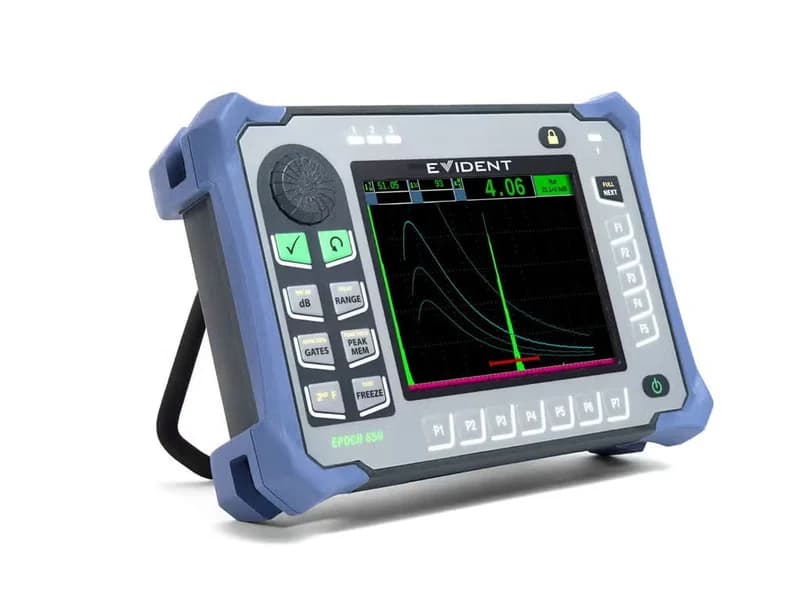
Olympus EPOCH 650 — ultrasonic flaw detector
Portable Olympus (Evident) ultrasonic flaw detector: tunable square-wave pulser up to 400 V, 0.2–26.5 MHz bandwidth, VGA display, DGS/AVG, DAC/TCG and AWS as standard, 100,000 IDs, 15–16 h runtime, IP67.
- 3.36–13,388 mm at 5900 m/s
- tunable square wave, 100/200/300/400 V
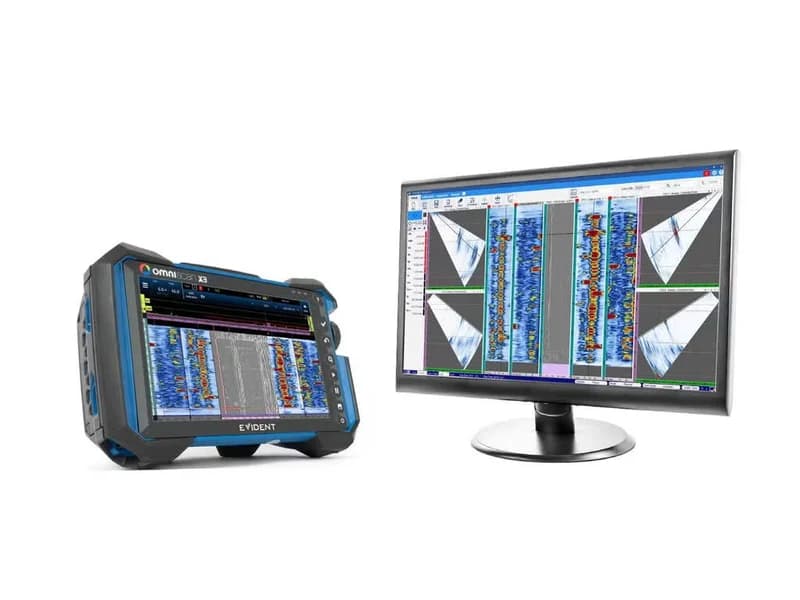
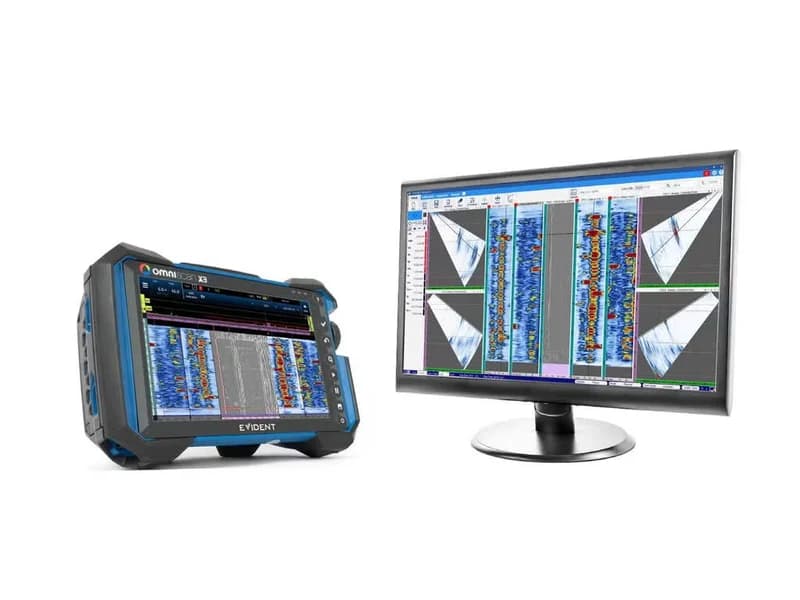
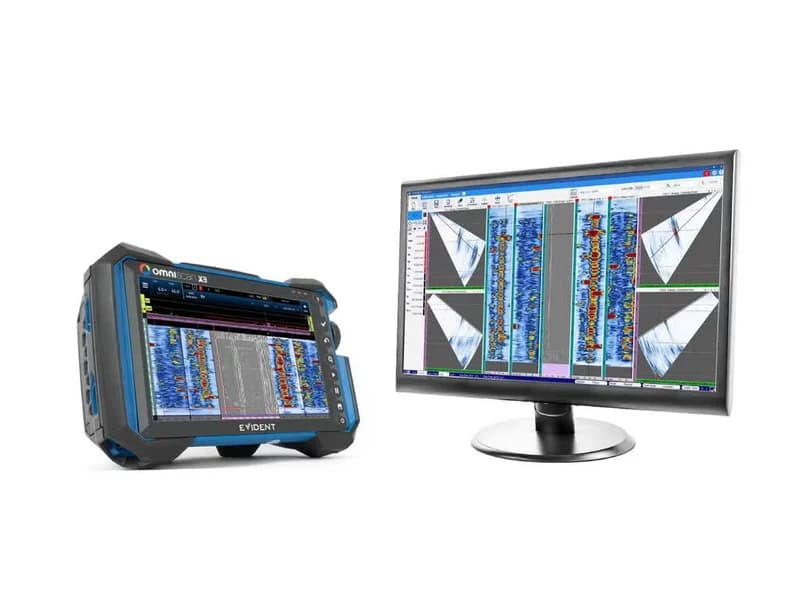
Olympus OmniScan X3 — phased array flaw detector with TFM
Olympus (Evident) phased array flaw detector with full matrix capture and TFM: X3 series (16:64PR, 16:128PR) and X3 64 (32:128PR, 64:128PR), up to 4 simultaneous TFM groups, 10.6" display, two hot-swap batteries, IP65.
- X3: 16:64PR, 16:128PR; X3 64: 32:128PR, 64:128PR
- PAUT, TOFD, TFM (MXU software)
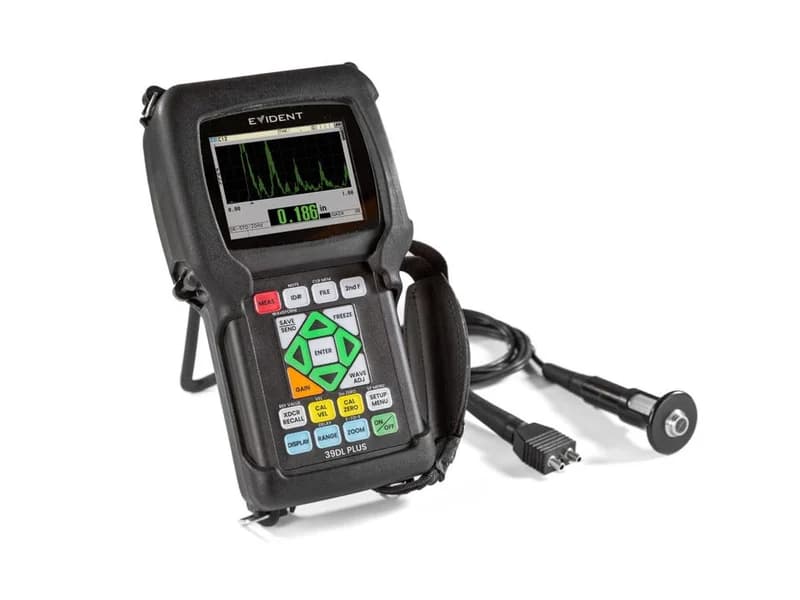
Olympus 39DL PLUS — ultrasonic thickness gauge
General-purpose Olympus (Evident) ultrasonic thickness gauge, successor to the 38DL PLUS: 0.08–635 mm, up to 60 Hz update, single and dual element transducers, THRU-COAT, Echo-to-Echo, B-scan, up to 792,832 readings, IP67, 0.83 kg.
- 0.08–635 mm
- 0.1 mm; 0.01 mm; 0.001 mm (option)
Need advice?
Our specialists will help you choose the optimal Olympus EPOCH 6LT — lightweight ultrasonic flaw detector configuration for your equipment.
Related articles
All articles →Ultrasonic Flaw Detector: How It Works and What It Finds
The pulse-echo principle, how to read an A-scan, straight and angle beam transducers, which flaws a detector finds, velocity and zero calibration, reference blocks and the DAC curve.
Weld NDT at mining and metals plants: EPOCH or OmniScan
When a conventional EPOCH flaw detector is enough on GOK/metals sites — and when OmniScan PAUT is justified
Thickness gauging, flaw detector or PAUT: which NDT tool you need
When an Olympus thickness gauge is enough, when you need EPOCH, and when OmniScan PAUT is justified