

Pillar 3 of 8 · SDT Ultrasound Solutions methodology
Ultrasonic Compressed Air and Gas Leak Detection
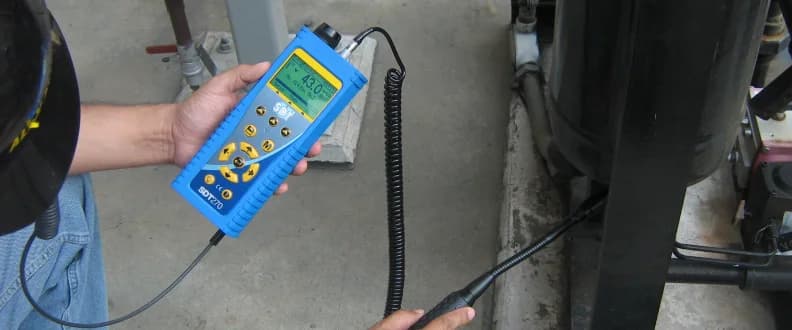
Ultrasonic compressed air leak detection identifies energy losses in pneumatic systems. According to the Compressed Air Challenge, leaks account for 20–30% of total compressed air production at a typical industrial plant. Given that compressed air consumes around 10% of a plant's total electricity, eliminating leaks is the fastest way to cut energy costs.
Ultrasonic detectors find leaks by the characteristic high-frequency signal of turbulent flow (SDT detectors work at around 38 kHz). The method works for compressed air, process gases (N₂, Ar, CO₂), steam, and vacuum. Inspection is performed on running equipment under operating pressure — with no production shutdown and no depressurizing. The specialized LEAKChecker instrument is purpose-built for leak detection tasks.
KEG TRK supplies SDT Ultrasound Solutions detectors and LEAKReporter software for leak detection across Almaty, Astana, Atyrau, Aktobe, Pavlodar, Kyzylorda, and other cities in Kazakhstan. Training in the leak detection and documentation program is included.
Applications of Ultrasonic Leak Detection
One detector — full control of every gas system in the plant.
Compressed Air and Pneumatic Systems
Detects leaks in pipelines, connections, valves, and fittings. The detector localizes the leak source down to a specific fitting — even in noisy shop floors above 100 dB.
Vacuum Systems
Identifies air ingress in vacuum lines, chambers, and seals. The ultrasonic signal of the turbulent flow clearly pinpoints the ingress point.
Natural and Process Gas
Finds leaks of N₂, Ar, CO₂, and natural gas in industrial installations. Safe inspection under pressure without additional gas analyzers.
Steam and Condensate
Detects steam leaks in pipelines and fittings. Ultrasound distinguishes a genuine leak from normal venting by the signal characteristics.
How to Perform Ultrasonic Leak Detection
Three steps from scanning to a savings report.
Scan Pipeline Zones with the Sensor
Use a directional sensor with a parabolic reflector for long-range searches, or a contact sensor for close-range work. Move along the pipeline, noting any rise in signal.
Localize the Leak Point
The ultrasonic signal increases as you approach the source. Move toward the peak dBµV reading — that is the exact leak location.
Document and Calculate the Loss
Tag the leak and log it in LEAKReporter. The software calculates the annual cost of the loss and generates a report with a map for the repair crew.
Benefits of Ultrasonic Leak Detection
Measurable energy savings for plants across Kazakhstan.
Less Load on Compressors
Eliminating leaks reduces compressor load and directly lowers electricity consumption. A single survey route provides the data for a savings plan.
Detection in Noisy Environments
The detector listens to a narrow band around 38 kHz, where there is far less plant noise than in the audible range. Leaks are found in the noisiest conditions — near presses, crushers, and compressors.
Precise Localization
A directional sensor points to a specific fitting or joint — no need to shut down and disassemble piping to find the leak location.
Loss Calculation Reporting
LEAKReporter automatically calculates the volume and annual cost of a leak. A ready-made document for prioritizing repairs and reporting to management.
No Shutdown or Depressurizing
Inspection is performed on running equipment under operating pressure. No downtime, no production loss during the audit.
Payback on Your Own Numbers
Each leak found is estimated by flow, and the cost is worked out from your electricity tariff and the compressor specific power. The program is justified on site data, not on industry averages.
Want to Run a Leak Audit at Your Plant?
KEG TRK specialists will help estimate potential savings and select the optimal detector.
Get a ConsultationInstruments for Compressed Air Leak Detection
From the specialized LEAKChecker to the professional SDT340.
LEAKChecker
SpecializedA specialized leak detection instrument. Simple, reliable, immediate results.
Suited for: Basic air leak detection
SDT270
Data and TrendsA data collector with signal recording and routes; leaks are reported in LEAKReporter.
Suited for: Energy audit program, documentation
SDT340
ProfessionalA multi-sensor platform with Bluetooth HD, advanced analytics, and cloud sync.
Suited for: Critical sites, comprehensive audits
SDT200
For BeginnersA basic detector for a quick start to a leak detection program, with an immediate audible indicator.
Suited for: First step, fast ROI
Explore the Other Pillars of Ultrasonic Testing
The SDT methodology covers 8 areas — one instrument solves every task.
Frequently Asked Questions About Compressed Air Leak Detection
Need advice?
Our specialists will help you choose the optimal detectors for compressed air leak detection configuration for your equipment.