
How to Find an SF6 Leak on GIS and Circuit Breakers: A Step-by-Step Method
Pressure is dropping in a GIS compartment but the leak is nowhere to be seen. A step-by-step method: from pressure trends and room monitoring to pinpointing with a leak detector and confirming the repair.
In this article
Prepared by the KEG TRK team · How we prepare our content
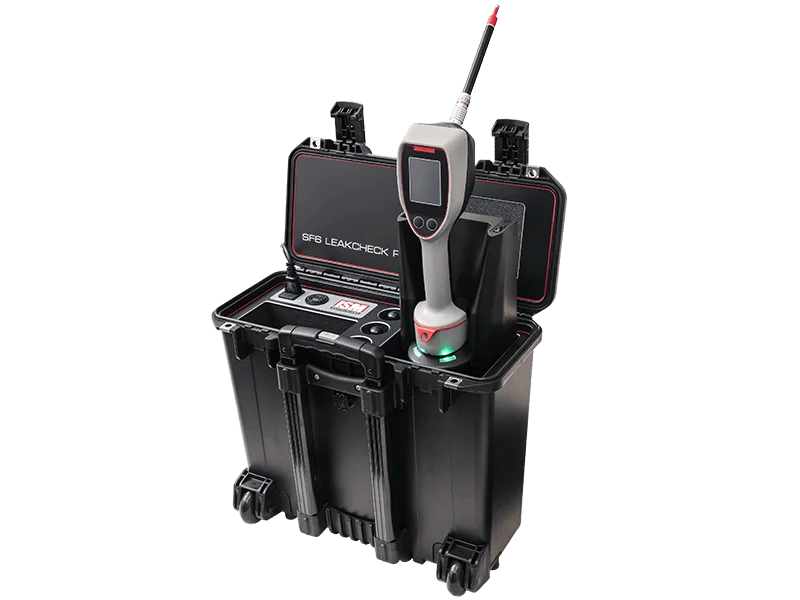
A "low SF6 pressure" alarm on a gas-insulated switchgear (GIS) compartment or a dead-tank breaker is one of the most frequent substation work orders. Topping up the compartment is easy; finding the leak is much harder. GIS has dozens of flanges, bushings, bursting discs, valves and density monitors, and the leak can be at any of them.
Below is the method we recommend to substation teams, from trend analysis to repair confirmation. It combines three classes of instrument: fixed room monitoring, a portable leak detector and an SF6 quality analyser.
Step 0. Size the problem from pressure trends
Before going out with a leak detector, answer two questions:
- Which compartment is losing gas? Compare density monitor readings across all compartments, temperature-compensated. A pressure gauge without temperature compensation "breathes" with the weather outdoors and can mimic a leak.
- How fast? Convert the density drop into kilograms per year. That determines urgency: a slow leak goes into the repair plan, a fast one needs immediate action. How to calculate losses in kilograms and CO₂ equivalent is covered in the article on SF6 leak accounting.
Knowing the compartment narrows the search from hundreds of joints to a few dozen.
Step 1. Check the room air
SF6 is about five times heavier than air and collects in low points: cable trenches, pits, the basement under the GIS. A significant leak in an enclosed room is a personnel safety issue: SF6 displaces oxygen, and its decomposition products after arcing are toxic.
- A fixed monitor, SF6 AreaCheck P2 or the Rapidox SF6 Fixed Detection System, continuously monitors room concentration and signals SCADA. Its trend often shows in which part of the room and at what time the concentration rises.
- Before entering a room with an SF6 alarm, make sure ventilation is running and the concentration at low level is normal.
Equipment covered in this article
Ion Science SF6 LeakCheck P1 XTL — SF6 leak detector
Wireless SF6 and C4-FN leak detector on Negative Ion Capture technology: sensitivity to 1×10⁻⁸ cc/s (0.1 ppm), response about 0.5 s, ready at switch-on and no loss of…
Step 2. Coarse search: a walk-round with a leak detector
The goal of the coarse search is to find a "hot" zone, not a point. Use the detector at standard sensitivity and work from the general to the specific:
- walk round the compartment at flange level;
- check the undersides of flanges and joints, as the gas flows downward;
- mark places where the signal is consistently above background.
The compact SF6 Leakmate is handy for walk-rounds: its audible tone is proportional to leak size, and automatic temperature and airflow compensation reduces false alarms in wind.
Important: in a room that already has elevated SF6 background, ventilate first. Otherwise the detector will show gas everywhere.
Step 3. Pinpointing
Once the zone is found, move to the point:
- switch the detector to high sensitivity: on the SF6 LeakCheck P1 XTL that is down to 1×10⁻⁸ cc/s (0.1 ppm);
- move the probe slowly, about 2–3 cm/s, a few millimetres from the surface;
- check one by one: flange seals, bolted joints, density monitor and filling valve connections, bursting discs, enclosure welds, bushings.
The LeakCheck P1 XTL uses Negative Ion Capture technology and does not lose sensitivity after exposure to high concentration, which matters when the probe accidentally hits the jet. Its 0.5 s response with no warm-up keeps the search moving.
| Typical leak location | What to look for |
|---|---|
| Flange joints | Ageing O-rings, uneven bolt torque |
| Density monitors and valves | Threaded connections, seals damaged during maintenance |
| Bushings | Microcracks in cast insulation, mounting points |
| Welds and cast enclosures | Pores and cracks, especially after thermal cycling |
| Bursting discs | Damaged or aged disc |
Step 4. Check the gas quality
If the compartment was losing gas for a long time, moisture may have entered: a leak works both ways as pressure and temperature cycle. After pinpointing and before the repair, check the gas with a Rapidox SF6 6100 analyser: moisture (dew point), SF6 purity and decomposition products (SO₂, H₂S). If parameters are out of limits, the compartment needs gas treatment as well as the leak repair. Details are in the article on checking SF6 quality.
Step 5. Confirm the repair
After replacing a seal or repairing the joint:
- check the repair point with the detector at high sensitivity;
- follow the compartment density trend for several weeks; it should stabilise once temperature is taken into account;
- record the result: leak location, cause, mass of gas topped up, date. This data is needed for accounting and for planning repairs on similar equipment.
Typical mistakes
- Searching with high room background. The detector reacts everywhere and the point cannot be found.
- Searching in wind without compensation. In an outdoor substation the wind blows gas away from the leak; work downwind and use instruments with airflow compensation.
- Checking only top surfaces. SF6 flows down; the underside of a flange tells you more.
- Topping up without searching. Gas costs money, and SF6 emissions count as emissions of a greenhouse gas with a very high global warming potential.
Summary
Finding an SF6 leak quickly means working in order: pressure trends show the compartment, a fixed monitor shows the room zone, a leak detector at standard sensitivity shows the hot zone and at high sensitivity the point. A gas analyser confirms whether gas quality has suffered, and a re-check confirms the repair.
KEG TRK supplies Ion Science leak detectors and Rapidox SF6 analysers in Kazakhstan and helps put together a kit for your substations. A comparison of instrument classes is in the article "SF6 leak detector or gas analyser".
Equipment in this article
KEG TRK quotes prices and delivery times to Kazakhstan on request. We will prepare a commercial offer for your application.
Ion Science SF6 LeakCheck P1 XTL — SF6 leak detector
Wireless SF6 and C4-FN leak detector on Negative Ion Capture technology: sensitivity to 1×10⁻⁸ cc/s (0.1 ppm), response about 0.5 s, ready at switch-on and no loss of…
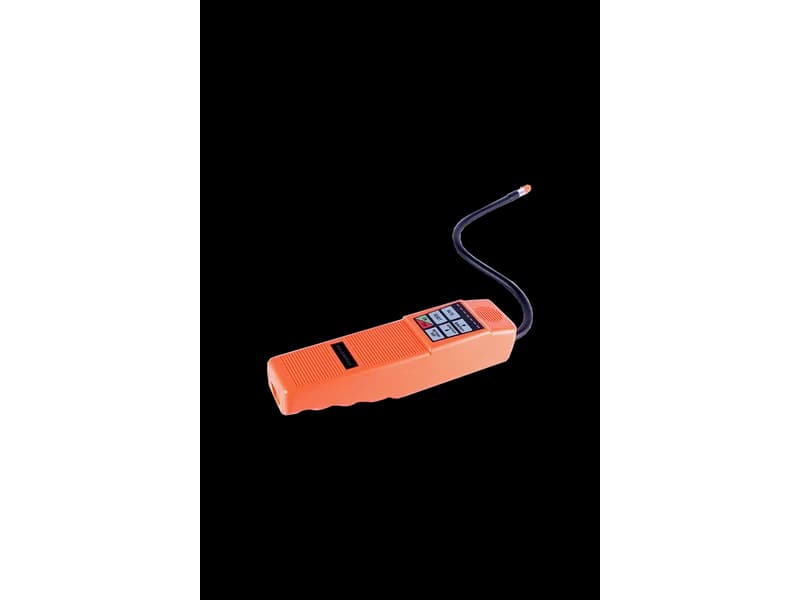
Ion Science SF6 Leakmate — portable SF6 leak detector
Simple portable SF6 leak detector with a high voltage ionisation sensor: sensitivity 1×10⁻⁶ mbar·l/s, response about 1 s, 355 mm flexible probe, LED bar graph and an…
Also in this article: Ion Science SF6 AreaCheck P2 — fixed SF6 room monitor, Rapidox SF6 6100 Portable — Portable SF6 Gas Analyser
Read also
10/14/2026
How to Find an SF6 Gas Leak: Instruments and Procedure
SF6 leaks are found in two steps: a pressure drop on the density monitor shows gas is escaping, then the spot is located with an SF6 sniffer and confirmed with soap solution.
9/19/2026
SF6 control at GIS and substations: Ion Science leak detectors
How to find an SF6 leak on a breaker or GIS bay before it turns into equipment failure. LeakCheck P1:XTL and AreaCheck P2 from Ion Science's official representative in Kazakhstan — KEG TRK.
9/25/2026
SF6 Leak Accounting: How to Calculate Losses in Kilograms and Emissions in CO₂ Equivalent
Why every kilogram of leaked SF6 matters to a utility, how to calculate leak rate from density and top-ups, how to convert it to CO₂ equivalent and which instruments the accounting needs.