
Supply in Kazakhstan
KEG TRK supplies motor condition monitoring solutions (Artesis) across Kazakhstan: Almaty, Astana, Karaganda, Ust-Kamenogorsk, Aktobe and other regions. Official warranty, monitoring system design, installation, commissioning and personnel training.
Mining equipment
Key features
Applications and resources
Industry solutions, landing pages and articles on Artesis e-PCM — Generator and Wind Turbine Monitoring
Where it is used
Typical tasks
- Wind turbines
- Diesel generator sets
- Gas turbines
- Hydro generators
- Steam turbines
Documentation
Official manufacturer PDF documents. Key specifications are also published on this page.
Need a price with delivery in Kazakhstan? We will prepare a quotation for your task.
Description
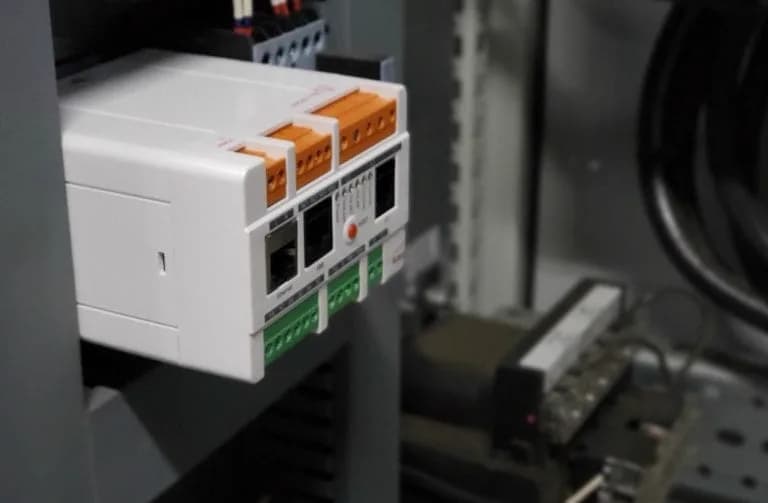
Artesis e-PCM (Electronic Plant Condition Monitoring) is a specialised system for monitoring generators and their prime movers. It uses patented sensorless technology — the generator itself becomes a complex sensor for faults in the turbine, engine or driven train.
Key features
Sensorless generator monitoring
- Generator as sensor — analyses generator output signals
- No extra sensors on the prime mover
- Real-time online monitoring 24/7
- AI algorithms — automatic fault classification
Applications
Wind turbines
- Main shaft bearings
- Generator bearings
- Gearbox (where fitted)
- Rotor imbalance
- Blade-related effects (indirect)
Diesel generators
- Engine mechanical faults
- Generator electrical issues
- Fuel system problems
- Cooling fan condition
Gas and steam turbines
- Rotor imbalance and misalignment
- Bearing wear and lubrication
- Coupling to generator
- Overall vibration-related stress
Detectable faults
Prime-mover mechanical faults
| Fault | Early warning |
|---|---|
| Rotor imbalance | 2–4 weeks |
| Misalignment | 1–3 weeks |
| Bearing wear | 4–8 weeks |
| Mechanical looseness | 1–2 weeks |
| Gearbox defects | 2–6 weeks |
Generator electrical faults
- Stator winding looseness or shorts
- Rotor winding defects
- Load asymmetry
- Power-quality harmonics
Technical specifications
Measurement
| Parameter | Value |
|---|---|
| Monitoring | Online 24/7 |
| Inputs | 3-phase generator voltage and current |
| Sampling | High rate (up to 10 kHz) |
| Frequency | 50/60 Hz (application-dependent) |
| Rating | kVA to MVA |
Communications
| Interface | Description |
|---|---|
| Ethernet | TCP/IP |
| Modbus TCP | SCADA / PLC |
| Analog outputs | 4–20 mA (optional) |
| Relay outputs | Alarm contacts (optional) |
| OPC UA | Optional |
Installation
- DIN rail or panel mount
- 100–240 V AC/DC supply
- IP20 in cabinet; IP54 optional
Wind energy detail
Monitored components
- Main shaft — bearings, rotor balance, coupling
- Generator — bearings, windings, air gap
- Auxiliary systems — pitch hydraulics pumps
Benefits for wind farms
- No sensors in the nacelle for prime-mover faults
- Fewer climbs and maintenance visits
- Early warning → planned instead of emergency stops
- Remote monitoring from control centre
Backup power (diesel gensets)
Monitored components
- Engine — bearings, fuel, cooling fan
- Generator — rotor, stator, excitation, AVR
Benefits
- Assured readiness when grid fails
- Automatic health checks during test runs
- Prevents costly critical-backup failures
Software
Artesis Cloud
- Fleet dashboard for all generators
- Trend analysis and alarms
- Email / SMS notifications
- Remote access and management reports
Control-system integration
- SCADA alarm levels
- PLC trip signals on critical faults
- DCS for large power plants
Advantages vs traditional vibration
| Feature | Traditional vibration | e-PCM |
|---|---|---|
| Rotor sensors | Required | Not required |
| Nacelle access | Frequent | Reduced |
| Analog wiring | Long runs | Digital only |
| Installation cost | High | Lower |
| Generator electrical faults | Partial | Full coverage |
Wind-farm ROI
- Lower OPEX — fewer technician visits
- Higher availability — less unplanned downtime
- Condition-based maintenance scheduling
- Extended asset life
- Improved safety — less work at height
Case example — wind farm
Site: 20 × 2.5 MW turbines
Challenge: High maintenance cost, bearing-related trips, expensive nacelle access
Solution: e-PCM on all turbines + central SCADA + cloud monitoring
Results:
| Metric | Before | After |
|---|---|---|
| Unplanned stops | 8/year | 1/year |
| Maintenance visits | 40/year | 20/year |
| Failure cost | $200K/year | $25K/year |
| Availability | 94% | 98.5% |
| ROI | — | 14 months |
Package contents
Standard kit
- e-PCM monitoring unit
- Current transformers (3)
- Voltage measurement leads
- Mounting accessories
- Base software licence
Options
- DIN rail kit
- Outdoor IP54 enclosure
- Analog / relay output modules
- Extended cloud subscription
- SCADA integration kit
Technical specifications
| Type | Online monitoring |
| Application | Generators, wind turbines |
| Monitoring | Prime mover + generator |
| Communication | Ethernet, Modbus TCP |
| Inputs | Generator voltage and current |
| Mounting | DIN rail or panel |
| Power supply | 100–240 V AC or DC |
Applications
Manufacturer
Artesis
Sensorless monitoring of generators and their prime movers
Key specifications
- Type
- Online monitoring
- Application
- Generators, wind turbines
- Monitoring
- Prime mover + generator
- Communication
- Ethernet, Modbus TCP
- Inputs
- Generator voltage and current
Official supplier in Kazakhstan
Related products
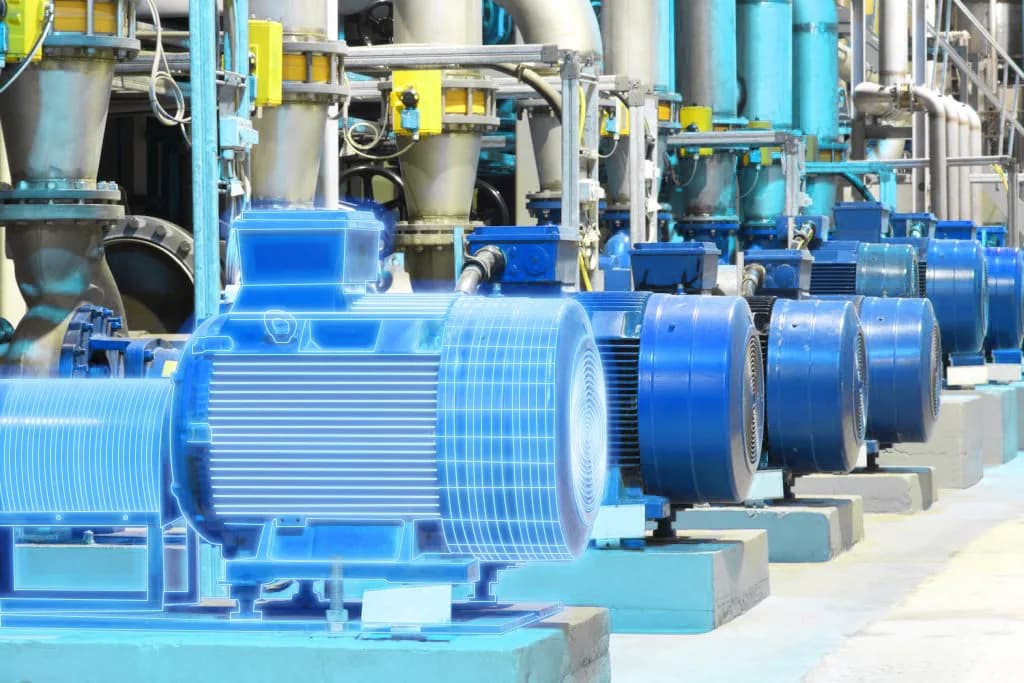
Artesis e-MCM — Online Sensorless Motor Monitoring
Online sensorless electric motor monitoring with AI and digital twin
- Online, continuous 24/7
- 2500 Hz
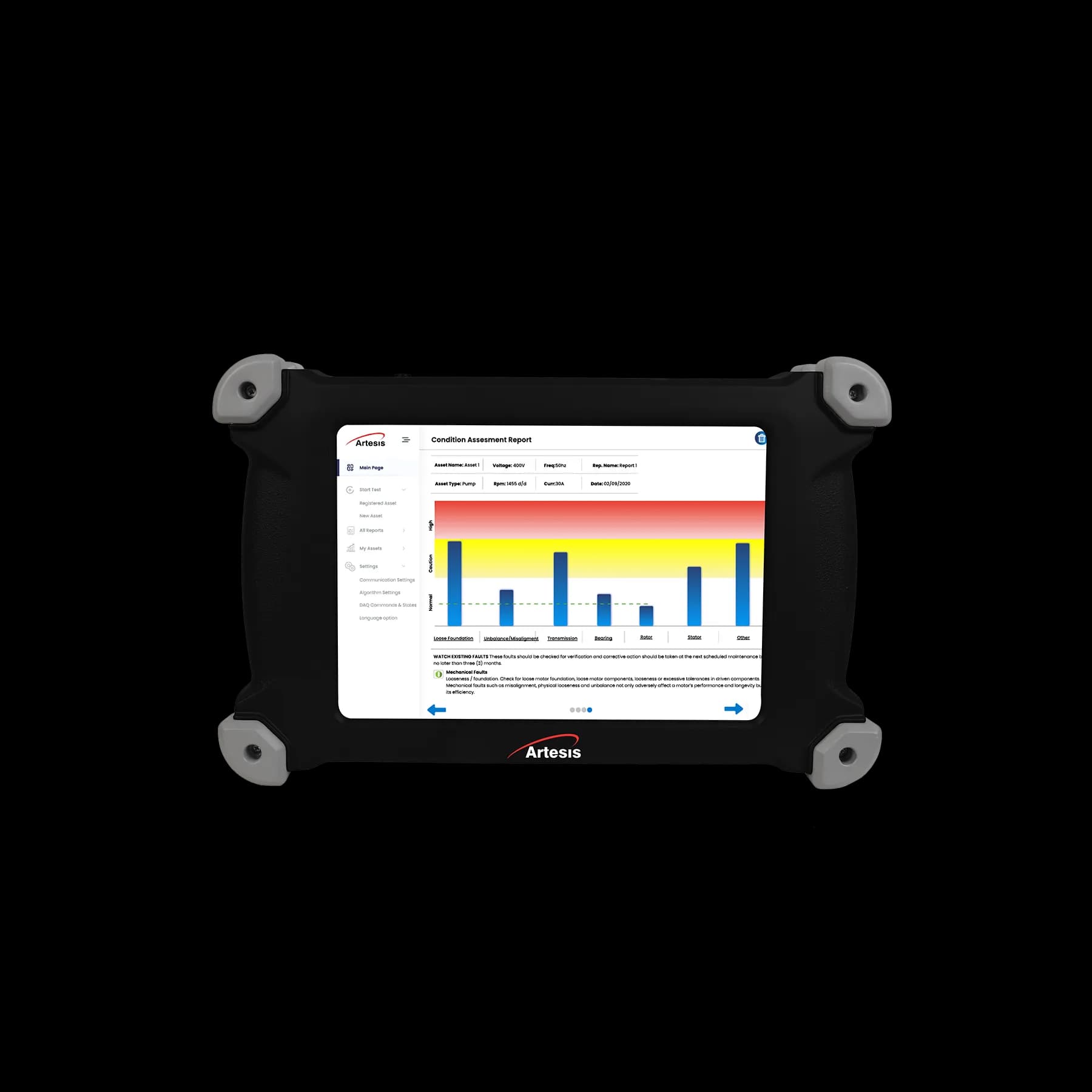
Artesis AMT Pro — Portable Electric Motor Tester
Portable sensorless motor diagnostics with AI analysis — full test in 7 minutes
- Portable tester
- 7 minutes
Need advice?
Our specialists will help you choose the optimal Artesis e-PCM — Generator and Wind Turbine Monitoring configuration for your equipment.
Related articles
All articles →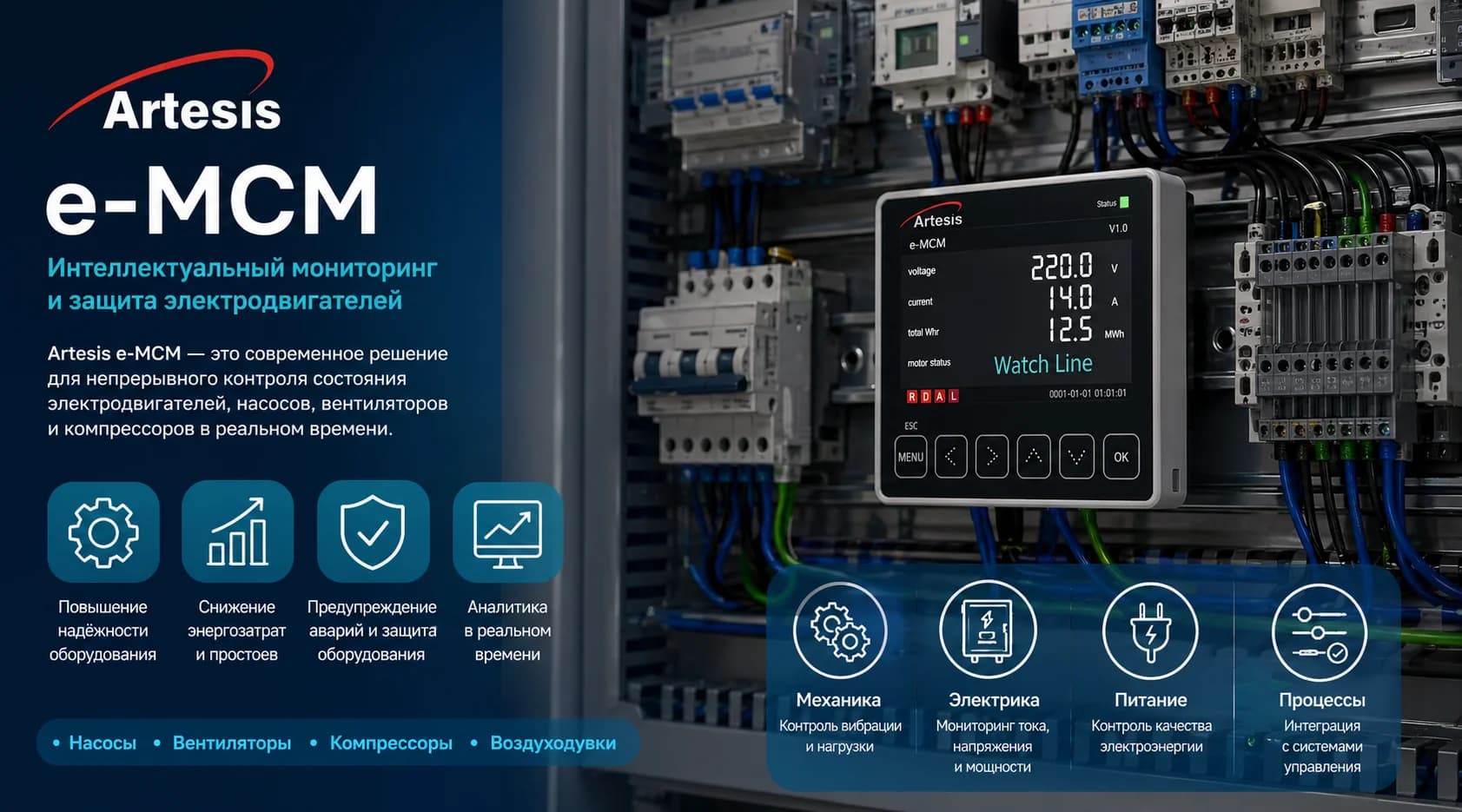
Why Artesis Omnisight Is a Revolutionary Solution for Predictive Maintenance
Most condition monitoring programs split assets into "critical" and "everything else" with incompatible tools and no shared data model. Artesis Omnisight collapses that split at the signal level — here is how and why it works.
Harmonics in industrial electric drives: causes, consequences and ESA diagnostics
VFDs, rectifiers, transformers and supply asymmetry all create harmonics in motor current. How Artesis e-MCM separates 'electrical noise' from a developing mechanical fault, and when harmonics themselves signal danger.
Artesis e-PCM for Diesel Generators: Backup Power Monitoring Without Shaft Sensors
Diesel gensets at CHPs, oil & gas sites and data centres: how e-PCM monitors engine and generator from output current and voltage — early warning before grid failure exposes a dead unit.
Artesis e-PCM for Gas Turbines: GTG Monitoring for Power and Oil & Gas
CCGT, cogeneration and remote oil & gas sites: how e-PCM monitors the gas turbine and generator from generator output — bearings, misalignment, windings without shaft sensors.
Artesis e-PCM on Hydro and Steam Turbines: Turbo-Generator Monitoring Without Shaft Sensors
Hydro plants and thermal power stations: how e-PCM reads generator output to monitor turbine and generator — bearings, misalignment, windings; DCS integration and BOP with e-MCM.
Artesis e-PCM Application Navigator: Pick Your Asset, Read the Right Guide
Hydro, steam, gas, wind, diesel — one e-PCM technology, five scenarios. Decision table, BOP with e-MCM, and links to sector guides.