
Supply in Kazakhstan
KEG TRK supplies non-destructive testing solutions (Olympus) across Kazakhstan: Almaty, Astana, Karaganda, Ust-Kamenogorsk, Aktobe and other regions. Official warranty, monitoring system design, installation, commissioning and personnel training.
Key features
Applications and resources
Industry solutions, landing pages and articles on Olympus D790 — dual element transducer for thickness gauges
Where it is used
Typical tasks
- Corrosion gauging of pipes, vessels and tanks
- Measurements on hot surfaces up to +500 °C
- Rounds with 27MG, 45MG and 39DL PLUS gauges
Overview
The D790 is an Olympus (now Evident) dual element ultrasonic transducer for thickness gauges. One element transmits and the other receives, so it reliably measures remaining thickness of corroded metal and works on hot surfaces.
Technical specifications
| Parameter | Value |
|---|---|
| Type | dual element |
| Frequency | 5 MHz |
| Tip diameter | 11 mm |
| Range | 1.0–508 mm (steel) |
| Temperature | −20 to +500 °C |
| Connector | straight, potted cable (D790); Microdot (D790-SM) |
Applications
- Corrosion gauging of pipes, vessels and tanks
- Measurements on hot surfaces up to +500 °C
- Rounds with 27MG, 45MG and 39DL PLUS gauges
Related instruments
Same transducer with a right-angle connector: D791. For measuring through coatings: D7906-SM. Gauges: 27MG, 45MG, 39DL PLUS.
What it is used for
The D790 is the main transducer for measuring remaining thickness of corroded steel, including hot steel. It works with Olympus (Evident) dual element thickness gauges on rounds of pipelines, vessels and tanks: oil and gas, power plants, chemicals, metallurgy. It is designed for steel of 1.0–508 mm and surfaces from −20 to +500 °C.
How to use it in practice
- Connect the transducer to the gauge; the gauge recognises it automatically.
- Clean the point and apply couplant (high-temperature for hot pipes).
- Calibrate velocity and zero on a sample of the same material.
- Place the transducer with the acoustic barrier across the pipe axis and press firmly without turning it.
- On hot surfaces limit the contact time, let the transducer cool and use the freeze function.
Choosing among neighbouring transducers
| Transducer | MHz | Tip | Steel | Temperature |
|---|---|---|---|---|
| D7910 (supplied with the 27MG) | 5 | 12.7 mm | 1–500 mm | 0 to +50 °C |
| D790 | 5 | 11 mm | 1–508 mm | −20 to +500 °C |
| D799 | 5 | 11 mm | 1–508 mm | −20 to +150 °C |
| D797 | 2 | 22.9 mm | 3.5–635 mm | −20 to +400 °C |
| D798 | 7.5 | 7.2 mm | 0.71–100 mm | −20 to +150 °C |
D790 versions: D790 with a fixed cable, D790-SM with a Microdot connector and a removable 1.5 m cable. The right-angle connector version is the D791.
What to prepare for an order
- the steel grade and thickness range;
- surface temperature and contact time;
- pipe diameter: the D790 tip is 11 mm;
- the gauge model and the connector type (Microdot);
- whether an armoured cable is needed.
Limits
- On a wall thinner than 1.0 mm the gauge may show too high a thickness.
- The temperature rating applies to brief contact.
- For measuring through coating in THRU-COAT mode you need the D7906-SM; for high accuracy on a smooth wall use single element transducers.
Related materials
- How to Measure Pipe Wall Thickness with an Ultrasonic Thickness Gauge
- Ultrasonic Thickness Gauge: How It Works and Its Limitations
- Thickness Gauging Through Paint: Echo-to-Echo and THRU-COAT Modes
- Thickness gauges: 27MG, 45MG, 39DL PLUS; couplant, step wedge
- Olympus thickness gauges and selection wizard, NDT equipment catalog
Supply in Kazakhstan
KEG TRK supplies Olympus (Evident) transducers and thickness gauges and selects transducers for material, thickness and temperature. Price on request.
Technical specifications
| Type | dual element |
| Frequency | 5 MHz |
| Tip diameter | 11 mm |
| Range | 1.0–508 mm (steel) |
| Temperature | −20 to +500 °C |
| Connector | straight, potted cable (D790); Microdot (D790-SM) |
Applications
More by industry
Manufacturer
Olympus
Olympus (Evident) dual element transducer for corrosion gauging: 5 MHz, 11 mm tip, 1.0–508 mm in steel, −20 to +500 °C, straight connector, potted cable.
Key specifications
- Type
- dual element
- Frequency
- 5 MHz
- Tip diameter
- 11 mm
- Range
- 1.0–508 mm (steel)
- Temperature
- −20 to +500 °C
Official supplier in Kazakhstan
Related products
Olympus D791 — right-angle dual element transducer
Olympus (Evident) dual element transducer with a right-angle connector for corrosion gauging in tight spaces: 5 MHz, 11 mm tip, 1.0–508 mm in steel, −20 to +500 °C.
- dual element
- 5 MHz
Olympus D7906-SM — transducer for measuring through coatings
Olympus (Evident) dual element transducer for measuring metal thickness through paint in THRU-COAT mode: 5 MHz, 11 mm tip, 1.0–50 mm in steel, straight Microdot connector, 0 to +50 °C.
- dual element
- 5 MHz
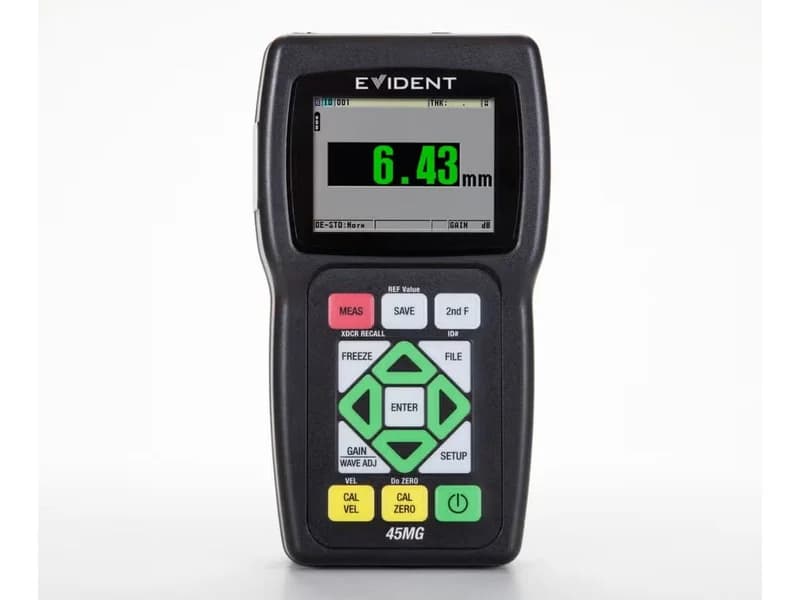
Olympus 45MG — ultrasonic thickness gauge
Olympus (Evident) ultrasonic thickness gauge: 0.08–635 mm, dual and single element transducers, Echo-to-Echo and THRU-COAT options for measuring through coatings, up to 475,000 readings, 3 AA batteries, IP67, 431 g.
- 0.08–635 mm (depends on material and transducer)
- 0.508–18.699 mm/µs
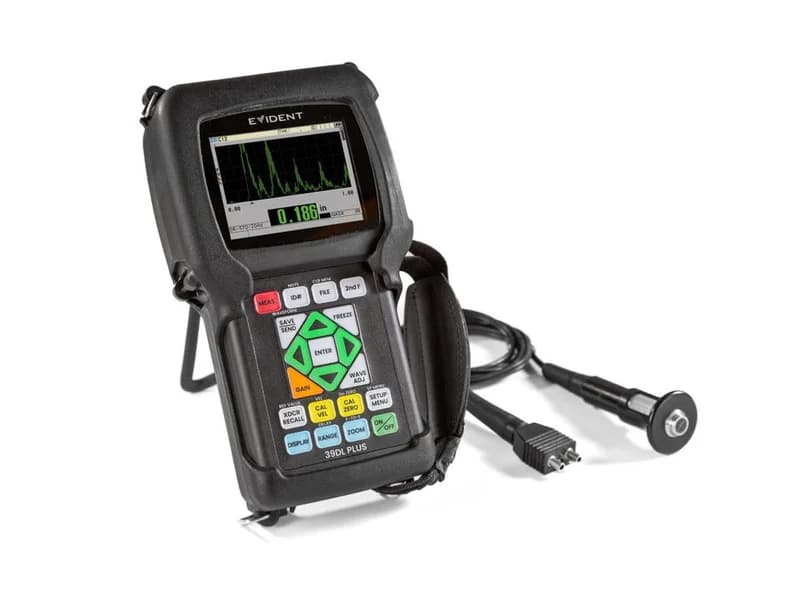
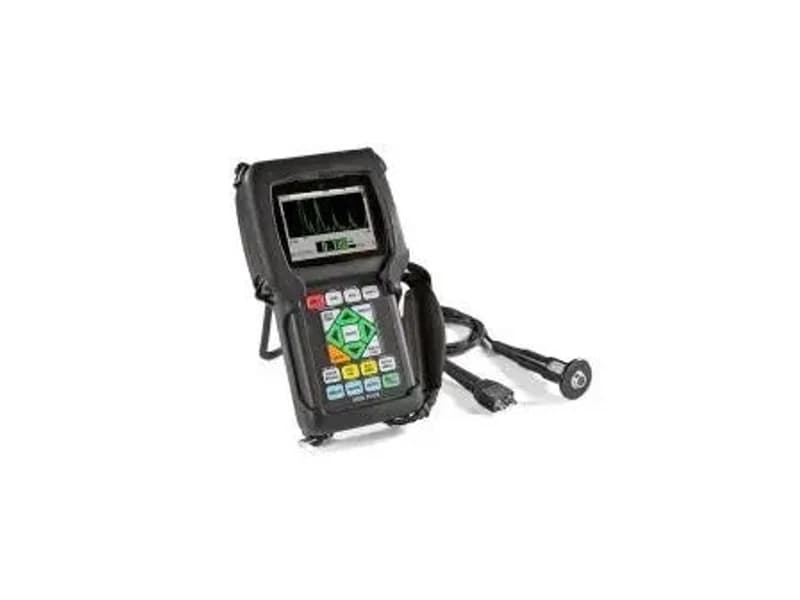
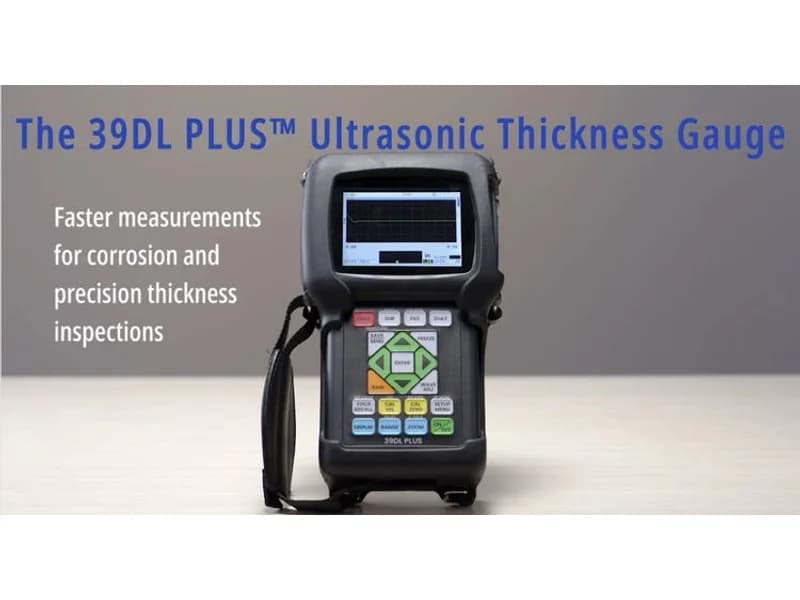
Olympus 39DL PLUS — ultrasonic thickness gauge
General-purpose Olympus (Evident) ultrasonic thickness gauge, successor to the 38DL PLUS: 0.08–635 mm, up to 60 Hz update, single and dual element transducers, THRU-COAT, Echo-to-Echo, B-scan, up to 792,832 readings, IP67, 0.83 kg.
- 0.08–635 mm
- 0.1 mm; 0.01 mm; 0.001 mm (option)
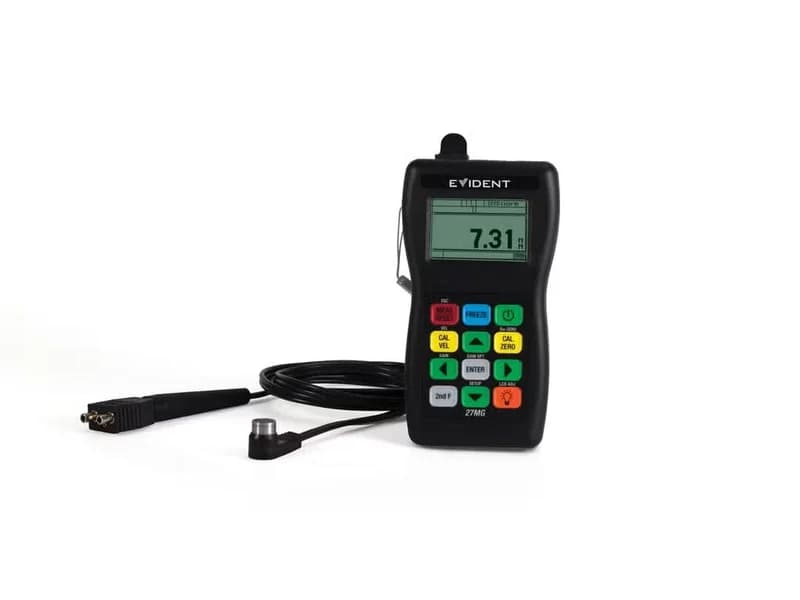
Olympus 27MG — ultrasonic corrosion thickness gauge
Simple Olympus (Evident) ultrasonic corrosion gauge: 0.5–635 mm, 2.25–10 MHz dual element transducers, Min/Max mode at 20 readings per second, 150 h on three AA batteries, IP65, 340 g.
- 0.50–635 mm (depends on material and conditions)
- 0.1 mm or 0.01 mm
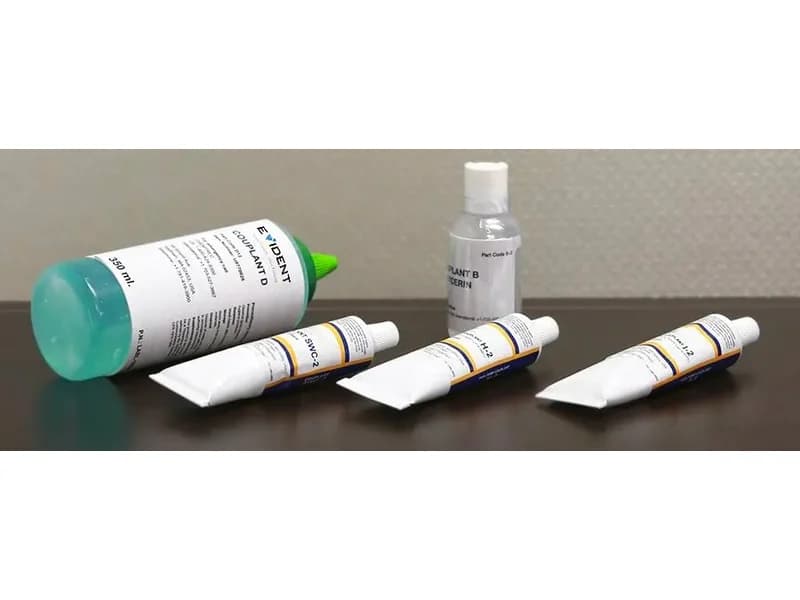
Olympus — ultrasonic couplant
Olympus (Evident) couplant for ultrasonic thickness gauging and flaw detection: it removes the air gap between transducer and surface, without which ultrasound does not enter the metal. The couplant type is chosen for surface, temperature and orientation.
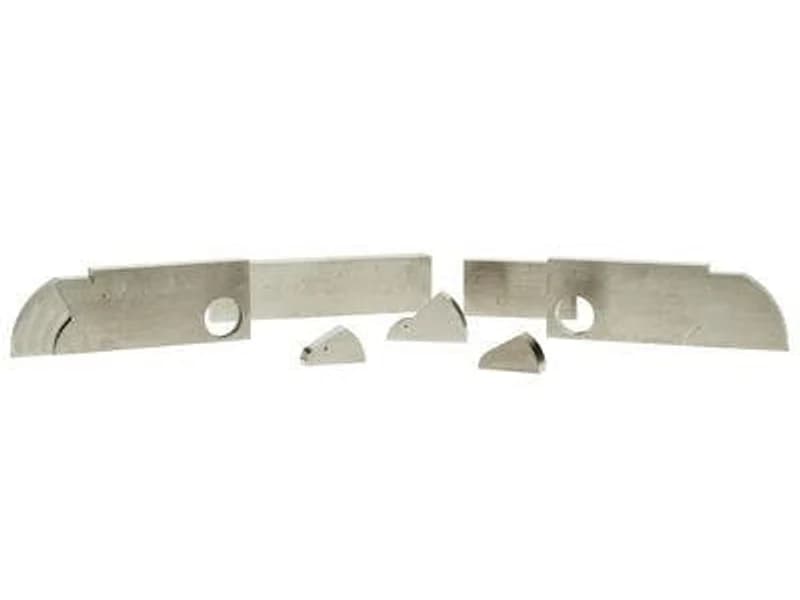
Olympus — step wedge for thickness gauge calibration
Step wedge with known step thicknesses for calibrating Olympus (Evident) ultrasonic thickness gauges and flaw detectors for velocity and zero. Material and step set are chosen to match the inspected part.
Need advice?
Our specialists will help you choose the optimal Olympus D790 — dual element transducer for thickness gauges configuration for your equipment.
Related articles
All articles →Thickness Gauging Through Paint: Echo-to-Echo and THRU-COAT Modes
Why a standard gauge overstates painted steel thickness, how echo-to-echo and THRU-COAT remove the coating, which transducers they need, thickness ranges and temperature limits.
How to Measure Pipe Wall Thickness with an Ultrasonic Thickness Gauge
Corroded pipe wall thickness is measured with an ultrasonic gauge and a dual element transducer: clean the spot, apply couplant, calibrate sound velocity and zero, place the transducer with its barrier across the pipe axis and take the minimum reading.
Ultrasonic Thickness Gauge: How It Works and Its Limitations
How an ultrasonic thickness gauge calculates thickness from an echo, contact, delay line, immersion and dual element transducers, measurement modes, what affects accuracy and where the method fails.