
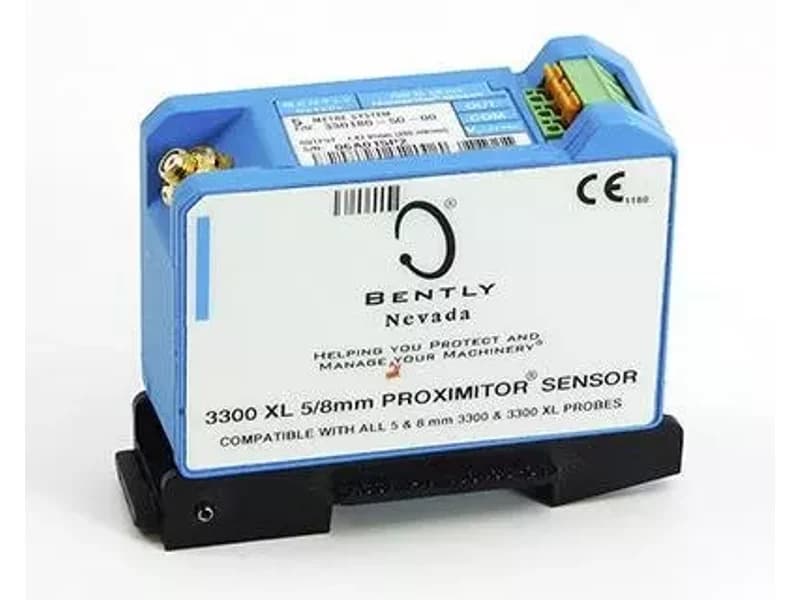
Supply in Kazakhstan
KEG TRK supplies vibration monitoring and analysis solutions (Bently Nevada) across Kazakhstan: Almaty, Astana, Karaganda, Ust-Kamenogorsk, Aktobe and other regions. Official warranty, monitoring system design, installation, commissioning and personnel training. Specifications and description are below; to select a configuration and receive a quotation, please send us a request.
Mining equipment
Key features
Applications and resources
Industry solutions, landing pages and articles about 330180-91-05 — 3300 XL proximity component
Where it is used
Typical tasks
- Pairs with 330104-00 probe
- Hazardous areas
- Chemical and oil & gas
Integrated monitoring: ultrasonic diagnostics · motor monitoring · implementation services
Description
Bently Nevada 330180-91-05 — 3300 XL proximity component. KEG TRK supplies, commissions and supports vibration monitoring in Kazakhstan.
Key features
- For 330104 probe (11 mm)
- Sensitivity 3.94 V/mm (100 mV/mil)
- DIN-rail / panel mount
- HA certification options
- API 670
Applications
- Pairs with 330104-00 probe
- Hazardous areas
- Chemical and oil & gas
Supply in Kazakhstan
KEG TRK supplies, commissions and supports 330180-91-05 with System 1 integration across Kazakhstan.
Technical specifications
| System | 11 mm 3300 XL |
| Sensitivity | 3.94 V/mm |
| Bently Nevada part number | 330180-91-05 |
Applications
Manufacturer
Bently Nevada
Bently Nevada 3300 XL proximity component for vibration and condition monitoring — supply and service in Kazakhstan.
Key specifications
- System
- 11 mm 3300 XL
- Sensitivity
- 3.94 V/mm
- Bently Nevada part number
- 330180-91-05
Official supplier in Kazakhstan
Related products

330104-00 — 3300 XL proximity component
11 mm proximity probe — 4.0 mm range, hazardous area applications
- 11 mm
- 4.0 mm (160 mil)

330103-00 — 3300 XL proximity component
Standard 8 mm 3300 XL proximity probe — 2.0 mm range, API 670 compliant
- 8 mm
- 2.0 mm (80 mil)
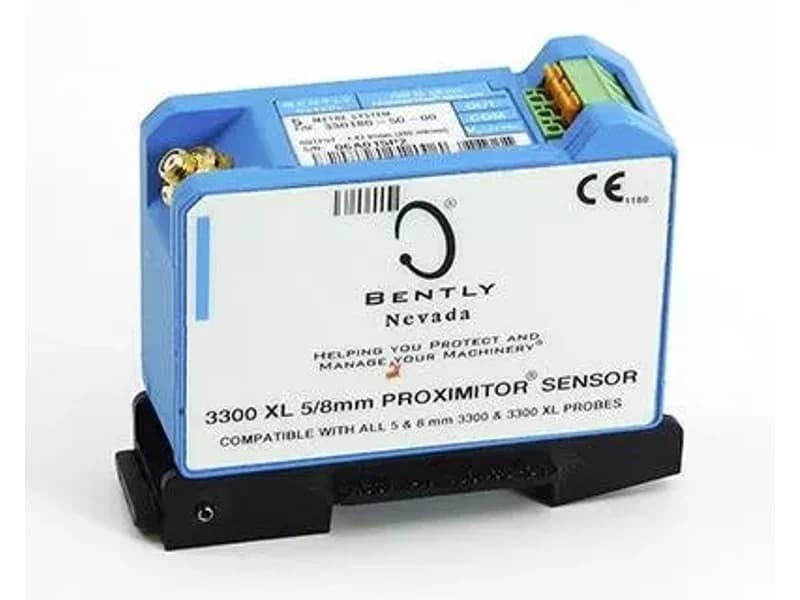
330180-90-00 — Proximitor Sensor 8 mm (3300 XL)
Proximitor transducer 8 mm — 7.87 V/mm, DIN-rail and panel mount
- 3300 XL 8 mm system
- 7.87 V/mm (200 mV/mil)

3300 XL Series — Eddy-Current Proximity Transducer System
3300 XL eddy-current proximity probes for radial vibration, axial position and gap
- 8mm, 11mm, 25mm, 50mm
- 2.0 mm (80 mil) linear range
Need advice?
Our specialists will help you choose the optimal 330180-91-05 — 3300 XL proximity component configuration for your equipment.
Related articles
All articles →
10 Equipment Maintenance Strategies That Cut Downtime in 2026
10 maintenance strategies that genuinely reduce downtime in 2026: predictive maintenance, RCM, TPM, and tools like Artesis e-MCM and SDT340, with KPIs you can roll out in stages at plants across Kazakhstan.

Shaft Misalignment: the Hidden Killer of Bearings, Couplings and Seals
Up to half of all rotating equipment failures are linked to shaft misalignment. We break down the types of misalignment, its consequences, and how vibration analysis and current analysis detect it before it destroys couplings and bearings.

What an Hour of Downtime Really Costs and How to Cut Unplanned Stops
Unplanned downtime costs far more than the repair crew's payroll line suggests. We break down the full cost-of-downtime formula and show how switching to predictive maintenance cuts unplanned stops by 30–50%.
4 Stages of Bearing Failure: How to Catch a Defect Months Before It Fails
A bearing doesn't fail instantly — it goes through 4 stages of degradation, and the first one is only visible to ultrasound. We break down the P-F curve and which diagnostic method works at each stage of bearing failure.
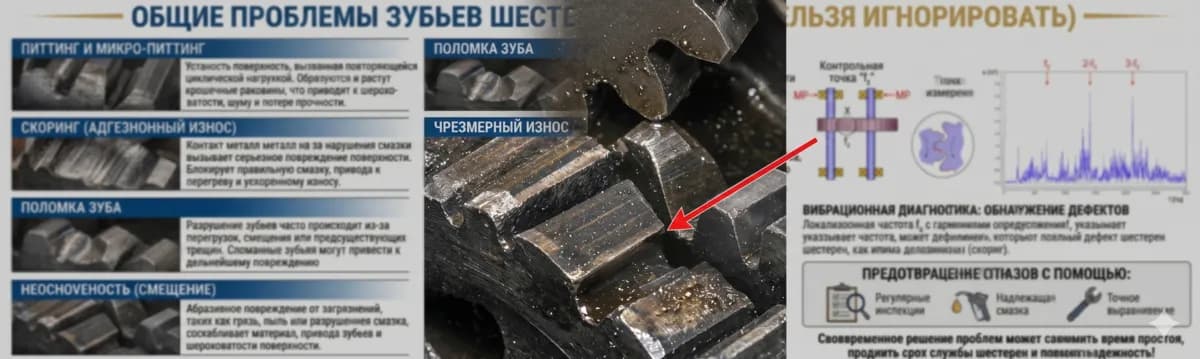
Gearbox Diagnostics: Tooth Wear, Pitting and Misalignment Before Shutdown
How to catch gear tooth wear, pitting and misalignment before an emergency stop. SDT 340 ultrasound walkdowns plus Artesis e-MCM on the drive motor — field experience from mining and metallurgy in Kazakhstan.
How to Read an FFT Spectrum: Five Vibration Signatures Every Mechanic Should Know
How to read an FFT vibration spectrum: unbalance (1x), misalignment (2x and axial 1x), mechanical looseness (harmonics), bearing defects (BPFO, BPFI, BSF, FTF). Criteria per the SKF guide.