
Electric Motor Bearing Lubrication: How Much, Which Grease, How Often
Practical guide to greasing electric motor bearings: grease type, volume, drain, interval — and why “greasing a hot motor” often makes overheating worse.
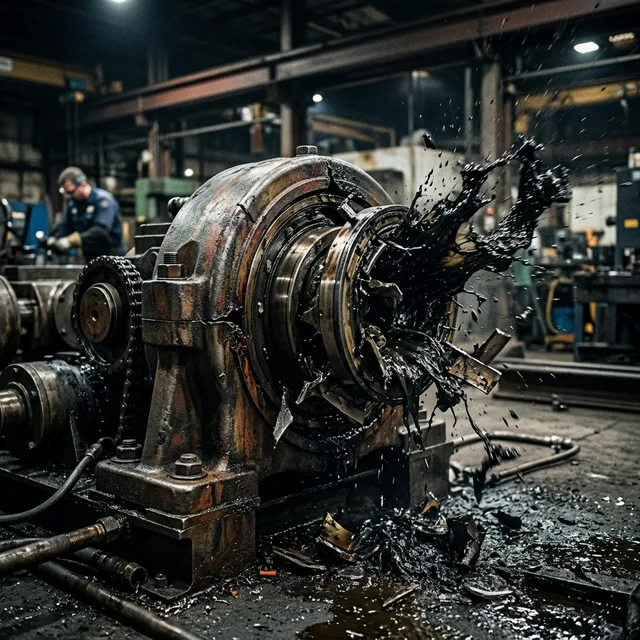
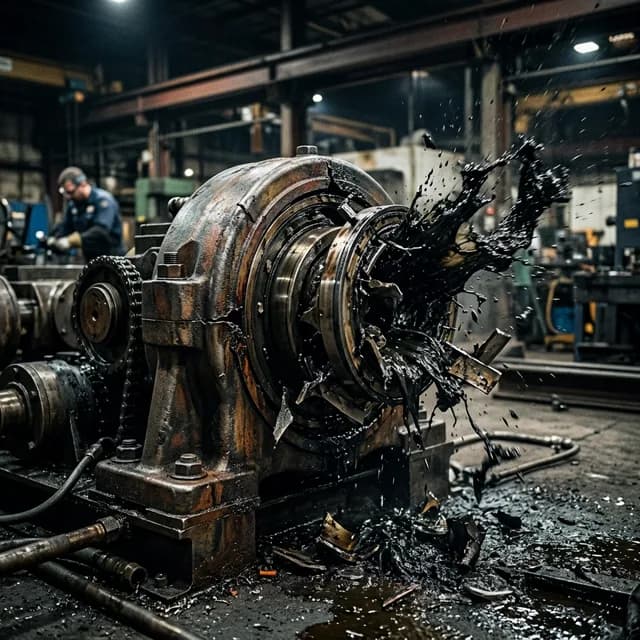
Motors are the most common assets on site. “Motor bearing lubrication” usually hides three questions: which grease, how much, how often. A miss on any of them shows up as a hot end shield and an unplanned swap.
Which grease
Rolling bearings → grease. Sleeve bearings → oil. Do not confuse them.
Priority: motor OEM plate/manual → plant lube map → only then “equivalents” with compatible thickener and viscosity. Typical industrial pick: NLGI 2 (lithium or polyurea depending on OEM). Selection deep-dive: choosing grease. Do not mix grades without a controlled changeover.
How much
Do not fill the free volume to 100%. Working fill is often about 30–50% (confirm with OEM). Excess causes churning: grease fights the rolling elements, temperature rises, seals extrude.
Starter relube dose: Q (g) ≈ D × B × 0.005 — a ceiling, not an order to pump it all. Closed drain or leftover grease → safe dose is lower. Technique: how to grease bearings and grease gun.
Equipment covered in this article
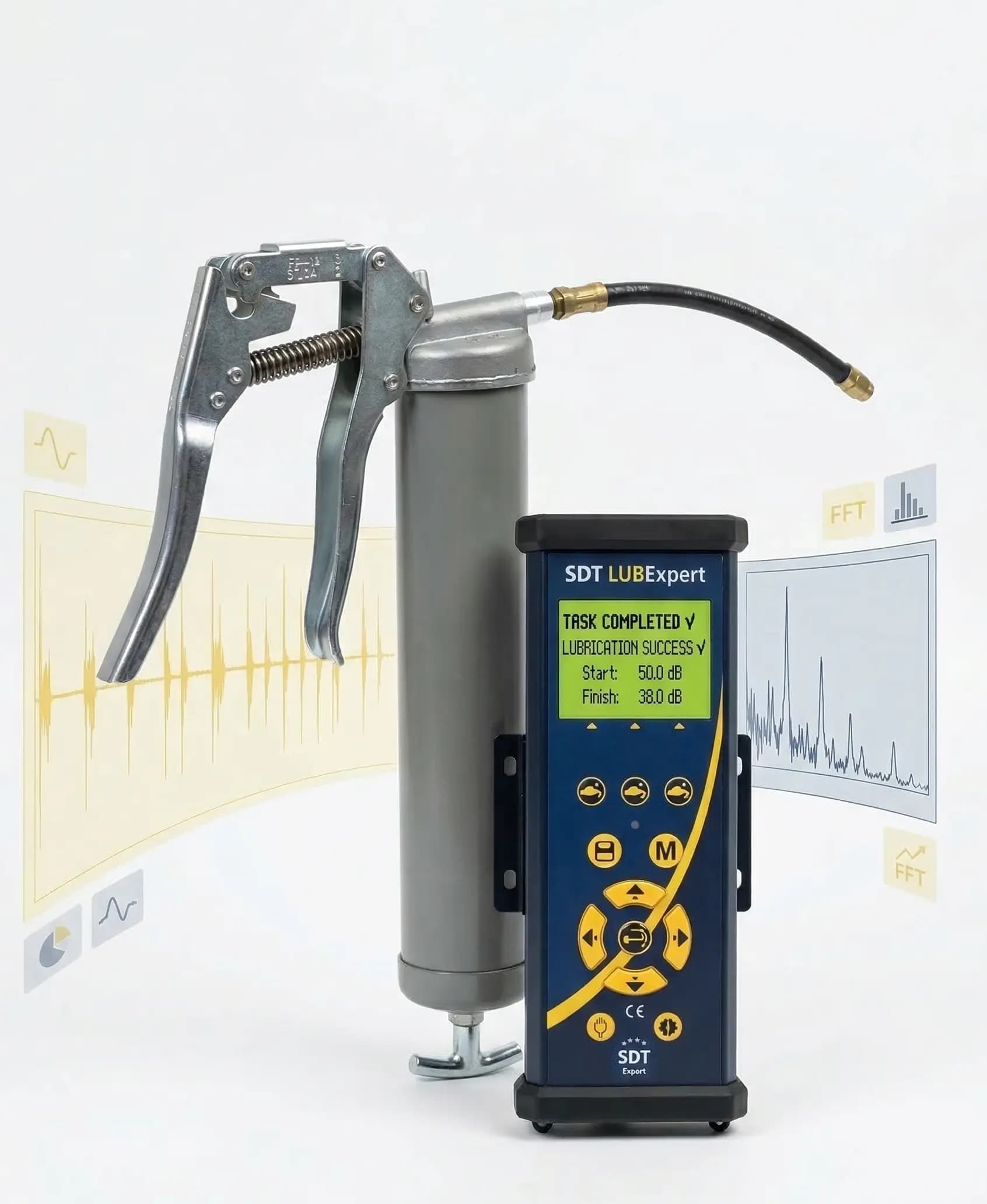
LUBExpert — SDT Ultrasound Bearing Lubrication Assistant
SDT instrument for precision ultrasound-guided greasing of rolling element bearings: tells you when to add grease and when to stop, follows routes from UAS3 and closes…
How often
Catalogue intervals are lab averages. Real life shortens grease life via shield/ambient temperature, starts, vibration, dust/moisture, vertical shafts, seal quality. Fixed “every month for all motors” almost always means some are over-greased and some are dry — why intervals lie.
Procedure with a grease nipple
Clean nipple → open drain if fitted → small shots → run motor so excess can exit → close drain, wipe, log. If the shield is already hot, the instinct to add grease often worsens churning — diagnose first: why the bearing runs hot.
Common motor mistakes
Closed drain → grease into the winding; extra pumps after the ceiling; mixing warehouse grades; greasing sealed 2Z/2RS lifetime bearings; dirty nipples.
Condition control
Temperature lags. Vibration often catches late-stage defects. Ultrasound sees friction rise earlier — and during greasing shows when to stop. Routes: LUBExpert and grease mode on SDT340.
KEG TRK — supply and training for acoustic motor-fleet lubrication in Kazakhstan. Discuss a rollout.
Further reading: How Much Grease to Put in a Bearing: Formula and Calculation · How to Check an Electric Motor Bearing Without Disassembly: 5 Methods · Electric Motor Bearing Noise: Causes and What to Do · Bearing Defect Frequencies BPFO, BPFI, BSF, FTF: Formulas and Calculation
Equipment in this article
KEG TRK quotes prices and delivery times to Kazakhstan on request. We will prepare a commercial offer for your application.
LUBExpert — SDT Ultrasound Bearing Lubrication Assistant
SDT instrument for precision ultrasound-guided greasing of rolling element bearings: tells you when to add grease and when to stop, follows routes from UAS3 and closes…
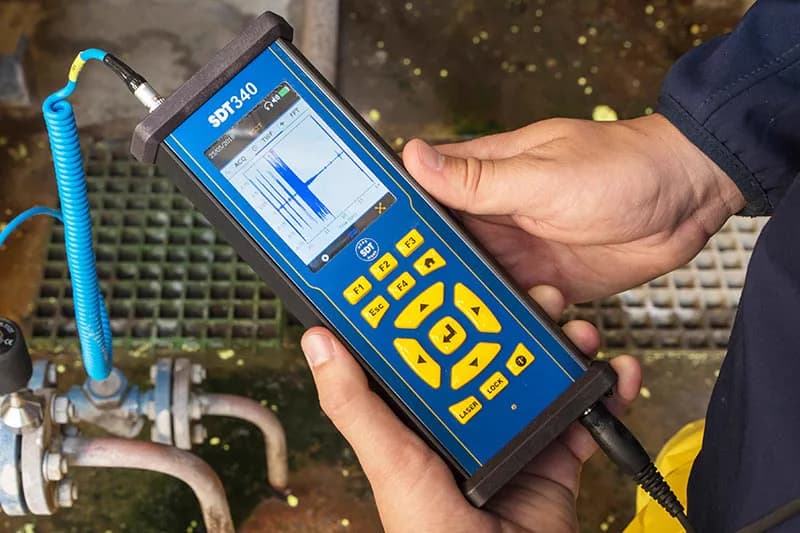
SDT340 - Advanced Ultrasound Detector
The most advanced ultrasound detector for collecting, analysing and trending data
Read also
7/25/2026
Greasing pump and fan bearings: schedule vs condition
How to grease pump and fan bearings at CHP plants, mines and workshops: how they differ from a motor, the typical mistakes, and when a calendar does more harm than good.
4/17/2026
How Often Should You Lubricate Bearings: Why Charts and Formulas Lie
A catalogue lubrication interval is a hospital average. Real bearing life depends on load, temperature, speed and the actual state of the grease right now. We break down why a fixed schedule kills bearings — and how ultrasound gives a precise answer to "lubricate or not."
7/25/2026
What Is Acoustic Bearing Lubrication — and Why It Beats the Calendar
In plain language: acoustic (ultrasonic) lubrication means adding grease based on friction level, not only the date in the PM schedule. How it works and who it is for.