
Methane leaks: what to use and why a PID will not work
A PID detector cannot see methane: its ionisation energy of 12.6 eV is above any PID lamp. Pressurised leaks are located with ultrasound, and CH₄ concentration is measured with an IR analyser.
A PID detector will not detect methane: according to Ion Science, methane's ionisation energy is 12.6 eV, and a PID only sees compounds with an ionisation energy no higher than the lamp's, the most powerful lamp being 11.7 eV. A pressurised methane leak is located with an ultrasonic leak detector or an acoustic camera, and CH₄ concentration is measured with an instrument on a different principle, for example an infrared (NDIR) analyser.
Why a PID cannot see methane
A photoionisation detector (PID) exposes the sample to ultraviolet light. If the photon energy is high enough, a molecule loses an electron, and the instrument measures the resulting current, which is proportional to concentration. According to Ion Science, a lamp only ionises compounds whose ionisation energy is equal to or below the lamp's photon energy.
| Compound or PID lamp | Ionisation energy / photon energy, eV |
|---|---|
| Benzene | 9.25 |
| Acetone | 9.7 |
| 10.0 eV lamp | 10.0 |
| Hydrogen sulfide | 10.5 |
| 10.6 eV lamp (standard) | 10.6 |
| Methanol | 10.9 |
| Chloroform | 11.4 |
| 11.7 eV lamp | 11.7 |
| Methane | 12.6 |
Data from the Ion Science technical article "What is a PID?". Methane sits above every lamp, so on a pure methane leak a PID reads zero. That is the physics of the method, not an instrument fault. In the same article Ion Science lists what a PID does not respond to at all: components of clean air, noble gases, most small molecules (hydrogen, CO, SO₂ and others), natural gas including methane and ethane, and fluorinated compounds including SF₆.
Two pitfalls when using a PID near methane
- Response to the odorant. Ion Science lists methyl mercaptan, the natural gas odorant, among the compounds a PID sees. The instrument may respond near a leak of odorised gas, but the reading relates to the odorant and other VOCs, not to methane.
- Signal suppression. According to Ion Science, water vapour, methane and carbon dioxide can suppress the lamp's ionising light and affect the reading. If the sample contains a lot of methane, VOC readings may be understated.
Where a PID really is the right tool (volatile organic compounds, benzene, LDAR programmes) is covered in Gas and VOC leak detection at industrial sites: Ion Science PID detectors.
Equipment covered in this article
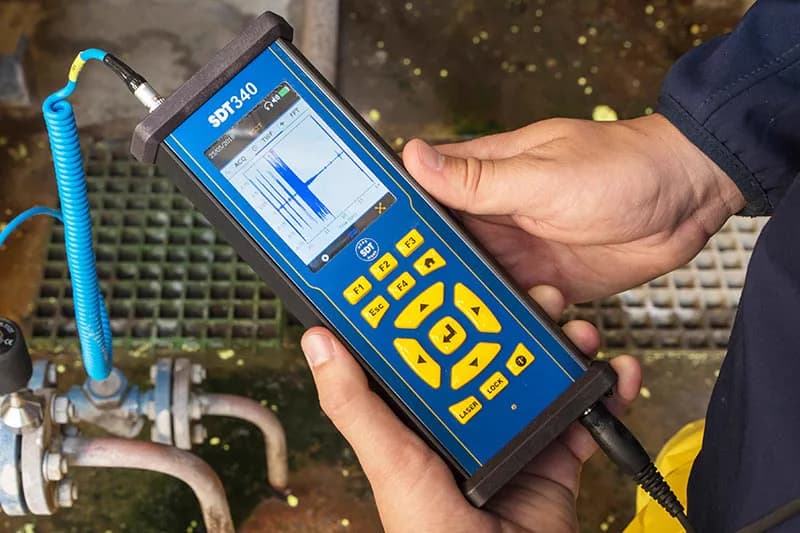
SDT340 - Advanced Ultrasound Detector
The most advanced ultrasound detector for collecting, analysing and trending data
What to use for a methane leak
| Task | Method | What it gives | Limitation |
|---|---|---|---|
| Locate a leak on pressurised pipework or valves | Ultrasonic leak detector | The leak point, by peak signal | Does not identify the gas or measure concentration |
| Inspect a large area, pipe rack or overhead line | Acoustic camera | The sound source on an image | The point is confirmed close up |
| Measure CH₄ concentration | Methane analyser, for example infrared (NDIR) | Methane concentration | Does not show where exactly the leak is |
| Measure VOCs in the same area | PID detector | Concentration of volatile organic compounds | Does not see methane |
Ultrasound: the leak location, whatever the gas
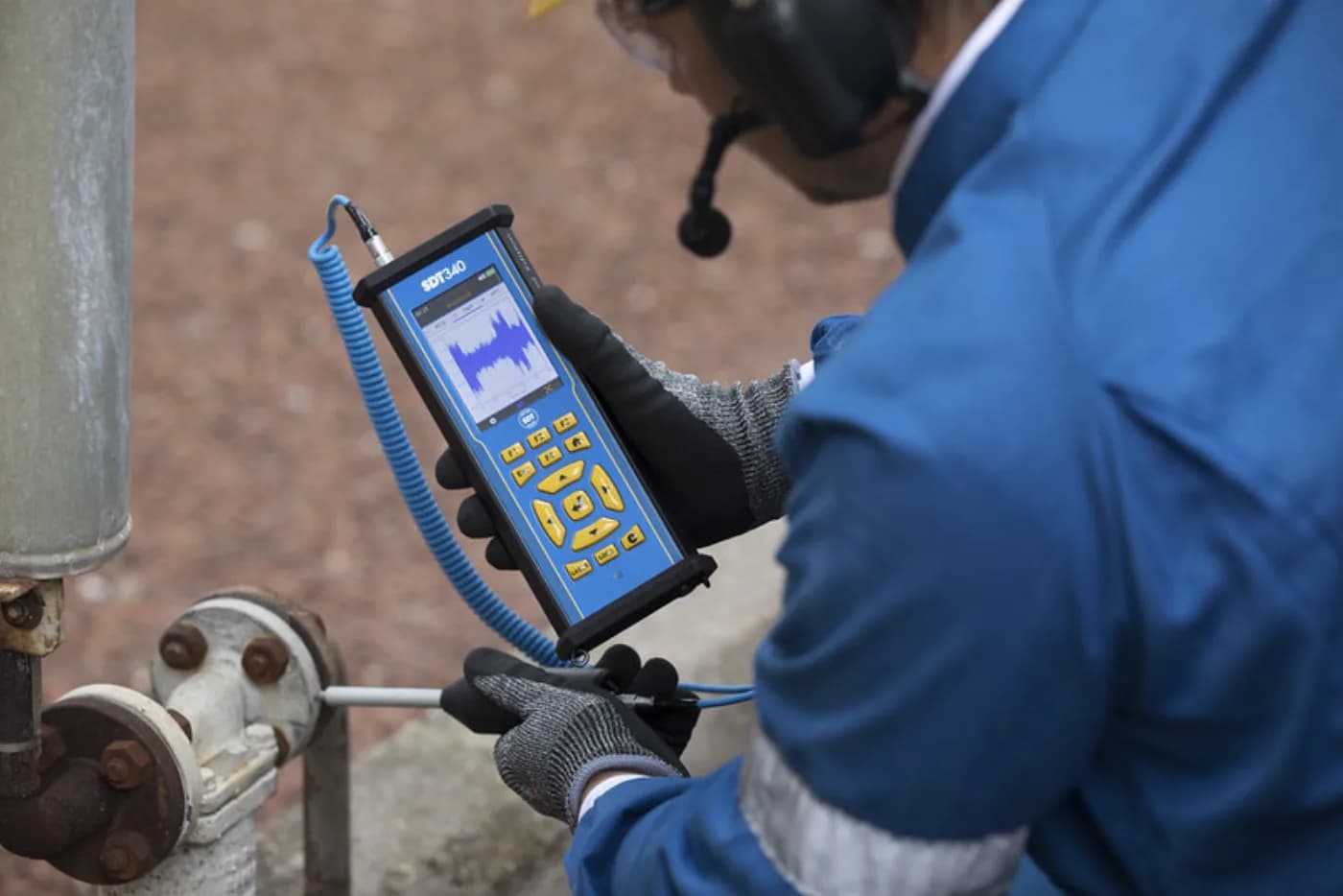
Gas escaping under pressure through a gap creates turbulence, and turbulence produces ultrasound. SDT positions its ultrasonic instruments for compressed air and gas leak detection: the instrument hears the escaping flow, not the chemistry, so methane is no different from air for it. How it works is explained in Ultrasonic leak detector: how it works and what it finds; the survey procedure is the same as for air leaks: How to find a compressed air leak: 5 methods.
For hazardous areas, the instrument rating matters. In the SDT range this is the SDT270 ultrasonic detector in its ATEX version (Ex ia IIC T3/T2 Ga) and the SonaVu+ acoustic camera in its ATEX version (Class I, Division 1); the SonaVu+ product page lists fugitive emission detection among its applications. More on the ATEX camera in Ultrasonic inspection in hazardous areas: the new SonaVu+ ATEX camera.
Methane analyser: the concentration
When you need to know the CH₄ content (in biogas, at a cogeneration unit, for safety monitoring), you need an analyser on a principle that sees methane. For example, the Rapidox 1100 CH₄ from Cambridge Sensotec uses the infrared NDIR principle and has 4–20 mA and RS232/Modbus outputs and programmable alarms.
On-site procedure
- Decide what you need: locate the leak, measure methane concentration or monitor VOCs. That determines the instrument.
- Make sure the instrument is approved for the area where you will work (ATEX version for hazardous areas).
- Walk the pressurised pipework and valves with an ultrasonic instrument or inspect the area with an acoustic camera; tag the leaks you find.
- Where concentration is needed, measure it with a methane analyser, and VOCs with a PID detector, remembering that a PID cannot see methane.
- Record locations and readings and schedule the repairs.
Which instrument to choose
- Locating pressurised gas leaks, plus other ultrasonic inspection tasks: SDT340; for hazardous areas, the SDT270 in its ATEX version.
- Inspecting large areas and overhead lines: the SonaVu+ acoustic camera, available in an ATEX version.
- Methane concentration: the Rapidox 1100 CH₄ analyser.
KEG TRK supplies SDT ultrasonic instruments, Ion Science PID detectors and Rapidox analysers in Kazakhstan. Price on request.
Sources
- Ion Science. Technical/Application Article 01: What is a PID?
- Ion Science. Cross Sensitivity of Photoionization Detectors.
- SDT Ultrasound Solutions. Compressed Air & Gas Leak Detection.
- SDT Ultrasound Solutions. Detecting Compressed Air and Gas Leaks Using the SDT340.
Frequently asked questions
Equipment in this article
KEG TRK quotes prices and delivery times to Kazakhstan on request. We will prepare a commercial offer for your application.
SDT340 - Advanced Ultrasound Detector
The most advanced ultrasound detector for collecting, analysing and trending data
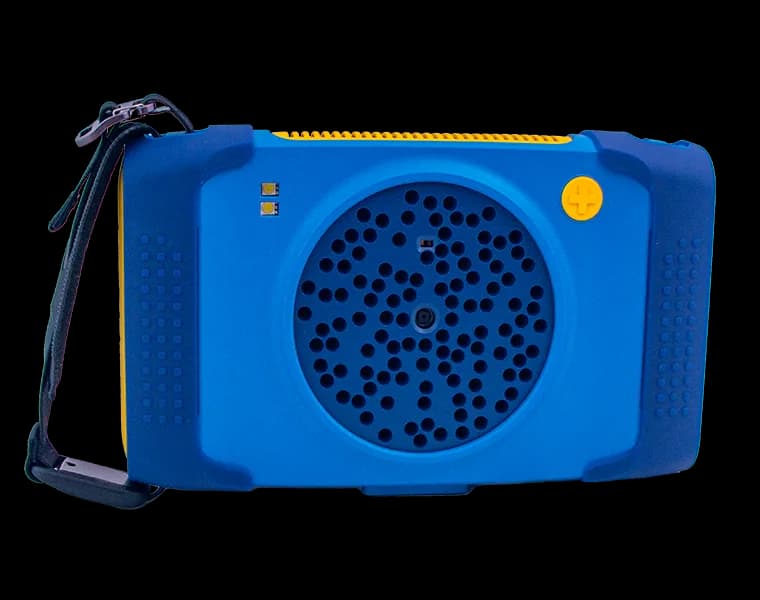
SDT SonaVu+ - Next-Generation Acoustic Camera
SonaVu+ acoustic camera with 112 sensors, a built-in display and a detection range of up to 200 metres — for leak detection, electrical inspection and mechanical-defect…
Also in this article: Rapidox 1100 — methane analyser
Read also
10/13/2026
How to find a gas leak at an industrial site: methods and instruments
Pressurised gas leaks are located with ultrasound, VOCs measured with a PID, SF₆ found with an SF₆ detector, helium and hydrogen with a thermal conductivity detector, concentration with an analyser.
10/10/2026
What Is Machinery Vibration Analysis and How to Start
Vibration analysis checks machine condition from bearing housing vibration: what is measured, route-based vs online monitoring, which faults show in the spectrum, how to start.
10/10/2026
Electric Motor Diagnostics: Which Method Shows What
Vibration, ultrasound, thermography, current analysis (MCSA/ESA), motor circuit analysis (MCA), megohmmeter and oil analysis: which faults each method sees, where it stops and how to combine them.