
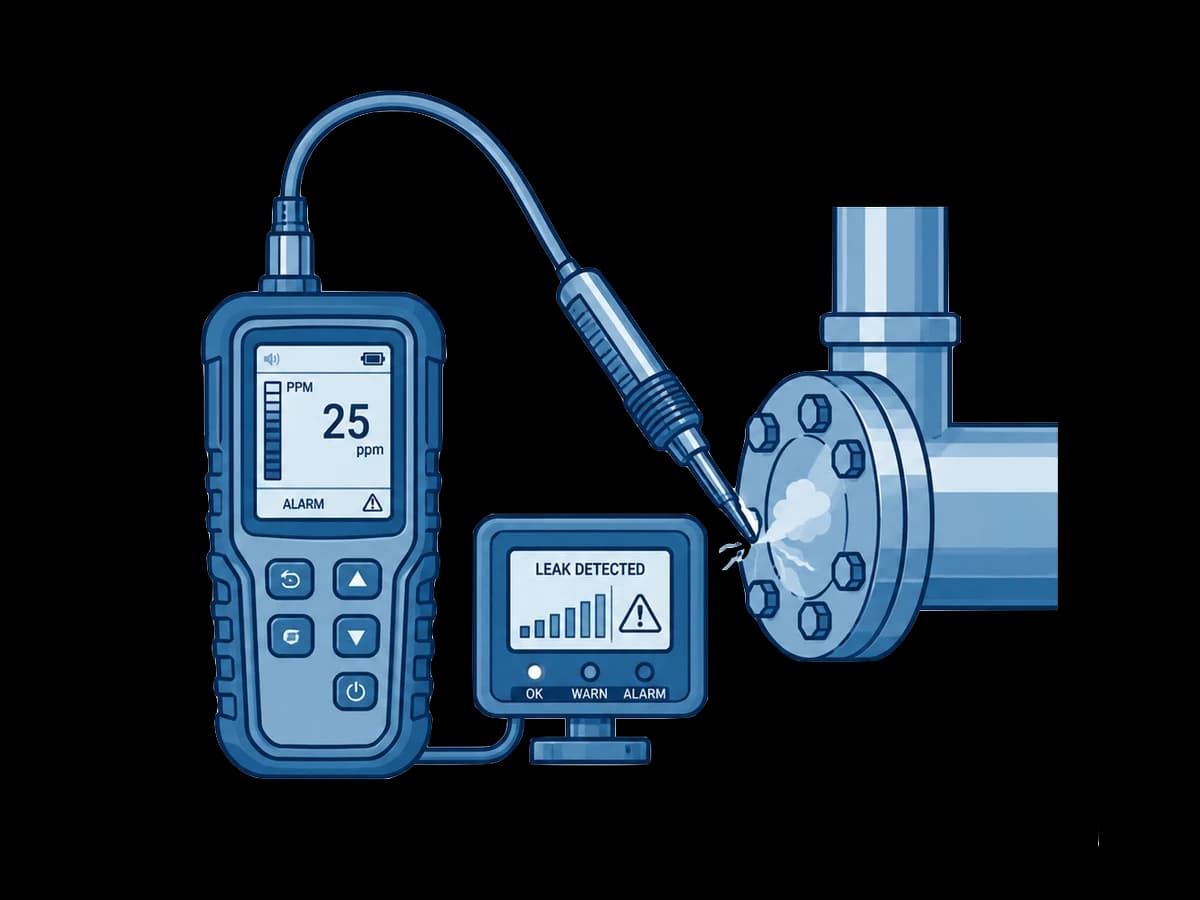
How to find a gas leak at an industrial site: methods and instruments
Pressurised gas leaks are located with ultrasound, VOCs measured with a PID, SF₆ found with an SF₆ detector, helium and hydrogen with a thermal conductivity detector, concentration with an analyser.
Gas leaks at an industrial site are found with two kinds of instrument. An ultrasonic leak detector or an acoustic camera locates a leak of any pressurised gas but cannot tell which gas it is. Gas-specific instruments show what is leaking and at what concentration: a PID for VOCs, an SF₆ leak detector for SF₆, a thermal conductivity detector for helium and hydrogen, an analyser for methane.
Two questions: where is the leak and what is leaking
Before choosing an instrument, decide which question you need answered.
- Where is the leak? Pressurised gas escaping through a gap creates turbulence, and turbulence produces ultrasound. SDT uses ultrasonic instruments to find compressed air and gas leaks: the instrument hears the flow, and the chemical composition does not matter to it. An acoustic camera works the same way but shows the sound source on an image.
- What is leaking and how much? This needs a sensor that responds to a specific substance. No single instrument sees every gas: each detection principle has its blind spots.
In practice the methods are combined: ultrasound quickly covers the line and finds the point, and a gas instrument confirms the gas and measures the concentration.
Table: gas, method, instrument
| Gas or task | Method | What it gives | Example instrument |
|---|---|---|---|
| Compressed air, nitrogen, any pressurised gas | Ultrasound | Leak location | SDT340, acoustic camera SonaVu+ |
| VOCs, benzene, solvent vapours | Photoionisation detector (PID) | VOC concentration from ppb | Ion Science Tiger XT |
| Methane, natural gas | Ultrasound for location; infrared (NDIR) analyser for concentration | Location and CH₄ concentration | SDT340; Rapidox 1100 CH₄ |
| SF₆, C4-FN | Negative Ion Capture leak detector | Leak location from SF₆ in air, sensitivity down to 1×10⁻⁸ cc/s | Ion Science SF6 LeakCheck P1 XTL |
| SF₆ in GIS room air | Fixed detectors | Continuous 0–2000 ppm monitoring with alarms | Rapidox SF6 Fixed Detection System |
| Helium, hydrogen, refrigerants | Micro thermal conductivity detector (MTCD) | Leak location | Ion Science Panther PRO |
| Oxygen deficiency after an inert gas leak | O₂ analyser or gas detector | O₂ content | see Oxygen gas analyser: how to choose |
Instrument data are taken from manufacturers' pages and KEG TRK catalogue cards.
Equipment covered in this article
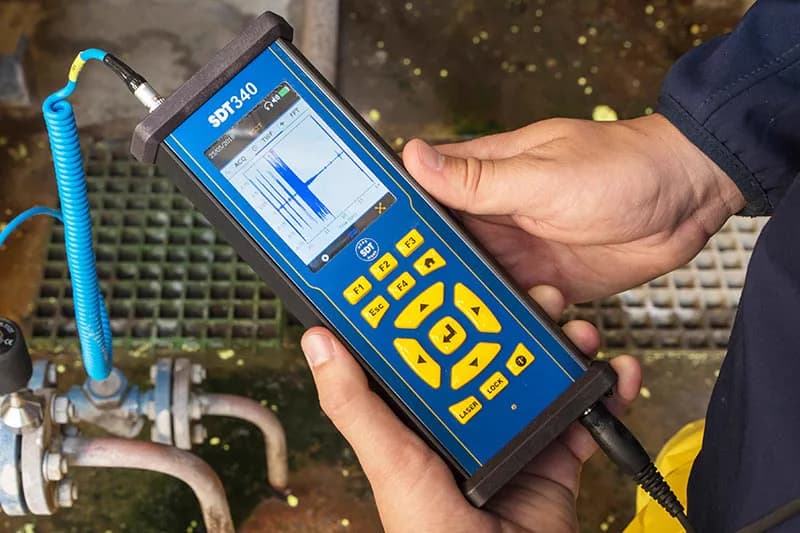
SDT340 - Advanced Ultrasound Detector
The most advanced ultrasound detector for collecting, analysing and trending data
Ultrasound: location of any pressurised gas leak
An ultrasonic leak detector suits the first walk-down: pipelines, flanges, valves, compressed air connections. The procedure and five search methods are covered in How to find a compressed air leak, and the physics of the method in Ultrasonic leak detector: how it works.
Limitations of the method:
- the gas must escape under pressure, otherwise there is no turbulence and no ultrasound;
- the instrument does not distinguish gases: a nitrogen leak and a methane leak sound the same;
- ultrasound does not measure gas concentration.
Hazardous areas need an explosion-protected instrument. In the SDT range this is the SDT270 in ATEX execution, and the SonaVu+ acoustic camera has an ATEX version.
PID: volatile organic compounds
A photoionisation detector measures VOCs, benzene, solvent and fuel vapours, including in LDAR programmes. According to the catalogue, the Ion Science Tiger XT covers 1 ppb to 20,000 ppm with a 10.6 eV lamp and has a library of more than 750 compounds.
An important limitation: according to Ion Science, a PID does not respond to methane and ethane, to SF₆ and other fluorinated compounds, to hydrogen or CO. More in Gas and VOC leak detection: Ion Science PID detectors and Methane leaks: what to use and why a PID will not work.
SF₆: a dedicated leak detector
SF₆ needs an instrument sensitive specifically to SF₆. The Ion Science SF6 LeakCheck P1 XTL uses Negative Ion Capture technology, needs no warm-up and responds in under 0.5 s. Standard sensitivity is 1×10⁻⁷ cc/s, the HIGHsense version 1×10⁻⁸ cc/s. The new version also detects C4-FN. According to the manufacturer, after exposure to high gas concentrations the instrument recovers without losing sensitivity.
A leak detector answers where the gas is escaping. Gas quality inside the compartment is measured by an analyser; the difference is covered in SF6 leak detector or gas analyser. An SF₆ leak in an enclosed room is dangerous because it displaces oxygen; see Oxygen displacement in enclosed GIS rooms.
Helium, hydrogen, refrigerants: thermal conductivity
The Ion Science Panther PRO uses a micro thermal conductivity detector (MTCD) and a built-in piezo pump that keeps sample flow stable in draughts. According to the manufacturer, sensitivity is 5×10⁻⁶ cc/s for helium and 3.8×10⁻⁶ cc/s for hydrogen, with a T90 of about 1 s; the main applications are helium, hydrogen, ammonia and refrigerants. The manufacturer notes that the instrument does not sample remotely: the probe is brought to the leak point.
Site survey procedure
- List the gases on site and, for each, define the task: find the location, measure concentration or monitor continuously.
- Check that the instruments are approved for the work zone (ATEX execution for hazardous areas).
- Walk the pressurised lines with an ultrasonic leak detector or scan the area with an acoustic camera, and mark the leak points.
- At the points found, confirm the gas with an instrument for that gas and measure concentration if needed.
- In enclosed rooms with inert gases and SF₆, check oxygen content before entry.
- Record locations and readings, schedule repairs and re-check afterwards.
Which instrument to choose
- Walking the lines and locating a leak of any pressurised gas: SDT340 or the SonaVu+ acoustic camera.
- SF₆ leaks at a substation: Ion Science SF6 LeakCheck P1 XTL.
KEG TRK supplies SDT ultrasonic instruments, Ion Science detectors and Rapidox gas analysers in Kazakhstan. Price on request.
Sources
- SDT Ultrasound Solutions. Compressed Air & Gas Leak Detection.
- Ion Science. Technical/Application Article 01: What is a PID?
- Ion Science. SF6 LeakCheck P1 XTL Leak Detector.
- Ion Science. Introducing SF6 LeakCheck P1 XTL.
- Ion Science. Panther PRO Gas Leak Detector.
- KEG TRK catalogue cards: Tiger XT, Rapidox 1100 CH₄, Rapidox SF6 Fixed Detection System.
Frequently asked questions
Equipment in this article
KEG TRK quotes prices and delivery times to Kazakhstan on request. We will prepare a commercial offer for your application.
SDT340 - Advanced Ultrasound Detector
The most advanced ultrasound detector for collecting, analysing and trending data
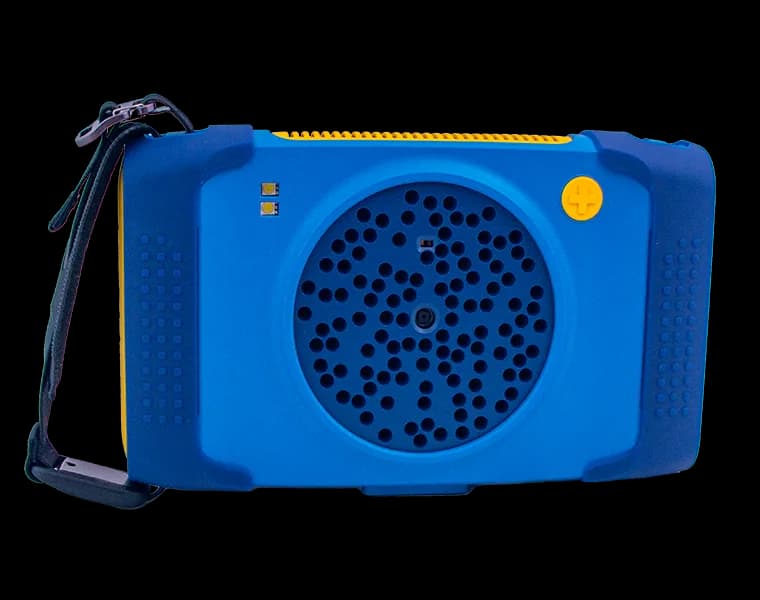
SDT SonaVu+ - Next-Generation Acoustic Camera
SonaVu+ acoustic camera with 112 sensors, a built-in display and a detection range of up to 200 metres — for leak detection, electrical inspection and mechanical-defect…
Also in this article: Ion Science Tiger XT — handheld PID detector for volatile organic compounds, Ion Science SF6 LeakCheck P1 XTL — SF6 leak detector, Ion Science Panther PRO — helium, hydrogen and refrigerant leak detector, Rapidox 1100 — methane analyser
Read also
9/19/2026
KEG TRK becomes the official representative of Ion Science in Kazakhstan
As of September 2026, KEG TRK LLP is the official representative of British gas-detection manufacturer Ion Science in Kazakhstan: SF6 leak detectors, VOC detectors, supply, service and training.
10/10/2026
Methane leaks: what to use and why a PID will not work
A PID detector cannot see methane: its ionisation energy of 12.6 eV is above any PID lamp. Pressurised leaks are located with ultrasound, and CH₄ concentration is measured with an IR analyser.
8/24/2026
Gas and VOC Leak Detection on Industrial Sites: Ion Science PID Detectors
How to choose a PID detector for gas and volatile organic compound leaks: Ion Science personal, portable and fixed instruments, LDAR programmes and the pairing with ultrasound.