
Which Ion Science instrument to choose: VOC, benzene, mercury, SF6, helium
Choosing an Ion Science gas instrument by task: PID detectors for VOC and benzene, mercury vapor indicator, SF6 leak detectors, helium and hydrogen detector. Tables of instruments, lamps and ranges.
In this article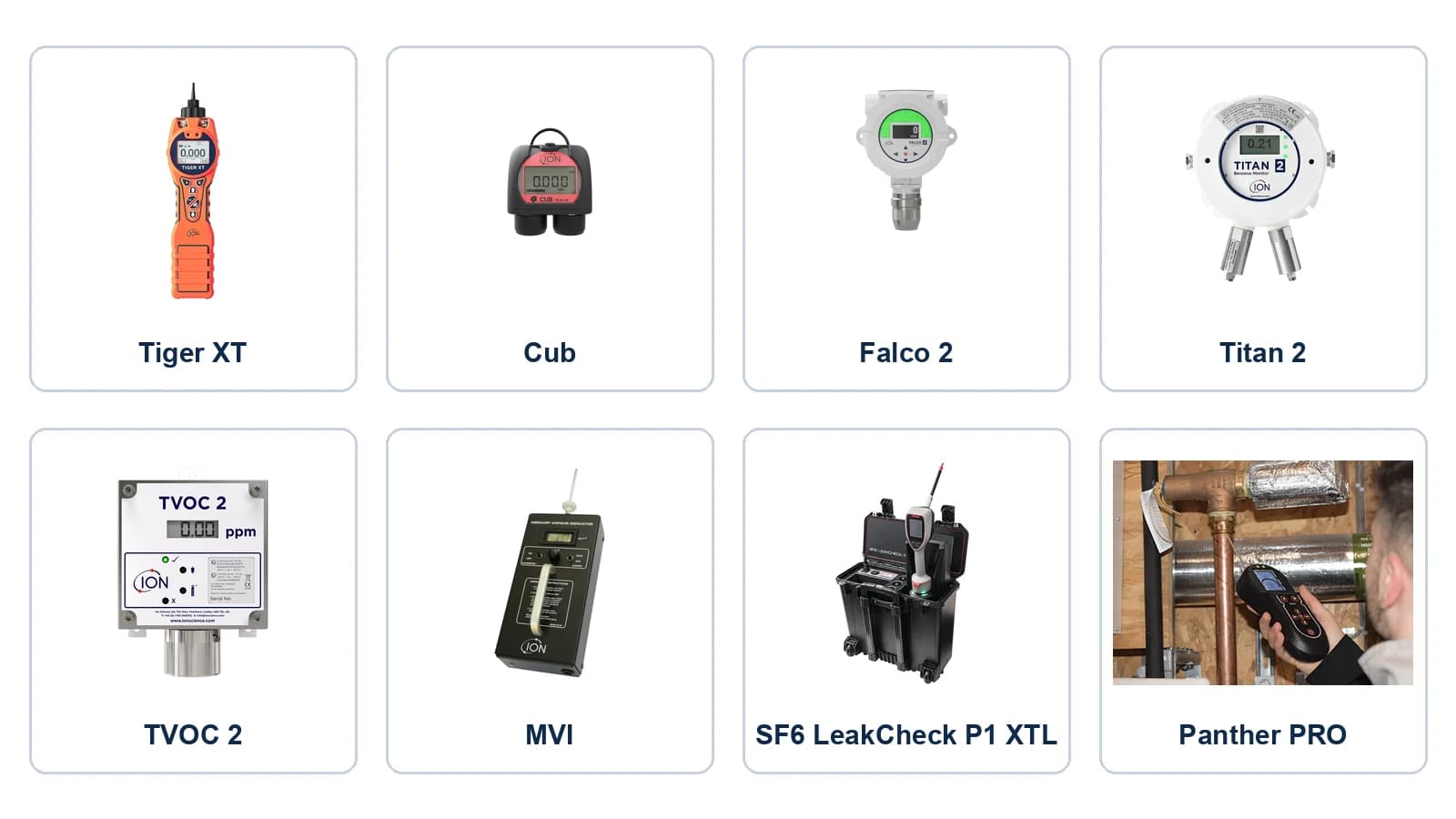
Prepared by the KEG TRK team · How we prepare our content
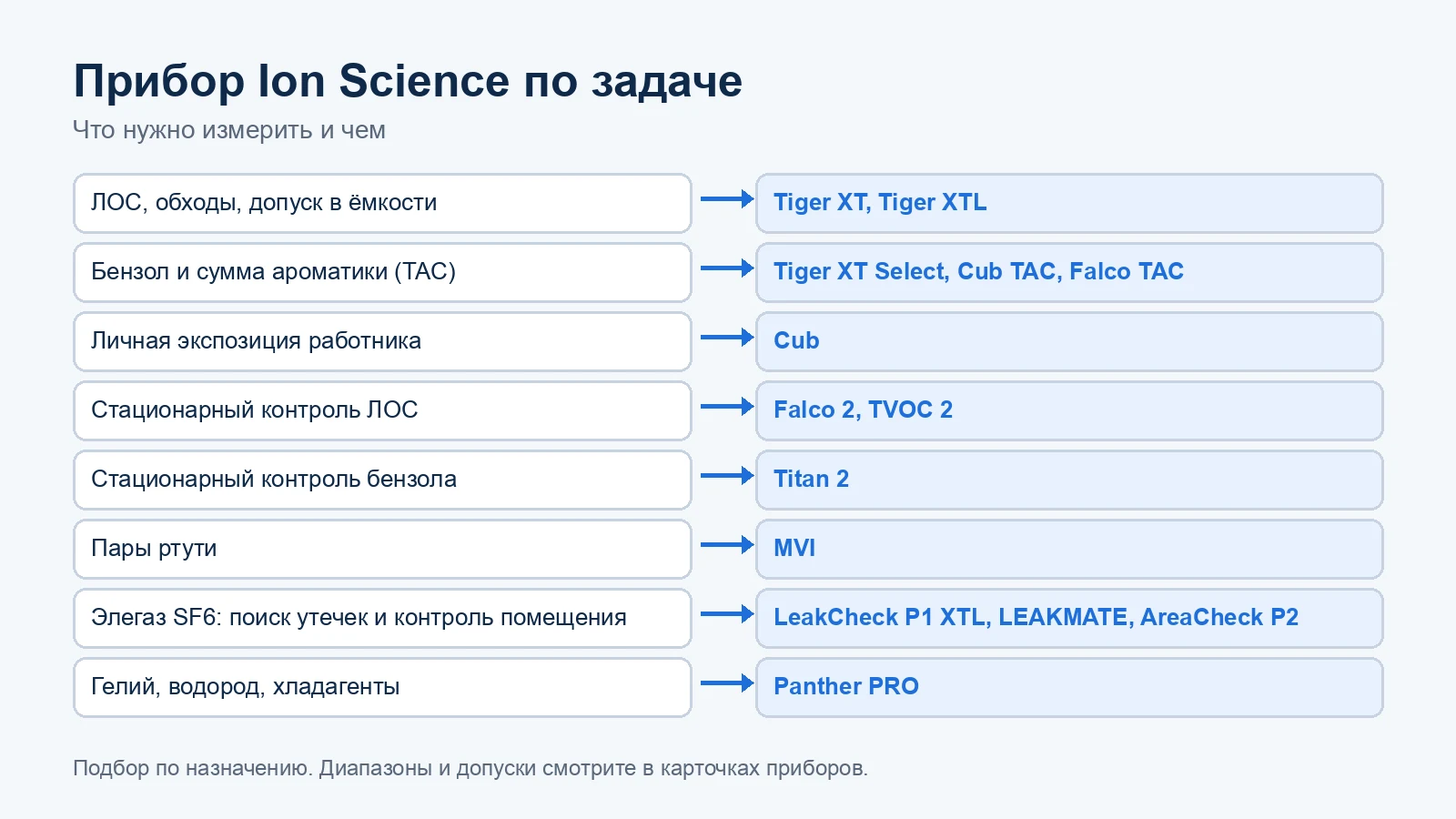
An Ion Science instrument is chosen by task. VOC and tank entry: Tiger XT or Tiger XTL. Benzene: Tiger XT Select, Cub TAC, Titan 2. Personal exposure: Cub. Fixed monitoring: Falco 2 or TVOC 2. Mercury vapor: MVI. SF6: LeakCheck P1 XTL, LEAKMATE, AreaCheck P2. Helium, hydrogen and refrigerants: Panther PRO. Below are tables to check this and notes on lamps and ranges.
KEG TRK has represented Ion Science in Kazakhstan since September 2026; prices on request.
Choosing by task
| Task | Instrument | Page |
|---|---|---|
| Walk-throughs, VOC leak search, tank entry | Tiger XT, Tiger XTL | Tiger XT, Tiger XTL |
| Benzene and total aromatics (TAC) | Tiger XT Select, Cub TAC, Falco TAC | Tiger XT Select |
| Personal worker exposure (STEL, TWA) | Cub | Cub |
| Fixed VOC monitoring | Falco 2, TVOC 2 | Falco 2, TVOC 2 |
| Fixed benzene monitoring | Titan 2 | Titan 2 |
| Mercury vapor | MVI | MVI |
| SF6 leak search | SF6 LeakCheck P1 XTL, SF6 LEAKMATE | LeakCheck P1 XTL |
| SF6 monitoring in GIS halls | SF6 AreaCheck P2 | AreaCheck P2 |
| Helium, hydrogen, refrigerants | Panther PRO | Panther PRO |
VOC instrument comparison
| Instrument | Type | Range | Response | Explosion protection | Connectivity |
|---|---|---|---|---|---|
| Tiger XT | portable | 1 ppb - 20,000 ppm | T90 under 2 s | ATEX, IECEx | USB, 120,000 records |
| Tiger XTL | portable | 0.1-5000 ppm | T90 under 2 s | ATEX II 1G Ex ia, IECEx | USB, 80,000 records |
| Tiger XT Select | portable, benzene | 0.01-200 ppm | about 130 s in tube mode | ATEX II 1G Ex ia, IECEx | USB, 120,000 records |
| Cub | personal | up to 5000 ppm | T90 under 13 s | ATEX II 1G Ex ia, IECEx | USB 2.0, 30,000 records |
| Falco 2 | fixed | 0-10 ... 0-3000 ppm | pumped under 10 s, diffusion under 30 s | ATEX/IECEx II 2G Ex db ib | 4-20 mA, RS485 Modbus, 2 relays |
| TVOC 2 | fixed | 0-10 / 0-100 / 0-1000 ppm | T90 under 35 s | II 2G Ex ia (zone 1), II 3G Ex nA (zone 2) | 4-20 mA |
| Titan 2 | fixed, benzene | 0.02-20 ppm | one sample per minute | ATEX II 2G Ex db IIB+H2 | 4-20 mA, RS485 Modbus, 2 relays |
How the photoionization detector itself works is covered in Photoionization detector (PID): how it works.
Equipment covered in this article
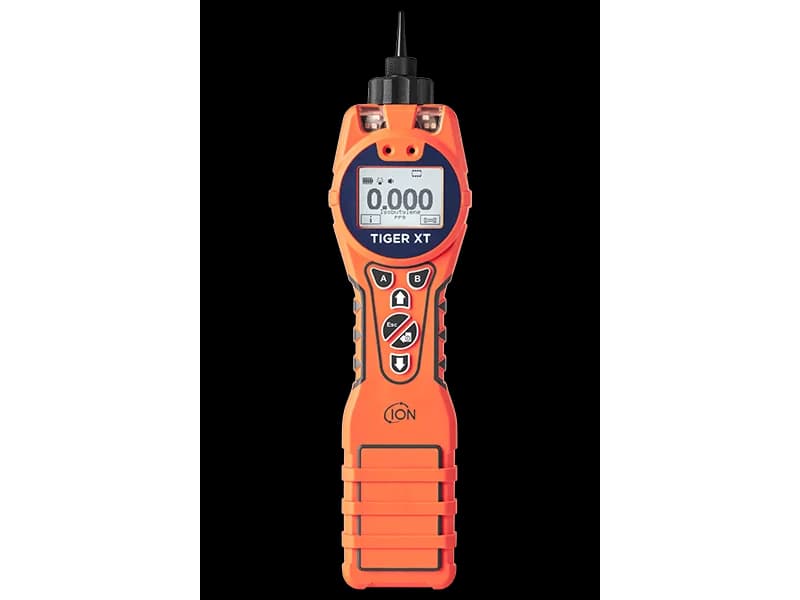
Ion Science Tiger XT — handheld PID detector for volatile organic compounds
Intrinsically safe Ion Science photoionisation detector for over 750 volatile organic compounds: 1 ppb to 20,000 ppm, T90 under 2 s, Fence Electrode technology against…
Which lamp
| Lamp | Use | Fitted in |
|---|---|---|
| 10.6 eV (krypton) | most VOCs | Tiger, Falco, Cub, TVOC 2 |
| 10.0 eV | aromatics and benzene (TAC) | Tiger XT Select, Cub TAC, Titan 2, Falco TAC |
| 11.7 eV | compounds with high ionization potential | Tiger XT, Cub, Falco 2 versions |
The 11.7 eV lamp sees more compounds but lasts less: by the brochure table at least 500 hours against 10,000 hours for the 10.6 eV lamp. Choose it when the compound you need is not visible with another lamp.
What a PID does not measure
A PID shows organic vapors and does not measure methane, mercury or SF6. Those need other instruments:
- methane and light hydrocarbons: Methane leak: what to search with and why a PID does not fit;
- mercury: the MVI, see Mercury vapor at industrial sites;
- SF6: How to find an SF6 leak.
For benzene and its thresholds use the instruments in Benzene monitoring at an industrial site.
Portable, personal or fixed
- Portable (Tiger): walk-throughs, leak search, checks before tank entry. A person holds the instrument and the reading must be logged.
- Personal (Cub): worn in the breathing zone, warns of hazardous exposure and records STEL and TWA.
- Fixed (Falco 2, TVOC 2, Titan 2): round-the-clock zone monitoring with a signal to the control system. More on Falco versus TVOC: Fixed VOC detector: Falco 2 or TVOC 2.
How to build a leak search program at a plant: Gas and VOC leak detection with Ion Science PID detectors.
How to order
KEG TRK supplies Ion Science instruments in Kazakhstan, selects an instrument for the task and demonstrates it on site. Price on request. Russian translations of most instrument brochures are on the product pages.
Frequently asked questions
Equipment in this article
KEG TRK quotes prices and delivery times to Kazakhstan on request. We will prepare a commercial offer for your application.
Ion Science Tiger XT — handheld PID detector for volatile organic compounds
Intrinsically safe Ion Science photoionisation detector for over 750 volatile organic compounds: 1 ppb to 20,000 ppm, T90 under 2 s, Fence Electrode technology against…

Ion Science Tiger XTL — handheld PID VOC detector for routine rounds
Simplified version of the Tiger photoionisation detector: 0.1–5,000 ppm range, T90 under 2 s, 80,000 data points in 128 zones, ATEX and IECEx certified, IP65, up to 24 h…
Also in this article: Ion Science Tiger XT Select — handheld benzene detector, Ion Science Cub — personal VOC monitor, Ion Science Falco 2 — fixed PID VOC detector, Ion Science TVOC 2 — fixed PID VOC monitor, Ion Science Titan 2 — fixed benzene monitor, Ion Science MVI — portable mercury vapour detector, Ion Science SF6 LeakCheck P1 XTL — SF6 leak detector, Ion Science Panther PRO — helium, hydrogen and refrigerant leak detector
Read also
9/25/2026
Tiger, Tiger Select, Titan 2, Falco or Cub: How to Choose an Ion Science PID Detector for the Job
A comparison of the Ion Science range: portable Tiger XT and Tiger XTL, selective Tiger Select, fixed Falco and Titan 2, personal Cub. A selection table and typical kits for a refinery, a chemical plant and a solvent store.
8/24/2026
Gas and VOC Leak Detection on Industrial Sites: Ion Science PID Detectors
How to choose a PID detector for gas and volatile organic compound leaks: Ion Science personal, portable and fixed instruments, LDAR programmes and the pairing with ultrasound.
10/23/2026
Photoionization detector (PID): how it works and what it measures
A PID exposes the sample to UV light and measures the ion current. It sees compounds with ionization energy below the lamp energy (10.0-11.7 eV): aromatics, solvents, fuels. Not methane.